

Too many people in classical music talk like this. I'm thinking of Daniel Barenboim, quoted about his latest recording of Beethoven's symphonies, a project he and his people call "Beethoven for All": Many people feel or think, without really knowing, that music is somehow elitist – that it is for people who can afford the money and the time; it’s something that has only to do with leisure. But music is not elitist. On the contrary. Music is not only not elitist, music is universal. Even though all the great composers of the past are … [Read more...]
About my four keys — the culture gap
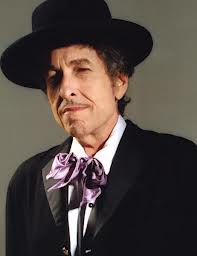
Here's the start of Jon Pareles's review of Bob Dylan's terrific new album, from the New York Times: Bob Dylan’s voice isn’t getting any prettier. At 71, on his 35th studio album, “Tempest” — and a full 50 years after he released his debut album in 1962 — Mr. Dylan sings in a wheezy rasp that proudly scrapes up against its own flaws. That voice can be almost avuncular, the wry cackle of a codger who still has an eye for the ladies. But it can also be calmly implacable or utterly bleak, and it’s completely believable when Mr. Dylan sings, in … [Read more...]
Helping you

I'm happy — thrilled — with how much people like my four keys to the future. Aka the four things we in classical music must do, if we want to build a new audience, and help classical music survive. And of course (as commenters have eagerly noted) there's lots more to say about how we do these four things. I'll be saying much of it in weeks to come. The first two points, especially, can be expanded. The first one — understand and respect the culture outside classical music. — is harder than it seems. One problem for the classical music … [Read more...]
What we have to do
Now it's time to return to the main business of this blog, which of course is the future of classical music. And also to return to something I stressed before my vacation, which is that the main business — the highest priority, the central focus — of people in our field should be to find a new audience. This ought to be a no-brainer. As things are now, the old audience isn't being replaced, or at least not in anywhere near large enough numbers to sustain classical music institutions at the size they are now. Or to give smaller groups and … [Read more...]
Visiting the cows and sheep
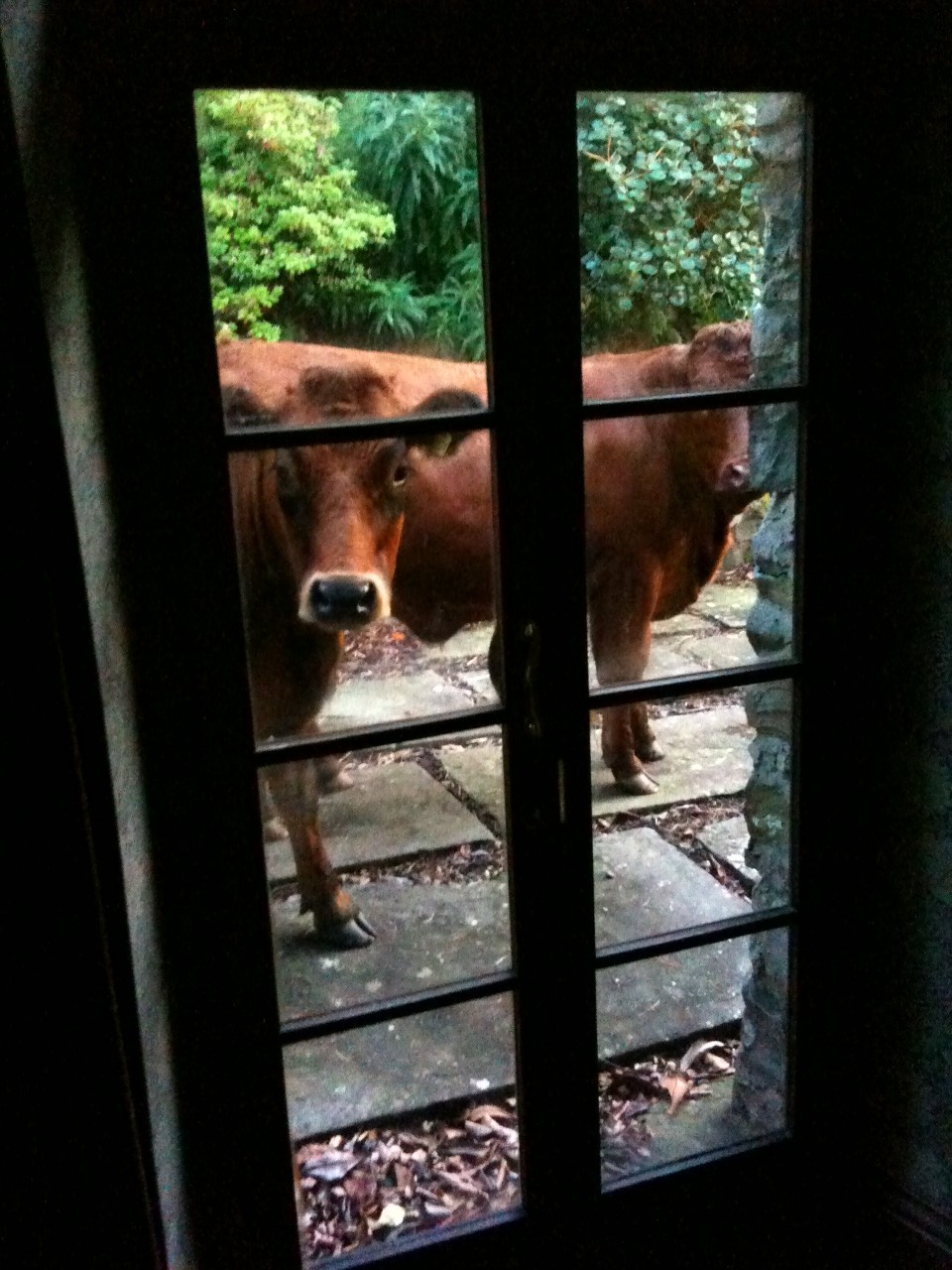
I'm on vacation, till September. Gone off to the gloriously lovely spot we go to nearly every summer, in Britain's Yorkshire Dales. Staying in a 17th century house that might be visited by cows, if they escape from a farmer's field. And then peer through the French doors of our dining room! (Cows are easy to chase away. They're timid. Sheep -- which also escape, and visit us -- are much more stubborn.) So I won't be blogging again till after Labor Day. I'll approve comments for a week, perhaps, and then look at them very lazily, if at … [Read more...]
Playing more vividly — second post

[Continuing my thoughts about why we should play more vividly, if we want a new audience.] Here's an exercise. Look at the score of a Haydn or Mozart symphony. You'll see contrasts between piano and forte, between soft music and loud, occurring throughout, clearly marked by the composers. Who -- very clearly -- wanted parts of the music to be loud, and other parts to be soft. And, evidently, relished the contrast. So now listen to performances, live or recorded, and ask yourself if you're hearing the contrasts the composers clearly liked … [Read more...]
Playing more vividly, for the new audience
At last I've gotten to the last part of my long disquisition -- which was longer than I meant it to be, and maybe longer than it should have been. Loyal readers will remember I said that the highest priority for the classical music world should be to build a new audience, and that this would require doing three things: making performances feel more lively, playing repertoire that reflects contemporary life, and -- finally -- playing all music, but especially the old masterworks, more vividly. That last point bothered some people, including … [Read more...]
Repertoire — final post
Some years ago, I hosted and coprogrammed a concert series for the famous new audience, with the Pittsburgh Symphony. We did many things -- play the first movement of Mozart's Paris Symphony, with the audience told to applaud whenever it heard a passage it liked. (Because that was the practice in Mozart's time, as he explains with great delight in a letter to his father. He was delighted because he'd gamed the audience, written music that guaranteed they'd applaud.) (And -- digression, but an important one -- the result was revelatory. The … [Read more...]
New programming — expanding the box
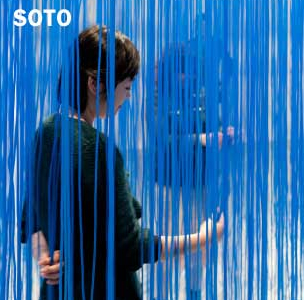
One more thought about changing/expanding the classical repertoire, because our culture has changed, and people have new ideas about music. Have had those ideas, in fact, for quite a while. So I want to suggest that classical music people -- even those in the most mainstream classical music institutions -- should perform music that's far outside the normal notions of classical music. This is music that might be compared to installation and performance art, work which (as I've noted before) is huge in the art world, is shown in major … [Read more...]
Programming for a new audience — things that worked
So why does Lincoln Center's White Light festival matter? I mentioned it in my last new audience post, and listed next season's programs: U.S. premiere of Rian, performed by Ireland’s Fabulous Beast Dance Theatre Virtuoso Wang Li plays jaw harps and calabash flute N.Y. premiere of choreographer Akram Khan’s Vertical Road Cameron Carpenter plays Bach on the Alice Tully Hall organ Mahler’s Das Lied von der Erde, arranged for chamber orchestra, conducted by Matthias Pintscher, and performed by pianist Emanuel Ax, members of the New York … [Read more...]
Programming for a new audience — more examples

As I wrote in my last post (at greater length): I'm not saying that every moment in every classical performance has to be new and eclectic. I'd expect a wide-ranging mix. All-Schubert one night, Les Noces the next weekend, Shuffle.Play.Listen midweek, and then a student-crafted concert happening down the street. Then a Stockhausen retrospective, and then my friend Stewart Goodyear playing his Beethoven marathon, all the sonatas in a single day. That said, here are more examples of what can be done. Of what has been done. I label some of my … [Read more...]
Programming for a new audience — Shuffle.Play.Listen
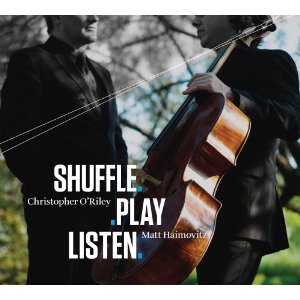
Shuffle.Play.Listen -- that's the title of a Matt Haimovitz/Christopher O'Riley double CD, which I should have blogged about ages ago, especially after I heard Chris and Matt play a version of it live. Among much else, it revolutionizes the cello/piano repertoire. (Here's a Spotify link if you want to hear it.) When I heard it live (at George Mason University in Virginia), the pieces were announced as (or after) they were played, rather than being listed in order in the program. So I had no idea what the first piece was. Clearly 20th … [Read more...]
Programming for a new audience: one example

And now to some specifics -- how classical music programming (repertoire) could change, in the new world we'll be in when we've found a new audience. Or, of course, how we'll need to change what we offer, to be part of the culture our new audience lives in. I'll describe a concert I saw at the University of Maryland, created by students at the National Orchestral Institute (NOI). It shows one approach. But before that, a word about Boulez and Godard, in my last post. I said Boulez, the leading advanced musician in '50s and '60s France, … [Read more...]
Boulez and Godard
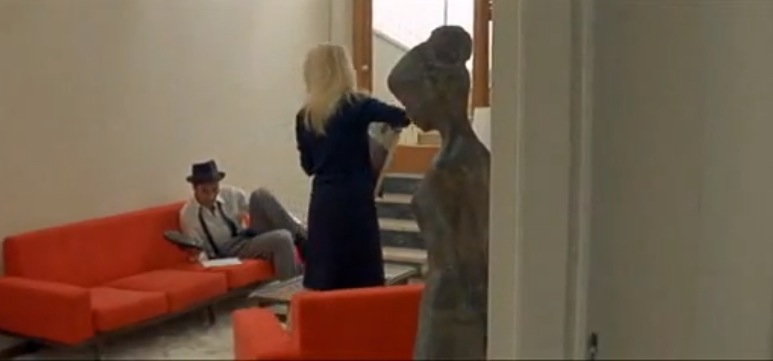
As I said in my last post, Pierre Boulez is a poster child for a problem classical music has -- some of its most respected living composers don't have much connection to the culture of our time. Here's what I mean. The mainstream classical world -- while not programming Boulez's music very much -- still treats him as if his music is greatly important. I remember talking to a faculty member at major state university music school, who eagerly wanted to meet me because he likes my ideas. He didn't think Boulez took, in his composing, any … [Read more...]
Programming classical music for the new culture (first post)
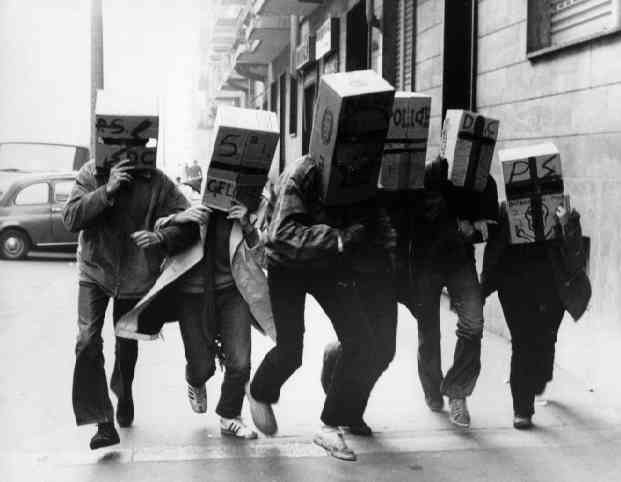
So now it's time for a post about what kind of classical music a new audience might like. Which means an audience younger than the one we have now, and one that's native to our changed culture, which (as I've noted in my last few posts) classical music hasn't kept up with. We have to think about this, because the audience we have now won't be replaced by another one like it, by another audience that accepts the old view of what classical music is. Or at least there won't be another old-style audience nearly as large as the current … [Read more...]