
We're not entirely sure how this is going to work out, but she's ready to film answers to your questions, so send them our way! I even set up an exciting new e mail account for the occasion: questions@firstchairpromo.com. Happy Birthday from us to you, Arnie.
Twenty fan questions will be selected and posted here at 12:01 am and throughout the day on September 13th. So don't expect any blog posts on the 13th, team.
Please note, this may be the dorkiest pursuit I have ever been involved with (other than, you know, becoming a classical music publicist...and Photoshoping a hat on Arnold Schoenberg), but as Hilary once assured me, "Music dorks rule!"
I've heard tales of publicists pitching writers about an artist who the writer had literally covered the month before, publicists sending out mass e mails to any writer they can find on a publication's website (one classical journalist told me she was contacted about a local football game), and publicists asking journalists if they had ever written about the artist he/she was pitching. I mean, if you don't have your own artist's press kit in front of you, let's do some brisk Googling; let's not go ahead and ask the journalist. And who can forget the NYC venue that misspelled its own name in a press release, a story I've mentioned before. One journalist told me that he got a thank-you note from a publicist for his "kind words", for a review of a performance he had canned; did she even read the review? I'm sure I've made these mistakes - and many, many others - myself, so I'm not throwing stones; just, sympathizing with our comrades in the press.
Here's an e mail from a close-to-top symphony orchestra that a journalist friend received and sent me this morning:
Whether your publication is interested in concert and event coverage, musician, board and philanthropic profiles, education and outreach or society news, I hope you will consider utilizing the X Symphony Orchestra as a source of current up-to-the-minute news and features.No pitch? Just a quick, "Keep us in mind!" for good measure? Seriously? "What shall I have my people write about today," muses Joe Editor, "I know! That symphony orchestra press person told me they had concert and society news, should I need it..."
But then I sometimes feel bad for my own kind as well. Both a manager friend and I were fairly-to-moderately appalled to receive a mass e mail from the editor of a well-known music magazine yesterday:
If you've heard any good stories, or know of any good projects or new happenings, please let me know.Oh sure, I heard a good one the other day: The Pope walks into a bar...
Are publicists and editors really so busy that neither party can do their homework? The levels of vagueness on both the symphony PR person and the magazine editor's parts represents a total lack of respect for the receiver of the pitch: my time is more valuable than your time, you do the research. The magazine editor could have, at the very least, customized her e mails for record labels, and then management, and then publicists, and the symphony could have included a list of concerts or some general information about their (preferably new) education programs and philanthropy efforts. It's great that your news is up-to-the-minute, but...what is it?
These two examples from the last 24 hours have spurred me to be overly specific in my own pitches going forward. "You last reviewed The King's Singers' performance of X composers in Y year at Z venue. This is what they've been up to since then. This is what they are doing now. Here are some angles you can bring to your editor", etc. etc.. Yes, we're all very busy, but let's step back and think about what we're e mailing before we click send. We'd all give pitches a little more thought if we had to handwrite them and drag ourselves over to a fax machine, or pick up the phone and say what we had to say on the spot, so why not give the same attention - or any attention at all - to e pitches?
9:45 AM: FREE Dress Rehearsal
Join us as Music Director Lorin Maazel, Sir James Galway and the Philharmonic rehearse the evening's concert, a program featuring Berlioz's Roman Carnival Overture, Ibert's Flute Concerto, and Tchaikovsky's Symphony No. 4.Free general admission tickets will be handed out on a first-come, first-served basis, starting at 8:00 a.m. that morning, on Lincoln Center's Josie Robertson Plaza in front of Avery Fisher Hall. All who attend the dress rehearsal will receive a discount coupon for a future Philharmonic concert.
For more information, visit nyphil.org.
Not to be outdone by the The Metropolitan Opera, it seems the Carnegie Hall ticket website is down. Single tickets went on sale at 11 am this morning, so I assume the demand crashed their servers? I called "Carnegie Charge" to see what was up [What's got two thumbs and is a hard-hitting journalist? THIS GUY.], but obviously the line has been busy all morning. While I'm genuinely thrilled that the public-at-large is clamoring for tickets to Carnegie Hall, one wonders why they couldn't, what's the saying, "Make it work"?
As my friend and client who shall remain nameless pointed out, if radiohead.com could handle millions upon millions of album downloads in a single day, surely carnegiehall.org can handle single ticket web sales?
Update 9/2, 4:39pm - I just tried to buy tickets for Eric Owens' not-to-be-missed recital (shameless, shameless!), and the site is up-and-running. "Carnegie Charge" is still busy, though.
If a white person starts talking to you about classical music, it's essential that you tread very lightly. This is because white people are all petrified that they will be exposed as someone who has only a moderate understanding of classical music...Therefore it is essential that even if you possess a massive amount of knowledge about classical music, do not share it with a white person regardless of how much they profess to love it. It's a recipe for disaster and shame.Thanks to Tom Zydel for the link.
The Pins and Needles creation story begins with the election of David Dubinsky as president of the ILGWU five years earlier. When forced to play the dinner party game ("If you could invite 3 people, dead or alive, to dinner, who would you choose?"), Dubinsky would be first on my list. Don't get your panties in a bunch, Susan B. Anthony, you get to come, too; we're having pesto. The idea of the "Labor Stage" grew out of the new cultural and recreational programs developed under Dubinsky. In his memoirs, A Life With Labor, he explains, "But, for me, education without some salesmanship was not education. In my book, that meant showmanship." His marketing savvy shone through all the educational programs he created. "Our educational activities in the widest sense," he stated, "should be looked upon from the point of view of the union's public relations - and sound public relations presuppose a sound union." The benefit of "social education", as it was called, in a union was twofold: first, the union members presumably became better-rounded, educated and contributing citizens. Second, the union made the best possible contact with the non-union public. And in the mid-1930s in America, labor unions had PR problems, problems that were worsening by the day.
In Europe, Dubinsky had witnessed a quarter million people watching an Austrian trade-union pageant. Both the concept and the reception of the trade union-pageant were quite remarkable to Dubinsky; he wondered if he could do the same thing with the ILGWU. He hired his friend Louis Schaffer to give it a shot, and under Schaffer's leadership, the Cultural Division of the Educational and Recreational Department soon held classes in drama, acting, dance and music. Schaffer organized local dramatic groups and set up training programs for boys and girls "from the shops." He also began selecting plays that would be appropriate for his newly formed "ILGWU Players". In the book Tailor's Progress: The Story of a Famous Union and the Men Who Made It, Benjamin Stolberg describes Schaffer as:
A veteran newspaperman and labor editor with a long background in the socialist movement and in business. He is the typical New Yorker - breezy, sophisticated and extremely likeable. His sense of publicity is far more Broadway than "proletarian." He is a sort of link between the theatrical world and the New York labor movement.A Broadway sense of publicity applied to another industry: what a fantastic idea.
In press releases, Schaffer stressed that his new group did not intend to pose as professionals, noting that no one performing in an ILGWU production was a trained actor, actress or musician; they all literally came from behind the sewing machines. Well played, Louis Schafer. If the ILGWU shows flopped or weren't deemed worthy by the press, Schaffer had an out - they're not "real" actors! But if the press came and liked what they saw, it would be a David and Goliath sensation.
Schaffer realized that play production could be used to carry the labor movement's message outside the confines of the ILGWU. A play within a play, publicity-wise. After producing one unsuccessful serious drama (a play called Steel about, you guessed it, a steel workers strike) with the ILGWU, Schaffer recognized 1. the need to attract a wider audience, and 2. that the only way to do that would be to create a highly entertaining product. Schaffer had the idea of creating an amateur labor revue that was funny and witty. This idea was in complete contrast to the solemn, far left-wing proletarian dramas so popular at the time.
Enter Harold Rome, and cue another PR coup. Ironically, the man who wrote hundreds of political skits and songs managed to avoid all political questioning at the time. When asked if he was a leftist in the December 25, 1937 issue of The New Yorker, Rome retorted, "It's not a question of being a Leftist...It's a question of keeping your eyes open." (I would have wanted Harold Rome as a client, for those of you playing at home.) Perhaps it was his lack of political bias that allowed Rome to freely criticize both the radical left and right and everyone who wavered in between. Unlike many of his contemporary proletarian dramatists and writers, Rome's only political agenda was satire, satire of everyone and everything in his contemporary society.
When Pins and Needles officially opened to the public on November 27, 1937, it was generally accepted as the second in an intended series of plays performed by the ILGWU Players. Shockingly, it ran for nearly four years and was so successful that no other plays were ever produced by the ILGWU. The show filled the Labor Stage until June 26, 1939, when it was moved to the much larger Windsor Theatre for a year's run on Broadway. Pins and Needles was seen in three editions: Pins and Needles (original show), Pins and Needles 1939 (April 20, 1939 to November 20, 1939), and New Pins and Needles (November 30, 1939 to June 22, 1941). When the last road show closed in 1941, the show had run 1,108 performances, making Pins and Needles the longest running musical to date. It is interesting to note that, with each new version the Pins and Needles content was revised so that the piece remained absolutely relevant. For example, the song "Four Little Angels of Peace" was originally sung by Eden, Mussolini, Hirohito, and Hitler, but in the 1938 version, Chamberlain replaces Eden in the scene.
What did the press think of Pins and Needles? Only a few critics attended the November 27th opening. Rome recalled, "First string critics went to important shows, and there were a lot of shows in those days. Pins and Needles was not an important show at first. We also played only on weekends at first, so it was hard for critics to come." Slow as they were, the critics did come, and within a few weeks word-of-mouth praise and glowing reviews turned Pins and Needles into a hit. (The New York Times sent its second string critic to the opening of Pins and Needles; the November 29, 1937 review was written by a certain "J.G." Top Times theatre critic Brooks Atkinson did not review the show until January 23, 1938, when it was already quite popular. How the times - and the Times, for that matter - do not change.)
By the end of the Pins and Needles run, the Labor Stage had made the ILGWU approximately $1,500,000 in profits, all of which went back to the ILGWU's educational programs. This was a tremendous amount of money, considering it was tax-free and in pre-inflation dollars - oh, and that the original production costs had been $10,000. To guarantee that all possible profits went back to the ILGWU, no independent ticket brokers were allowed. In his article, "A New Show Business" for Hollywood magazine (February 1, 1938), writer Sidney Skolsky details his attempts to purchase a ticket to see the show when he was in New York:
I phoned the correct people to ask for tickets. They were polite, but very sorry that they didn't have any tickets. I asked them to buy me a couple from the ticket speculators. They told me that the ticket brokers didn't have any. I had heard that story before. The ticket brokers always have them, no matter how big a hit the show is. I contacted several ticket brokers. Not one of them had a ticket...and couldn't get them. I was greatly surprised. "Where are the tickets?" I asked a broker. He answered: The unions have all the tickets. It's a new kind of show business.
I digress. So two, three, four comments on a blog post are exciting to me; tiny little baby steps to building a national arts community, if only online. But then I find out that Parterre Box ((shakes fist at the heavens)) entries often get hundreds of comments!! I've been served. An excerpt from Matthew Horner's interview over here received 89-comments-and-counting over there. I'm not really shaking my fist at the heavens, but rather applauding the mainstream levels of participation in a blog devoted to opera and the opera industry; I thought that number of comments was reserved for Perez Hilton & Co.. So much for the popular notion that die-hard opera fans are old-world and technology-less - they blog, they comment! Neither Alex Ross nor Terry Teachout have comment fields on their blogs, but I suspect if they did they could garner similar results.
Results like this, perhaps:
OK, perhaps that's another sitcom-esque fantasy sequence flash, but a girl can dream.Update, 8/28 10:01 am: 104 comments!
First, word up to The New York Times for approving the double review of a concert at Joe's Pub and a concert at Lincoln Center the following evening. What better opportunity to explore the similarities and differences in both the concert-going and performance experiences than reviewing two concerts (of the same artist/group) in drastically different spaces, in a single review. Could this mean the start of The Era of the Concept Review? Here's hoping.
Second, I sincerely enjoyed Schweitzer's casual but smart and clean style. Quoting WQXR radio presenter Elliott Forrest's analysis of the ESQ's 32-year career as a group ("like a marriage, but without the sex"), likening listening to chamber music at Avery Fisher to "voyeurism" and - a subject near and dear to my heart - commenting on the rigid concert-going experience at the usual halls:
These low-key settings offer newcomers and cognoscenti a chance to relax away from the sometimes crotchety atmosphere of major halls, where concertgoers may become hapless victims of the Stare -- the withering look of disgust directed at a listener who can't stifle a sneeze or inadvertently claps at the wrong moment. Before a concert at Avery Fisher Hall last spring, a stern-faced patron admonished me not to "treat the place like a living room." My sin, apparently, was placing my jacket incorrectly on my seat.Love the "apparently" and love the guy who lectures the Times critic.
The review also gave context and background to chamber music itself without being preachy. While the word "chamber" is in the genre name, we often forget the art form's origins in our contemporary presentations. (Ironically, of course, a place should be treated as, or should literally be, a "living room" when chamber music is being performed.)
The concert [at Avery Fisher] finished with an amiable rendition of Schubert's beloved "Trout" Quintet, with the pianist Jonathan Biss and the bass player Timothy Cobb. This work can make even curmudgeons smile, and the performance illuminated its cheery optimism and soothing melodies.
But it probably would have been even better at Joe's Pub, a space more in the spirit of the private hausmusik concerts for which Schubert and Mozart composed chamber works. Mozart wrote his arrangement of fugues from Bach's "Well-Tempered Clavier" for Sunday-afternoon gatherings at the Vienna home of Baron Gottfried van Swieten, a connoisseur who championed the music of Bach (which, surprisingly, was given short shrift at the time).
While The Bartok and Beers Movement isn't exactly breaking news anymore, the juxtaposition of reviews of the same artists at Avery Fisher and Joe's Pub in The New York Times actually is. It takes a village to change an industry, as they say.
I got kind of emotional about the whole thing. It was embarrassing.
Now if someone would just remove the "adventurous" label from contemporary music programming...
Another reason I enjoy 2008 is that we've reached a point where journalistic criticism has been diluted (or, as some might argue, polluted) to a point where there cannot be a final word on an album, concert or artist in general; too many people have platforms on which to comment, she says as she blogs.
Composer/performer Nico Muhly posted one long paragraph on his blog last Friday that made my head explode a little, in a good way. An excerpt:
...I got a very mean review on Pitchfork by Jayson Greene (whom I think had interviewed me before), which is too bad, because it would have been nice to have a good one from them...What's particularly unfortunate about that review, though, is that it obsesses over other press coverage that I've gotten, of which, of course, I am neither author nor source. I'm happy to be evaluated by the notes, the rhythms, the sounds, and the textures but not by something that's been done to me, like my height or the way I spell my name...Here, I am being called to task for the way the music relates to the press materials, which I suppose is "fair" but not necessarily in what we call good faith...An artist gets a bad review for having too much press, and then comments on the points of criticism on his own blog. (((boom))). 2008, man.
Is an artist allowed (" ") to comment on his reviews? Sure. Artists (and family members/friends of artists) have written Letters to the Editors disagreeing with critics for years: artists/fans/family members having blogs just adds immediacy. Is a critic allowed to comment on the other press an artist has gotten? Apparently. It seems to me a bit like referencing ex boyfriends in your current relationship, but who am I to judge a writer's...style.
What I'm more interested in here, though, is what defines The Journalist in 2008. Nico writes as well or better as/than most journalists, certainly knows as much about music, and majored in English at Columbia. Does his opinion on albums (if not on his own work) matter less, or differently, because journalism is not his profession of choice? His blog readership is a fraction of Pitchfork's, certainly, but the hundreds of people who read it daily trust his voice and perspective, and he reports on that which he has experienced. Does this a journalist make? Or simply a tastemaker. Didn't they used to be one and the same?
Whose opinion on art do you trust in your daily life? I've found that I trust distinct voices over publications or platforms. I know I will always hate the musicals Person X loves, and love the musicals Person Y hates. I write "Persons" X and Y rather than "Critics", because so-called credentials aren't especially relevant to me anymore, personally. Perhaps I'm in the minority, or, more likely, perhaps it's split down the middle. "I will not buy Mothertongue because (A) Pitchfork told me not to (B) Jayson Greene told me not to (C) Nico Muhly has gotten too much press and I'm going to personally punish him by withholding my $9.99. Please circle (A) (B) or (C)." Is there even a (D)? "(D) I listened and decided for myself that I didn't like it."
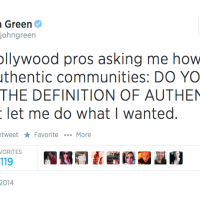
I went to an interview-ish thing recently during which the interviewer kept telling me that publicity was about "influencing the influencers". After listening to me digress for ten-odd minutes about who I thought said "influencers" were [SPOILER ALERT! They weren't necessarily journalists], he raised his eyebrows and said, "My, you have quite the broad definition of what a publicist does." I suppose I do. But then Jayson Green is an online official "influencer", and his means of influence (a review) was influenced by print media official influencers, which was then picked up by a third, artist-reporter-blogger influencer. So you tell me what a publicist's job in 2008 is.
Epilogue: A publicist has now commented on an artist's criticism of a journalist's criticism of his getting too much press. Doing my part in the circle of life. Nants ingonyama bagithi Baba!
Matthew A. Horner is Vice President and Artist Manager at IMG Artists, New York. Previously, he was an Artist Manager at Columbia Artist Management (CAMI). He does frequent classes for singers at Yale University, The Curtis Institute and Bard College, among others. Matthew has also served as a judge for numerous vocal competitions including the McCammon Competition, the Palm Beach Opera Competition, the Metropolitan Opera National Council Auditions. How has artist mainstream marketability affected the opera industry? Do you think the introduction of The Met HD broadcasts (close-ups, interviews) sparked this change?
Quite a bit. The Met's increasing visibility in cinecasts and HD transmissions, on PBS and international television (after several years of none of this) has made it important for them to cast a certain "look" and emphasize artists who are appealing and telegenic. The other houses both domestically and internationally are following their lead, so this will be a trend for some while to come.
Do you think the industry is moving toward hot-people-only, or will good singing always prevail over looks?
I view it cyclically. One sees even in the accounts of the Met under Edward Johnson and Rudolf Bing that the public believed that certain singers were being hired more for their looks than for the vocal goods they posessed or didn't. I think that there will be an increased desire in the future to hear great singing again. Certain operas rise and fall on having the requisite vocal chops, and no degree of theatrical energy or physical glamor can replace this. We will have the "hot" mentality for a period while cinecasts are still popular, but eventually one can only substitute so much before turning out a compromised artistic product.
Have we reached a point where marketing is so important that artistic directors will actually think about an artist's website/headshots/press profile when casting?
If not their materials, they'll certainly consider looks and have for some time. The materials are important, but most casting directors can see through puffery rather easily and still need some degree of substantive output before casting anyone.
How often do people approach you for management?
My colleagues and I get about a half dozen requests a week. I don't believe that anyone at IMG has ever taken on anyone who sent unsolicited materials.
What is the usual track for opera management? What is the next step after participating in a young artist program, for example?
Among American singers, it's fairly common to find your manager while in a young artists' program though some are already managed when they begin. The Met usually restricts their young artists from being managed for the first two years of the program. The "next step" depends largely on the individual. Some artists are ready to work right away after a program; others still need further work on various things. It's not uncommon especially for young artists to need more stage experience in principal roles.
How could an artist best market him or herself to a manager? I realize a lot of it is referral, but what do you look for insofar as materials and "package" at the onset of a working relationship?
Certainly at the top level of the profession referrals are critical. While we are always impressed by well-organized materials and elegant presentation, it doesn't replace talent for us.
Should aspiring opera singers be concerned about a lack of press? It's hard to get press even for top singers. Should younger singers focus on reviews from small, local publications, or does press not matter as much at that point?
Having reviews is always important. Anything like a feature, profile or interview is usually the purview of more established artists. We don't put an enormous amount of stock in tiny papers or local critics outside the major centers.
What are the benefits of being managed by a big company like IMG Artists versus a smaller agency?
This is a discussion that could last for pages, but one thing that jumps to mind is information flow. Because we are a large and international company, we have access to more information than most and can use this to our clients' advantage.
Switching gears, how important have sponsorships become in the opera world? Are all the top singers promoting some kind of product? Are we moving toward product-placement in operas, or other such craziness?
It's been around for some time, and there are a number of top stars who are associated with fashion, jewelery, cell phone companies and the like. Like it or not, the audience for opera will remain limited, and thus there will never be a huge amount of interest from the commercial world for singer endorsements.
Will there be a backlash against this - where is the artistry when we're worried about who's promoting which watch - or will the industry just keep on trucking in that direction, like basically every other industry?
Again, it goes in cycles. There has always been some degree of this and in fact singers' place in the world was much more visible in the past. I think there is some backlash against it already within the business.
What do think is the most important thing to happen to opera in the past year?
The Met's increased visibility has been very major and has "trickled down" to other companies as well. The company's national profile has really been helped by both cinecasts and the return to multiple telecasts on PBS.
What do you think is the most important thing a singer at any level can do to advance his or her career?
SING WELL!
About
Amanda Ameer left her position as Publicity Manager at IMG Artists in June 2007 to start First Chair Promotion, and currently represents Hilary Hahn, Gabriel Kahane, The King's Singers, David Lang, Eric Owens and The Wordless Music Series.
Contact Click here to send an email.
Subscribe to the Newsletter Fill in your email address here.
Sites
This site has musicians teaching viewers how to play their most popular songs on the guitar via downloadable video.
This microsite for one of MOMA's 2006 exhibitions is a(n extreme) lesson in what can be done digitally for special projects (world premieres?).
Sometimes, when the (performing arts) world gets me down, I go to The Met's website and feel better about it all.
AJ Ads
AJ Arts Blog Ads
Now you can reach the most discerning arts blog readers on the internet. Target individual blogs or topics in the ArtsJournal ad network.
Advertise Here
AJ Blogs
AJBlogCentral | rssculture
Terry Teachout on the arts in New York City
Andrew Taylor on the business of arts & culture
rock culture approximately
Rebuilding Gulf Culture after Katrina
Richard Kessler on arts education
Douglas McLennan's blog
Art from the American Outback
For immediate release: the arts are marketable
No genre is the new genre
John Rockwell on the arts
Jan Herman - arts, media & culture with 'tude
dance
Apollinaire Scherr talks about dance
Tobi Tobias on dance et al...
jazz
Howard Mandel's freelance Urban Improvisation
Focus on New Orleans. Jazz and Other Sounds
Doug Ramsey on Jazz and other matters...
media
Jeff Weinstein's Cultural Mixology
Martha Bayles on Film...
classical music
Greg Sandow performs a book-in-progress
Exploring Orchestras w/ Henry Fogel
Harvey Sachs on music, and various digressions
Kyle Gann on music after the fact
Greg Sandow on the future of Classical Music
Norman Lebrecht on Shifting Sound Worlds
publishing
Jerome Weeks on Books
Scott McLemee on books, ideas & trash-culture ephemera
theatre
Wendy Rosenfield: covering drama, onstage and off
Chloe Veltman on how culture will save the world
Elizabeth Zimmer on time-based art forms
visual
Public Art, Public Space
John Perreault's art diary
Lee Rosenbaum's Cultural Commentary
Tyler Green's modern & contemporary art blog