Michael Rushton
Should there be a tax deduction for donating to the nonprofit arts?
I was at a seminar yesterday given by Professor Philip Hackney of the University of Pittsburgh School of Law, given (via web) at the Marxe School at Baruch College, on “Tax Policy Toward Arts Nonprofits: Democracy or Plutocracy?” It’s a good question! I won’t try to summarize what Professor Hackney
Colleges, students, and jobs: nobody knows anything
In my past life I spent some time in university administration, and one of my jobs at this public university was to take proposals for new degree programs that the university had approved of to the state board of higher education, for their necessary approval. In those proposals we had to include
Reading Eleonora Redaelli’s Invisible Cultural Policy in America
This recent book is open access, here. And my full review in the International Review of Public Policy is also open access, here. My review begins: There is an old joke: An American tourist is visiting Oxford for the first time, and on his first morning signs up for a guided walking tour. The
Reading Brink Lindsey’s The Permanent Problem
Brink Lindsey takes his title from one of my favourite essays, John Maynard Keynes’s “Economic Possibilities for Our Grandchildren” (which I wrote about here). Keynes, in 1930, wondered what lives might be like in our present. There are three big predictions in the essay, interrelated, of which I would say he got two right, which
He is beyond satire
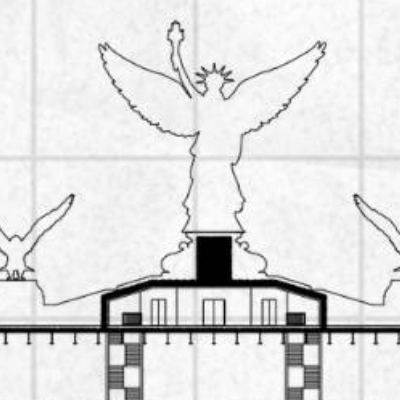
Olga Neuwirth has composed an opera, “Monster’s Paradise”, with a libretto written by her and Elfriede Jelinek. You can see in the photo above, what it’s about. It is premiering at the Hamburg Opera, before going to Zurich and Vienna, and on their website there’s a two-minute video that gives