February 1, 2010


hoppsbutton.jpg 


Historic button produced by employees of the Corcoran Museum in D.C. when the "elusive"  Walter Hopps, once an art dealer, was director; now reproduced to celebrate the publication of Hans Ulrich Obrist's  History of Curating.


Moving From the Dark Side   


New York art dealer Jeffrey Deitch will be the new director of L.A.'s Museum of Contemporary Art. Certain NYC art galleries -- but definitely not Deitch Projects --are perceived as offering better exhibitions than many museums. Perhaps we should pause and compare art museums and commercial art galleries or, to put it another way, the for-profit and the non-profit spheres.


The art dogma is that these should be as separate as Church and State, which is what we believe in the USA, right?


Art museums are tax exempt, considered to be charities operated for the public good. Because donations may be deducted, more or less, from taxable income, museums are government-supported sub rosa. This indirect support far outweighs any direct support, unlike in Europe.


It is generally supposed this legerdemain was instituted because of a lack of interest on the part of the American public in the arts and a presumed outrage if direct funding were set in place. What? Money for men in tights? For screeching sopranos? For the preservation and public display of paintings that only the rich admire? For marble carvings of naked ladies? For Shakespeare, when vaudeville is so much better?


No, the reasons are not historically clear. Consider that as part of the City Beautiful movement in the 19th century, local governments gave land for temples of culture like the Metropolitan Museum in New York and removed those acres and the consequent structures from the tax roles. There is no record of riots in the streets when this happened.


A more persuasive theory is that an indirect method of arts support prevented government say-so in programming, perhaps a justifiable fear considering the so-called Cultural Wars that ensued in the last century.


Charitable Deductions

Preferential tax treatment of expenditures or gifts to organizations that the law qualifies as having a socially beneficial characteristic and for which the donor is not motivated by direct benefit when making the contribution.

Since 1917, individual federal taxpayers have been allowed to deduct gifts to charitable and certain other nonprofit organizations. Such organizations (hereafter called "charitable") were already exempt from the income tax. A charitable deduction extended the benefits of exemption to individual taxpayers, so that income donated to charitable organizations was exempted from all levels of income taxation.

The deduction was intended to subsidize the activities of private organizations that provide viable alternatives to direct government programs. The 1917 law increased tax rates, and the deduction was introduced to alleviate congressional concern that the higher tax rates would discourage private charity (Wallace and Fisher 1977). To control the revenue loss, total charitable deductions were limited to 15 percent of taxable income. Corporations were first allowed a deduction in 1935. 


From The Encyclopedia of Taxation and Tax Policy by William C. Randolph


 Galleries are run for profit. Museums technically are not, but since government support, unlike in Europe, is wanting -- and getting more so -- non-profit art venues such as museums pretty much have to be self-sustaining through fundraising, the largess of trustees, and corporate sponsorships. Admission fees do not cover very much. Hence we have fundraising events, and the ceaseless sucking up to the rich and the courtship of corporate sponsors.


Oh, yes, did I forget to mention that the tax-policy ploy is paid for by a tradeoff?

Staff and trustees are not allowed to use their positions in non-profits for personal gain. But gains can be subtle and difficult to track or catch.


You would not want a CEO of even a major corporation if he (or she) were a total Art Babbitt, worried about whether or not a bicycle wheel attached to a stool was art. In any case, why would anyone give so much money and time if not really interested in art? The period of Old Money sense-of-duty is long gone. It seems that if you are art-interested, it is almost inevitable you are going to be self-interested. Not only does one hand scratch the other; your left hand scratches itself.


What if the principle of full disclosure were made law? That all trustees and staff (certainly directors and curators) must publicly list the art they own? Is transparency enough? Who would read those lists? Lists alone will not stop conflict of interest and potential gain on the back of the taxpayers who do not make charitable deductions.


A museum exhibition usually increases the value of the art in the exhibition and all other art by the artist. I assume that this is why galleries and collectors are more than helpful to museums. I am told that galleries often pick up packing and shipping costs and subsidize catalogues. And sometimes collectors do the same.


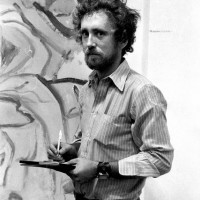
hopps1.jpg


Walter Hopps.


More...                                      

Deitch is not the first art dealer, by the way, to switch sides. In 1962, Walter Hopps left the Ferus Gallery, which he co-founded and co-owned, to become the director of the Pasadena Museum of Art, where he presented the first museum retrospectives of Kurt Schwitters, Joseph Cornell, and Marcel Duchamp (!), as well as the first Pop Art survey.


As fate would have it, Franklin Parrish Gallery recently offered "Ferus Gallery Greatest Hits Volume I" (723 N. La Cienega Blvd., Los Angeles) documenting the gallery founded by Hopps, Ed Kienholz, and Irving Blum. Andy Warhol's first solo (32 Campbell soup cans) was not the only memorable exhibition. Robert Irwin, Craig Kauffman, Larry Bell, Ken Price, Ellsworth Kelly, Josef Albers, Roy Lichtenstein, Jasper Johns, and Frank Stella showed there too..


Alas, no such stellar list for Deitch, who now, like our sainted Hopps, enters the nonprofit whirl with no experience in same. Yes, Deitch backed Keith Haring and Jean-Michel Basquiat, but since then his gallery extravaganzas, to be kind, have been recherché. He is, of course, ceasing his business operations now.


6PxqjMt83olfds65frHW5wwpo1_500.jpg  

 Los Angeles Museum of Contemporary Art


You Will Never Work in This Town Again      


What really is creepy, however, is that Eli Broad -- who recently rescued MOCA from oblivion with a big chunk of cash -- and who, apparently not satisfied with having the Broad Contemporary Art Museum of LACMA under his belt,  is now dickering with various political entities in the region to donate a site for his own stand-alone museum. Broad is not only a lifetime trustee of MOCA, but also of the Los Angeles County Museum of Art. 


He is also a trustee of the Museum of Modern Art in New York and a regent of the Smithsonian Institutions.


How did all this happen? Well, Mr. Broad certainly is rich. He discovered that one could make and sell houses without basements. And then he went into the retirement-savings business selling his company in 1999 to AIG (the company too big to fail) for $18 billion. Broad is not as rich as Bill Gates or Mike Bloomberg, but he and his wife are big-time collectors of contemporary art.


Sounds like the ideal trustee: wealthy and loves art.


As L.A.'s self-appointed art mogul, in the interest of transparency and to avoid conflict of interest, just like Deitch, Eli Broad should declare all of his holdings. He already has. One list of artists in his collection includes all the usual suspects in a sort of "one chip on every square" strategy. Also on the Broad Art Foundtion website are artworks on loan to LACMA's Broad Contemporary Art Museum. Sounds like he is lending his collection to himself.


Broad is filling a leadership vacuum. Are there no other players to step up to the plate? How embarrassing for Los Angeles, for California, for art.


< p>


Hero or Clown?


Above  is a video of Mr. Broad announcing Deitch's selection, courtesy of L.A.'s  ever rambunctious Coagula magazine. (The captions are theirs, not mine.) Note that "Barnum" Broad claims, rather outrageously, that MOCA will continue to be the leading contemporary art museum in the world. Yeah, and it nearly tanked.


True. Chicago's MCA has only 2500 objects, compared to MOCA's 5000. Beyond this association, such a statement is apples to oranges. TATE Modern and MoMA collect contemporary as well as modern art. How does MOCA's 5000 compare to these? More important, how will Deitch as director care for MOCA's collection, since he has no experience in this regard? A collection is what makes a museum a museum and not a Kunsthalle like New York's New Museum or P.S. 1 or almost any ICA in America.


More amusing and certainly more scary is this music video tribute to Broad, (This Is My Circus) produced by L. A. County Museum, directed by Mike Binder, and choreographed by Ben Wolf.


Paradoxes and Conundrums


Paradoxes and conundrums are the stuff of life. A world without contradictions, overstatements, sins of omission, collusion, bargaining, and wheeling-dealing is a world without air. If everything were rational, we would die of asphyxiation. A world without wiggle-room is a world without surprise.


For instance, to avoid all conflict of interest we would have to forbid non-profit trustees (and directors and curators) and their mates, spawn, mistresses, and all kin from owning any art.


We want trustees who are passionately interested in art. For directors we want the same. However, it is unlikely that those who are passionate about art will not own or ever want to own art. Nor is it likely that they will not be socially or otherwise engaged with other art lovers.


Since conflict of interest is so likely and transparency is the ideal, those in the know "recuse" themselves -- I love that term -- when potential conflicts arise, like approving an acquisition or an exhibition. I may refrain from voting or even leave the room, but this only underlines the location of my heart and/or my wallet.


Should we, out of fear of "rocking the boat" -- even when the boat is sinking --- take a vow of silence?


Now we come to a deep paradox:


Publicly identified art dealers are not allowed on non-profit boards. It just wouldn't look good. It would give the show away.


You can trade in art as a high-stakes hobby or addiction, but as long as you don't hang the art-dealer shingle, you pass muster.  


Checks and balances? Don't know of any.


Yes, we must have transparency. Yes, we must recuse ourselves.  Wink, wink. But to what effect?  


night_nurse_copy.jpg 


The Pledge of Allegiance to Art


I recently saw the raucous, pre-Code movie Night Nurse (1931). Before they have to tangle with Clark Gable's evil chauffeur, Barbara Stanwyck and Joan Blondell, as new nurses, are seen taking off their clothes, jumping into bed with each other in their slips, but eventually they recite the Florence Nightingale Pledge. Forbidden to embed, so here is link instead. The Pledge is half way through clip. Enjoy. 


Since an art pledge might be called for, here is the Artopia version of the Nightingale Pledge, for use by museum trustees, directors, and curators:


I solemnly pledge myself before Art and presence of this assembly;
To pass my life in purity and to practice my services

to art faithfully.
I will abstain from whatever is deleterious and mischievous 
   and will not take profits, perks, or favors nor knowingly administrate any unnecessary exhibitions nor aid

in the accession of

dubious, trivial, or inconsequential artworks.
I will do all in my power to maintain

and elevate the standards of art

   and will hold in confidence all personal matters

 committed to my keeping 
   and family affairs coming to my knowledge in the practice of

my calling.
With loyalty will I endeavor to aid the museum in its  work,
   and devote myself to the preservation of  the art

committed to its care.


0b4fca7bcefd9328c3b8ecb2b42def2a-l.jpg


.

Deitch Projects, in Soho, NYC.


Keep the Faith!


If moving from the dark side of art commerce to the heaven of art museums is as rare as it appears, why the hue and cry about the appointment of poor Mr. Deitch,  and not that of Bill Moggridge, the new director of the Smithsonian's Cooper-Hewitt, National Design Museum? Moggridge served on the Cooper-Hewitt board and is credited as the inventor of the laptop, but he has no museum credentials.


 As Andy Warhol once quipped, "Art is business." Yes, indeed. So we may want business types to manage museums, which can be as complicated and as difficult to steer as large corporations. But why not industrial designers or even artists?


But because there is something deeper at stake, selecting Deitch as director of an art musuem -- even though he may be the only one foolish enough to chance such a perilous appointment -- is dangerous. He may be genial, but I call his appointment the Lifitng of the Veil.


It should be obvious from what is outlined above that what separates art from business -- otherwise known as the Dark Side -- is not a firewall but a veil. The veil has been rent. But do we really want to find out the truth about the Wizard of Oz?


When Hopps moved over from the Dark side, the museum world had not become as rigidly professional as it is now or quite as openly compormised by corporate and collector interests -- the latter probably ineveitable given current budgets and ambtions. Arts dollars feed the economy, but you have to spend money to make money.


No one anymore wants to think of art as a religon. (Or at least not since Oscar Wilde.) But art is indeed a belief system. When that belief system is compromised, the cathedral falls.


What are the articles of faith?


The appreciation of art is the appreciation of the human spirit.


The creation of art is above commerce.


Art is worth more than its cash value.


Art is knowledge and self-knowledge.


Art is truth, not merchandise.


Art is not a circus.


Biltmoresized.jpg 


The Biltmore Solution


As galleries take on the function of mounting temorary exhibitions, museums will be left to preserve art and show only their collections for educatinal purposes rather than entertainment. We then await something new and vital.


The museum without walls or halls?


The museum without borders?


The totally digital museum?


But how about the for-profit museum?


 In the footsteps of P.T. Barnum's museum rather than the elitist cabinet of curiosities -- the two-headed origin of American museums -- the profitable museum may again have its day. 


When I was director of the Newhouse Galleries at Snug Harbor on Staten Island in the '80s, I knew about the Biltmore manse in North Carolina. George Washington Vanderbilt built it in1895; it has a modest 250 rooms and paintings by Sargent and Whistler; now on a mere 8000 acres, it is still the largest private home in this country. Of course, it is no longer just a home, but an historic house museum. However, it is not operated as a non-profit, but a for-profit, subject to all appropriate taxation and exempt from none. It is entirely self-sustaining, thanks to the stewardship of G.W. Vanderbilt's great-great grandson, Bill Cecil.


Back then, just for fun, and because I was weary of and wary of the constant grant-applications I had to write to keep my contemporary art program (including outdoor sculpture) afloat, I tried to figure out what admission fee we would need to charge in order to be independent of any government or corporate largesse.


Although I probably should have included the equivalent of rent and utilities that Snug Harbor -- founded in 1822 as a nicely endowed retirement home, but saved from destruction at last -- might have charged, I divided my annual budget  for the visual arts department by the number of visitors and arrived at $28 per person.


Would a paying public come up with that amount to see a stained-glass window that reads "Sailors' Snug Harbor -- For Aged, Decrepit And Worn-out Sailors," a dome decorated with nautical motifs, Thomas Melville's office (which was then mine), and exhibitions of emerging artists?


The North Carolina Biltmore charges $40 per person in the winter and $60 the rest of the year. In comparison: MoMA is $20; the Whitney, usually $18; Guggenheim, $18; LACMA, $12. LA MOCA, $10.  Furthermore, if you want a guided tour of the Biltmore, add $17. (The Premium Tour is $150.) And if you drive there, which is likely, valet parking is another $15. After you add restaurants, gift shops, a vineyard, and other moneymakers, the Biltmore is self-sustaining and has enough income to conserve keep up all of its many rooms, buildings, and decorative and fine art treasures.


Is this nod to the past the wave of the future?  


calfbest.jpg


Damien Hirst: Golden Calf. Reportedly sold at the all-Hirst Sotheby's auction in September 2008 for $186,000,000. Is this artwork satirical or a case of having your calf and eating it?


Art Will Survive The Museums


On top of inheriting a shaky enterprise,  everything Deitch does will be examined in the light of his past as an art dealer and secondary-market salesman. Perhaps L.A. now has the museum director it deserves. We really hope he will rise to the occasion.


And the occasion is more than a local quagmire of bad karma, bad leadership, bad positioning. It is the quagmire of art museums in general.


Not a day goes by without mention in the media of art facsimiles and fakes and/or the difficulties of presenting and storing or restoring art. Aren't digital images easier to handle? As venues for new art or even historical exhibitions, museums are well on their way to becoming merely income-generating tourist sites, luring the paying customers to see the one and only really-real,  two-headed monkey. Or the Golden Calf.


ammu.jpg 


P.T. Barnum's American Museum, 1841-1865.


                                        *   *   *


For your enlightenment and/or amusement: 


               ART  DUMP: ART STARS DUMP MISTAKES


Michael-Landy-in-a-bin-001.jpghttp://www.guardian.co.uk/artanddesign/2010/jan/28/michael-landy-art-rubbish-dump


368_Christoph-Buchels-T312657.jpgMORAL RIGHTS: MASS MOCA CAN'T SHOW UNFINISHED INSTALLATION BY CHRISTOPHE BUCHEL


http://www.nytimes.com/2010/01/29/arts/design/29artist.html


 NEVER MISS AN ARTOPIA ESSAY: CONTACT perreault@aol.com


February 1, 2010 11:21 AM |
January 18, 2010

installsized.jpg 

Craig Kauffman: Three Untitled Wall Reliefs, 1968. Vacuum formed Plexiglas

Larry Bell: Untitled, 1969. Mineral coated glass

De Wain Valentine: Triple Disk Red Metal Flake - Black Edge, 1966.  Fiberglass     

        reinforced polyester


Primarily Atmospheric


 Mr. McGuire: I want to say one word to you. Just one word. 
 Benjamin: Yes, sir. 

 Mr. McGuire:  Are you listening? 

 Benjamin: Yes, I am.

 Mr. McGuire: Plastics. 


                                       The Graduate, 1967


Distance can make things clearer. It's now obvious the '60s were a kind of Cambrian Explosion of art styles.


Cambrian Explosion?


Five hundred and twenty million years ago there was a biological Big Bang in which millions of new creatures were created. Some became the phyla we now know; countless others are forever gone. The discovery of the Burgess Shale in the Canadian Rockies in 1909 unveiled the imprints of many soft-bodies animals not previously known.


I was turned on to this by Steven Siegel who in 2008 completed a series of 52 wall sculptures called "Wonderful Life" after Stephen Jay Gould's exposition concerning the Burgess Shale.


The Cambrian Explosion as revealed by the lagerstätte of the Burgess Shale gives the lie to the popular notion that evolution proceeds in steady, diagrammatical increments, one step at a time. This may be why the Explosion is not part of common knowledge.


ptgbyD.W. Miller.jpg


D. W. Miller: Cambrian Explosion, N.D.


                                                                           Mary Parrish: Hallucigenia


hallucigeniaD8.gifIn any case, I have taken to calling the '60s -- up to the mid-'70s? -- the Cambrian Explosion of Art. So many styles, schools, movements came to the fore that it still boggles the mind and defies synthesis. L.A. Finish Fetish, nominally our Artopia topic today, was only one of dozens of style clusters, not the least of which was Pop Art and Minimal Art. Soon there was also: Anti-form, Video Art, Fluxus, Performance Art, New Realism, Photorealism, Kinetic Art, Conceptual Art, Earth Art. Finish Fetish, Funk, Hairy Who, Psychedelic Art, Neo-Dada, Environments, Installations, Mail Art  and on and on. And although the U.S. bore the brunt of the explosion, a burst of new art appeared in Europe, Asia, Latin America too.


Yet we have about as much explanation for the Art Explosion as for the Cambrian one. The Cambrian Explosion may have been caused by a radical change of environment, such as the break-up of Gondwana, then

earth's solitary land mass. Or maybe something else.


Hasn't everyone noticed that an unprecedented number of art styles fluoresced  in the '60s? It is all pushed under the rug of art history and dismissed by the formalists, structuralists, and poststructuralists as "pluralism" -- before the official pluralism of the '70s, also disdained. Art styles are supposed to succeed one another in an orderly fashion, just like those quaint illustrations showing a neat staircase from amoebas to fish, fish to reptiles, reptiles to apes, apes to Man -- just as socialism was supposed to be the logical outcome of capitalism. Simultaneity, discontinuity, multiplicity, backsliding, mutations, detours and braiding are not allowed. I need only refer you to the recent exhibition "1969" that, though it did include some samples from the Finish Fetish group, left everything else out except Minimalism and its offshoots. probably because MoMA's collection, the source of the exhibition, largely does the same.


Well, never mind. Though sometimes I think my brain is the Art Explosion lagerstätte, we can't keep the facts hidden for long. Everything old is new again. Products pushed aside are once more viable, hence the various commercial gallery ventures into recent histories.


But the question of why there was the Art Explosion still needs to be answered, so here are some theories about the phenomenon in the United States:


Because of the G. I. Bill, more people than ever were privy to art education. And for those who passed through the academic mill, there were teaching jobs too.


In the '50s, "beatnik" subculture and Action Painting in the pages of Life magazine planted the seeds. Disillusion with such official government activities as the Korean War and the Red Scare made art seem righteous and noble. The election of Kennedy sealed the deal, and good times were afoot. Or so it was thought.


Being an artist became an honored career choice. By 1960, it was obvious that some were becoming rich from art, even artists -- rich and, more important, famous. Art and artists suddenly made good copy.


The National Endowment for the Arts individual-artist grants started in 1965.


Just as in fashion, art needed something new each season. The art world, newly born, graved new artists, new styles, new copy, new products, new news. There was suddenly an art public, and that mob was voracious. Elizabethans constantly craved new plays, Venetians went mad for new operas and new singers, and Victorians coveted new and newer serial yarns. In the '60s, New Yorkers -- and art-lovers in all major cities -- coveted the new in art.


There was a void to be filled. After the Man in the Gray Flannel Suit, the world needed new art and new artists in hip clothes. Down with unproductive, boring, unsexy conformity. New art equals new thoughts. Rock 'n' roll had already loosened things up. Bombarded by TV images, the public wanted more.


Nothing was sacred. Because of an idiotic war, sexual liberation, recreational drugs, and assassinations, Western society was going through a cultural Gondwana. Chaos opened the door to innovation.


The Art Explosion was, like the Cambrian Explosion, overdetermined. Then why did it stop? There were some '70s aftershocks: feminist art and P&D. From then on, though there were individual artists of great talent, the packaging become increasingly forlorn. Neo-Geo? Graffiti Art, Neo-Expressionism? The Pictures Generation? In comparison, boring Minimalisms now seem sublime.


Install 6web.jpg


Robert Irwin: Untitled (Acrylic Column), 1970-71

                   Untitled, 1969. Acrylic lacquer on acrylic plastic.

                           Collection: San Diego Museum of Contemporary Art


What Minimalism Wasn't


1. Californian.


2. Beautiful.


3. About perception.


4. Made of plastic.


5. About light and smog.


6. About surface perfection.


Curator Kynaston McShine's "Primary Structures" at the Jewish Museum in 1966 lumped them all together: Anthony Caro, Phillip King, Tim Scott and other Brits, major Minimalists; Park Place sculptors (for instance, Forrest Myers, Peter Forakis, David von Schlegell) and two Finish Fetish folks from California, Larry Bell and John McCracken. Also included were Judy Chicago and Robert Smithson. The important aspect of this mélange was that none of the artists were Abstract Expressionist sculptors. There weren't too many of these who looked like they were going to count. Seeing Caro as David Smith's successor was a stretch. But McShine was casting a wide net.


The closer you look at things, the more they fall apart.


Now, with the wisdom that time confers, we can see that the "Primary Structures" exhibition, which seemed not to please any of the artists, was rather like putting elephants, cats, monkeys and mice in the same room, merely because they all have tails. The elephant might know there was something wrong, but would not have the wherewithal to explain that cats meowed, monkeys chattered, and mice squeaked. Certainly none of them smelled like elephants.


We have nothing to say about Caro, nor much occasion to say it. The same can be said for the Park Place gang. But because of "Primary Atmospheres: Works from California 1960-1970" -- another museum-quality show at David Zwirner (519, 525, and 533 West 19th, to Feb. 6) -- and because of my offhand dismissal of the Finish Fetish group included in "1969," recently at P.S.1, we have a bit more to say about California "Minimalism," which came on the heels of the New York brand, and was -- surely we can see that now -- a different kind of animal.


The "Light and Space" artists (I don't remember them being called that way back when) are not pseudo-Minimalists -- as I opined recently, alas. What they share with the pioneering MInimalists is a commitment to simple geometric structures, the avoidance of a handmade look, and the denial of anything gestural or expressionist. I purposefully say "the avoidance of a handmade look" because sometimes this look is gained by laborious hand-work, as in the hand-crafted color planks of McCracken. Without the layering and sanding and polishing, they would not be nearly as slick as the surfboard surfaces they imitate -- or as color-saturated, in their monochromatic density.


There was a reason that the art now dubiously labeled "Light and Space" and sampled under the better title "Primary Atmospheres" at Zwirner was sometimes referred to as California Finish Fetish. The space-industry emphasis on perfection is in itself reason enough to divorce the art  from Minimalism per se.


Although Donald Judd sometimes went after some fairly fancy finishes, Minimalism in general was not about finish and surface (yes, call it what it is), but about objectness, even when that objectness is expressed by store-bought fluorescent lights and was in part defined by the light emitted as well as the fixtures and tubes.


Using the rubric "Light and Space" makes it easier to justify the inclusion of artists working with light, such as James Turrell and Robert Irwin.


But isn't plastic the common denominator of this group? In the '60s, plastic wasn't the Neo-New, it was the New Bad. It was bad everywhere except Southern California, where plastic, we on the East Coast thought, was a way of life.


Well, there are two handsome oil-on-canvas paintings by Irwin in the Zwirner survey. The cubes by Larry Bell are actually glass. And Turrell's light projections are certainly not made of plastic.


Simple geometry? Craig Kauffman's three vacuum-molded wall pieces and De Wain Valentine's Triple Disk Red Metal Flake -- Black Edge are hardly illustrations of that.


I tried to make a chart to show what Peter Alexander, Bell, Laddie John Dill, Irwin, Kauffman,  McCracken, Helen Pashgian (new to me), Turrell, Valentine, and Doug Wheeler actually have in common.


There is no common denominator, no necessary characteristic. Neither light, space, plastic, nor simple geometry will do the trick. Finish Fetish doesn't apply to all of them, either. How can Turrell's projected light, as in the two pieces shown here, have "finish"?


So Finish Fetish is an art movement without a common denominator and with a somewhat derogatory name.


Wheelersized.jpg 


Doug Wheeler, Untitled, 1969. Acrylic, neon tubing and wood.


And the Solution Is.....


I was puzzling over the lack of a necessary and sufficient characteristic, until I suddenly remembered a pedagogical strategy I used in the '60s derived from Ludwig Wittgenstein's later philosophy: the anti-Aristotelian Family Resemblance. A category can consist of items that have a family resemblance rather than a necessary and sufficient common denominator. On a macro level, family resemblance can be used to delineate art in general; on a micro level it can be used to describe a style or art movement.


I have my father's steel-gray eyes and reddish beard, but my mother's soma-type (I hope). Whereas my sister has my mother's blue eyes, my father's soma-type, and my aunt's tendency to indulge in monologue. My brother has my father's eyes; my mother's blond hair and my grandfather's weak heart. I have my grandmother's and my mother's green thumb, but my brother doesn't. He has instead my father's mechanical ability, which neither my sister nor I possess. One big, happy family, with enough cross-references to enable identification as such.


Well, O.K. But couldn't you say the same thing about the varied art in the 1966 "Primary Structures" exhibition, that there was indeed a family resemblance?


No strategy is perfect, and Wittgenstein wasn't entirely right. It is how you use a strategy and what you use it for that counts. And let us not forget that classification can be ossification. Categories should be for illumination and comparison, not for control.


Family resemblance works for showing generosity to things you like; "necessary and sufficient" works if you want to weed your garden and get rid of all the plants you didn't plant, like dandelions, although dandelions are perfectly edible. They are sometimes just in the wrong place.


But surely there are other strategies, such as sorting by hindsight.


Install 5 web.jpg 


John McCracken: Red Plank, 1967. Polyester resin, fiberglass and plywood.

Peter Alexander, Blue Wedge, 1970/ Cast polyester resin.

McCracken: Black Pyramid, 1975. Polyester resin, fiberglass and plywood.


Insight by Hindsight


If we still must judge art by its influence on future art -- a very big "if" -- then how does Finish Fetish come out? We can say that Minimalism itself influenced Anti-Form and Earth Art, and certainly Conceptual Art. But so far we see no developments out of Finish Fetish. Reactions against, no doubt. Mess instead of finish and finesse, which we decline to find game-changing or even interesting. Finish Fetish is a sport.


On the other hand, what U.S. city has its own art movement? New York has had dozens. But in all the rest of the United States of America, there are only three. L.A. produced Finish Fetish; Chicago gave birth to The Hairy Who; San Francisco briefly floated Funk. All are worth reexamining.


Was Finish Fetish the beginning of New Age art? Unlike in Minimalism, a lot of the work in "Atmospheric Structures" looks semi-mystical. This is certainly true of Irwin's demisphere with light and shadows. And, as we shall see, of McCracken's planks. Simple geometry, unless you are very careful, will always suggest the Platonic.


boardjpg.jpgCoda: Readymade, Shop-made, or Handmade


The New York Minimalists rediscovered the idea that you didn't have to make things yourself in order for them to turn out to be art. We know that Duchamp did this first with his Readymades, but for some reason Dada was anathema to Judd, Flavin,  LeWitt. Was it Duchamp's Dandyism? His odd connection to the lingering decadence of Surrealism? Certainly not his friendship with the rich and well-positioned, since no artist ever turns down a free meal, no matter how expensive the china. 


Perhaps you cannot honor Dada when you are trying to sell made-to-order art for handmade prices and questioning art would queer the sale. So let us say instead that the major Minimalist "didn't make art" in the same way that Duchamp "didn't make art." A Minimalist eschewing the handmade meant something different than what Duchamp meant by selecting his urinal or his bicycle wheel.


I am tempted to say that Minimalism, although producing unique objects, embraced the mass-produced -- or it looked like that. Minimalism wanted the matter-of-fact rather than the pristine.


On the West Coast, the surface was the subject, and perception rather than philosophy was the point. Or to make light of it: not what light might mean, but how light could be seen -- on a clear day, theoretically without smog, when gazing at your surfboard or the fender of your car. West Coast Minimalism might really be abstract Pop -- Pop without dust or imagery. If you really want to get at the difference between Minimalism and the best of the Finish Fetish folk, compare anything written by Judd to this statement by McCracken:


I was always primarily interested in form alone, but then to make a form, you have to make it out of something. So color seemed a natural material to use, because color is abstract. If you make a form that appears to be composed of color, then you have something, an object, that's pretty abstract. Just form alone would be more abstract, of course, because it's just a mental idea, but you don't have anything there for your perceptions to grapple with unless you make it out of a material. However, if you make it out of metal, or stone, or wood, or whatever, then you have something that to my mind may overemphasize the physical aspect and therefore be difficult to perceive as purely mental. An important thought behind this is that all things are essentially mental - that matter, while quite real on the one hand, is on the other hand composed of energy, and in turn, of pure thought.

John McCracken quoted from an interview with Thomas Kellein, August 1995, in the catalogue McCracken, Kunsthalle Basel 1995, p. 22. Courtesy Gallerie Tanit, Munich.                                                                                                                                                             

And that's not all. There is a difference between early '60s and mid-'60s, by which time New York Minimalism was already something to subsume or survive. On the West Coast, beauty did the trick, where beauty meant perfect and shiny. A decade later, the P&D artists had another definition of beauty and another answer to Minimalism. And now we can no longer think about beauty at all.


Think Pinkcropped.jpg 


McCracken: Think Pink, 1967. Polyester resin, fiberglass, and plywood.


Where Is the Aura?


After my aura riff last time around, I now use the term whenever I need a space-holder for something unexplained. Don't know why one painting is worth millions and another less than the cost of the canvas and paint? Aura!


Can't figure out why you are moved by de Kooning and not Robert Motherwell? Aura!


Find it difficult to understand how an appraiser can tell a fake Mondrian from a real one? Aura!


Puzzled by the positive experience afforded by an early Frank Stella contrasted to the boredom inspired by later, more varied work?  Aura!


So...


Does any of the art in "Primary Atmospheres" have an aura? You would think that works by Irwin and Turrell, or even the boxes of Bell, having so much to do with light and perception, would have auras. But that is the case only if you assume that aura has something to do with the spiritual, a dubious premise. Auras in art are not like halos. Nor do art auras have to do with perception.


Although I have doubts about his columns and other forms, McCracken's planks have aura. He makes them by hand in the same way surfboards are made. Neither fish nor fowl; neither paintings nor sculptures but both, they have the oddness of the interstitial. And we all know from anthropology that everything interstitial is aurific.  


Surf Bo.jpg 


NEVER MISS AN ARTOPIA ENTRY! ASK FOR THE AUTOMATIC ARTOPIA

ALERT: perreault@aol.com

January 18, 2010 10:22 AM |

About

John Perreault I have written about art for a number of years, specializing in first-person art criticism as art critic for the Village Voice, then in the Soho News. I have championed... more

Artopia ARTOPIA is an art diary featuring my evaluations of the art I see in galleries, museums, public spaces, and sometimes in artists' studios... more

Join My Mailing List Want to be notified when I post new entries? Email: perreault@aol.com more

Contact me Click here to send me an email... more

Archives

Archives: 171 entries and counting

Elsewhere

Recommended 
Selected writings by John Perreault from various publications: www.johnperreault.com
John Perreault interviewed on WPS1 

Now available as a podcast. Click here: PODCAST.

more picks

Find recent content on the main index or look in the archives to find all content.

AJ Ads


AJ Blogs

AJBlogCentral | rss

culture
About Last Night
Terry Teachout on the arts in New York City
Artful Manager
Andrew Taylor on the business of arts & culture
blog riley
rock culture approximately
critical difference
Laura Collins-Hughes on arts, culture and coverage
Dewey21C
Richard Kessler on arts education
diacritical
Douglas McLennan's blog
Dog Days
Dalouge Smith advocates for the Arts
Flyover
Art from the American Outback
Life's a Pitch
For immediate release: the arts are marketable
Mind the Gap
No genre is the new genre
Performance Monkey
David Jays on theatre and dance
Plain English
Paul Levy measures the Angles
Real Clear Arts
Judith H. Dobrzynski on Culture
Rockwell Matters
John Rockwell on the arts
State of the Art
innovations and impediments in not-for-profit arts
Straight Up |
Jan Herman - arts, media & culture with 'tude

dance
Foot in Mouth
Apollinaire Scherr talks about dance
Seeing Things
Tobi Tobias on dance et al...

jazz
Jazz Beyond Jazz
Howard Mandel's freelance Urban Improvisation
ListenGood
Focus on New Orleans. Jazz and Other Sounds
Rifftides
Doug Ramsey on Jazz and other matters...

media
Out There
Jeff Weinstein's Cultural Mixology
Serious Popcorn
Martha Bayles on Film...

classical music
Creative Destruction
Fresh ideas on building arts communities
The Future of Classical Music?
Greg Sandow performs a book-in-progress
Overflow
Harvey Sachs on music, and various digressions
PianoMorphosis
Bruce Brubaker on all things Piano
PostClassic
Kyle Gann on music after the fact
Sandow
Greg Sandow on the future of Classical Music
Slipped Disc
Norman Lebrecht on Shifting Sound Worlds
The Unanswered Question
Joe Horowitz on music

publishing
book/daddy
Jerome Weeks on Books
Quick Study
Scott McLemee on books, ideas & trash-culture ephemera

theatre
Drama Queen
Wendy Rosenfield: covering drama, onstage and off
lies like truth
Chloe Veltman on how culture will save the world

visual
Aesthetic Grounds
Public Art, Public Space
Another Bouncing Ball
Regina Hackett takes her Art To Go
Artopia
John Perreault's art diary
CultureGrrl
Lee Rosenbaum's Cultural Commentary
Modern Art Notes
Tyler Green's modern & contemporary art blog
Creative Commons License
This weblog is licensed under a Creative Commons License.