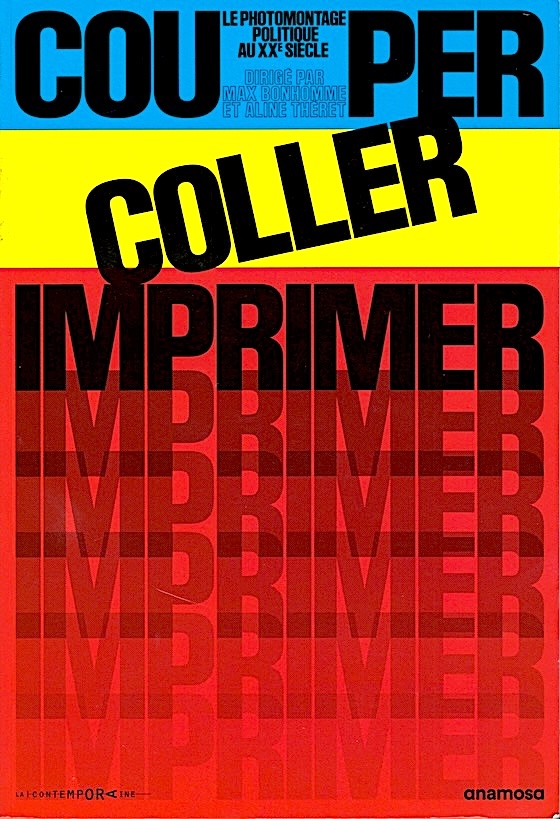
This blogpost cannot adequately display the exhaustive content and brilliant design of Couper, Coller, Imprimer, a richly illustrated catalogue of an extraordinary photomontage exhibition at La Contemporaine in Nantes, France (running through March 14). Even so, it is hoped that this limited attempt evokes the broad spirit of the exhibition while offering an edited summary of the subject by the curators, Max Bonhomme and Aline Théret, in their own words.
Click on the images to enlarge them.
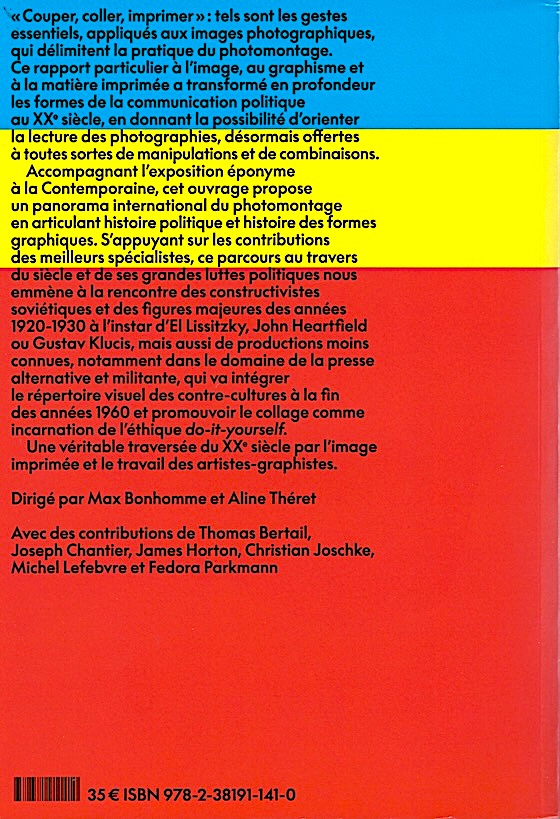
The aim of this exhibition is to present an international panorama of the history of photomontage, spanning the entire 20th century, with a close link between political history and the history of graphic forms.
Drawing on recent and unpublished research, the exhibition traces the development of photomontage in graphic design and political communication, and highlights the diversity of printed media: postcards, illustrated press, posters, book covers, leaflets and brochures. Going back to the beginning of the 20th century, it bears witness to the inventiveness of the compositions present in imagery from this period onwards.
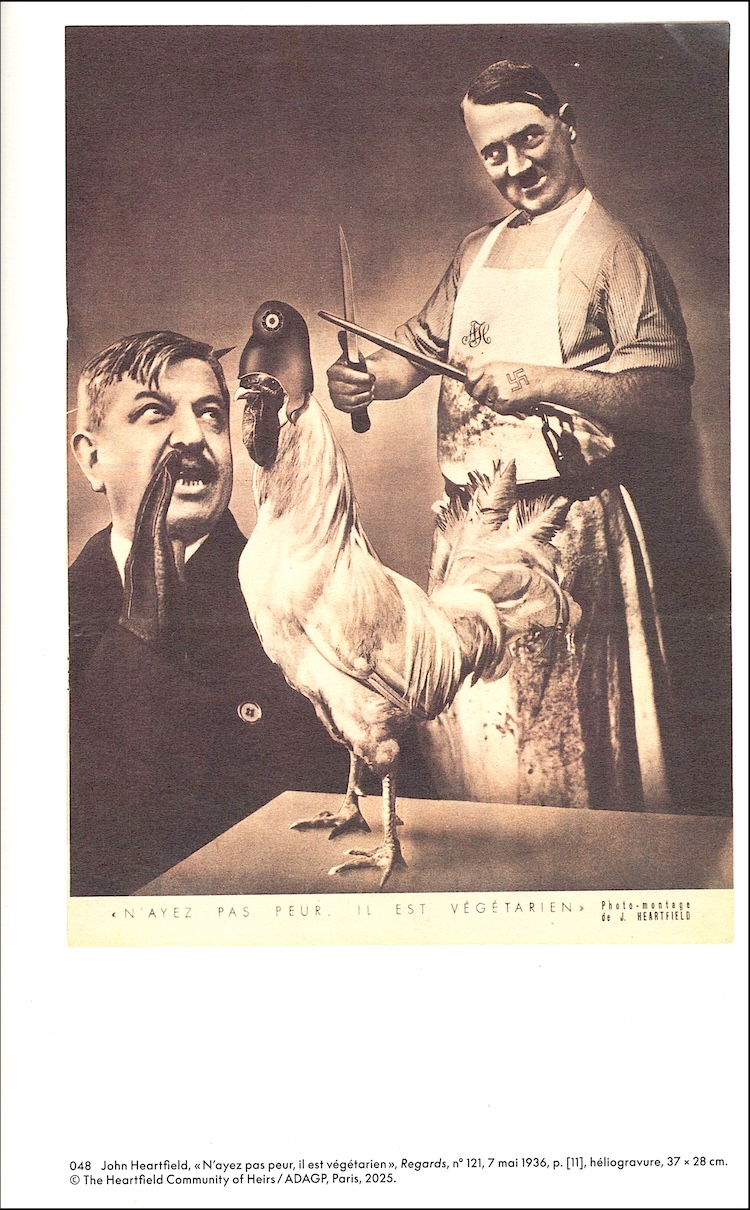
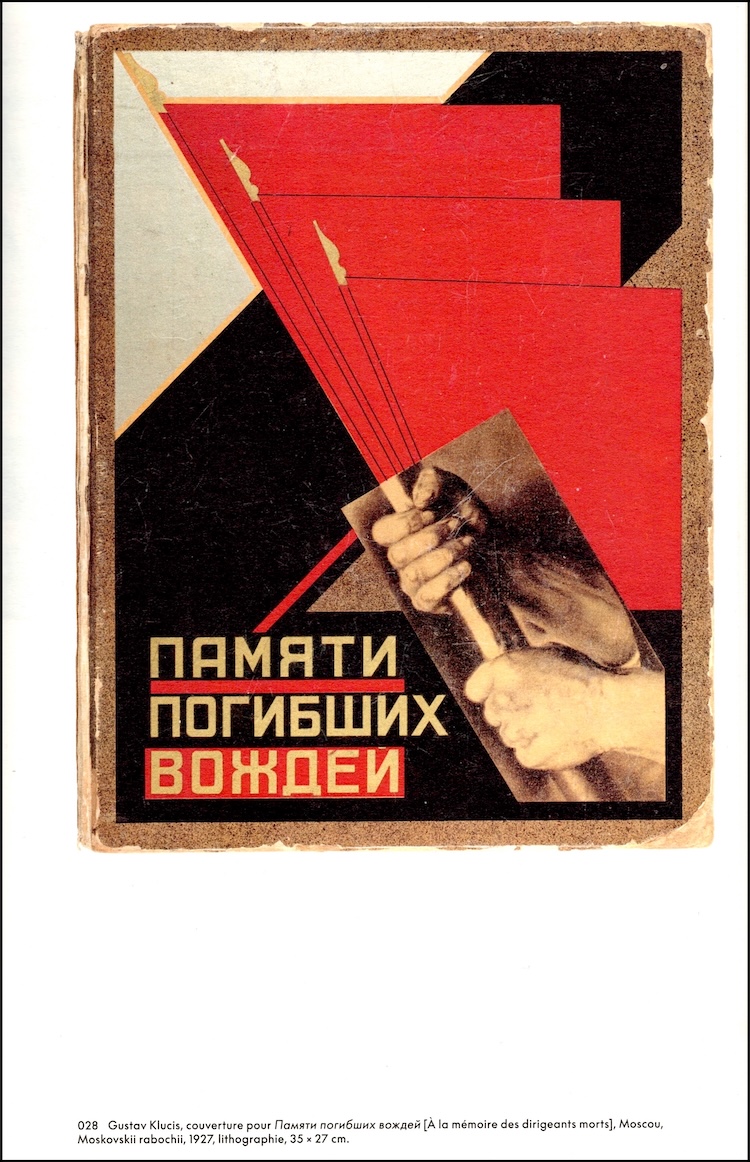
Between World Wars I and II, photomontage became a distinctive graphic element in political news magazines. The Communist press in particular invested heavily in photomontage, especially the German magazine Arbeiter Illustrierte Zeitung (AIZ), which published compositions by former Dadaist John Heartfield.
In France, the magazine Regards pursued similar objectives, but it was in fact a vast international Communist propaganda network that took advantage of the potential of photomontage in the press, under the impetus of the German Communist Willi Münzenberg.
Offering an international panorama of the history of photomontage, the exhibition highlights works from the Soviet Union, Germany, the Netherlands, Italy and Spain. It is based mainly on the collections of La Contemporaine, which are particularly rich in illustrated press and political posters.
Gustav Klucis, [‘To the memory of dead leaders’], Moscow, 1927
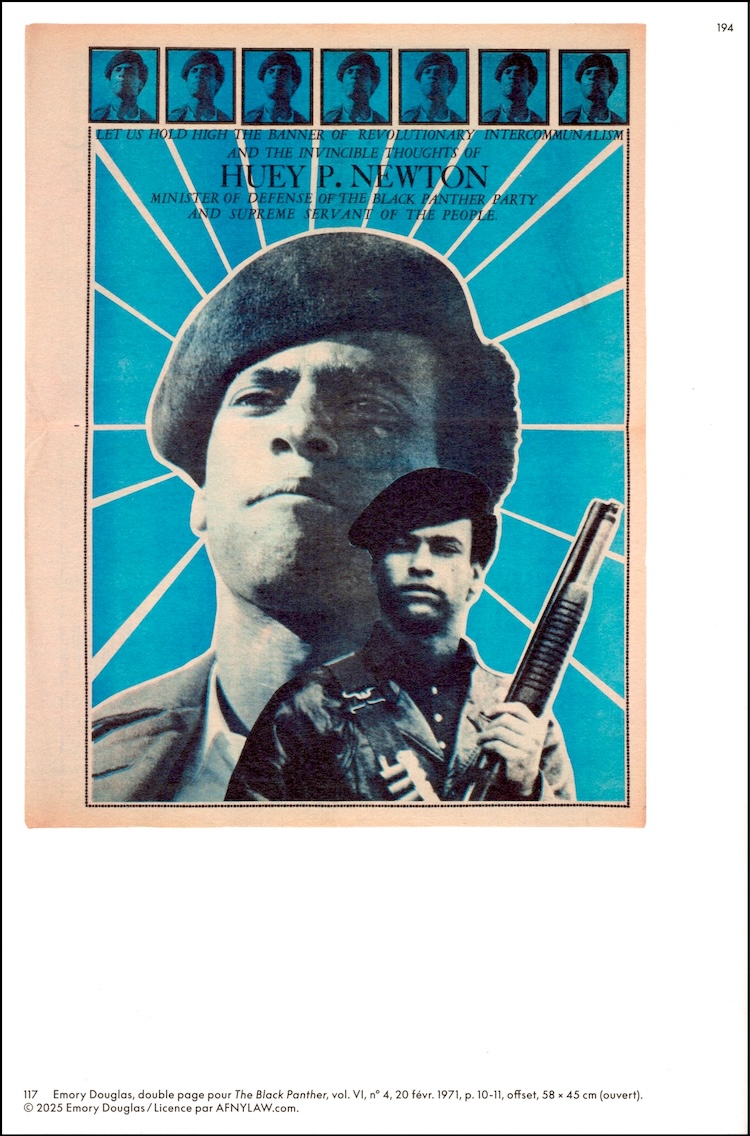
After a relative decline in the post-war period (1945-1968), photomontage was reborn in new forms with the reinvestment of activism after 1968. Just as the intellectual history of the “New Left” led to a return to the sources of Marxism and pre-Stalinist communism, so the most politicized graphic artists drew on the history of radical graphic practices that preceded the most rigid versions of “socialist realism”.
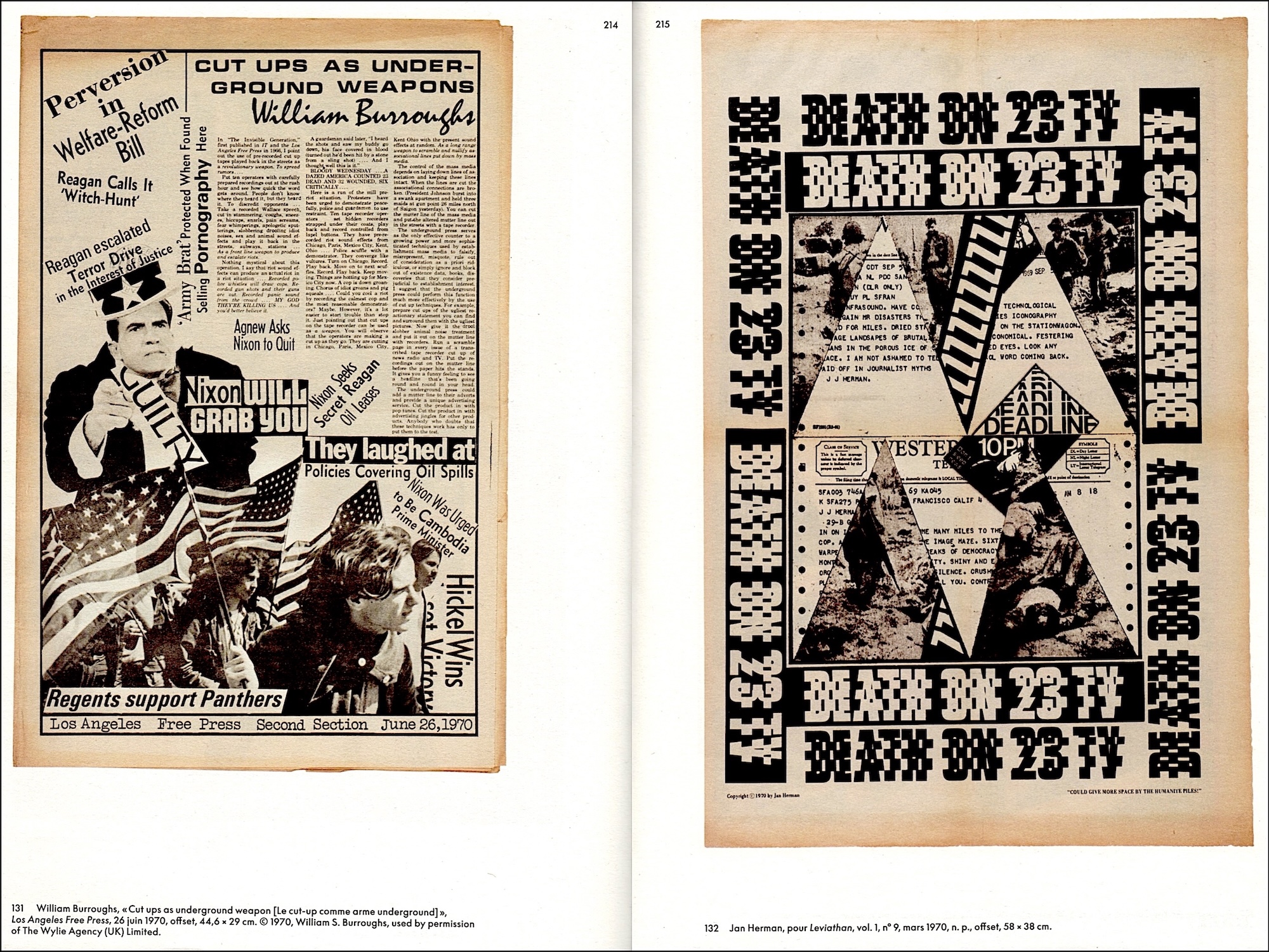
In Germany, England, the United States and France, the rediscovery of John Heartfield’s work, in particular, sparked a veritable revival of political photomontage among artists and graphic designers. The technique also integrates the visual repertoire of countercultures, from the psychedelia of the late 1960s to the punk movement, which promotes collage as the embodiment of the “do-it-yourself” ethic. These countercultural movements, in the broadest sense of the term, also reinterpret the history of political graphics in their own way, sometimes even to deride it.
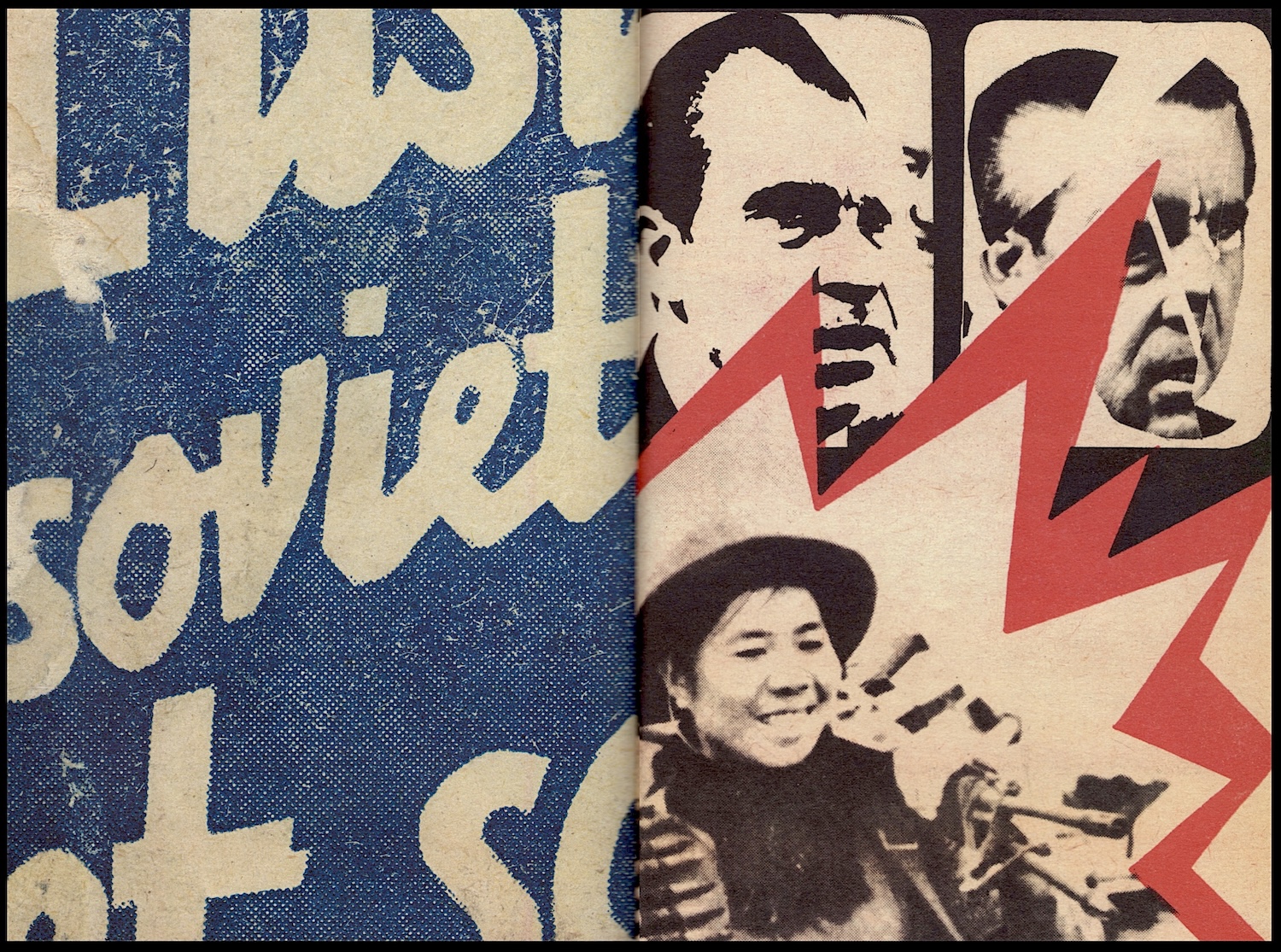
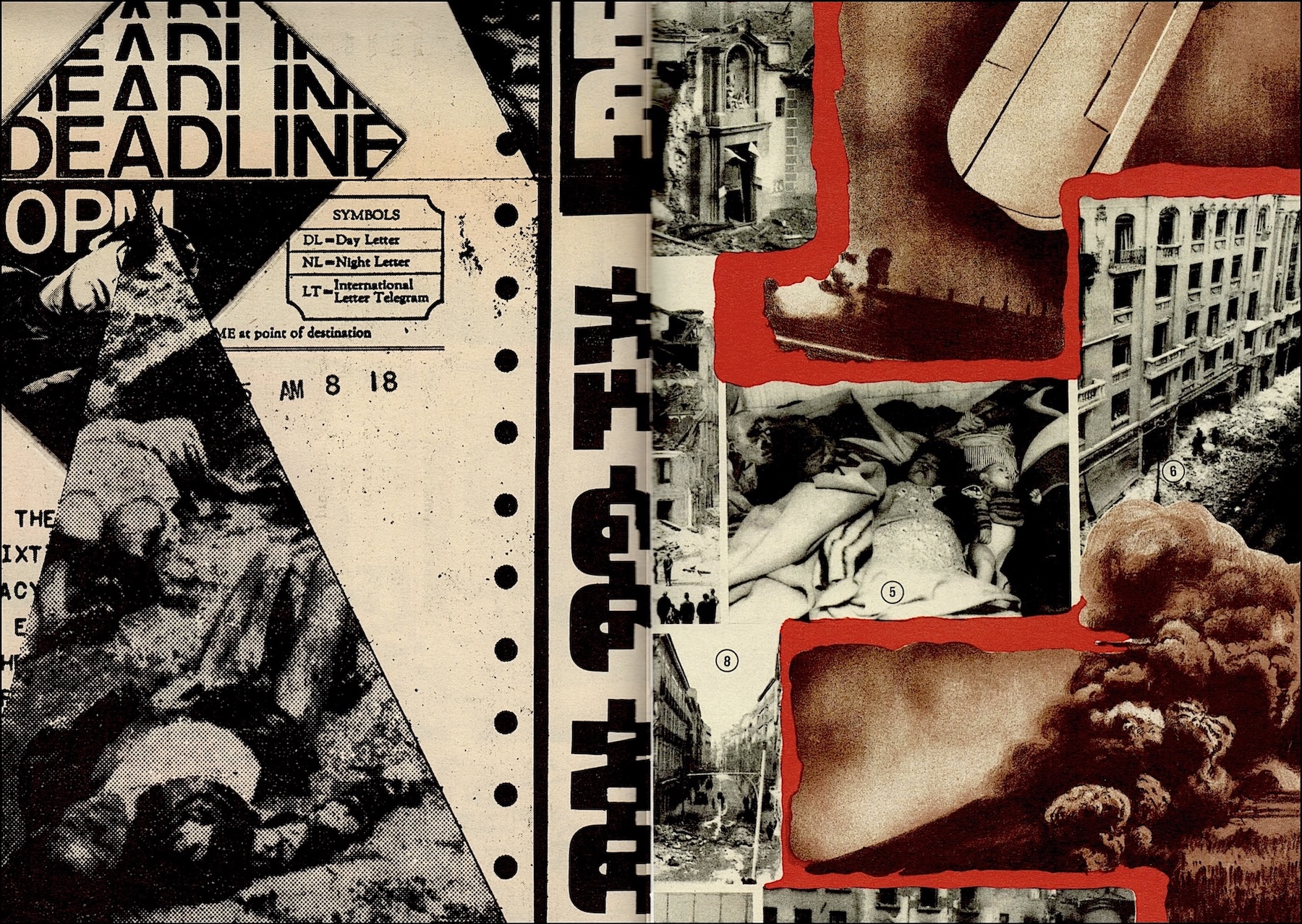
Emory Douglas, double page for The Black Panther, Vol. VI, No. 4, Feb. 20, 1971
The exhibition features, in all, a selection of around 250 original printed documents. The aim is to highlight the materiality of the prints, without resorting to facsimiles, in order to appreciate the rendering of different printing techniques. The photomontages on display, all multiples, do not include preparatory silver photographs, drawings or collages. These printed photomontages come in a wide variety of forms: posters, book covers, periodicals (covers and inside pages), brochures, postcards. Formats range from the smallest (stickers) to the largest (posters).“
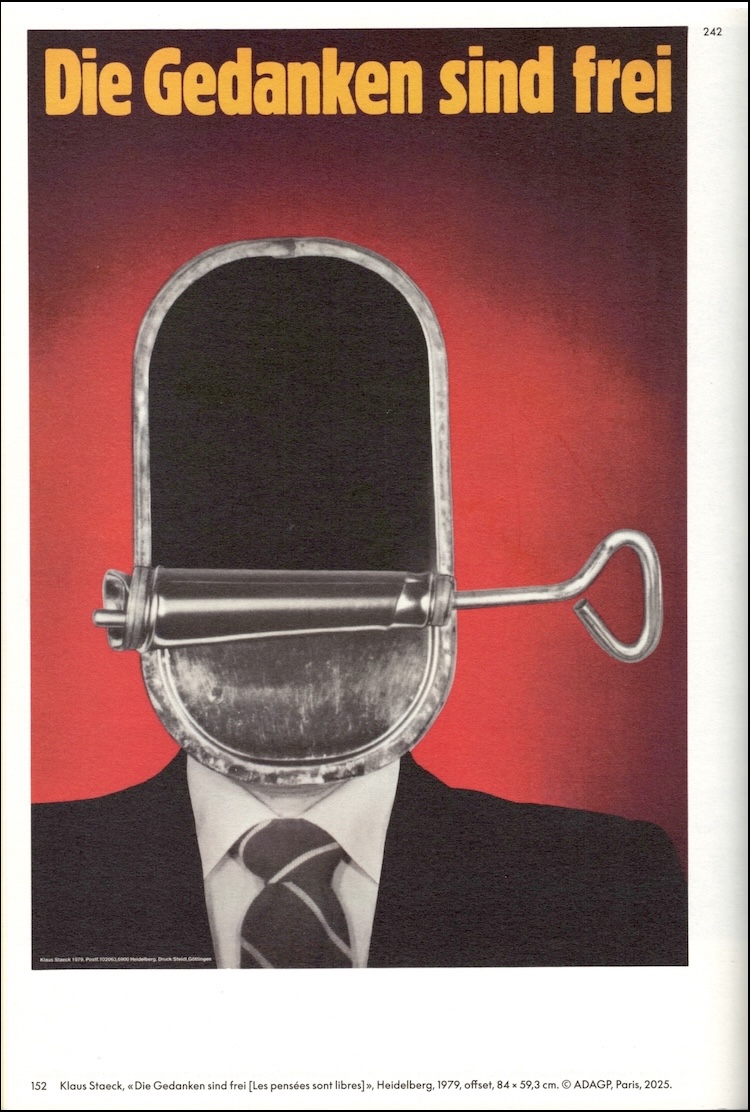
Finally, a huge tip of the hat to the curators for the sectional spreads combining partial details of various selections included in the catalogue. Here for example, is one such spread, created from this poster andthis broadsheet. The creative combinations are vivid close-up images worth seeing for themselves. They lend the publication an added liveliness that testifies to the sharp editorial eye of the exhibition curators.
Hi Jan.
Honestly haven’t opened an ArtJournal email in a while. Seeing a two posts with your byline this morning was enough to drag me into this particular rabbit-hole. Despise being so self-referential — human nature’s a bitch — however, reading this article and having been a graphic designer and artist, this particular work I created for a cultural exchange exhibition in Valencia and then Miami years ago, which intentionally relied on appropriated images came to mind. It consists of two sublimation printed silk-like lengths of fabric, each with a montage of highlights (atrocities, mythologies, hypocrisies, etc.) of U.S and Spanish history. https://randyburman.com/memory-scrolls Thought you might appreciate.



Hi Jan.
Honestly haven’t opened an ArtJournal email in a while. Seeing a two posts with your byline this morning was enough to drag me into this particular rabbit-hole. Despise being so self-referential — human nature’s a bitch — however, reading this article and having been a graphic designer and artist, this particular work I created for a cultural exchange exhibition in Valencia and then Miami years ago, which intentionally relied on appropriated images came to mind. It consists of two sublimation printed silk-like lengths of fabric, each with a montage of highlights (atrocities, mythologies, hypocrisies, etc.) of U.S and Spanish history. https://randyburman.com/memory-scrolls Thought you might appreciate.
yes, appreciated. thanks for that.