
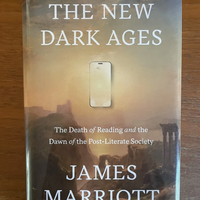
A year ago James Marriott had a Substack post on “the dawn of the post-literate society” that as I write has over 21,000 likes and 6,000 restacks: clearly something that struck a chord. And now we have a book length treatment of the issue, though a short book - put your phone away and you can read it in an afternoon. As someone who recently retired from over forty years of university teaching, my own sense is that there has been a genuine decline in the ability of college students (and I only ever taught at non-elite public universities) to … [Read more...]
Macklemore, Sheeran, Kraft
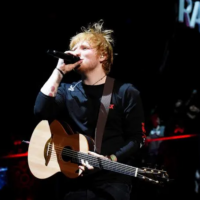
This has been all over the papers, so I’ll only give a brief synopsis: Ed Sheeran is on a US stadium tour, and has Macklemore as an opening act. Macklemore makes statements about Israel-Palestine on stage. A forthcoming stadium gig, at Robert Kraft’s Gillette Stadium in Massachusetts, is cancelled owing to Macklemore’s remarks, and other stadium owners follow suit. Sheeran’s concert promotor, Messina Touring Group, drops Macklemore from the tour. Sheeran does not protest, saying it is the promotor’s call. Sheeran’s other opening acts and his … [Read more...]
We cannot quantify the richness of a nation’s literary life

In the English-speaking world, is there a decline in our literacy and in how people live with literature? For the past while there has been a debate on whether we are losing our literary culture - James Marriott thinks we are at the “dawn of the post-literate society” and has a forthcoming book that extends the argument. I’ll write up a review when I get my copy, but Henry Oliver has already obtained it, and gives some thoughtful pushback on Marriott’s analysis. Who’s right? I’m not sure. My intuition leans towards … [Read more...]
The Personal Brand Generation

Last week I learned that Arizona State University had launched a new degree program, a Bachelor of Arts in Content Creation, which can be taken either online or in-person: Do you dream of monetizing your video channel or making social media your career? Arizona State University’s online Bachelor of Arts in content creation prepares you to become a strategic storyteller who thrives in the rapidly evolving creator economy. This online program teaches you how to create powerful content across video, podcasts, social media and emerging … [Read more...]
Reading Isaac Butler’s The Perfect Moment
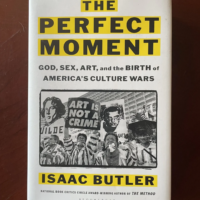
Isaac Butler has written a history of the controversies - dubbed the “culture wars” - that arose in the United States around the arts and arts-adjacent fields from the mid-1980s to around 2000. These were fights over state censorship of art, and the separate issue of restrictions on the content of art that could be available for government funding, even if quite indirectly. Butler tells a vivid story with good portraits of the artists whose work was at issue. He is especially good at defining the bind that National Endowment for the Arts … [Read more...]
Free Speech on Someone Else’s Stage – An Update
A few months ago I posted about a controversy in Australia, where a musician had a future appearance with the Melbourne Symphony Orchestra cancelled because he had, contrary to MSO policy, made political comments during a performance. He sued, and the New York Times today reports (gift link) that he lost in court: The pianist, Jayson Gillham, claimed in a lawsuit that the orchestra had violated the country’s Fair Work Act and his right not to be treated unfavorably in the workplace because of his political beliefs. But the judge, Graeme … [Read more...]
What is it Like to be a Professional Musician?
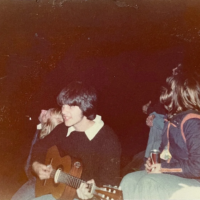
There is no simple explanation for anything important any of us do, and the human tragedy, or the human irony, consists in the necessity of living with the consequences of actions performed under the pressure of compulsions so obscure we do not and cannot understand them. (Hugh MacLennan, The Watch Ends the Night (1958)). Some personal history When I was in high school, I found my place in the band room. I took up the French horn (never very well) and played in the concert band. I learned guitar and bass and played the latter … [Read more...]
Gut Punch
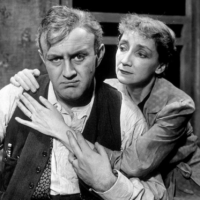
(Lee J. Cobb and Mildred Dunnock in the original Broadway production of Arthur Miller’s Death of a Salesman, 1949). In a guest essay in the New York Times, former Washington Post theater critic Naveen Kumar writes that “Broadway is Serving Up Liberal Comfort Food.” His piece concludes: Not everyone goes to the theater hoping to be confronted with big questions, the kind that compel audiences to turn inward and disrupt their worldviews. But offering easy answers to those who do is its own form of injustice, … [Read more...]
Reckoning with Pierre Bourdieu and Cultural Policy
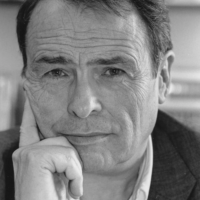
On the weekend John Ganz had an interesting discussion of our rich tech-elites and aesthetic taste, of which they have little, and who would hope to destroy what for now remains that is human and beautiful. This leads him to consider Immanuel Kant’s Critique of Judgement (1790) and Pierre Bourdieu’s Distinction: A Social Critique of the Judgement of Taste (1979), where the latter book’s title is clearly meant to evoke the former. I won’t try to summarize Ganz - I recommend you read him yourself (not just this one … [Read more...]
Free Speech on Someone Else’s Stage
The Australian Broadcasting Corporation reports: Jayson Gillham believes artists have a right to bring their whole selves to the stage. “I believe that everyone has the right to freedom of expression,” the internationally acclaimed, London-based pianist says. That’s why the British Australian musician, 39, is suing the Melbourne Symphony Orchestra (MSO) for discrimination based on political belief, after it cancelled one of his scheduled performances in August 2024. His recital was cancelled after he … [Read more...]