
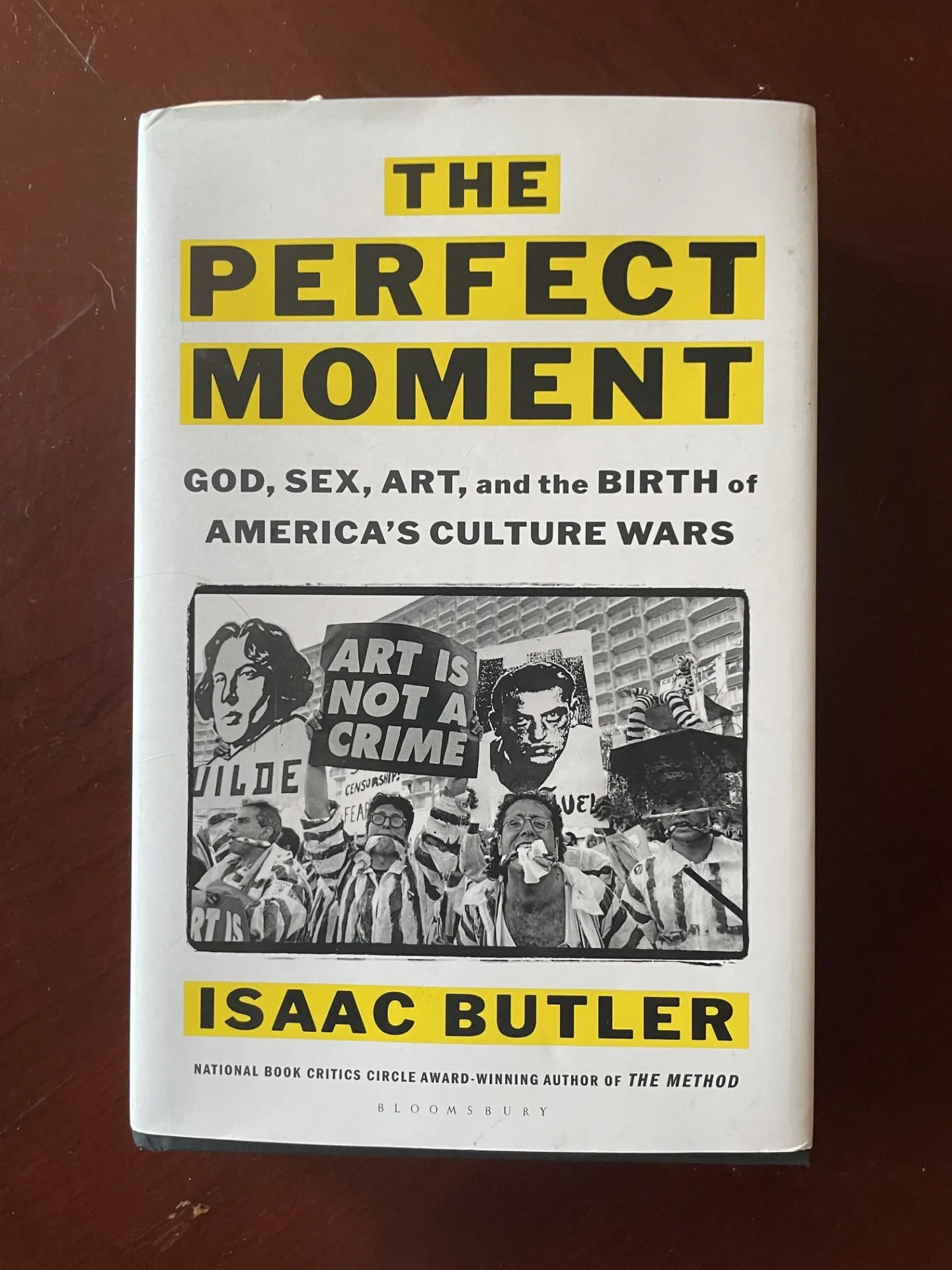
Isaac Butler has written a history of the controversies – dubbed the “culture wars” – that arose in the United States around the arts and arts-adjacent fields from the mid-1980s to around 2000. These were fights over state censorship of art, and the separate issue of restrictions on the content of art that could be available for government funding, even if quite indirectly.
Butler tells a vivid story with good portraits of the artists whose work was at issue. He is especially good at defining the bind that National Endowment for the Arts chairs John Frohnmayer, and then Jane Alexander, found themselves in as they endeavored both to keep the NEA alive in the face of Congressional threats to kill it, and to preserve the ability for the NEA to give grants to artists and presenters on the basis of recommendations of peer review panels regarding the quality of the art independently of restrictions, often quite vague, on what was politically acceptable. At one point in the tale Frohnmayer laments that he doesn’t see how he could possibly do both. He was correct.
One thing that has changed since the culture wars is the end of state censorship of artistic speech. Butler gives the details on the attempted prosecution, on the grounds of obscenity, of the Contemporary Arts Center in Cincinnati in 1990 for displaying The Perfect Moment, a retrospective of the photography of the (by then) late artist Robert Mapplethorpe, and, in the same year, the almost comic attempt to charge the rap group 2 Live Crew with obscenity in the state of Florida. In both cases the defendants were found not guilty, and that has more or less been the end of it. With only a very limited set of exceptions, artists, or anyone, can record what they want, publish what they want, exhibit the art that they want.
Public funding for the arts is a different story. “I don’t want my tax dollars paying for Z” is the crux of the matter, though what turned this commonplace complaint into a “culture war” was the political theatre around particular examples of Z, in the works of artists such as Andres Serrano, David Wojnarowicz, Mapplethorpe, and, in the end, the performance artists Karen Finley, Holly Hughes, John Fleck, and Tim Miller. Butler reminds us of the appeals to homophobia that were used in attacking many of the artists (though not all of the above are gay), and of the appalling cruelty towards gays, especially those who had contracted HIV, in the 1980s.
There were various attempts to put boundaries around what the NEA would be permitted to fund, beginning with what became known as the “loyalty oath” produced by Senator Jesse Helms, which included the provision that no art could be funded that “denigrates the objects or beliefs of the adherents of a particular religion or nonreligion”, though in the end the Endowment adopted the milder language of a provision that “artistic excellence and artistic merit are the criteria by which [grant] applications are judged, taking into consideration general standards of decency and respect for the diverse beliefs and values of the American public.” The constitutionality of this provision and whether it, in practice, would entail viewpoint discrimination, was tested at the Supreme Court in National Endowment for the Arts v Finley, and it was upheld; it is in the NEA grant guidelines to this day (I wrote about the case here, so I won’t go on about it again). Thereafter, writes Butler, we would have a National Endowment for Nice Art.
What Americans will tolerate outside of publicly funded art is quite at odds with what right-wing firebrands were demanding of the NEA.
Politicians are free to, and do, publicly denigrate religion (well, Islam) at will without censure.
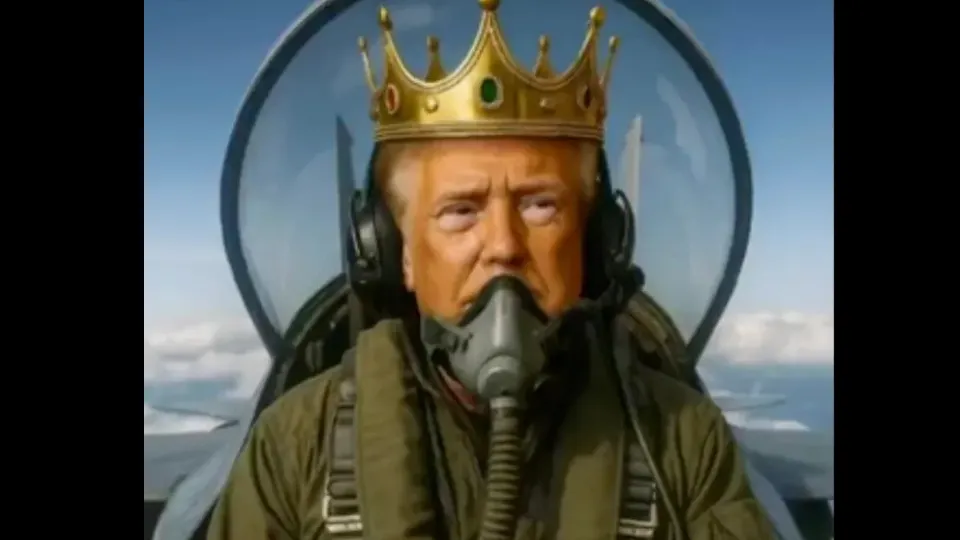
The President of the United States had produced on his behalf, and circulated on social media, a video of himself flying a jet plane and bombing American protestors with (literally) shit.
Jesse Helms and his fellow travelers during the culture wars seemed a bit cartoonish, but Butler tells us they were highly organized and (pre-internet) knew how to reach and to activate their base. And so defenders of uncensored public funding of the arts had to gather forces, and defend the NEA at all costs, though they were not always strategic about it. Butler writes:
The liberal establishment seemed afflicted with a novel recurrent form of amnesia that kept them from seeing that each of these flare-ups were not individual moments of disagreement, but rather the work of a movement that wanted to return the country to a mythical past where women, people of color, and LGBTQ Americans knew their place.
What I observed at the time was that, if you worked in the cultural policy field, criticism of any aspect of public arts funding was frowned upon as giving aid and ammunition to an evil enemy. Solidarity was called for. It was a culture war, after all.
And yet … Butler sees the culture wars as involving two clearly defined sides – there are baddies and goodies, even if the goodies are sometimes a bit hapless. I’m less sure. I think there is something of a middle, people who support public funding of art even when it might cause some people offence, and yet who still think that offence can be genuine, and not just a result of religious fanaticism or right-wing power politics. That a photograph of a crucifix submerged in urine is offensive, and not only to Catholics, or Christians in general. These “middle” people support freedom of artistic expression, and full rights and equal dignity for gays, and still see some of Mapplethorpe’s X Portfolio as gross and dehumanizing. It’s a cohort that is overlooked in this book, but it might be larger, and more influential, than Butler thinks.
Relying on the judgment of experts in their fields what art, or what research into the sciences or the humanities, is worth public funding, will never yield perfect results – there will always be a few regrettable choices – but it beats the alternative of either a permanent bureaucracy or elected officials making such decisions. I’m with John Maynard Keynes that “arm’s length” is the best way of organizing all this. But there will be a loss of faith in that system as more art is championed where it is hard for the layperson, a reasonable and open-minded layperson, to see what the thinking was.
We have had the “decency and respect” clause at the NEA for over three decades now, suggesting a pretty stable equilibrium. I wish it were not there, and that there could again be grants to individual artists, that they could pursue their artistic vision where it leads, and that there could be some public funding for this.
But the NEA of the 1970s is not coming back – it has been made abundantly clear that the American public does not want it to, and that the only way for public funding to persist is to fund “nice art”, even as the world of commercial entertainment, and politics, sinks ever further into the muck. We get the cultural policy we deserve.
Cross-posted at https://michaelrushton.substack.com/
Leave a Reply