
There is no simple explanation for anything important any of us do, and the human tragedy, or the human irony, consists in the necessity of living with the consequences of actions performed under the pressure of compulsions so obscure we do not and cannot understand them.
(Hugh MacLennan, The Watch Ends the Night (1958)).
Some personal history
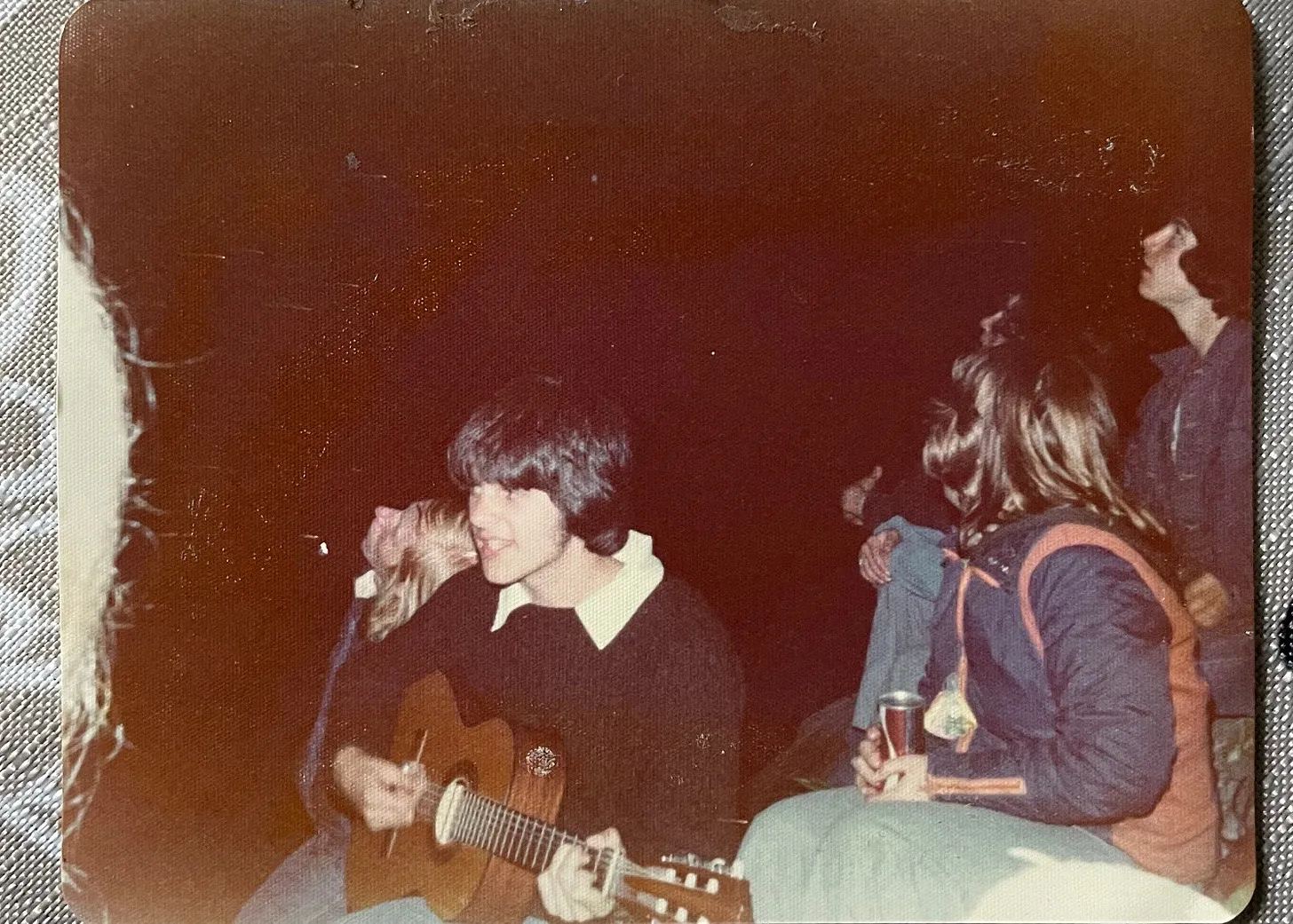
When I was in high school, I found my place in the band room. I took up the French horn (never very well) and played in the concert band. I learned guitar and bass and played the latter in the jazz band. I sang in the chamber choir, and took part in the cast, or chorus, or pit, or crew, of musicals and plays. My closest friends were band room kids. I also played in a garage (basement, actually) band. I had a great pair of music teachers (one of whom I got to spend time with on a recent hometown visit), and thought that this had to be the greatest job in the world. So, in hopes of one day becoming a high school music teacher myself, I applied to the local university school of music, did the theory exam, did the audition (on voice – I had the benefit of the low bar set for desperately needed tenors), and got accepted.
I was the only one of my peer group who chose this route; many other music friends tried to make it in the pop/rock scene in Vancouver, and they were surprised I didn’t try to do the same. But I didn’t see much future there. A few got regular gigs in local bands, one very good drummer I played with got a job on a cruise ship band. One kid at our school actually managed to achieve superstardom, but I think we all knew what a rare thing that was. And so far as I know he was the only one who, quite sensibly, stuck with it.
How did music at university go? At the end of the fourth day of classes, I went to the registrar and dropped the whole thing, and, unsure of what was even on offer at the huge campus – I’d never really known well anyone who had ever attended university – just picked from a set in general arts and sciences. This eventually turned into a major in economics. In the music school, I had realized as soon as classes got going – the voice teacher who thought I didn’t have much of a voice but that maybe it could be turned into something; the theory teacher disappointed how few of us in the entering class had perfect pitch; and other students, who were driven about achieving success in their instruments in a way I just was not – that this did not look like a happy situation.
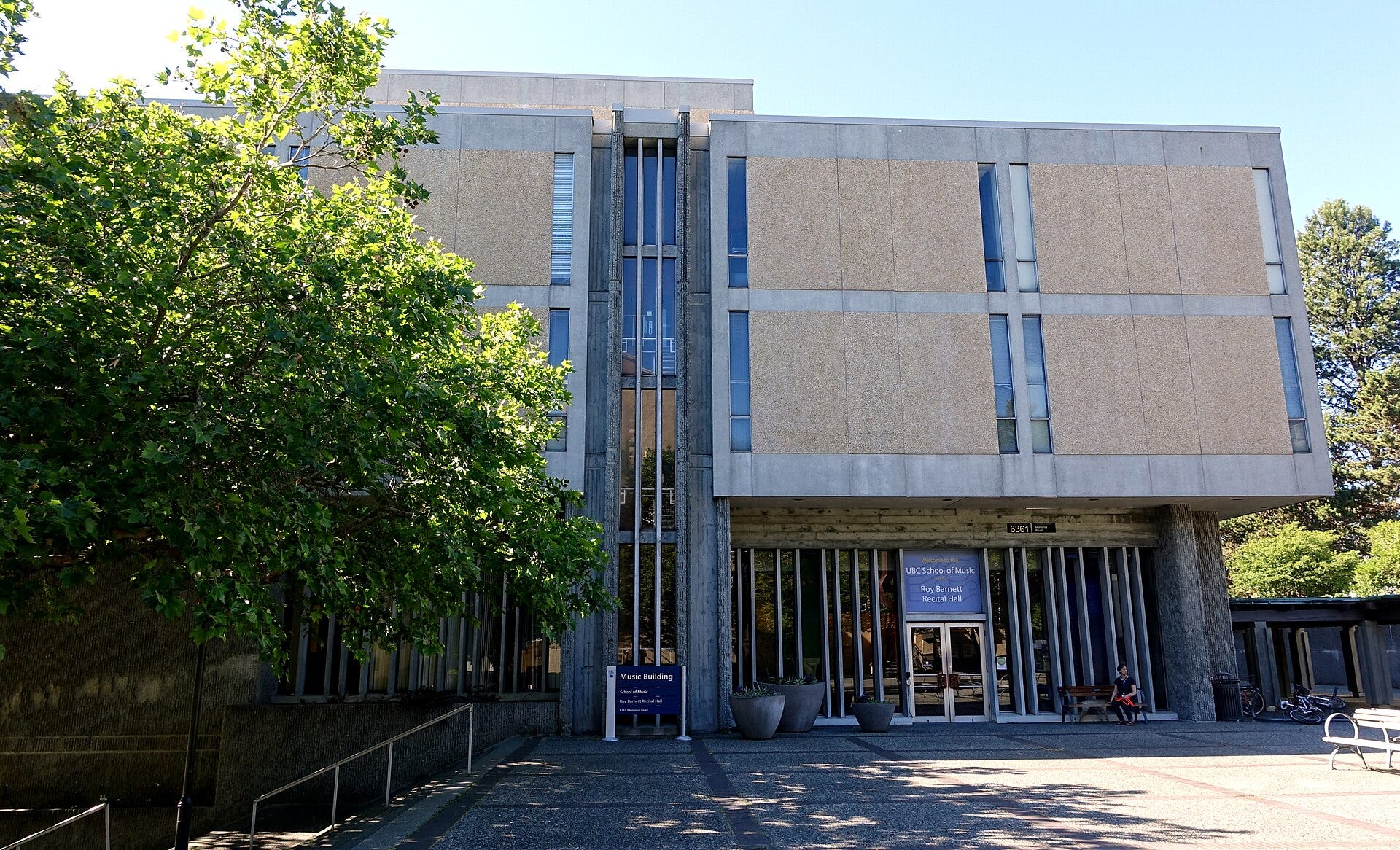
This was awfully impulsive of me (though my parents were relieved), and if I had stuck it out for longer, even a semester, I might have found my place there after all, but I’ll never know.
Was it a rational choice, to drop music school, and the idea of making music my profession, either as performer or teacher? Would I have had a better life if I didn’t drop out? I can’t know, because I don’t know what my life would have been like.
But I need to clarify this.
I can read all manner of numbers regarding the earnings of professional musicians in different genres, or wages in the teaching world, or what my salary might be now if I had got my degree and begun teaching at some high school, and stuck with it for more than forty years (which is of course a lot more certain than if I had tried to make it performing). I could try to find the paths for different alumni of the program (though of course the school will highlight the great successes – I would have to dig for info on the lesser known artists, or the ones who tried ten years of performing and then packed it in, or the ones just happy to teach in K-12). That’s data that with some work I could start to evaluate. And I could compare that to what eventually became a career as an academic.
But what I can’t do is know how I would have been different as a person.
A brief digression into economic method
Economists want to be able to predict how people will react to changes in external economic circumstances, such as changes in the prices of things they purchase, and changes in the wages of various jobs they could conceivably do. To be able to say anything at all sensible about this, they have to work with the assumption that as prices and wages are changing, people’s preferences over what sorts of things they like to consume, and over how driven they are to earn money at the expense of time for doing other things, stays much the same. Otherwise, any change in what people do could be explained by waving our hands and saying “their preferences changed, that’s all.”

The definitive statement of why this assumption is necessary is by two Nobel prize winners George Stigler and Gary Becker, in their 1977 essay “De Gustibus Non Est Disputandum”. The title is poorly chosen, since you come to it imagining it will be about the unavoidably subjective nature of taste, but instead it is about the need to assume individuals have stable preferences:
the economist [searches] for differences in prices or incomes to explain any differences or changes in behavior.
But what if people try to change their preferences? They have an answer for that. In Gary Becker’s very influential book Human Capital (1964), people know that they have the capacity, through formal education or informal skills acquisition or on-the-job training, to increase their productive capacities in the workforce and thereby command a higher wage. So, people do a cost-benefit analysis of whether acquiring more human capital will ultimately prove to yield more gains in future wages than the costs of going to school or devoting unpaid time to skill-acquisition. But the person stays the same, their “utility function” stays the same; it’s just that after investing in human capital they can earn more.
Stigler and Becker apply the same idea to the example of the appreciation of classical music. Suppose a person is capable (not everybody is!) of really enjoying classical music. They value the appreciation, not just the act of putting a record on the turntable. But music appreciation is “produced” by a combination of listening right now, and the “capital” that has been built up by listening to music at previous times. Someone could make a rational decision: “I will listen to Beethoven now, even if I don’t get a lot from it right now, but it will eventually pay off with the pleasure I will eventually get from listening to it.” But, importantly, nothing else about the person changes as a result of this investment in music appreciation – our listener is otherwise the same person.
I spent a lot of my academic life with the Journal of Cultural Economics, the flagship of our merry band of economists who study this sort of thing (I was Book Review Editor for six years, then Co-Editor for another six, and published a few articles there), and to this day the working model of arts consumption is something like that proposed by Stigler and Becker, with people choosing the deliberate acquisition of the ability to enjoy the arts, while otherwise staying the same, and likewise for investments in the training needed to become a professional artist.
I enjoy listening to certain genres of music, or going to the art museum, more now than I did in my twenties, because I have, often deliberately, “invested” in trying to get to better know what I am hearing and seeing. And when I became a boring economist instead of trying to earn a living through music, it was a rational calculation of the expected returns to different career paths. But otherwise, the assumption is that I’m basically the same guy as ever.
The limitations of social science on understanding our cultural lives
I really enjoyed this post by Emma Dollery at Discordia Review, “How Arts Grants Ate the Arts Audience”, and recommend the whole thing. But consider this excerpt:
Choosing to be an artist is, or should be, a profoundly difficult path. It’s innately lonely: necessarily, you separate yourself from the warm, safe embrace of being one amongst many, and, by extension, put yourself at the mercy of the very group you’ve just separated from. Part of the job description is willfully choosing to become incredibly vulnerable to a sea of strangers, exposing your guts (your work) to them, and asking them whether they connect, why, why not, and what’s pretty or ugly or stupid about it all. Being a writer/artist who is offended by or afraid of honest feedback (in all its forms, whether that be savagely critical, glowing, or everything in between), is like being a doctor who doesn’t want to see blood. You signed up for this, honey!
In that sense, creating work for the public is less glamorous than it is absolutely fucking terrifying—the kind of hard work that requires effort, bravery, and a very thick skin. The power lies in numbers, the power lies with the audience, and it’s a totally valid, essential place to be.
You can still love an artform, be seriously involved in an artform, be actively shaping an artform, without having your name pasted on it. But this kind of participation comes with its own set of responsibilities and reciprocal honesty. It involves an active pointing of attention, supporting things that you believe in and protesting against things you don’t. Discerning audiences should be talking to each other, forming the metrics of their own taste, voicing strong and sometimes impolite opinions, and demanding from their artists—with readership, attendance, vocalized thoughts—what they have, by being artists, promised to give: an honest investigation of what it means to be alive.
Becoming a serious artist, or a serious participant in the arts (which means more than “I went to a show last year”) changes the person. It is not just about “I chose to invest in this career path over that one based on relative costs and benefits” or “I chose to read some art history books so I could get more out of visiting a museum”. If someone is serious about it, it changes what they want from life, in all respects. It changes who they want to be around with, which changes them even further. If I had become a music teacher, and spent my life at it, or tried seriously to become a performer, I would not be the person writing this blog post right now. (I don’t have the capacity to really get into Derek Parfit’s argument in Reasons and Persons, but this was central to his concerns).
This means that economic analysis of these choices is going to be severely limited. How do you make a fully rational decision to change who you are, given that you can no more have a clear sense of what the new you will be like than you can of what it is like to be a bat? As Shaun Hargreaves Heap argues in a recent article, preference change remains as the “blind spot” in economics. It’s not that people who work in the field of cultural economics don’t know this – they are smart people and conscientious about trying to get things right – but economic method itself is going to put a hard constraint on how deeply models of decision-making can illuminate the choices we actually make for our cultural lives.
If I had made different choices in my late teens and my twenties, it is not just that I might have more capacity to enjoy this thing, or more ability to earn income at that thing. My worldview would be different, what I care about in life would be different, far beyond what can be analyzed in a model that assumes stability in such things.
Cross-posted at https://michaelrushton.substack.com/
Leave a Reply