
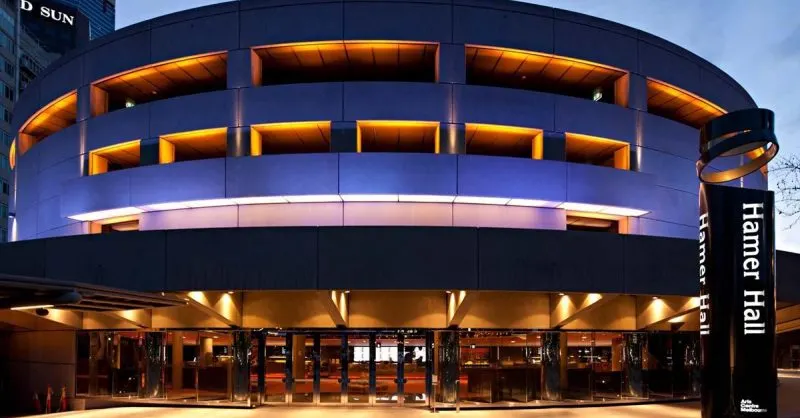
A few months ago I posted about a controversy in Australia, where a musician had a future appearance with the Melbourne Symphony Orchestra cancelled because he had, contrary to MSO policy, made political comments during a performance. He sued, and the New York Times today reports (gift link) that he lost in court:
The pianist, Jayson Gillham, claimed in a lawsuit that the orchestra had violated the country’s Fair Work Act and his right not to be treated unfavorably in the workplace because of his political beliefs.
But the judge, Graeme Hill of the Federal Court of Australia, ruled on Friday that because Mr. Gillham was an independent contractor he was not protected under the workplace rights law. The orchestra, Justice Hill determined, had acted to protect its business and reputation when it canceled the performance by Mr. Gillham and issued statements to its patrons about the matter.
“The court finds that the M.S.O. would have taken the same actions if Mr. Gillham had expressed a political belief in support of Israel, or if Mr. Gillham had made statements on any other topic that had the same impact or anticipated impact on the M.S.O.’s business and reputation that Mr. Gillham’s actual remarks had,” a summary of the judgment said.
In my post I said that as a general rule, arts presenting organizations are within their rights to restrict what performers can do on their stages:
If the Melbourne Symphony does not want guest performers making political statements during their concerts, it has every right to say so. If it “does not condone the use of our stage as a platform for expressing personal views”, then probably best to make this clear to any featured performer as they draw up their contract (and I don’t know if that happened in this case). Unless explicitly granted, no artist has complete freedom of speech on stage. An actor cannot decide on their own to interrupt a performance of Twelfth Night with a political dedication. Some performing arts organizations might think such political statements are fine, actually, and they can say so. Or a politically-oriented artist could produce their own shows, as Gillham seems to have moved towards. But if the MSO does not feel that way, there is no “free speech” right that overrides it.
The audience at an orchestra concert (Gillham does not raise the topic of “the audience”) is captive, and deserving of consideration; many of them, like me, might prefer to enjoy their orchestral music neat. To insist that they must be made to listen to the guest performer’s political thoughts, even when the orchestra management has said it doesn’t go in for that sort of thing, is self-indulgence.
And I doubt most artists would agree with a blanket “free speech” right at invited gigs anyway. Suppose a featured violinist, before their performance, said “I dedicate this performance to those who died, and their families, in the October 7 terrorist attack on Israel, and support Israel’s right to self-defense and to bring justice to those who committed this heinous crime”. Would Gillham think that free speech deserves protection? Suppose a guest artist wanted to talk about other political issues, or value-added taxes, or the Westminster parliamentary system, or that Vegemite is an abomination? Suppose a guest artist addressed the audience with racist opinions on Australia’s Indigenous people, or made a grossly homophobic joke. The ABC story the next day would not be about “free speech”, but about demands that the musician never be invited back.
I didn’t think Gillham had a case, and the court agreed.
Leave a Reply