
“As the repertoire ages, as the world changes, we will have ever fewer Fischers and Honecks, and ever more Dueñasas, Lims, and Chos. The outcome seems to me unpredictable. It could be a refreshment and it could be a dilution.“
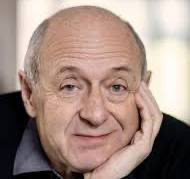
A dozen years ago, Ivan Fischer came to Carnegie Hall with his Budapest Festival Orchestra for a Dvorak program. So revelatory was their performance of Dvorak’s Eighth Symphony that, when he scheduled the same piece with the New York Philharmonic two seasons later, I requested permission to attend the rehearsals. The Philharmonic graciously complied. I wanted to see what difference the different orchestra would make.
Fischer’s Dvorak was steeped in Central European tradition. The music’s rusticities of song and dance were deliciously rendered. There were also details I had never noticed before – like the bewitching pianissimo chord unexpectedly ending the scherzo, revealed as a whispered residue preparing the sublimities of the finale.
In rehearsal, the Philharmonic players — these days, an exceptionally youthful group without much inter-generational continuity — were amazingly quick to do Fischer’s bidding. Everything was there except the boisterous passage in which the Budapest players had burst into song (it’s an orchestra that sometimes sings). I enjoyed the Philharmonic performance – but as a facsimile. What was different about the Budapest players (handpicked by Fischer) can be summarized in three words: they felt it.
These observations returned last night when Fischer and his orchestra visited Carnegie with Mahler’s Third Symphony. There are various ways to approach this protean 100-minute work. Fischer’s Mahler doesn’t sound like Bernstein’s Mahler, or Boulez’s Mahler, or Abbado’s Mahler. I would say that it’s more “Mahlerian,” stylistically, than other versions we are likely to encounter nowadays. As with the Dvorak performance, the lilt and affection of Mahler’s dance gestures were ravishingly understood. Near the beginning of the piece, the sepulchral chords in the low brass, softly attacked, evinced an existential shudder. These were moments in which the players were collaborative. The symphony’s 25-minute Adagio finale was less stressed, more lyrically supple, more convincingly paced than in any other reading I’ve encountered. Born in 1951, Fischer studied in Budapest and Vienna. He embodies a lineage.
One week previous to Fischer’s Mahler, Manfred Honeck conducted Beethoven and Richard Strauss with the New York Philharmonic. Born in 1958, Honeck is Austrian and was once a violinist in the Vienna Philharmonic. He, too, embodies lineage and tradition. Also, like Fischer, he at the same time goes his own way: his interpretations are personal. He fastidiously extracts details of texture and accentuation. He commands a rare plasticity of phrasing. Conducting his own suite from Richard Strauss’s Elektra, he seamlessly bound 35 minutes of music calibrated to yield a single, cumulative climax – exactly what Fischer had achieved in the Mahler finale.
Honeck’s soloist in the Beethoven Violin Concerto was 23 -year-old Maria Dueñas, with whom he has also recorded the piece. Compared to Honeck and Fischer, she is an immensely gifted young musician who belongs to no tradition. Her Beethoven is fearlessly original. Her command of the instrument is consummate. In these respects, she reminds me of the celebrated young Korean pianists Yunchan Lim and Seong-Jin Cho.
As the repertoire ages, as the world changes, we will have ever fewer Fischers and Honecks, and ever more Dueñasas, Lims, and Chos. The outcome seems to me unpredictable. It could be a refreshment and it could be a dilution.
The Beethoven Violin Concerto, for many listeners, peaks with a G-minor pianissimo episode preceding the first movement recapitulation. Duenas’s interpretation, here and elsewhere, beginning to end, was effusively expressive. Something was lost, I thought. A great performance of this piece, to my ears, is Joseph Szigeti’s 1932 recording with Bruno Walter. Szigeti could not play the fiddle as beautifully as Dueñas does. But he achieves a stillness in this passage that feels fathomless. You can hear it here at 11:05. And you can hear Dueñas here at 13:00.
How I wish New Yorkers could regularly encounter Ivan Fischer or Manfred Honeck. But that is another topic for another time.
For more on Manfred Honeck and Seong-Jin Cho, click here.
For more on Yunchan Lim, click here.
For an appreciation of an enduring “French” piano lineage, chick here.
For more on Joseph Szigeti, click here.
I could be wrong, but I think Honeck was a violist, not a violinist, with the Vienna Philharmonic.
I apologize for the information dump that follows but you’re hitting on something I’ve been thinking hard about lately and something I’ve grown quite enthusiastic about. .
I’ll be seeing Fischer and Budapest do it in Boston. I haven’t been this excited for a concert since seeing Petrenko/Berlin do Bruckner 5. Hearing them do Dvorak 8 right before Covid put me into tears. Hearing them do Bartok and Beethoven did nearly the same for me. If my schedule permits I’m going to drive to Pittsburgh to hear Honeck either do Bruckner 8 or Mahler 2.
I think we do have more born into the tradition these days than generally thought. We may not have the larger-than-life personalities of the Furtwangler/Mitropoulos era, but we still have serious remnants of the tradition. Even if we elevate them to stars when seventy years ago they would be considered equivalents to Beinum/Steinberg/ Cluytens/Kletzki, they still keep the flame alive.
Even if you’re not a fan of the drier ones like Jurowski and Petrenko, there are plenty still around who can summon up at least reasonably large parts of the grand tradition.
Bychkov integrates the Russian tradition in the Giulini mold. Suddenly Tchaikovsky and Shostakovich and Strauss are long-breathed and noble along with fully visceral, Not to mention how well he does certain other pieces, particularly operas (Tristan, Elektra, Kovaschina, Onegin). Jonathan Nott brings the same early Giulini energy to Schubert and Brahms, and also early moderns like Debussy and Stravinsky. FWM is getting better and better: listen to him at least do Mozart or Schubert 9, you’d be stunned. Paavo Jarvi is worthy of his dad and nobody today is a better GP: even if you probably wouldn’t like his HIP Beethoven, find the Bruckner, Mahler, Tchaikovsky, Sibelius, Nielsen.. I used to think him cold, then I heard him do Tchaikovsky 5 with the NSO, rubato and warmth everywhere. It was better than any I heard in the same space from Gergiev, Gatti or Barenboim with their own orchestras. Markus Stenz is no longer much on the circuit, but my god is he good: in Baltimore I heard unforgettable Brahms Requiem, Firebird, Schumann 2, and Don Giovanni excerpts. Find him online doing Haydn, Mozart, Beethoven and Mahler live, listen to his recordings of the Alpensinfonie and Pictures at an Exhibition, I’m serious when I say they’re the greatest I know. Eliahu Inbal is still active, at least in Asia, and doing Mahler better than ever. .In addition to early music, Thomas Hengelbrock did masterful Brahms in the Kubelik manner. Poor Juanjo Mena does Spanish and French repertoire as well as anyone in the world. Sadly he’s been felled by early onset Alzheimers. John Storgards is our only one in the Klemperer/Horenstein mold and does magnificent Bruckner and Sibelius. If you like Clemens Krauss in Wagner, listen to Donald Runnicles do the Ring. Osmo Vanska obviously does magnificent Sibelius and Nielsen. Hannu Lintu is magnificent not just in Sibelius but I’ve heard him live do a great Brahms 2 and a Dvorak 8 that may have even exceeded Fischer’s. I don’t knwo what you thought about Pappano, but I think he does a lot of the standard symphonic rep magnificently.
But the ‘new generation’ born between 1970 and 1990 is in some ways even better. Cleveland is currently having buzz about Antonello Manacorda…: Abbado’s concertmaster in Lucerne. Forget his Pottsdam recordings, they’re already 15 years ago, find him doing things online. There’s a masterful Verklarte Nacht he stretches to 34 minutes with perfect tension, Schubert 6 in Frankfurt, a very slow and gorgeous Brahms 4, Rather than Abbado, he’s a truer C. Kleiber.heir than Petrenko.. Juraj Valcuha in Houston is magnificent all the way through: sturdy but luminous in the manner of Steinberg or Jansons, and a fantastic though slow opera hand too. Cristian Macelaru coming to Cincinnati is a Central Europe dynamo in the manner of the younger Fricsay. Jakub Hrusa coming to Covent Garden is another warm one in Giulini/Davis manner. Soon Roberto Gonzalez-Monjas will make a name: who was concertmaster for both Pappano and Gabor Takacs-Nagy: just a pure musician like Busch or Beinum. Marie Jacquot is rising fast and she has that loose glow Kubelik energy. Dalia Stasevska is fiery in the Svetlanov way. Joana Mallwitz has Munch enthusiasm and lightness. Tugan Sokhiev will get some big podium soon and he’s as good a Russian as there’s been since the USSR plus he does really well in other larger-than-life stuff. Markus Poschner’s coming to Utah, and he’s going to be the next great Austrian traditionalist after Honeck leaves America, find his Bruckner cycle. Cornelius Meister does great performances of Bruckner, Dvorak and Mahler. What Deneve does in French repertoire puts YNS to shame. Krysztopf Urbanski is incredibly versatile and subst
This is still far less than 20% of the international circuit, but against the common logic, I think things aren’t quite as bad as they seem. A lot of the ones who don’t quite get the standard rep get interesting when they pick up music around 1900-1920. It’s true, things are not good enough to produce the larger than life figures anymore. There isn’t Panizza and Bodanzky at the Old Met, there isn’t Koussevitzky or Stokowski, but the next rank down.still very much exists if you’re willing to look for it. I can’t deny, Fischer and Honeck are just about the best of them (though I’d throw in Stenz and P. Jarvi too), But there are plenty still around who are ‘inside the music’ and can summon up at least a decently large part of the old warmth and passion.
Anyway, thanks for indulging me, and sorry.
One more I forgot. Michael Schonwandt, the Great Dane. https://www.youtube.com/watch?v=5ITpY18tRik
I am an Englishman living in Warsaw, Poland. The danger of the loss of tradition you allude to was clearly apparent in the recent Chopin Competition. For me, it is not for nothing that Rubinstein remains the benchmark. However, this is not simply due to ethnicity and origins. Education and life experience are as important as the ability to play the notes. Every young pianist should be required to read Rubinstein’s auto-biographies to discover how a great artist is formed. It is not by spending most of the day locked in a room with an inanimate object, nor a fixation on competitions..
I remember when the NYP played in Warsaw some 20 years ago. Cross-generational, cross-ethnic. It was not the orchestra I had heard in London decades before, when the desks were filled by players of a Central European origin, all of a certain age.