• Home
  • About
    • Chloe Veltman
    • lies like truth
    • Contact
  • AJBlogs
  • ArtsJournal

lies like truth

Chloe Veltman: how culture will save the world

Archives for 2010

A Manifesto

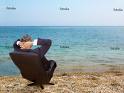
daydream.jpegAs part of a recent editorial job application for a web-based media startup, I was asked to put together my “blue sky vision” for coverage of the Bay Area culture scene. I didn’t get the gig, though I was told the reasons for this are not to do with my ideas but rather the fit with the job; “I don’t see you as a career editor,” the person in charge of hiring for the position astutely told me last week.

In any case, I thought I would take this opportunity to share what I came up with, ideas-wise. Some of what follows in my “Bay Area Cultural Coverage Manifesto” may come across as hopelessly idealistic or ridiculously naive. But, hey, a gal’s gotta dream…

1. Always keep the “why should anyone care?” question at the top of the editorial agenda

I believe that great arts journalism should focus on engendering high-quality conversations about the world around us. It’s about connecting people to the important ideas in our lives. As such, the one single-most valuable principle that should guide culture coverage in the publicaton is that there should always be a reason for why we are telling our readers about something. A simple news peg like “we’re writing about SFMOMA because the institution is celebrating its 75th anniversary” or “Amy Tan has a new novel out so we’re writing about her” isn’t a good enough reason to give something coverage. We constantly have to think about why it’s important for our readers to know about a cultural concept or event – why should it matter / make a difference to their lives? This motive should govern our editorial decisions wherever possible.

2. Do away with the traditional categories under which media organizations cover the arts

Silos like “high art” and “low art” are meaningless today. Also, due to the proliferation of a vast quantity of hybrid formats like computer game soundtrack symphony concerts and interactive hip-hop choreography soirees involving live painting and bunraku puppetry, the standard classification boxes like “theatre”, “film”, “music” and “visual art” are also becoming quite useless. Instead, I would organize events by date and use tag clouds to help people search for what they’re looking for. Columns and features, which would likewise range across traditional boundaries, would have their own easy-to-remember and descriptive names to help identify and classify them. Hopefully these content items would eventually come to possess as strong a brand image as something like Tim Grieve’s “War Room” column in Salon. There should also be room for articles that range beyond what is traditionally considered “art”. Where it makes sense for us to do so, we shouldn’t be afraid to find ways of connecting cultural goings on with other aspects of life e.g. an article about the Barbary Coast aesthetic that’s sweeping the cocktail lounge landscape, infusing everything from the drinks themselves to the way the bar tenders dress, the art on the walls of the bars and the music that’s being played on the sound systems; a piece on the acting/performance styles employed by different local politicians.

 3. Take a curated, rich-media-oriented approach to “listings”

I am a fan of the way in which Flavorpill and The Onion’s AV Club do arts listings. The idea would be to put together something similar each week, so that our readers have access to a wide-ranging but carefully selected crop of not-to-be-missed cultural events. Where possible, it would be good to embed video and audio into these blurbs as well as include a short paragraph of well-written, snappy prose which not only explains what the event is about, but also tells the reader why they should go check it out. This section would also provide a good opportunity for ticket giveaways, competitions and cross-promotions. The section need not only include arts experiences that have to be experienced outside. Alongside a weekly “big night out” concept which allows readers to plan their cultural activities ahead, we could also run a daily “big night in” feature which gives readers a short extract form a great new book by a local writer, a short snippet of a wonderful newly-released DVD by a local documentarian, a stunning YouTube clip by a local creator or one track from a fabulous local indie rock band’s new album. The feature would also encourage users to visit iTunes, Amazon, CDBaby or whatever to make relevant purchases, which could introduce a small additional revenue stream for the publication.

4. Dig into the corners of the culture in addition to covering the more obvious stuff (and combine longer- with shorter-form pieces)

Writing about the major arts institutions is of course important. We should follow what they’re doing closely, provide commentary on what they’re doing well and not be afraid to criticize them when they’re letting the side down. However, I think it’s equally important for the publication to get out and write about less well-known parts of our region’s incredibly rich and diverse culture scene. I would like to see in-depth articles about the local hula and underground Cantonese opera scenes, the latest developments on the Bay Area Venezuelan percussion front and how the area’s arts education offerings are serving (or failing to serve) our student population. To that end, I’d like to work with two or three smart columnists with wide-ranging interests who can draw connections between what’s going on in the art world and our lives and dig deeper into issues and cultural nooks than is generally the case in news organizations. It would be good to see some “longer-form” journalism (up to 2000 words) in this regard each week. But I also think there’s room for a few “diary”-like blog entries every day (up to 500 words) which consists of a few short and not necessarily connected observations about a range of interesting underground arts events.

5. Find ways to encourage people to get out and experience culture

I’d like to see a short feature each week on the website which provides a roundup of some of the most interesting free and low-cost events happening around the area, such as the free art parties being thrown all over the place (eg the Yerba Buena Center for the Arts’ Big Ideas nights), free walking tours, and theatre companies like ACT offering steep discounts on theatre tickets to educators. The publication should also regularly host competitions and giveaways and host its own cultural tours and events. For instance, we could get a local art maven – perhaps a collector or a curator to lead a Thursday night art tour around San Francisco’s galleries, or a singer-songwriter to lead a tour of a few folk music clubs.

6. Keep the editorial tone and style intelligent and rigorous, but allow the individual voices of the writers to come out

Great arts writing is an art form in itself. While adhering to the strictest rules of ethics, communicating through erudite prose and maintaining the high-quality house style, the culture section should also give its writers license, within certain parameters, to express themselves in their own voices. Culture writing should never be hokey or dumbed down. It should also steer clear of jargon and cheerleading. It’s really just like well-reported news journalism but with more verve and sparkle.

7. Put local artists in the spotlight

Highlighting the work of great local artists is a great way to expose readers to new names of which they might not have heard and generate a bit of civic pride. The idea is also to create fast and easy context around an artist’s work so that we see how they connect to the art scene more generally and to the world as a whole. To that end, It might be fun to run an occasional or even regular column that briefly describes the artist and
his or her work (including a photo and any relevant audio or video and links that show readers a sample of their output) and then a list of, say, five arts events, artists or works that the artist being profiled is excited about. These could be works or artists that have influenced the person being profiled, and/or stuff that’s going on in the Bay Area or beyond at the time of publication. Or maybe the artist could create a “virtual art tour” for readers in their medium e.g. a San Francisco painter might suggest five of his or her favorite local galleries and explain why. The only caveat here is that I would want the artist who’s being profiled each time to declare personal affiliations to any of the influences / institutions or works they mention at the time of creating the tour and where possible avoid conflicts of interest in this regard.

8. Maintain a world view

One of the problems of local (arts) journalism is that it can be very parochial. We should be promoting San Francisco as one of the great world cities both to residents and visitors. In order to do that, we should look for ways of connecting the local with the national and international cultural scenes. Instead of always looking to tell intrinsically “Bay Area stories,” we should also put effort into informing readers about the exciting global artists that visit the Bay Area on a regular basis as well as endeavoring to provide a national and/or global context on the local stuff we cover.

9. Find ways to interact actively with readers

The site should obviously provide room for reader comments. Though this is a very common way of soliciting feedback, it’s still a great one. I think our writers should be asked to keep a close eye on the comments feeds they get for articles they write (can we set up an alert system for writers to receive all comments sent to their content online?) and, where sensible, make a point of writing back to every person who posts a comment. Writers will need to exercise their own judgment about this: There are a lot of nutters out there who are best ignored. But genuine comments should always receive a response, even if only an acknowledgement ie “thanks for your comments about my article. I’m glad you enjoyed it” or “thanks for weighing in on the issues raised in my blog post – I am taking your criticisms on board.” The publication should also cultivate other ways to engage readers beyond comments. Organizing art tours and giveaways will help to create more experiential relationships with readers. Another fun feature might be to have a reader-generated online gallery where readers can take photos of themselves at arts events and post them on our website (instantly through multi-media messaging perhaps?) with comments about what they thought of the cultural experience.

10. Cultivate a stable of writers that includes career journalists with broad interests and (preferably) arts backgrounds, editorially-savvy career artists and a few famous names.

I like the idea of getting “behind the stage door” in order to give readers something deeper and more unusual than they might get from the standard approach of the “journalistic outsider.” This essentially means collaborating with a mixture of: a) discerning and fearless professional arts journalists who aren’t afraid to look under the hood at what’s going on in cultural organizations, forage into the very farthest corners of the local arts landscape, and where possible, have practical experience in the arts themselves; and b) erudite career artists with good writing chops and the ability to take a step back from their work to see the bigger picture. Having more of an insider take will have to be managed very carefully from an ethical perspective. But I believe that if you get the right writers on board, the strategy will pay off in terms of the color and depth of the content we can offer readers.
Oakland: A Theatre Desert

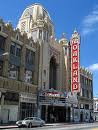
fox.jpegWhile researching my weekly Bay Area arts column for last Sunday’s New York Times last week about Oakland’s burgeoning arts scene, it came to my attention that while Oakland is flourishing in most areas of the arts and especially in the visual arts and music, its theatrical offerings are pitifully slim. Besides TheatreFIRST (which has after long travails found a home for itself at the Fox Theatre) and Woman’s Will (which maintains both a San Francisco and Oakland address), there are, to my knowledge, no other professional theatre companies in the city.

Compare this to neighboring Berkeley. That city supports a plethora of large, medium-sized and small companies, including Berkeley Rep, Aurora, The Berkeley Playhouse, Shotgun Players, Impact and Central Works among many others.

I did’t have time or space to explore the reasons for this in my column, though it’s a subject that I’d be interested in revisiting in the coming weeks or months. But from the little I can deduce, it seems that it’s difficult to find a satisfactory explanation for why theatre isn’t happening as much in Oakland as it is in other parts of the Bay.

This seems especially strange given how many theatre artists live in the city. Brad Erickson, head of Theatre Bay Area, says that his organization’s largest quotient of individual memberships come from Alameda County. This trend has been going on for several years now, he reports. Theatre people live in Oakland, but they clearly don’t practice their art there.

I wonder if unfriendly real-estate companies might provide part of the answer? I seem to remember TheatreFIRST being chased out of one of its previous homes – a lovely, cozy and in many ways ideal space in the Old Oakland neighborhood downtown. If my memory isn’t deceiving me, this might have been the result of the landlord wanting a higher paying tenant in the building. A high-end sport shoe retailer opened a short while after the theatre company moved out. Real estate companies might be more into the idea of unoccupied storefronts being used to display temporary art exhibitions. Visual art brightens up streets and has the potential to attract would-be tenants or buyers while making the real estate company look generous and community-minded. But theatre companies pose more issues such as insurance, permits to serve alcohol and disabled toilets.

TheaterMania iPhone App

iphone.jpegI’ve been giving the TheaterMania iPhone app a try. It’s not bad. Intuitive to use, the app allows you to select from three menus – “Broadway shows”, “shows near me” (which it finds via the GPS system and Google maps), and “browse by location.”

I used the “browse by location” section a couple of days ago to help get information about a play I was seeing at The Magic Theatre. The app only has the major US theatre towns (as well as London) listed, so if you’re looking for a show at, say, Dad’s Garage in Atlanta, you’re out of luck (although I guess you could use the “shows near me” feature to find it maybe.)

The information provided about each show is clear and easy to navigate. You can also browse to see which shows are opening and closing. The “type” and “title” categories seem a but pointless. It seems that the feature is meant to separate shows by genre, eg “musical”, “drama” etc, but all you see is a list of shows with no discernible classification system in place.

The system only failed me when I wanted to find out how best to get from downtown San Francisco on public transport to the Fort Mason Center. The app lets you see a may of where the show is and where you are, but it doesn’t link up with Google Maps as deeply as it should. I would have liked to have been able to plot my route using Google Maps’ handy public transportation feature.

Still, all in all, the app (which is free) is handy for a meandering theatre buff.

Acting from the Neck Up

Actors are sometimes criticized for not using their bodies to their fullest — for “acting from the neck up.” But Arwen Anderson makes a virtue of confined physicality in Lydia Stryck’s luminous and affecting new play about, among other themes, the healing process, at the Magic Theatre.

In Stryck’s An Accident, a two-hander directed by Rob Melrose and also starring Tim Kniffin, Anderson plays a woman hospitalized with memory loss and a broken body after being run over by a car (driven by Kniffin’s character, named Anton.) It’s a challenging role. For 80 minutes, the actress has to lie mostly on her back with her body hidden under bedsheets. Movement-wise, she only really has access to her face, head and neck.

Anderson’s performance, which makes vivid use of her expressive eyes, eyebrows and mouth and wide-ranging vocal modulations, never resorts to mugging. It’s a subtle and beautiful piece of acting, reminiscent of the actress Billie Whitelaw being physically confined in various plays by Samuel Beckett.

I’ve seen Anderson act in many shows in the past and have generally found her to be a solid, dependable and rounded performer. But this is the first time I have been swept away by her virtuostic talent.

Bacon

Given that part of the mandate of lies like truth is to highlight important cultural trends, it would be remiss of me not to blog about the latest craze sweeping the Bay Area cultural scene: unusual manifestations of bacon.

It’s almost impossible to go anywhere these days without encountering the delicious pork product’s presence in unlikely contexts. My local candy store sells bacon-flavored chocolate. At a dinner party the other day, someone brought homemade bacon-infused caramels. Even the arts are bringing home the bacon: At a choral rehearsal last Sunday, a fellow singer passed around a Tupperware container full of chocolate chip-nut-bacon cookies. They were extremely tasty.

I can’t help but think that the bacon fanaticism is just a passing fad which I suspect people in this most health-conscious of places will tire of when they realize how many extra calories they’re consuming thanks to that extra bit of more-ish smoky crunch in their breakfast cereal and beer. But the trend is very much part of Bay Area culture. We embrace this kind of thing here. Creating unlikely mashups in everything we consume from foodstuffs to theatre is in our DNA. This month bacon-riddled truffles are all the rage. Next month it’ll be naked virtuoso violin-playing trapeze.

PS This just in from my friend John in Michigan. His son Michael sent him the following story, which pretty much sums up the case for bacon. I guess it’s not a Bay Area thing after all – the passion is global.

Bacon Tree

Pancho and Cisco are stuck in the desert wandering aimlessly and starving. They are about to
just lie down and wait for death, when all of a sudden Pancho
says………

“Hey Cisco, do you smell what I smell. Ees bacon, I theenk.”

“Si, Pancho, eet sure smells like bacon. “

With renewed hope they struggle up the next sand dune, & there, in
the distance, is a tree loaded with bacon.

There’s raw bacon, there’s fried bacon, back bacon, double smoked
bacon … every imaginable kind of cured pork.

“Cisco, Cisco, we ees saved. Ees a bacon tree.”

“Pancho, maybe ees a meerage? We ees in the desert don’t forget.”

“Cisco, since when deed you ever hear of a meerage that smell like
bacon … ees no meerage, ees a bacon tree.”

And with that, Pancho staggers towards the tree. He gets to within
5 yards, Cisco crawling close behind, when suddenly a machine gun
opens up, and Pancho drops like a wet sock.

Mortally wounded, he warns Cisco with his dying breath,

“Cisco … go back, you was right, ees not a bacon tree!”

“Panch, Pancho mi amigo… what ees it? “

“Cisco … ees not a bacon tree. Ees

Ees

Ees

Ees

Ees a ham bush….”

Fado Lamo

In Fado music, the singer’s voice and command of the stage should cut the audience to the core. I don’t speak Portuguese, but when these elements are in place, I feel like I understand the meaning of the words being sung at the deepest level. The most powerful performers, such as Amalia Rodrigues and Cristina Branco, have a way of connecting with people that is entirely visceral. Even the peroxide-topped Mariza, for all her populist appeal, can carry a song by dint of her searing voice and queenly aura.

Such is not the case, as far as it’s possible to tell from a single performance, with the Fado star Ana Moura. Moura was in town last weekend for a show at the Palace of Fine Arts as part of the San Francisco Jazz Festival’s Spring Season.

The singer is gorgeous of course, with long dark hair, high cheek bones, limpid eyes and a nimble figure. She looked beautiful in the two identically-shaped tight-fitting, floor length gowns she wore during the performance. But her voice is way to sweet for a Fado singer. She sounds like she’s singing about happy things rather than the bitter-sweetness inherent in the Fado-centric word “saudade”, which stands for longing for or missing someone or something in Portuguese.

Moura also lacks stage presence. She has an annoying habit of wiggling her little hips and shoulders up and down and from side to side. She also – inexplicably – spent half of Saturday night’s performance standing sideways to the audience and pitching her gaze slightly downwards as if concentrating hard on pocketing the black in a particularly crucial game of snooker. The singer has an undoubtedly lovely profile, but all of her energy got lost in the wings.

Shape Note Singing: Is It Good For Your Health?

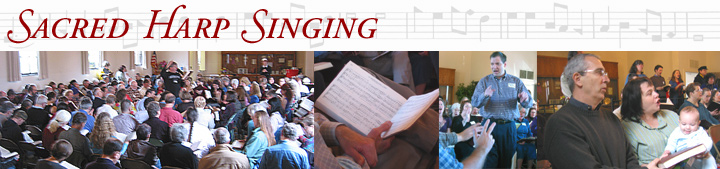
header.jpgAt the weekend, I had my first exposure to shape note singing (also known as “sacred harp singing”) — an American a cappella singing tradition which took off in the mid-19th century in the church tradition.

The all-day Bay Area shape note singing convention drew about 100 people to a small church hall in downtown Berkeley.

The thing about this music is that it’s so ardent and powerful that regardless of whether you pay attention to the churchy lyrics or not, you cannot help but get sucked in by the fervor and sheer volume of the singing.

For the entire six hours of music-making (combined with a bit of eating and socializing) we all sang at the very tops of our lungs. As is typical of this style of music, every song was sung at a bracing fortissimo. You have to have good support for your voice or you will seriously blow out your pipes.

This happened to my friend Greg, a shape note singing aficionado, who has an amazing voice (one of the finest in the room) but hasn’t quite learned to practice his art from his diaphragm. Greg cheerfully admits to losing his voice after every shape note singing event he attends. He’s got a bit of a cough and I’ve basically lost my voice entirely. I sound huskier than Carla Bruni. My excuse? I went into the convention with a bad cold. The experience of singing this music made me so euphoric that I belted my way through the day despite a sore throat and low energy. And now I’m paying the price! It was worth it though.

I Love KALW

kalw.jpegWhat other public radio station would allow one of it’s music programmers to create a show on the theme of yoga and singing whose playlist, over the course of an hour, veers between Handel’s “How Beautiful are the Feet” and “Head Crusher” by Megadeath?
Dancing Singers

lines.jpegadler.jpegNo one expects opera singers to be able to dance. So when, as a director, you have performers who are capable of using their bodies in expressive ways, you should make the most of them.

A world premiere collaboration between Alonzo King’s LINES Ballet and the San Francisco Opera Center‘s Adler Fellows showed off the dancing skills of opera singers Ryan Belongie, Sara Gartland, Maya Lahyani and Austin Kness. The singers moved with agility and grace and displayed a remarkable technical understanding of intricate movement figures. I found myself wishing that Alonzo King, who choreographed the piece entitled Wheel in the Middle of the Field, had made more use of the singers’ dance chops.

The work consists of 14 short movements, each one danced by soloists or small groups of dancers to music sung by one or more of the Adler fellows accompanied by Allen Perriello. What I especially love about Wheel is the relationship between the melodious and well known arias and art songs (which range from Schubert’s “Die Mainacht” to an arrangement of the “Pie Jesu” from Faure’s Requiem for four voices by Mark Morash) and the angular and discordant movement vocabulary. The dissonance between the lush tonality of the music and atonality of the dance seems to speak fundamentally about the way of the world – yin and yang, beauty and ugliness go hand in hand.

Adorable

0910-gf-thumb-11.jpgI don’t think I’ve ever described a work for the musical theatre as “adorable” before. But that’s the word I would most readily apply to Berkeley Repertory Theatre‘s new musical Girlfriend.
Based on Matthew Sweet’s early 1990s album of the same title and directed by the mercurial Les Waters, Girlfriend tells the story of two teenage boys falling in love against the backdrop of Sweet’s lollipop rock soundtrack played with verve by a dykey all-female four-piece band.

The piece is full of expectation, warmth and youthful vigor; it’s the stuff of spring. Whether you’re in love or remember falling in love (particularly for the first time) the work perfectly captures that initial feeling of excitement.

A two-hander starring Ryder Bach and Jason Hite, Girlfriend is on a much smaller scale than some of Berkeley Rep’s other recent forays into musical theatre such as American Idiot and Passing Strange. But it’s got more soul than these other works to my mind and it’s so much more intimate than pretty much any other musical I’ve seen to date.

Theatreworks’ recent two-hander, Daddy Long Legs, a love story of a similar size and scope, didn’t achieve the same level of closeness and freshness. I really hope Girlfriend goes on to be performed elsewhere. It’s a chamber piece though — I don’t suppose it’ll ever make a Broadway show. But it would be perfect off-Broadway fodder.

Of Singing in a Movie Theatre and the Advantages of Extended Rehearsal Periods

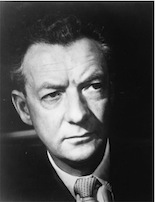
britten.jpgThe Lark theatre in Larkspur is a gorgeous art deco movie house. But it’s no place to hear live music, especially of the unadorned vocal variety. The Artists Vocal Ensemble (AVE), a professional choral ensemble from San Francisco, attempted to sing Benjamin Britten’s Hymn to Saint Cecelia there last night as part of a Britten celebration which included a screening of a documentary about the composer’s life.
I have never heard this normally slick-sonorous ensemble struggle so much. The acoustic was as dry as hermetically-sealed film stock and completely unforgiving. The singers had trouble hearing each other on stage, I gather. Some of the intonation was off. And the voices of the twelve brave singers did not blend as well as they would ordinarily have blended.

I gather that The Lark occasionally runs live entertainment programs. Marrying movies and live music is a wonderful idea in principle. But the theatre is going to have to find a way to enhance its acoustic or present only amplified music if it wants to make this programming truly satisfactory.

And as for AVE, the difficult setting exposed one of the shortcomings of the group’s performance model, which throws a group of singers who don’t necessarily consort on a regular basis together for just a few rehearsals before performing. When the room is this unforgiving, singers need to be absolutely on the same wavelength with one another to make things work. This synchronicity is really only possible when vocalists get to know each other in a rehearsal room over extended periods of time.

Charlotte’s Wonderful but Seemingly Inaccessible Museums

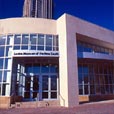
museum_am.jpgLast week, I spent four days working at a conference in Charlotte, North Carolina. I didn’t realize until I arrived what a hub the otherwise fairly nondescript town is for museums. The downtown area is tiny, but it plays home to many institutions including The Light Factory, The Levine Museum of the New South, The Charlotte Nature Museum, the Harvey B Gantt Museum for African-American Arts + Culture and the Mint Museum of Art, to name the main establishments.

I spent a wonderful hour pottering around the Levine Museum, which is free on Sundays and boasts some terrific, interactive installations about life in the southern states over the last 150 years or so. I particularly appreciated listening to old-time local music recordings and checking out what a 19th century sharecropper’s homestead and local hat emporium might have looked like back in the day.

The frustrating thing about the way in which Charlotte has its museum life organized is its lack of accessibility. The museums generally seem to be open during work hours while locals are in the office and the many convention attendees are stuck in the convention center. Weekend hours are limited. And I noticed that the Mint Museum, which I would have liked to take a look around had I had more time, seemed to be constantly rented out to private receptions.

I’d be curious to know how many locals visit the Charlotte museums. The Levine seemed pretty empty when I was there.

« Previous Page
Next Page »

lies like truth

These days, it's becoming increasingly difficult to distinguish between fact and fantasy. As Alan Bennett's doollally headmaster in Forty Years On astutely puts it, "What is truth and what is fable? Where is Ruth and where is Mabel?" It is one of the main tasks of this blog to celebrate the confusion through thinking about art and perhaps, on occasion, attempt to unpick the knot. [Read More...]

Archives

Blogroll

  • About Last Night
  • Artful Manager
  • Audience Wanted
  • Bitter Lemons
  • blog riley
  • Clyde Fitch Report
  • Cool As Hell Theatre
  • Cultural Weekly
  • Dewey 21C
  • diacritical
  • Did He Like It?
  • Engaging Matters
  • Guardian Theatre Blog
  • Independent Theater Bloggers Association
  • Josh Kornbluth
  • Jumper
  • Lies Like Truth
  • Life's a Pitch
  • Mind the Gap
  • New Beans
  • Oakland Theater Examiner
  • Producer's Perspective
  • Real Clear Arts
  • San Francisco Classical Voice
  • Speaker
  • State of the Art
  • Straight Up
  • Superfluities
  • Texas, a Concept
  • Theater Dogs
  • Theatre Bay Area's Chatterbox
  • Theatreforte
  • Thompson's Bank of Communicable Desire
Return to top of page

an ArtsJournal blog

This blog published under a Creative Commons license