
Economists Emmanuel Saez and Gabriel Zucman talk about how the rich dodge taxes and how to make them pay. And authors Suketu Mehta and zary Shteyngart discuss how American culture is constantly being remade by immigrants.
GC CUNY Keeps the Conversation Going:
Coping With the Shitstorm #3
A friend writes from the French countryside: The invisible threat casts a shadow over an otherwise idyllic springtime. When normally one’s own sorrows are cast aside, albeit temporarily, by the blossoming of nature and its infectious sense of hope, this year comes with a malaise which seems to leach all sense of renewal; and so I find myself hesitant in all I do.
Coping With the Shitstorm #2

A friend writes from Berlin: Good news … I received 5000 euros from the city. I could hardly believe it when I looked at my bank account. That will come in handy. Now we simply have to survive. It was very generous to artists who live here, many of whom are wiped out by what has happened. The decisions were made quickly, based simply upon the evidence that an artist truly has been living and working on their art here. It all seems unreal…everything does now.
GC CUNY Keeps the Conversation Going:
Roxane Gay and Katia D. Ulysse
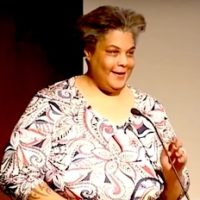
GC Presents: Roxane Gay, a powerful literary voice and one of today’s most-watched cultural critics, joins in a reading and conversation with acclaimed fiction writer Katia D. Ulysse. (Courtesy of GC CUNY’s Public Programs archive.)
GC CUNY Keeps the Conversation Going:
Milanovic, Piketty, Stiglitz, and Krugman
While events are postponed at The Graduate Center of the City University of New York in the heart of Manhattan, videos of recent public programs will be featured from its archive for your enjoyment. The videos provide illuminating discussions in two main categories: insights into current events and conversations with leading writers and artists. (Courtesy of GC CUNY’s Public Programs archive.)
What . ? . No Patti Smith?

Just kidding . . .
Last Breath

There are things / closer than rain / that keep hope alive— /
tenement flowers / seasoned with heartbreak, / chattering weeds / and the silence of fireflies— / things that may not be / more brilliant / than a wine-stained shirt / and crow’s-feet eyes. / But they will do …
‘I Do Not Think. I Am Thought. I Am Thought in Action.’
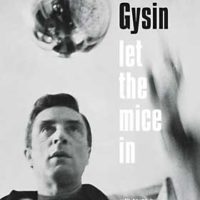
I am that I am that I happen. /
I am a resultant. /
—a coincidence of fields. /
Am is my here. /
That is I there. /
What am I here for? . . . /
I am here to go. /
When the magnetic fields shift / There / is no here. / I am gone.
And From the Outlaw End of the Writing Spectrum
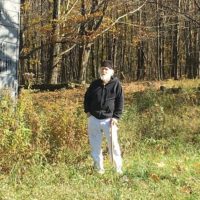
“At age 84, Plymell continues to write, publish and perform—“doing nuttin”, as he says—from his home in Cherry Valley, New York. His activities keep Plymell in steady correspondence with a crowd of like-minded hellions, including rockabilly’s Bloodshot Bill, Sonic Youth founders Kim Gordon and Thurston Moore, bassist Mike Watt, filmmaker Mark Hanlon, guitarist Bill Nace, photographer Philip Scalia and musicologist Byron Coley. Plymell and his wife, Pam, first happened upon Cherry Valley in late 1969 in coming to visit Allen Ginsberg and Peter Orlovsky at their East Hill farm. Moving there for good in early 1970, the Plymells have set into adding to their immense creative legacy.” – Benito Vila
A Blogpost for the Ages
![Heathcote Williams [Photo: JH, 2013]](https://www.artsjournal.com/herman/wp/wp-content/uploads/2017/07/heathcote-williams-photo-copy-200x200.png)
This was it, Jan. 12, 2017 . . . It began like this: ‘On the day Twitter Fingers is sworn in as the preening el presidente of a tin-pot United States of Trumpistan, enabling him to run the country like a division of his family-held company . . . ‘ and continued with a 17-minute recording of Heathcote Williams reading his poem “The United States of Porn.” That reading alone puts the blogpost in a class of its own.
‘When Tarnish Stalked the Dust of Fabulous Dreams’
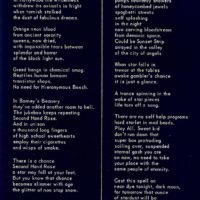
Charles Plymell’s poems are hard-core gems dug out of the earth. Yet they seem effortless to me. Without the slightest hint of literary elbow grease, they shine like polished jewels. I should have published more of them back in the day, but at least there was this one. It’s as gorgeous now as it was then.
Fluxus Impresario Readied for His Closeup

A feature documentary about the impresario of the international avant-garde art movement Fluxus from 1962 to 1978. Interviews with artists include Yoko Ono, Jonas Mekas, and Nam June Paik. Dedicated to cooperative methods and expanded processes, Fluxus could be everything and almost anything: kits, shops, festivals, islands, weddings, food, or Flux Lofts—a network of artist-owned lofts in SoHo, New York. The iconoclastic George Maciunas and the spirit of Fluxus provoke questions still critical to many working artists . . . and a helluva lot of silly serious fun.
When You Get to Your 85th . . .

“So I sit there with earphones, mind you West End of forgotten City East of what used to be a shade of time. Let’s not get into that again… machine gun fire loud & clear… airplanes moving in low & forgotten now like battles in the Pacific… distant artillery for the Americans don’t forget that buddy… sound of Japanese commandos… & Germany end of July 45, 17 sec. past the deadline… sunny morning in Hiroshima, stones trees houses people dust… it’s the 15th with transcribed music… cracks in the record, the unconditional surrender of Hollywood to TV…” — Jürgen Ploog
It’s That Time of Year . . .
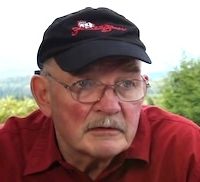
. . . when it seems that everybody is looking back over their shoulder more with nostalgia than disgust. I am not immune. Scrolling through some old emails, I came across this one called “from NELSON ALGREN’S LETTERS TO RAJAH.” Rajah was Roger Groening, a friend of Nelson’s and later of mine. Roger died in 2015. I think of him often. He and Nelson became friends, initially by mail, when Roger wrote him a fan letter. They remained friends for some 20 years until Nelson’s death, in 1981.
Review: ‘Captivating … Teasing … Spare … Seductive’
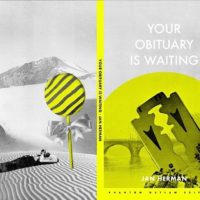
“I was struck by poems made of lines that are poems all on their own—even as they unstack into melodic steps from top to bottom . . . Some are as spare as Chinese widsom. In Herman’s poems you know you are certainly ‘somewhere’ but maybe it’s somewhere only in atavistic memory, the realm of dreams. He writes with what Lavinia Greenlaw called ‘unsettled language,’ which brings less obvious aspects of imagination or observation to the fore . . . teasing, holding attention by where they might be heading. A doubtful adventure? A seductive noire? An obscene history lesson? And of course, mortality raises its knowing head more than once.” — Jay Jones
New Nationalism Suckled by Old Wolves
“The penultimate superstition of mankind is the State, and until the state has been rejected man will be a slave to darkness and ignorance: for fatherland, nation, country, patriotism, government are all black magic brewed in the witch’s cauldron of World History. The State Conscience, like its founders, Remus and Romulus, has always been suckled by wolves . . . ” — Edward Dahlberg
This Blogpost Is Personal
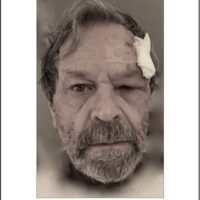
Ran into a tough opponent the other day. Took a header. I hit the pavement and it knocked me cold. Disfigured my face. An entire crew of firemen pulled up in full regalia, ladder engine included, had a look and got me a deluxe ambulance ride to the emergency room, plus a brainscan, a 24-hour overnight on a hospital gurney—the place was fully booked—and a bunch of stitches by a well-meaning young doc. Now home, condition improving, I got to thinking of Edward Dahlberg’s “Can These Bones Live.”