Another subject for an opera

A followup to my post about The Money Shot, a noir thriller I thought would make a fabulous -- and maybe pathbreaking -- opera.

But it would be pathbreaking only because -- in the manner of Tarantino's Kill Bill films -- it's so sexy and violent. And also, maybe, because of its implicit rock & roll ambience, which then would have to be central to its musical language. But in other respects, it's conventionally operatic. And I also take to heart Jay Langguth's remark, in a comment to my post, about noir not being the only contemporary sensibility we don't find on the opera stage.

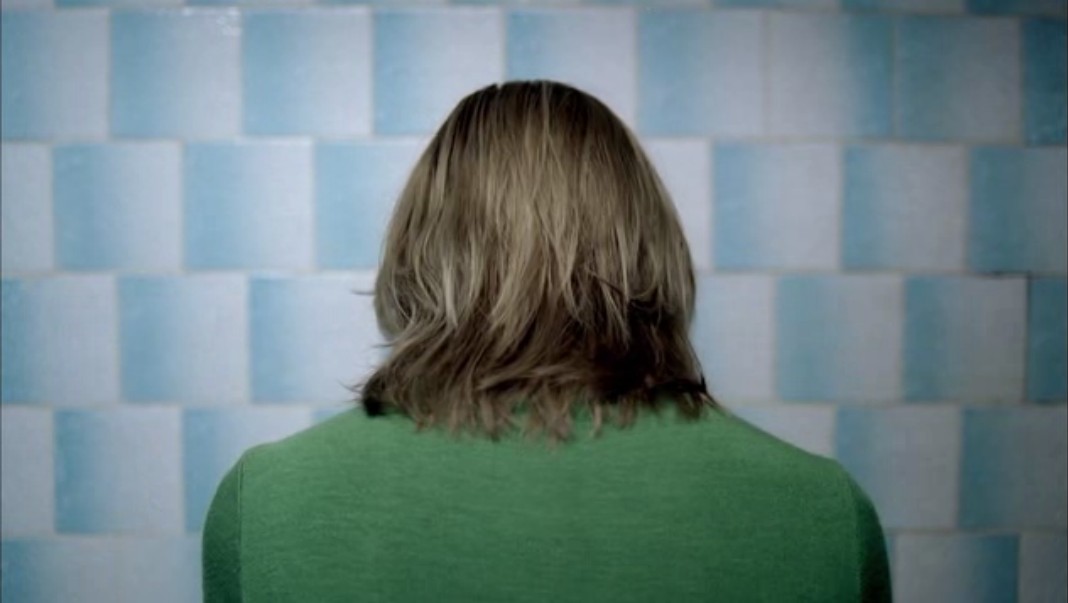
So here's another idea. Again, I came to it very naively. I wasn't looking for a new opera idea that wouldn't be noir. Instead, I watched Cristian Mungiu's film Four Months, Three Weeks and Two Days and thought immediately that it would make an almost mesmerizing opera.

Certainly it's a mesmerizing film.Its subject, more or less, is the severity and corruption of life under Romania's communist regime, though it's one of the many subtle things about the film that communism is mentioned onlyl briefly. It's story (searing) is about an illegal abortion, and you might appreciate how subtle the movie is when I tell you that it retains its subtlety even though it shows -- without hesitating, or softening the image in any way -- a late-term aborted fetus. (Hence the title.)

The word "abortion" isn't mentioned and the subject isn't even alluded to, until we see it happening. Life just unfolds, not pleasantly, and at the end, one of the women in the movie says, "We won't talk about this."

4 days.jpg

(Which could just as well be said about the communist politics that are always in the background, and even less talked about.)

There wouldn't be a single operatic moment in this opera. Nothing bigger than life, no occasion for melodies, high notes, or arias. (In any style.) The movie is unflinchingly realistic (Mungiu cites Vittorio De Sica, a founder of postwar Italian neorealism, as one of his influences), and the opera would have to be, too. This might fly against some current views of opera, but I think that if opera is going to succeed in our era, it should tackle any subject found in other media, and in every style and mood used elsewhere. This would be an opera for a small theater, using a small instrumental ensemble (I think), and unusually subtle singers. They'd have to act just as well as stage actors do.

One striking -- almost hypnotic -- aspect of the movie is how still the camera often is. Which (cf. comments to my Elliott Carter post about contemporary poetry) creates a typically modern contradiction, between the unflagging realism of what's depicted in the film, and the nonrealistic stillness with which it's shown. Entire conversations go by (even a loud and shallow dinner party), and the camera doesn't move. At one point we only see one of the people talking. The camera never leaves her, and the other woman in the conversation is present only with her hesitating voice.

I'd want the opera somehow to reflect that. Maybe the instrumental music would find a pattern or motif that it simply repeats, while the conversation takes its own shape. (I did that once in my Mahler Variations string quartet, where a longish passage from Proust is set to music that simply repeats the same chord progression, with parts of it sometimes stretched out to unusual length. But the procedure in the opera would be a lot more severe.)

I don't know if I'll ever write this opera, don't know if in the end it would turn out to be a good idea, don't know if I could ever get the rights, don't know if anyone would produce the piece. See the movie (Netflix members can watch it online), and see what you think. It's worth the time -- clearly one of the top films of the past year (with, in case this matters, a big award at Cannes).
December 19, 2008 3:18 PM | | Comments (3)

3 Comments

"Sexy and violent" adequately describes Olga Neuwirth's Lost Highway, which sold out its two shows at the Miller Theater after being imported from Graz. She also did it without resorting to neo-Romantic cliche, which may doom her from ever seeing it done in a large opera house. I think the Royal Opera House was going to do it, but don't know if that came through or not. The point is that adaptations are being made and staged, and we don't necessarily have to go hunting around for them.

An important reminder to remember that many things go on under the heading of opera. I especially remember that, because I've been in contact with it for more than 30 years. I could name Robert Ashley's operas as something way off the beaten operatic path, which I've loved. Not to mention Louis Andriessen's Rosa, which I'd mentioned earlier as my favorite new opera in recent decades.

But I'm not hunting for subjects to adapt into operas because I think the field isn't contemporary enough. I find things in the course of my normal life -- The Money Shot because I'm always reading some book or other, and I love the whole noir thrillers by women trend. And the Romanian film because I'm a communist history buff, and when I read about this movie (in an addendum to the Onion's 10 best films of the year list), I had to see it.

Then it occurs to me that these things would make powerful operas because I'm a composer, and I've written operas in the past. It's the composer's instinct speaking here, not the ideologue's.

But you can't tell me, Mark, that the things you and I have mentioned are in any way typical of what we see opera companies produce when they do new work. We've both been in this business too long to think any such thing, whatever exceptions we might find. What we see, to a great extent, though not uniformly, are adaptations of fairly safe classics, or (thinking of Dead Men Walking, or Wuorinen's upcoming -- someday -- Brokeback Mountain) popular movies. This applies to my own work as well as to what's in opera houses currently.

I have felt for a long time that the art world needs to get over the idea that "unpleasant" and "artful" are the same thing. The unfiltered extremes of Quentin Tarantino and Takashi Miike may have been a necessary shock to the system when they happened, but even Miike has moved on from unrelenting suffering to somewhat greener pastures.

I would like to see an opera based on "The Taste of Tea", a movie that boldly defies Tolstoy's assertion that all happy families are alike. It's a story of a family in rural Japan, they all have their own difficulties and they don't always do the right thing, but they manage to get by without dwelling on how miserable they are, and it comes off as far more emotionally honest than any of the 2 hour guilt-fests that are doing the circuit during Oscar season.

It's this middle ground between overwhelming misery and dishonest gaiety that strikes me as most realistic. Life is not peaches and sunshine, but there are peaches and sunshine to be had now and then, and the peaches often taste quite good, and the sunshine is often rather warm.

I would love to see the long scenes without any dialog presented much as they are, but with far more expressive music that draws out the mixed feelings that fill the story. The contrast between the stillness of the majority of the film and the abruptness of certain scenes, such as an illustrator being beat up by his secretary, or the rousing pop-song that the uncle records for his brother in law, would be reflected in the music, and more so in the overture. There would be memorable, striking themes to accompany seeming throw-away scenes, themes that return when the grandfather's legacy is revealed in the climactic final scene.

When the grandfather dies, he leaves behind the best gift for his family I can imagine, and the emotional richness of the scene where they discover it would make for some of the best music I can imagine. There wouldn't be a lot of singing, more scenes would involve only a few lines sung and great spaces of rich-as-chocolate-cake instrumental music. It's a story that could be told very effectively this way.

Lovely idea, Tristan. Sounds like a lovely movie, too -- I'll look forward to watching it.

And what a fine thought, to have an opera with very little singing. Opera doesn't have to be what it was in the past, doesn't have to be based on extravagant, operatic singing (much as I love the old operas that do work that way). The important thing is that opera is, ultimately, drama shaped by music, and that allows for operas even with no singing at all -- plays, in effect, in which music runs continuously, or in crucial segments, shaping the drama more than anything else does.

Thanks for adding to the discussion!

Greg,

You're right that the literary adaptations of American classics is de rigeur, and I protested against it in my Financial Times review of Doctor Atomic. I think those efforts are basically gambits to get people into the opera house by re-telling them a story they, by definition, already know. A lot of them aren't worth hearing twice. That's what I liked about Atomic, that it told an existing story in a unique way, with unique music. Anything that can be done to keep composers from adapting classic novels is a good thing in my book, but I don't know how to go about pushing against the "safe" envelope and keep new music coming into the opera house. Part of me says, "Face it, it's the most populist part of the classical world, so if the people will accept cloying literary adaptations, let them have it." The other part of me doesn't know what to think, but figures that daring work will continue to get done off the beaten path, and the scenery's prettier there, anyway. Fewer fur coats, too.

I'm divided in much the same way, Marc. Thanks for such a thoughtful comment. I agree about Dr. Atomic, whether I liked the piece or not. And I think the future will show us the direction things will take, as it always does. I can imagine it won't fully be to our liking (as the world so often isn't). But maybe, just maybe, a new strain of opera will emerge, very likely far from the big opera companies, where the kind of work we'll looking for can be seen.

Here's hoping, anyway!

Leave a comment

Resources

Age of the audience 
Conventional wisdom: the classical music audience has always been the age it is now. Reality: It used to be younger -- dramatically younger, in fact. Here's some evidence -- primary sources (actual texts of old studies, links to NEA studies) -- plus two of my blog posts on this subject, and some anecdotal data.
more

earlier resources

Things I like

Dion on YouTube 
He's singing his first big hit in the balcony of a theater, with his group (aka two backup guys) the Belmonts. The song is gentle, and if you listen to the words, it's supposed to be sad. "Why must I be a teenager in love?" But Dion is cocky and confident, enjoying his easy triumph. So this -- in Milan Kundera's famous definition -- can't be kitsch. There's no subtext telling us that he knows he's being sad, because he's not being sad. But the song is honest. It's about something he might have felt before he was famous. And surely it catches the helpless longing all the girls listening to him felt, all the girls clapping dutifully, right on the beat (because we white people hadn't yet learned what a backbeat is).

Terminator: The Sarah Connor Chronicles 
Smart, searing TV series. For instance: Cameron looks like a teenage girl, but really she's a killer robot from the future, reprogrammed to help people, rather than kill them. But she's still a killer. And though she tries to understand human beings, she can't grasp empathy. Someone finds a turtle on its back, and turns it over, so it can walk again. Why do that? Cameron asks. Later she attacks -- with unrelenting violence -- a friend of the people she's helping, because she thinks he's a liar. "Stop," she's told. She looks down at the man -- battered, groaning -- and with no expression turns him over.
 
Lucinda Williams, Little Honey 
Her most joyful album, but also her roughest -- very frayed, vocally, with edgiest band she's ever had. I don't know if I trust the joy (and I'm sad to say that), but she sounds like she's bitterly earned it.

Mantra for the arts 
From a New York Times Sunday piece on Wong Karwai, describing how he made his early film Ashes of Time:

"Mr. Wong was in a corner watching on a monitor. Every so often, in his measured way, he...called out to his cinematographer, Christopher Doyle, 'Is that all you can do?'

"Mr. Doyle, now a longtime collaborator of Mr. Wong's, said in a recent telephone interview that he heard that question as a constant challenge. 'It should be the mantra for all people in the arts.'"

more things

About this Entry

This page contains a single entry by Sandow published on December 19, 2008 3:18 PM.

The day the was the previous entry in this blog.

And to all a... is the next entry in this blog.

Find recent content on the main index or look in the archives to find all content.

AJ Ads

Introducing
AJ Arts Blog Ads

Now you can reach the most discerning arts blog readers on the internet. Target individual blogs or topics in the ArtsJournal ad network.

Advertise Here

AJ Blogs

AJBlogCentral | rss

culture
About Last Night
Terry Teachout on the arts in New York City
Artful Manager
Andrew Taylor on the business of arts & culture
blog riley
rock culture approximately
CultureGulf
Rebuilding Gulf Culture after Katrina
Dewey21C
Richard Kessler on arts education
diacritical
Douglas McLennan's blog
Dog Days
Dalouge Smith advocates for the Arts
Flyover
Art from the American Outback
Life's a Pitch
For immediate release: the arts are marketable
Mind the Gap
No genre is the new genre
Performance Monkey
David Jays on theatre and dance
Plain English
Paul Levy measures the Angles
Real Clear Arts
Judith H. Dobrzynski on Culture
Rockwell Matters
John Rockwell on the arts
Straight Up |
Jan Herman - arts, media & culture with 'tude

dance
Foot in Mouth
Apollinaire Scherr talks about dance
Seeing Things
Tobi Tobias on dance et al...

jazz
Jazz Beyond Jazz
Howard Mandel's freelance Urban Improvisation
ListenGood
Focus on New Orleans. Jazz and Other Sounds
Rifftides
Doug Ramsey on Jazz and other matters...

media
Out There
Jeff Weinstein's Cultural Mixology
Serious Popcorn
Martha Bayles on Film...

classical music
The Future of Classical Music?
Greg Sandow performs a book-in-progress
On the Record
Exploring Orchestras w/ Henry Fogel
Overflow
Harvey Sachs on music, and various digressions
PianoMorphosis
Bruce Brubaker on all things Piano
PostClassic
Kyle Gann on music after the fact
Sandow
Greg Sandow on the future of Classical Music
Slipped Disc
Norman Lebrecht on Shifting Sound Worlds

publishing
book/daddy
Jerome Weeks on Books
Quick Study
Scott McLemee on books, ideas & trash-culture ephemera

theatre
Drama Queen
Wendy Rosenfield: covering drama, onstage and off
lies like truth
Chloe Veltman on how culture will save the world

visual
Aesthetic Grounds
Public Art, Public Space
Another Bouncing Ball
Regina Hackett takes her Art To Go
Artopia
John Perreault's art diary
CultureGrrl
Lee Rosenbaum's Cultural Commentary
Modern Art Notes
Tyler Green's modern & contemporary art blog
Creative Commons License
This weblog is licensed under a Creative Commons License.