
The venerable Jerry Bowles of Sequenza 21 reminds me that I should be attending to my own PR, and I need the reminder. It never becomes a reflex, for some reason.
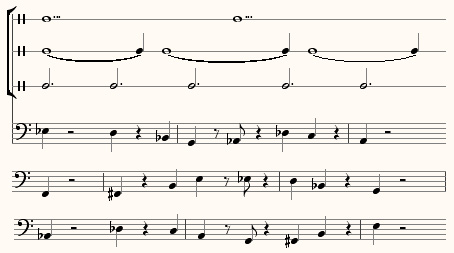
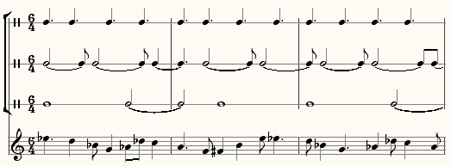
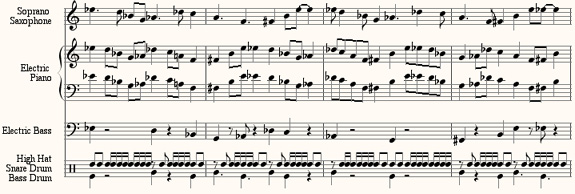
But three members of the Da Capo ensemble, joined by myself and my son Bernard, will perform my new piece The Day Revisited this Tuesday, January 24, at 7:30 PM at the Knitting Factory, 74 Leonard Street. It’s my first NYC gig in a year or two, I guess, and if Stockhausen can perform with his son Markus, I can perform with mine. Flutist Pat Spencer and clarinetist Meighan Stoops had asked me to write them a microtonal piece, and after having their heads examined I complied with a work in a 27-tone, just-intonation scale, for flute, clarinet, two keyboard samplers, and fretless bass, this last played by my son, who’s pretty inured to my tunings by now. Though slow and mellow it’s a damned difficult piece because of the tunings, but I’ll just be sitting there playing chords. Also on the program are works by a bunch of famous people: Eric Moe, Martin Bresnick, Derek Bermel, Michael Gordon, Gene Pritsker, and Philippe Hurel, which I guess means I’m a real composer too. Da Capo’s calling this a world premiere – the only other performance was here at Bard, and we had technical problems then that we’re not going to have this time, knock on wood. Call 212-219-3006 and bother the Knitting Factory about it.
Pianist extraordinaire Sarah Cahill will also play two of my Private Dances at REDCAT in Los Angeles on February 18, but I’ll remind you about that later.
I’ve had a hell of a time with my microtonal music lately. I’ve outgrown the samplers I’ve been using for the last 12 years, and am at the epicenter of a complete technological overhaul. Nowadays everything is software-based, so I’ve acquired Kontakt 2, Max/MSP, and Scala (newly available for the Mac) in an attempt to get better sounds and more feasible playability in my microtonal stuff. For years I’ve taken a lot of crap from people who find my electronic timbres amateurish, which has always seem unfair, since I’m using the most expensive microtonal samplers I can afford. So what if I use the sounds that come with the box? – I make up my own pitches, and everyone else uses the pitches that come with the box, which strikes me as a worse infraction. If I can get Kontakt to work (still touch and go at the moment), I’ll reorchestrate as much of my early music as I can stand to. Suggestions on how to get good sounds with microtonal-friendly software are always welcome. It’s a huge barrier between me and the continuation of my career at the moment. As for The Day Revisited, I usually don’t write microtonal music for acoustic instruments because the performance hurdles are just too great, but I was asked, and they’re working their butts off.
While I’m blowing my own horn here, Christopher DeLaurenti has officially given my book Music Downtown its jaunty first review.
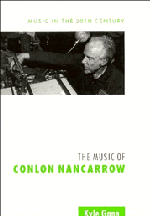 The most frequent and bitter complaint I’ve gotten about my book on Nancarrow over the years has been about the price. But I’ve just learned – over the
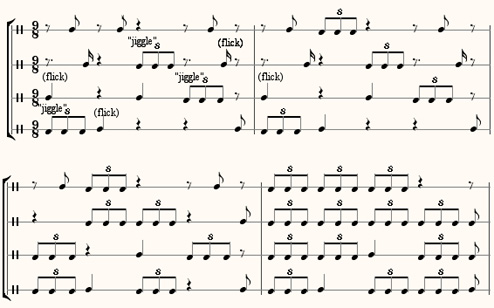
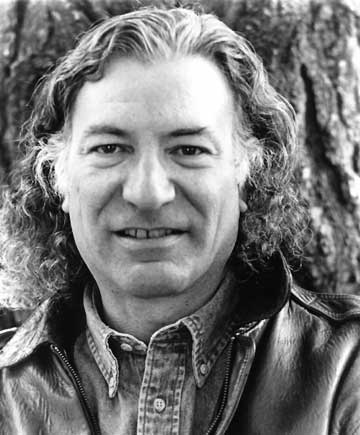 I had never heard Mosko’s music, but was well aware of his activities as a conductor. I once reviewed his Newport Classic recording of Feldman’s For Samuel Beckett as being the best available. Last week Art Jarvinen was kind enough to send me the O.O. Discs CD of Mosko’s music, performed by the California Ear Unit, and he tells me there’s a hard-to-find one on Cambria as well. I had no idea what to expect. Mosko’s music is thorny – or gnarly, in the parlance of our time – but his time sense is distinctive. Even when the music’s individual gestures are quick, it sustains its focus for many moments in succession, and changes slowly. It is quasi-atonal in a way that allows tonal passages to happen in a non-quotation-like way, almost as if it simply makes no distinctions among sonorities. Therefore it is playful rather than tense, with highly soloistic instrumental writing, and reminds me, more than anyone else, of Stefan Wolpe’s music. There is much stasis, dotted by delicate bursts of activity that build up no momentum. His early influences include Webern, Feldman, Cage, Icelandic folk music, and Sufi music, the first three more evident than the others.