
 I finally got around to viewing the performance of Eric Whitacre’s “Lux Aurumque,” a work which the composer created for his Virtual Choir, a sort of hybrid between a live performance by a choir standing together in one room and one involving people singing from many different locales via Internet hookup.
The conductor brought together 185 singers from 12 countries. Each of the singers was recorded separately but conducted by Whitacre via a YouTube video. You can read about Whitacre’s process and instructions (which he posted on the Web last July) here. For the final performance, Whitacre brought all the different video tracks of the choristers singing together. The result can be seen here.
I admire Whitacre’s experiments in technology. This one is particularly exciting because it attempts to bring the polish of a live performance to the virtual format. Many other virtual choir experiments which feature a conductor leading a remote ensemble in real-time often sound ragged because of time-delays on Internet connections and the like. Because the singers in “Lux Aurumque” had all followed the conductor carefully in advance of the performance to create a video of them singing their part, the rendering of the music when all the voices were brought together was more accurate.
But while it’s fun to watch the video of Whitacre on screen in a black t-shirt conducting 185 computer screens each with a chorister’s face on it, the performance is far from perfect. In fact it sounds very canned and artificial. With its atmospheric, drawn-out lines and movie soundtrack-like feel, Whitacre’s choral music lends itself more to electronic rendering than the work of other composers. But as parsed through so many screens, it lacked the warmth and communication of a live performance.
Still, I hope the composer continues with these experiments. Even if the music still has a long way to go before it approximates a true choral sound, there’s something captivating about the idea behind the projects. And from a visual standpoint, the sight of lots of people singing together is gorgeous – the canvas of faces is bright and kinetic. It wouldn’t look out of place as an installation on the walls of an art gallery.
If nothing else, it’s fun to think about all those singers dotted around the world, turning on their webcams, singing in time with Whitacre’s beat, recording themselves and then appearing on screen with their colleagues from many different lands in almost perfect unison. There’s a sort of poetry to this achievement.
 Last week, while preparing to write my weekly column for the
 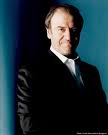 Everyone knows the Russians can teach the U.S. a thing or two about playing the music of Rachmaninoff, Borodin, Mussorgsky, Shostakovitch and co. That’s why audiences in this country flock in droves to hear groups like the Mariinsky Orchestra led by Valery Gergiev (pictured). At
  One of the many challenges facing performing arts presenters is figuring out seating plans. With audiences for some artforms such as dance typically booking up to see performances very late — sometimes on the day of performance — trying to work out how much to charge for tickets and how best to fill up premium seats is no easy matter for producers. Mathematicians could spend years working out algorithms to help arts organizations predict how to manage their houses and still the problem wouldn’t be solved.
 I dropped in on the
 Every so often I go to the theatre and get tricked into thinking the play I’m seeing is good. Beautiful performances, slick staging and strong visual imagery can sometimes make me believe that a drama is really profound when it isn’t. It’s only after the fact — sometimes several days or even weeks after the curtain has come down — that I realize that I had been duped.
 As I do not currently work for
 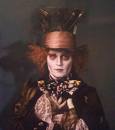 One of the problems with Tim Burton’s new Alice in Wonderland film is its title. Critics have been deriding the film for all kinds of reasons such as its shock tactics and the lack of charisma of its leading lady. And yes, much of the criticism is deserved, for the film isn’t up to Burton’s usual snuff.
 I am not a fan of those lists of “Top 50 Women Artists” or “Top 10 Young Conductors” or “The 20 Most Powerful Cultural Movers and Shakers” that pop up with alarming frequency in the media.
 While cycling down the coast in Kauai last week, I chanced upon an extraordinary sight. I heard the trombones before I saw them, actually. Brass scales and arpeggios caught my ears as I whooshed along, providing an unusual sonic backdrop for the palm trees, sandy beaches and ocean setting.