

” ‘A Something Else Reader’ is a previously unpublished anthology edited by Dick Higgins in 1972 to celebrate Something Else Press, the publishing house he founded in 1963, and to showcase Fluxus and other experimental artistic and literary forms. … He assembled the table of contents and an introduction into a proposal, which went into his archive, where it was found by scholar and curator Alice Centamore, who compiled the works and assembled it.” — Primary Information
A Something Else Reader
Orwellian Chuckle
Press Freedom in Full Squeak (replayed)
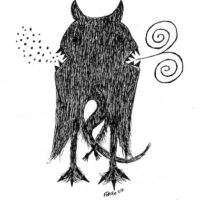
From a lifetime ago, though in fact it’s only been six years . . . and now what?
Jack Kerouac at 100, the Beats in Ruigoord

Kerouac fans In The Netherlands have been celebrating his centennial with readings, film presentations, and concerts throughout 2022. The celebration will culminate on Oct. 9 at the artists’s village of Ruigoord, near Amsterdam. An international gathering of writers, performers, and scholars will pay tribute, along with keynote speakers Joyce Johnson and Ed Sanders, who are to participate via Zoom.
Any of You Like to Try Propping up the Queen of Denmark?
![Portrait of William S. Burroughs © by R. Crumb [1985]](https://www.artsjournal.com/herman/wp/wp-content/uploads/2018/02/RCRUMB-portrait-of-Burroughs-366x470-200x200.jpg)
“The queen is an alien symbol basically Germanic in origin. The queen is also a white symbol. The White Goddess in fact. Young people want that. White people want that. Black people want that.” — William S. Burroughs
Heathcote Williams
Uncensored, ‘Advertisement’ for a Supermarket
![Heathcote Williams [Photo: JH, 2013]](https://www.artsjournal.com/herman/wp/wp-content/uploads/2017/07/heathcote-williams-photo-copy-200x200.png)
‘The people who run Tesco must be Buddhists / You go in there and things are exactly as they should be / There is nothing that you could possibly want / Bits of telepathic animals neatly shrouded in heat-raised polystyrene / With Magic-Maker gravestones. / Dyed tomato mulch slobbering to itself in lead-lined tubular coffins, / Zilched by monosodium glutomate.’ — Heathcote Williams
Independent Filmmaker, Principled Artist

Kenneth Anger held to his vision over a lifetime and, just as important, to his convictions.
American Presidents
A Dirge for Their ‘Greatest’ Racist Hits
“One shocking, grotesque, and racist revelation after another reveals a history of the bigotry of American presidents and how complicit they were in legitimizing American racism.” — Randy Burman
Counter Culture Chronicles

Retro vinyl is a thing. But retro cassette? Does anyone still have or use a cassette player? Apparently some do. René van der Voort has produced more than 100 cassettes by a wide range of poets, writers, and artists. His label, Counter Culture Chronicles, lists audio performances by Aram Saroyan, Charles Plymell, Jürgen Ploog, Stuart Perkoff, Allen Ginsberg, Nanao Sakaki, Angus MacLise, Ed Dorn, Ken Kesey, Joel Oppenheimer, Jack Kerouac, Gary Snyder, Ted Berrigan, Peter Orlovsky, Gerd Stern, Ira Cohen, Michael McClure, Fielding Dawson, Steve Dalachinsky, Neeli Cherkovski, Ed Dorn, and ruth weiss. My own cassette has just been released. The recording runs for 30 minutes.
‘Burning Boris’ by David Erdos

Poem 6 from ‘The Bastards Charter’
Kosti, the Earl of Wordship
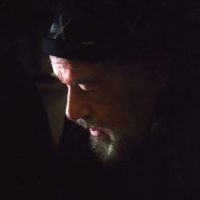
Also known as Richard Kostelanetz, or, as the NYTimes dubbed him, “the bibliomaniac of Ridgewood,” he is the author of hundreds of books — yes, hundreds, you read that right — and recently turned 82.
Celebrating William Wyler
His Hometown in Alsace Puts on a Hollywood Show

Wyler was Laurence Olivier’s mentor, the love of Bette Davis’s life, John Huston’s best friend, Audrey Hepburn’s inspiring taskmaster, and Barbra Streisand’s father figure. His major motion pictures were touchstones for an entire generation. He guided more actors to Academy Awards than any other director. He also won three Oscars himself. “Olivier once told me he learned more about film acting from Wyler than from any other director; I can say the same,” Terence Stamp recalled in my Wyler biography “A Talent for Trouble.” Despite his reputation as a demanding director who sometimes drove actors to tears, he was a beguiling personality in private.
‘A Solo Among Men’

Abbie Conant won an audition for first trombone in the Munich Philharmonic Orchestra. But the conductor, Sergiu Celibidache, preferred a man upfront and demoted her. Conant speaks about coping with that as she looks back at her tenacious struggle for justice. Conant’s husband, the composer William Osborne was instrumental in a feminist campaign against sexism at the Vienna Philharmonic. As he said at the time, “If it were just the Vienna Philharmonic, the whole issue would be much too parochial to bother with. The real issue is that women are not treated fairly …”
These Many Years Later, Algren for Real

For the first time, yesterday, I saw the DVD cover art of “The End Is Nothing the Road Is All,” a 2015 documentary. I was poking around on my laptop when I came across it by accident. Except for the fact that it showed up on Facebutt, which I try to avoid, it was a nice surprise.
Imagine That!
A Swiss Counterweight to Conformism
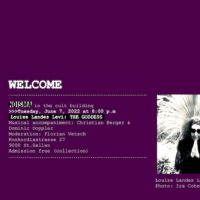
UPDATED with videos of the performance. In the heart of St. Gallen, a town not far from Zurich, where Dada began, there is a haven for the outlandish and the curiously extravagant. It is a place for the exchange of ideas and information, passionate discussion, chamber music, and for poetry. The American poet Louise Landes Levi, who is based in Japan, performed there on Tuesday, June 7.
A Uranium Jubilee for the Queen of the Arms Trade

How Queen Elizabeth II profits. Text by Heathcote Williams. Editing and narration by Alan Cox.
Annette Gordon-Reed on the Art of Biography
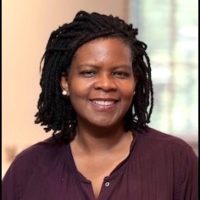
The distiguished historian is slated to give this year’s Annual Leon Levy Biography Lecture on Wednesday (May 4 at 6 p.m. ET), in a free, online presentation open to the public. Her investigative, multigenerational biography “The Hemingses of Monticello: An American Family” won both the 2008 Pulitzer Prize in History and the National Book Award.
Ben Vautier: ‘What to Do?’

The noted Nice-based Fluxus writer and artist Ben Vautier sends out a message, regularly by email, to friends and others. But the one that came the other day was unusual. Rather than simply conveying news of cultural and artistic events that personally interest him, it was something of a ‘cris de coeur.’