

In all the press coverage I have seen of Oprah Winfrey’s interview with Meghan and Harry, it has been treated as a tale of personal tragedy, a terrible racist family squabble, for the British royals — but not one mention of the larger tragedy at the heart of Heathcote Williams’s “Royal Babylon,” namely the immense damage caused by the monarchy’s greedy, rapacious treatment of peoples and nations the worldover.
Will Oprah Pick Up Where He Left Off?
Heathcote Williams on the British Monarchy
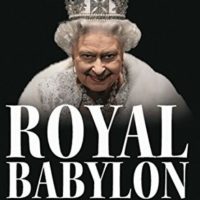
“‘God save the queen,’ they sang, ‘it’s a fascist regime.’ / And the song’s hook-line became a new anthem — / Disturbing to clutches of flag-wavers lining the streets. / And horrifying to Middle England and the Daily Mail.” — from ROYAL BABYLON
PS: In all the press coverage I have seen of the interview, it has been treated as a tale of personal tragedy, a terrible racist family squabble, for the British royals but not one mention of the larger tragedy at the heart of “Royal Babylon,” namely the immense damage caused by the monarchy’s greedy, rapacious treatment of peoples and nations the world over.
Joseph Brodsky on the Life of Books

“On the whole, books are less finite than ourselves. Even the worst among them outlast their authors. … Often they sit on the shelves absorbing dust long after the writer himself has turned into a handful of dust. Yet even this form of the future is better than the memory of a few surviving relatives or friends on whom one cannot rely, and often it is precisely the appetite for this posthumous dimension which sets one’s pen in motion.”
Lawrence Ferlinghetti Dies at 101
His Pictures of a Gone World Remain
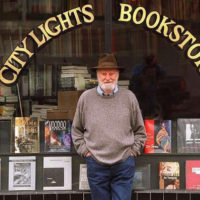
A literary era passes. It was already past, yet it still has influence. Maybe the biggest. Because ArtsJournal was down yesterday—I know not why—I couldn’t post this. The world didn’t miss it. My account is minimal in the scheme of things but here ‘tiz anyhow, excerpted from ‘My Adventures in Fugitive Litrichur.’
The Library Is Closed
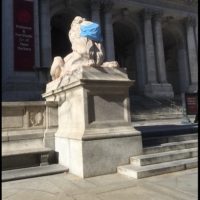
…and thoughts come in verse: ‘The stone lion at the gate / wears a mask like mine. / This is where I used to wait / for books that bind / that kept my mind at ease— / I crack them as I please. / Now I hurry home . . .’
‘Four-mile walk / double masked / fogged-up glasses / gloves and hat— / I’m a walking mummy / in deserted streets.’
Riding the Zoom Wagon
‘Journalism in a Time of Crisis’

The New York Review of Books will present a discussion about the ways contemporary journalism has addressed moments of political and social crisis. The program, Journalism in a Time of Crisis, is scheduled for Feb. 24 at 7:30 p.m., featuring Justine van der Leun, Howard French, Elizabeth Bruenig, Mark Danner, and Darryl Pinckney.
emmett williams: ‘universal truths’
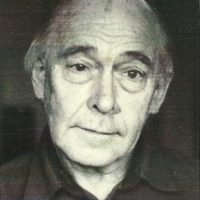
from ‘selected shorter poems 1950-1970’ ‘universal truths / shouldn’t be / all that hard / to find . . .’
Moloko Print
Two New Books of Poems in Bilingual Editions
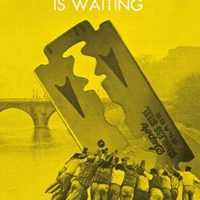
One by yours truly, “Your Obituary Is Waiting.” It’s a collection of “deformed sonnets,” with German translations by Gregor Pott and “flypaper collages” by Norman Ogue Mustill as counterpoint. The book design by Robert Schalinski, the paper, and the print quality are to die for, no pun. The other is “The Return” by William Cody Maher, also bilingual, with German translations by Walter Hartmann and photos by Signe Mähler, designed by Ralph Gabriel. And again the quality of the production is stunning. Furthermore, in a joint production, Moloko and Sea Urchin Editions have released “The Ex-Terr Poems” by Ed Sanders with his drawings, in an English-only edition, designed by Anneke Auer. I haven’t seen the book itself but I would bet the quality of the artifact matches the others.
Let’s Talk About Literary Exposure

Some would call it visibility. If you’re talking books, how about millions upon millions of Youtube views for a reading from Supervert’s ‘Necrophilia Variations.’ A dozen years ago when that video had two million views, I called it “viral reading.” Three years later, on Dec. 30, 2015, the video had 18.6 million views. Today it has some 28 million views. So what has this meant for selling the book?
Jim Haynes, RIP
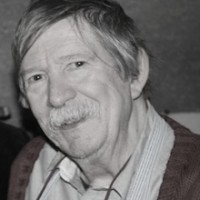
Brad Spurgeon memorializes him: “End of an Era, but not of a Philosophy of Life.” I never met Jim. But he was extraordinarily welcoming when we corresponded by email about the strange case of Orwell’s typewriter.
GC CUNY at the Center of the Conversation
Peter Baker & Susan Glasser on James A. Baker III, with Kai Bird

“For a quarter-century, from the end of Watergate to the aftermath of the Cold War, no Republican won the presidency without the help of James A. Baker III or ran the White House without his advice. Now two major political journalists, Peter Baker (of The New York Times) and Susan Glasser (of The New Yorker) have written ‘The Man Who Ran Washington,’ a definitive, page-turning biography of the power broker whose impact was unmatched when Washington ran the world and who influenced America’s destiny for generations. The authors join in a discussion with Kai Bird, executive director of the Leon Levy Center for Biography.”
Let’s Begin the New Year . . .
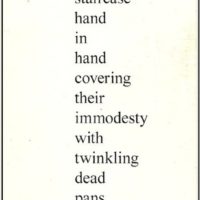
. . . with an old poem by a late friend: “buster / duchamp / and / marcel / keaton / walked / down / an / exploding / staircase / hand / in / hand / covering / their / immodesty / with / twinkling / dead / pans / did / marcel / keaton / and buster / duchamp”
‘Burroughs and the Dharma’

William S. Burroughs was not a Buddhist: he never sought or found a “Teacher,” he never took Refuge, and he never undertook any Bodhisattva vows nor—for that matter—did he ever declare himself a follower of any one faith or practice.. He did not consider himself a Buddhist. But he did have an awareness of the essentials of Buddhism, and in his own way, he was affected by bodhidharma.
Twin Engines of Misrule

Sometimes my tireless staff of thousands looks back and sees a blogpost that demands to be reposted. This one from Dec. 17, 2004 — 18 years ago next week, imagine that: “When 1984 came around smack in the middle of the rose-tinted Reagan era, many in the commentariat had a field day noting that George Orwell, for all his genius, had overstated his case. The future he’d warned of in ‘1984’ simply hadn’t come to pass.”
GC CUNY at the Center of the Conversation
Biden Chronicler Evan Osnos on the 2020 Presidential Election
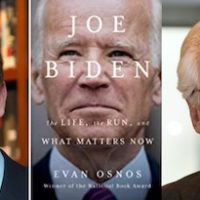
In his new book, “Joe Biden: The Life, the Run, and What Matters Now,” Evan Osnos draws on nearly a decade of reporting for The New Yorker. His portrait of Biden and what his election means for the nation. is based on lengthy interviews with Biden, as well as conversations with President Barack Obama, the Biden family, his advisers, rivals, and opponents.
Pandemic Poems From Cold Turkey Press: Mistress Death
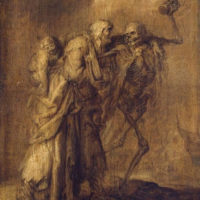
This handmade, 16-page chapbook is not about Covid-19, but the virus is present in every line.
The Holy Grail of the Beat Generation
Neal Cassady: ‘The Joan Anderson Letter’
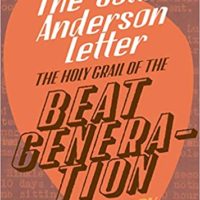
When Jack Kerouac read Neal Cassady’s spontaneous rush of words, he claimed it was more alive than any piece of writing he had ever seen. In its effusive style, its freewheeling candor, its Proustian (yes, Proustian!) introspection, the letter touched off a response in Kerouac that reshaped entirely his own approach to writing. The result was an explosion of “road” novels, beginning with “On the Road,” in which Cassady is renamed Dean Moriarity and seen as nothing less than “the root, the soul” of Beat legend.