« December 2008 | Main | February 2009 »
January 30, 2009
CAAF: Superman
The bit of description that follows below has been in my head all week, since hearing about John Updike's death. It's from Witches of Eastwick, which I re-read a couple months ago and which, if I'm honest, is the novel of his that I feel the greatest true affection for. (Who knows where, once all the sifting & shaking is done, Witches will stand in the Updike canon; but I hope it doesn't get struck for all the more Important Ones.)
This sentence stuck because its construction so resembles a really marvelous, elaborate marble run, and it seemed like on this week, even while we pay tribute to Updike's Zeus-ian stature (first among writers, 60+ books, with enough good ones and bad ones in there to fuel a dozen mortal careers), it's also nice to stop and appreciate him at this, a sentence level:
Eastwick in its turn was at every moment kissed by the sea. Dock Street, its trendy shops with their perfumed candles and stained-glass shade-pulls aimed at the summer tourists and its old-style aluminum diner next to a bakery and its barber's next to a framer's and its little clattering newspaper office and long dark hardware store run by Armenians, was intertwined with saltwater as it slipped and slapped and slopped against the culverts and pilings the street in part was built upon, so that an unsteady veiny aqua sea-glare shimmered and shuddered on the faces of the local matrons as they carried orange juice and low-fat milk, luncheon meat and whole-wheat bread and filtered cigarettes out of the Bay Superette.
* * *
A few tributes I've enjoyed:
• Lorrie Moore's appreciation in today's New York Times, which contains a beautiful, just-right description of Updike's criticism as "part rose, part snake."
• Martin Amis in The Guardian; it's interesting to read this one, with its observation about Updike's love for James Joyce, back to back with a story like "A&P".
• Joseph O'Neill for Granta. (Via TEV.)
Posted January 30, 1:55 PM
TT: Chicago, at home and away
I just flew back to the East Coast from one of the most exciting reviewing trips in my six-year-long career as The Wall Street Journal's drama critic. I saw Kansas City Repertory Theatre's The Glass Menagerie and Chicago Shakespeare Theater's Macbeth, and both were extraordinary. Here's an excerpt.
* * *
The greatest of all American plays has received a production worthy of its beauty and truth. Tennessee Williams' "The Glass Menagerie," one of the immortal masterpieces of 20th-century theater, is currently being performed by Kansas City Repertory Theater in a staging by David Cromer, whose Writers' Theatre revival of "Picnic" was the best show I saw last year, not just in Chicago (where Mr. Cromer and most of his production team are based) but anywhere in America. His "Glass Menagerie" is fully as impressive. Mr. Cromer has the uncanny ability to take a too-familiar script and make it seem entirely new--yet it is his special gift to serve the plays that he stages, rather than twisting them into unrecognizable and irrelevant shapes. Such is the essence of recreative genius.
So what has Mr. Cromer done with "The Glass Menagerie"? To begin with, he has collaborated closely with his designers to create a visual environment for Williams' play that looks nothing like any "Glass Menagerie" I've ever seen, even though it is fundamentally faithful to both the spirit and the letter of the text. At the center of Collette Pollard's set is a cramped, shabby tenement apartment identical to the one described in Williams' stage directions--except that the walls of the living room have been ripped away and are hanging askew in mid-air. Throughout the evening a stream of images related to the play is projected on these walls: words and phrases plucked from the script, "home movies" of the characters as seen in their youth, live close-ups of the actors that are shot by video cameras concealed on the set.
Radical though it sounds, all this is no more than a modern-day elaboration of what Williams had in mind for the original production of "The Glass Menagerie," in which he called for "magic-lantern" slides to be projected on one wall of the set. The images on the slides, he explained in his production notes, were meant to "give accent to certain values in each scene." The slides were omitted from the 1945 Broadway staging, but various attempts have been made since then to do something resembling what Williams had in mind.
Kansas City Rep's projections, designed by Jeffrey Cady, are astonishingly effective, not least because they are so tightly woven into Mr. Cromer's conception of the play, in which the acting is as naturalistic as the setting is surreal. Nowadays many productions of "The Glass Menagerie" run to quasi-operatic exaggeration, but the four actors whom Mr. Cromer has cast in Williams' tale of a St. Louis family teetering on the far edge of despair have opted instead for simple understatement. Their characterizations are all fresh and unexpected....
Barbara Gaines, Chicago Shakespeare's artistic director, has given us a modern-dress "Macbeth" set in a glossy world of press conferences, cocktail parties and departure lounges. Macbeth and his wife (Ben Carlson and Karen Aldridge) are an up-to-the-minute power couple, a crisply plain-spoken soldier married to a coarse, slutty trophy wife. Such devices may seem trendy in the telling, but Ms. Gaines and her first-class cast have instead used them as the building blocks of a dead-serious "Macbeth" that has the immediacy of a fast car shrieking down a long, straight stretch of road....
* * *
Read the whole thing here.
Here is a video clip from Kansas City Rep's Glass Menagerie:
Posted January 30, 12:00 AM
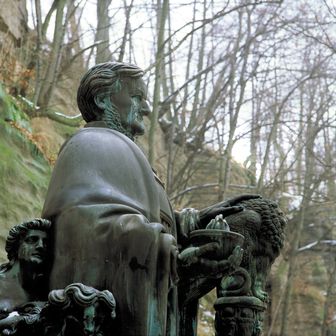
TT: They don't do Wagner
David Stern, the Israeli Opera's new music director, announced the other day that he won't be programming the operas of Richard Wagner in Tel Aviv. The resulting news story may have come as a surprise to American readers who are unaware that Wagner's music is not played in Israel's opera houses or concert halls. This informal ban, which has been in force since the founding in 1948 of the state of Israel, is the subject of my "Sightings" column in Saturday's Wall Street Journal. (It was originally scheduled to run two weeks ago but was replaced by a column about Andrew Wyeth.)
The ban, needless to say, was and is a response to Wagner's anti-Semitism. Is it still justified? Was it ever? Pick up a copy of tomorrow's Journal to see what I have to say.
You might also want to take a look at Alex Ross' The Unforgiven: Wagner and Hitler, originally published in The New Yorker in 1998, which is very much worth reading in this connection.
UPDATE: Read the whole thing here.
Posted January 30, 12:00 AM
TT: Almanac
"The apprentice and the master love the master in different ways."
Friedrich Nietzsche, Mixed Opinions and Maxims
Posted January 30, 12:00 AM
January 29, 2009
TT: Too far from home
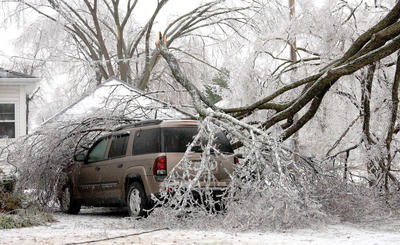
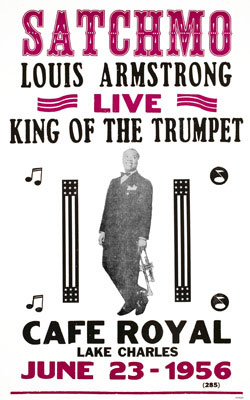
Sikeston, the Missouri town that normally goes under the guise of "Smalltown, U.S.A." on this blog, was hit three days ago by a fearsome ice storm, one of the worst on record. The power is out throughout the city and its environs and is expected to remain that way for the next few days. Cellphone service is spotty. Last night I managed to talk to my brother, albeit briefly and through heavy static, during the intermission of Chicago Shakespeare's performance of Macbeth. He told me, as best as I could make out, that my seventy-nine-year-old mother has been evacuated to Cape Girardeau, a town thirty miles north of Sikeston where the storm was much less severe and the power is still on, and that's she's all right. I haven't spoken to her since the night before the storm hit.
Times like these remind me of how big America is. Right now I'm in a Chicago hotel room four hundred miles from Sikeston, but I might as well be on the far side of the world. I felt a bit like this on 9/11, when I was visiting my mother in Sikeston and suddenly found myself out of touch with my many friends in New York City. It doesn't help that Mrs. T is in Connecticut, where the weather is somewhat better but still pretty rocky.
I'm glad I had a piece to write this morning, and that I have a show to see tonight. It's a comfort to be distracted by art when there's nothing to do but sit and wait.
UPDATE: I finally got through to my mother in Cape Girardeau a few minutes ago. She's safe and warm. The situation in Sikeston, she says, is fairly chaotic and likely to remain so for a few more days, but my brother and sister-in-law are safe as well.
Posted January 29, 12:20 PM
TT: Cover story
This is the cover of the orchestral score of The Letter, which will be published by Subito Music. Paul Moravec and I are still proofreading what's inside, but we passed the cover for publication on Tuesday.
I've written or edited seven books in the past twenty years--Pops: The Life of Louis Armstrong will be the eighth--and one of the many things I've learned along the way is that few things in life are more exciting than seeing the dummy of a dust jacket that has your name on it. For me, at any rate, that's the first moment in the publishing process when a book starts to seem real.
The Letter, by contrast, has seemed real to me ever since the Santa Fe Opera workshopped the first six scenes in front of a live audience last March, and it became realer still in December when Paul and I got our first look at Hildegard Bechtler's set designs. Yet my heart still beat a little faster when I opened up the e-mail from David Murray of Subito Music that contained the cover design for The Letter. No, it's not especially fancy, but it seems to me both elegant and suitable. And...real.
Posted January 29, 12:00 AM
TT: More than you know
A friend writes in response to my recent posting about my Louis Armstrong biography:
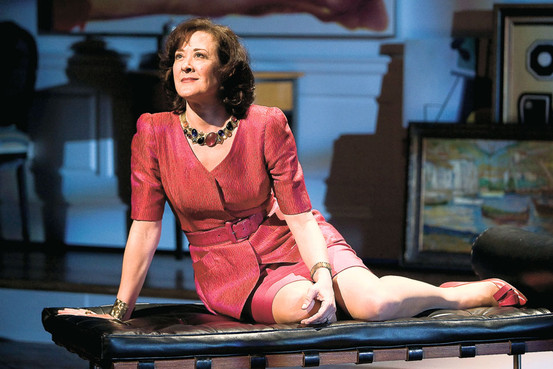
"Sooner or later, everyone who interviews me about Pops will ask some variation on this question: Why do we need another book about Satchmo? The short answer is that I am..."Terry.
I stopped reading (at the ellipsis).
The short answer is (as if I were you, speaking): Because I never wrote one before.
I would believe this about any "subject" and about any writer. There may be a million books about Mahler, but someday, SOMEDAY, there is going to be one written by a person who somehow actually speaks to ME! And THAT will be the Mahler bio I turn to again and again. Same with Louis Armstrong. There may be a million books, but I've not read a single one. There NEEDS to be another (another, another, and another) book about singularly interesting people, subjects, topics...because "the greatest book" or "definitive version" is not universal. I just do NOT believe it can be so. Your book needs to be written because you, your voice, will speak to people who a) may never have read about Louis Armstrong, b) know every book on Armstrong, but read yours and say, wow, what a great new facet!, c) know every book, and think yours sucks, and thus are inspired to TALK ABOUT IT, and WHY. And there's probably d) e) and f) too.
O.K. So now I'll go actually read your post....
My friend is a bit of an idealist, but I happen to agree with her, though I'd put it somewhat differently: there's no such thing as a definitive biography of a great man. There can't be. A great man (or woman) is too big to cram into a book-sized box. The best that you can do is offer a summary of the current state of knowledge about him, written from your own point of view--but you can never know everything there is to know. The day after your book is published, somebody may dig up an immensely important fact that you missed, or interpret the facts that you dug up in a way that makes more sense than your version. Biographical understanding is a journey without a destination, only stops along the way.
For this reason I, too, believe that there ought to be many books about Armstrong. As I recently said in an e-mail to Ricky Riccardi, the indefatigable Armstrong blogger who is currently writing a book about Armstrong's later years:
I hope that Pops provides stimulus for the emerging monographic literature on Louis Armstrong. That your book will come out a year after mine seems to me enormously appropriate and significant--it will be a signal that specific aspects of Armstrong's life and work are now seen as no less deserving of full-length treatment than, say, Matisse's later years. If that wish comes true, then I'll undoubtedly want to publish a revised edition of Pops in, say, 2030.
I should live so long!
Posted January 29, 12:00 AM
TT: So you want to see a show?
Here's my list of recommended Broadway, off-Broadway, and out-of-town shows, updated weekly. In all cases, I gave these shows favorable reviews (if sometimes qualifiedly so) in The Wall Street Journal when they opened. For more information, click on the title.
Warning: Broadway shows marked with an asterisk were sold out, or nearly so, last week.
BROADWAY:
• Alfred Hitchcock's The 39 Steps (comedy, G, suitable for bright children, reviewed here)
• August: Osage County (drama, R, adult subject matter, reviewed here)
• Avenue Q (musical, R, adult subject matter and one show-stopping scene of puppet-on-puppet sex, reviewed here)
• The Little Mermaid (musical, G, entirely suitable for children, reviewed here)
• South Pacific * (musical, G/PG-13, some sexual content, brilliantly staged but unsuitable for viewers acutely allergic to preachiness, reviewed here)
OFF BROADWAY:
• The Cherry Orchard (elegiac comedy, G, not suitable for children or immature adults, closes Mar. 8, reviewed here)
• The Cripple of Inishmaan (black comedy, PG-13, closes Mar. 1, reviewed here)
• Enter Laughing (musical, PG-13, closes Mar. 8, reviewed here)
• The Fantasticks (musical, G, suitable for children capable of enjoying a love story, reviewed here)
IN CHICAGO:
• The Seafarer (drama, PG-13, closes Feb. 22, reviewed here)
CLOSING SOON IN SAN DIEGO:
• Six Degrees of Separation (serious comedy, R, nudity and adult subject matter, closes Feb. 15, reviewed here)
CLOSING NEXT WEEK ON BROADWAY:
• Equus (drama, R, nudity and adult subject matter, closes Feb. 8, reviewed here)
CLOSING NEXT WEEK IN SAN FRANCISCO:
• Rich and Famous (comedy, PG-13, closes Feb. 8, reviewed here)
CLOSING SUNDAY IN FORT MYERS, FLA.:
• Dancing at Lughnasa (drama, PG-13, reviewed here)
CLOSING SUNDAY IN WEST PALM BEACH, FLA.:
• The Chairs (surrealist comedy, PG-13, far too complicated for children, reviewed here)
Posted January 29, 12:00 AM
TT: Almanac
"Actors who have tried to play Churchill and MacArthur have failed abysmally because each of those men was a great actor playing himself."
William Manchester (quoted in Book-of-the-Month Club News, June 1983)
Posted January 29, 12:00 AM
January 28, 2009
TT: Omega/alpha
As expected, the Washington Post has announced that Book World, its stand-alone book-review supplement, will publish its last issue on February 15. Thereafter the Post's book-related content will be integrated into the paper--but it will also be consolidated into a separate online section.
According to the New York Times:
Under the new arrangement at Book World, the combined pages allocated to books in the two sections will be equivalent to about 12 tabloid pages, down from the 16 published in the stand-alone section. The staff of Book World, already shrunk dramatically from its peak, will remain intact.
I'm sorry about that, but I must confess that the larger decision to kill off the print version means nothing to me, not because I don't like Book World but because I read all newspapers (including the one for which I write) online. As far as I'm concerned, the fuss over this development is pointless, given that the magazine will continue to be available as a unified entity on the Post's Web site.
I've said it before, but it's worth repeating: it is the destiny of serious arts journalism to migrate to the Web. This includes newspaper arts journalism. Most younger readers--as well as a considerable number of older ones, myself among them--have already made that leap. Why tear your hair because the Washington Post has decided to bow to the inevitable? The point is that the Post is still covering books, and the paper's decision to continue to publish an online version of Book World strikes me as enlightened, so long as the online "magazine" is edited and designed in such a way as to retain a visual and stylistic identity of its own.
Newspapers are in trouble now because their editors and publishers have spent the past decade turning their faces from the inevitable effects of the coming of the Web. Writers would do well not to make the same mistake. So enough with the anguished kvetching already. Let's turn loose of the past and see what we can make of the future.
* * *
Sarah Weinman's take is here.
Posted January 28, 12:33 PM
TT: I shook hands with Piney Brown
Kansas City, where I lived from 1975 to 1983, left a deep and indelible mark on me. I grew up in Smalltown, U.S.A., but Kansas City was the place where I went to college, rented my first apartment, played my first jazz gig, became a professional writer, and met the woman with whom I was to spend the first part of what I'm now old enough to call my middle years. For a time I took it for granted that I'd put down roots and raise a family there. But life, as is so often the case, had other plans for me, and when I left town and headed east, it was for good.
Because my kinfolk live on the other side of Missouri, I rarely have occasion to return to Kansas City. The last time I did so was to give a lecture in 1999. So when I heard that Kansas City Repertory Theatre was putting on a production of The Glass Menagerie staged by David Cromer, one of the directors whom I admire most, I knew I had to go and see it, not only for good and sufficient professional reasons but also because far too much time had gone by since I'd seen the city that I once called home.
I still know a number of people in Kansas City and its environs, and it would have taken no more than a half-dozen phone calls for me to come up with someone to share every meal I ate there last weekend. Instead I kept my presence strictly to myself. It wasn't that I didn't want to see my old friends--I miss them very much--but I knew that I urgently needed to spend some time alone with the past.
For me Kansas City is the intersection of a dozen roads not taken, the unknown, unknowable country that Stephen Sondheim wrote about in Follies:
The choices that you make
Aren't all that grim.
The worlds I'll never see
Still will be around,
Won't they?
The Ben I'll never be,
Who remembers him?
I remember the Terry that I'll never be, but I don't think about him very often, immersed as I am in this day and the next, and of late the press of work has grown so unrelenting that I've started to feel myself losing touch with the Terry I once was, the wide-eyed small-town boy who came north in search of...what? The Terry I am now? Or the one I used to be?
I went to Kansas City to spend a day communing with myself when young, wondering whether I'd know where to look for him. I drove toward what sounded like a familiar address, took what seemed like a familiar exit, and promptly found myself in the middle of a city that looked nothing like the one I remembered. Where was Italian Gardens, the restaurant where I learned to love garlic? Where was the bank in which I'd worked after graduating from college? Both had been razed to the ground and replaced with shiny new buildings of whose existence I knew nothing. It felt as though I had awakened one morning, looked at my hand, and discovered that two of my fingers had vanished in the night.
I resumed my pilgrimage after an uneasy sleep, and was greatly relieved to learn that my hotel was on the edge of the Kansas City Power & Light District, a large-scale mixed-use development that has swallowed up the part of town in which I worked a quarter-century ago. Most of the rest of downtown Kansas City, it turned out, is as it was, and the compass of memory soon led me unerringly to the Music Hall, the Folly Theater, and the Lyric Theater, all still intact and open for business, just as they were when I was an eager young man who longed to hear all the music there was in the world.
Many of my enduring memories of Kansas City have to do with food, a fact for which Calvin Trillin is to blame. In 1974 he published a book called American Fried: Adventures of a Happy Eater in which he sang the praises of the Kansas City restaurants of his own misspent youth in language so mouthwateringly evocative that I resolved to eat my way through the book from cover to cover. I didn't quite make it, but I put in more than my fair share of time eating at Winstead's Drive-In, having succumbed to what Trillin called "the monumental purity of the Winstead's hamburger." On Saturday I doffed my cap to Trillin by lunching at Winstead's, and that night I dined at Arthur Bryant's, the barbecue joint that he described as "the single best restaurant in the world." I wouldn't go that far, but the burnt ends at Bryant's remain ambrosial, and though the facade (if you want to call it that) has been gussied up by the new owners, the dining room is as worn and grubby as ever.
I can't say the same for Eighteenth and Vine, a corner not far from Bryant's that is known by name to all lovers of traditional jazz and celebrated in the lyrics of "Piney Brown Blues," a musical tribute to a legendary Kansas City saloonkeeper that was first recorded in 1938 by Big Joe Turner and Pete Johnson:
I dreamed last night
I was standin' on Eighteenth and Vine
I shook hands with Piney Brown
And I could hardly keep from cryin'
That moldering block is now the site of the American Jazz Museum, a shiny neon palace that houses an ersatz nightclub called the Blue Room. No doubt it is a good thing that Kansas City is home to such an institution, but it is so self-evidently out of place that I found it hard to warm to--especially since the surrounding neighborhood shows no visible signs of having been renewed by its presence.
Elsewhere, though, I found surprisingly little evidence of change. The great parkways and boulevards that sweep through Kansas City city look much the same as they always did. So does Liberty, the suburb north of town that is home to William Jewell College, my alma mater. Liberty looks like Smalltown, just as Jewell looks like Animal House's Faber College, the place where Knowledge Is Good, and I was relieved to find that both appear to be largely untouched by the passage of time.
Relieved--but also unnerved. For Kansas City has changed so little that I found it all too easy to retrace my youthful steps. My first apartment? It's still there. So is Mario's, the Italian grinder shop that I used to favor for first dates. So is the suburban ranch house on whose front lawn I fell in love with a pretty girl one starry autumn night some thirty-odd years ago. So is the hilltop park overlooking the city to which I brought another girl a few years later, as yet unaware of the pivotal role that she would play in the next installment of the story of my life.
To revisit the precincts of one's youth can be a disconcerting affair. Everywhere I looked I saw the Terry I'll never be, the one I wrote about in my first book:
We are born into a vast room whose walls consist of a thousand doors of possibility. Each door is flung open to the world outside, and the room is filled with light and noise. We close some of the doors deliberately, sometimes with fear, sometimes with calm certainty. Others seem to close by themselves, some so quietly that we do not even notice. "I want to play the violin," I said to my parents one day, and nobody bothered to tell me that a half-dozen doors slammed shut at that very moment--not just the door marked BECOMES JAZZ TRUMPET PLAYER but the one that said BECOMES SMALL-TOWN LAWYER, the one my father would someday encourage me to walk through, not knowing that it was already shut. I went off to college, and a door marked MARRIES HIGH SCHOOL SWEETHEART AND SPENDS LIFE IN SMALLTOWN, U.S.A. closed softly in the distance....
I wrote those words in 1991, and since then I've spent precious little time wondering what lay behind all those closed doors. Driving through Kansas City last Saturday was like revisiting my thousand-doored room. I drove a hundred miles that morning, and the further I drove, the stranger I felt. It occurred to me for the first time that nothing I had imagined for myself when young had come to pass. How was that possible? What did it mean?
My last stop was the Nelson-Atkins Museum of Art, one of America's foremost medium-sized art museums, though it wasn't widely recognized outside the art world as such until two years ago, when it opened a new wing designed by Steven Holl that was devoted to contemporary art. This made the Nelson a destination museum, something it should always have been, since its permanent collection contains the best Caravaggio in America and show-stoppingly fine examples of the work of (among many others) El Greco, Titian, Rembrandt, Poussin, Chardin, Constable, Corot, Monet, Cézanne, van Gogh, Brancusi, de Kooning, Fairfield Porter, Richard Diebenkorn, and Agnes Martin. As for the new wing, Tyler Green posted extensively two years ago on the Bloch Building. "If there has been a better American museum building built since Renzo Piano's Menil Collection 20 years ago," he wrote, "I haven't been there." I agree. It is as good as museum architecture gets.
Alas, the Nelson played no part in my lost youth. I went there exactly once when I lived in Kansas City, my eyes not yet having been opened to the visual arts. Not until years later did I come back to town for a visit and find out what I'd been missing. It was precisely for this reason, though, that seeing the Nelson now had the paradoxical effect of pulling me out of my bittersweet reverie and returning me to the present. As I strolled through the galleries, I thought of the art-covered walls of my New York apartment, my nights on the aisle, Pops and The Letter, my far-flung friends, my beloved and indispensable Mrs. T. My heart overflowed with gratitude for the goodness of the life that happened to me instead of the one I'd imagined. The past started to slip away as if I were looking at it in the rear-view mirror of my rental car.
The next day my niece Lauren, who is going to school at the University of Missouri in Columbia, drove to Kansas City to see The Glass Menagerie with me. We chatted happily over dinner, talking only of this day and the next. Then we crossed the street to the theater and took our seats, and a few minutes later the lights went down and an actor spoke. The play is memory, said Tom Wingfield, Tennessee Williams' alter ego, and I caught my breath. I'd been too wrapped up in the past to remember that I was in town to see a play spun out of the memories of another writer who spent part of his youth in Missouri....
The play is memory. Being a memory play, it is dimly lighted, it is sentimental, it is not realistic. In memory everything seems to happen to music. That explains the fiddle in the wings.
I don't know what Williams' fiddle was playing, but right then mine was playing "Piney Brown Blues," and I could hardly keep from crying. Nor did I try.
Posted January 28, 12:00 AM
TT: Snapshot
Excerpts from "Walking Distance," a 1959 episode of The Twilight Zone written by Rod Serling and starring Gig Young. The score is by Bernard Herrmann:
(This is the latest in a weekly series of arts-related videos that appear in this space each Wednesday.)
Posted January 28, 12:00 AM
TT: Almanac
That year at Oakland High
When we were seventeen,
The grass from there to San José
Was tall and cool and green.
I see it now.
Too young and brash was I
To know what time could mean.
That old acacia long cut down
Was felt but never seen.
I see it now.
That world I knew is lost to me,
Loves have come and gone.
The years go racing by.
I live as best I can,
And all at once I know it means
The making of a man.
I see it now.
William Engvick, "I See It Now" (music by Alec Wilder)
Posted January 28, 12:00 AM
January 27, 2009
CD
Jerry Junkin and the Dallas Wind Symphony, Lincolnshire Posy: Music for Band by Percy Grainger (Reference). An exquisitely well-played collection of Grainger's folk-flavored compositions and arrangements for concert band. Lincolnshire Posy, his six-movement masterpiece, is performed in a manner comparable in quality to the long-celebrated 1958 recording by Frederick Fennell and the Eastman Wind Ensemble. That version remains the gold standard, but it's out of print, and this one has the advantage of being coupled with such delectable miniatures as "Shepherd's Hey," "Spoon River," "The Duke of Marlborough Fanfare," and the deservedly ever-popular "Irish Tune from County Derry" (that's "Danny Boy" to you). Grainger's way with a folksong was both charming and brilliantly imaginative, and what he didn't know about scoring for concert band wasn't worth knowing. This might just be the best Grainger album to come along since Benjamin Britten's 1969 Salute to Percy Grainger (TT).Posted January 27, 11:24 PM
TT: John Updike, R.I.P.
I never succeeded in engaging with John Updike's work, and I've always assumed that the fault is mine. Throughout my lifetime he was the very model of a modern man of letters, a quintessentially professional writer pur sang who tried his hand at everything (he even wrote a play, Buchanan Dying) and was widely and impressively varied in his interests. I couldn't help but admire his seriousness and industry, and from time to time I'd give him another try, never to any avail. His prose style in fiction struck me as unpleasingly gray and thick, his essays and reviews as fluent but essentially conventional. The only book of his I really liked was Bech: A Book, and I didn't like it well enough to hang onto my copy when I pruned my library a few years ago. Yet time and again friends whose taste I trusted assured me that I was wrong about Updike, and insisted that I should try, try again.
In the end I finally gave up, and decided that Updike was one of those undeniably important artists, like Wagner or Dreiser, to whose virtues I would always be deaf. It's been years since I last read a word of his. Needless to say, I regret his passing, and I have no doubt that the world of letters will be much the poorer for his absence. I only wish I understood why.
* * *
Novelist Thomas Mallon offers an alternative view:
He was deeply interested in sex and God, but more than anything he was interested in working--steadily and prodigiously. The Rabbit books, taken together, are the great American novel of the second half of the twentieth century. Even when he was through with them, he kept writing fiction as if, culturally, it still counted--as if it could still land a writer on the cover of Time....
Read the whole thing here.
The New York Times obituary is here.
Posted January 27, 2:56 PM
DVD
The King and I. Now that TV screens are growing bigger and brighter, it's becoming possible--just--to appreciate the glories of wide-screen musicals without seeing them in a theater. Even if you don't much care for Rodgers and Hammerstein, the 1956 CinemaScope film of their musical version of Anna and the King of Siam is of the first importance because of Jerome Robbins' dances--especially since Robbins personally supervised their filming. "The Small House of Uncle Thomas," his Asian-flavored retelling of Uncle Tom's Cabin, looks cramped and illegible on a conventional TV, but to watch it on a HDTV-friendly screen is to be astonished anew by the endless ingenuity and unaffected freshness of Robbins' choreographic storytelling (TT).Posted January 27, 12:19 PM
BOOK
Walker Percy, The Moviegoer. Percy's first novel, published in 1961, is a startlingly rich and unsettling portrait of anomie under the aspect of modernity, seen through the eyes of a young man from New Orleans who flees from his fear of the meaninglessness of life by going to the movies and chasing his secretaries. Alienation is to American literature what love is to Italian opera, but The Moviegoer makes something enduringly new and relevant out of the old, old story (TT).Posted January 27, 12:10 PM
TT: Coast to coast to coast (V)
JANUARY 19 Off to San Francisco to see John Guare's Rich and Famous at the American Conservatory Theater. It's both convenient and reassuring to stay in familiar places when you travel as much as I do, so I booked myself into the Hotel Diva, which is across the street from A.C.T. The Diva is a bit boutiquey, to put it mildly, but the staff is friendly, the décor amusing, and the location unbeatable, at least if you're a professional playgoer.
JANUARY 20 I watched the inauguration of President Obama in a diner up the street, then knocked out a posting about it that pulled in a bushel of hits. Lunch with Carey Perloff, A.C.T.'s artistic director, after which I spent the afternoon writing about Flannery O'Connor for Commentary. In the evening I went to Rich and Famous with Heather Heise, whom I hadn't seen for nearly a year.
JANUARY 21 I flew to San Diego, picked up a rental car, drove to the train station, and met Mrs. T, who'd been spending a few days in Los Angeles with a mutual friend. We proceeded directly to Park Manor Suites, our regular San Diego residence, which is as dowdy and comfy as the Diva is cheerfully chic. After unpacking, unwinding, and catching up, we drove to the Old Globe Theatre to see Six Degrees of Separation, which was terrific, then returned to the hotel, whose restaurant is exceptionally good, for a late supper.
JANUARY 22 My body still thinks it's in New York, so I woke up at four-thirty sharp. A good thing, too, since I had to write and file my Wall Street Journal drama column by nine a.m. local time. Once it was done, I tiptoed out and ate breakfast in the hotel's rooftop café, then returned to the room and went back to bed.
Mrs. T and I spent the afternoon driving around town. We went as far north as La Jolla, lunched on fish tacos, then made our slow way back down the coast, looking for possible places to stay next winter. (We like San Diego, which is companionable and pleasingly devoid of cutting edges.) Dinner at Café Coyote, which the hotel clerk recommended to us. "I'm Mexican, so I'm fussy about Mexican food," he said. "This place is good." It turned out to be the same place where we'd eaten last July, so we congratulated ourselves on having previously sniffed it out on our own.
JANUARY 23 To Kansas City, leaving Mrs. T behind in San Diego, where it's fifty degrees warmer. I left the hotel at six-thirty in the morning and landed at Kansas City International Airport nine hours later, having spent the middle part of the day in a Minneapolis departure lounge. It started snowing as soon as I picked up the rental car.
(To be continued)
Posted January 27, 12:00 AM
TT: Twenty-five random things about me
Having been tagged by Gwen Orel and Lee Ann Westover in the past two days, I decided to play this game in public. So here goes:
1. I love corned-beef hash.
2. I played Beverly Carlton in a college production of The Man Who Came to Dinner.
3. Checking into a hotel makes me feel like a grownup.
4. I don't play piano much anymore, but I can still toss off the first chorus of Nat Cole's "Easy Listening Blues" from memory. (In college my classical cheval de bataille was Brahms' A Major Intermezzo, Op. 118/2.)
5. I can't dance. Don't ask me.
6. I wrote a play once. Alas, it wasn't any good, a judgment that was confirmed by a well-known director to whom I showed it. This was before I became a drama critic--and yes, I've given the director in question plenty of favorable reviews since then. I'm nothing if not fair.
7. The thing I dislike most about myself is my chronic impatience. I try to keep it under control, but sometimes it slips out.
8. My favorite Broadway musical--not my pick for Best Musical Ever, but my personal favorite--is On the Town.
9. I don't hold grudges.
10. All but two of my closest friends (including my best friend) are women.
11. I'm shy. My apparent gregariousness is an overcompensation...
12. ...which is why cocktail parties make me acutely uncomfortable.
13. I think Gene Tierney was the most beautiful of all movie stars--but I'd have rather known Ida Lupino.
14. I prefer cold pizza. (This drives Mrs. T crazy.)
15. I almost never read poetry for pleasure, even though I'm always glad when I do.
16. It's been a year since I last saw a movie in a theater.
17. I wish I had a deeper voice.
18. The last book I read was Walker Percy's The Moviegoer (which I reread every year or so).
19. I played bass on two albums, both of which are out of print and neither of which I own.
20. Given unlimited funds, the first thing I'd buy (other than a Frank Lloyd Wright house, which wouldn't be very practical) is a Cézanne watercolor.
21. I've seen Falstaff more times than any other opera.
22. I have a weakness for funny women with cat-like faces.
23. My all-time favorite rock album is The Band. Runners-up: Steely Dan's Aja, The Who Live at Leeds, and Erin McKeown's We Will Become Like Birds.
24. I look frightful in a caftan.
25. I cry easily.
Now, over to OGIC and CAAF....
Posted January 27, 12:00 AM
TT: Almanac
"By 1938, I had read so many books that I wrote one."
Delmore Schwartz, The Ego Is Always at the Wheel: Bagatelles (courtesy of Paul Moravec)
Posted January 27, 12:00 AM
January 26, 2009
TT: Where are they now?
I'm curious about the current whereabouts of two people whom I knew in college three decades ago, a violinist named Laura Gutsch and an oboe player named Michelle Rock. Both lived in the Kansas City area. Laura married and moved away, but I know nothing more about Michelle, who may or may not still be in Kansas City.
If anyone out there knows either of these women, would you be so kind as to send them a link to this posting?
Posted January 26, 9:32 AM
TT: Looking for trouble
Brooke Campbell asked me at lunch the other day how I managed to write a book and an opera libretto in between seeing and reviewing two plays a week. I was tempted to reply by quoting Leonard Bernstein: "I'm extremely humble about whatever gifts I may have, but I am not modest about the work I do. I work extremely hard and all the time." In fact I don't work all the time (and neither did Bernstein). It's true, though, that I often work at times when other, saner people might well choose to do something else.
Last week, for instance, I flew from San Francisco to San Diego, where I met Mrs. T at the train station. I got there an hour ahead of her, so I did the same thing that I'd been doing while waiting for my plane that morning: I planted myself on a bench, booted up my MacBook, and started proofreading the orchestral score of the first four scenes of The Letter. By the time the train arrived, I was done.
Proofreading is one of the aspects of writing an opera (or a book, for that matter) that tends not to get mentioned in interviews. Yet it's indispensable to the successful realization of the end product. The orchestral score of The Letter consists of 315 pages, each one crammed full of complex musical notation. The seventy-odd members of the Santa Fe Opera pit orchestra will play from individual parts that have been extracted from this score. This means that any mistakes in the version of the score that goes to the printer will be repeated in the orchestra parts. Result: wrong notes, wasted time and money, fast-mounting irritation, last-minute chaos.
If you think I'm exaggerating, consider the cautionary tale of the first orchestral run-through of Four Saints in Three Acts, at which Virgil Thomson, the composer, was put through the wringer by Alexander Smallens, the conductor. He deserved it, too. Anthony Tommasini tells the story in Virgil Thomson: Composer on the Aisle:
Because there was no budget to hire copyists, Thomson had had to prepare the orchestra score with Maurice Grosser's help. The previous summer on a Mediterranean island, Porquerolles, he copied out all the individual parts himself, marking the manuscript paper in pencil, averaging ten pages a day. Grosser kept pace, copying over Thomson's script in ink. There was no piano available to check for accuracy. But Thomson felt he didn't need one...The parts contained countless mistakes, as was clear to everyone when the instrumentalists struggled to read through the music for the first time. The hot-tempered Smallens was furious. Thomson, who had been such a bossy perfectionist, was devastated with embarrassment as he made correction after correction, wasting precious time and money.
The extra rehearsal time necessary to make the corrections ended up costing the producers of Four Saints $500, $7,700 in today's dollars--big money for a small-scale production.
Time and technology, of course, have changed greatly since 1934. Paul Moravec wrote The Letter on an Apple computer, using a program called Sibelius that made it possible for him to create the orchestral score electronically. Using the same program, Subito Music, Paul's publisher, will generate the orchestral parts for The Letter directly from his digital files instead of hiring copyists to write them out in longhand. By cutting out these once-essential middlemen, Sibelius eliminates the possibility of inadvertent copying errors--but Paul still has to double- and triple-check his electronic "manuscript" to make sure that the notes he wrote were the ones he meant to write. I in turn must read through each page of the score to make sure that Paul has inputted my libretto correctly, including all of the countless revisions that the two of us have made over the past year.
Needless to say, Paul's job is far more involved than mine. All I have to do is proof the printed text, which is 7,800 words long, a bit more than half the length of a single chapter of Pops: The Life of Louis Armstrong. Paul, on the other hand, has to sift through hundreds of thousands of musical notes in search of niggling errors, any one of which might turn (say) a minor chord into a major one.
I loathe such numbing drudgery, which is why I started doing it as soon as Subito e-mailed me my formatted electronic copy of the proofs of the orchestral score of The Letter. As usual, Shakespeare was right: If it were done when 'tis done, then 'twere well/It were done quickly. So I spent a good-sized chunk of a sunny day in San Diego staring at the screen of my laptop and pecking out messages that read like this: "At measure 370, Hammond's vocal part should include the stage direction Offstage as before. This direction should not be at measure 378."
Such labor is far from glamorous, but it's a not-unimportant part of what you'll be paying for should you decide to pony up $26 for a cheap seat (or $178 for an expensive one) at the first performance of The Letter.
Posted January 26, 12:00 AM
TT: Almanac
"Men rush to California and Australia as if the true gold were to be found in that direction; but that is to go to the very opposite extreme to where it lies. They go prospecting farther and farther away from the true lead, and are most unfortunate when they think themselves most successful. Is not our native soil auriferous? Does not a stream from the golden mountains flow through our native valley? and has not this for more than geologic ages been bringing down the shining particles and forming the nuggets for us? Yet, strange to tell, if a digger steal away, prospecting for this true gold, into the unexplored solitudes around us, there is no danger that any will dog his steps, and endeavor to supplant him. He may claim and undermine the whole valley even, both the cultivated and the uncultivated portions, his whole life long in peace, for no one will ever dispute his claim."
Henry David Thoreau, "Life Without Principle"
Posted January 26, 12:00 AM
January 25, 2009
BOOK
Brad Gooch, Flannery: A Life (Little, Brown, $30, out Feb. 25). The first full-length biography of Flannery O'Connor is now available for pre-ordering. Flannery is lucidly written, sympathetic yet detached, thorough but not overly detailed. Among Gooch's more startling revelations: "Good Country People" is autobiographical, more or less. Don't expect too, many shockers, but don't worry about it, either. Surprising or not, this is the book O'Connor's admirers have been waiting for, and it does her justice (TT).Posted January 25, 10:53 PM
January 23, 2009
TT: Where's Guare?
I came back to New York long enough to catch the Broadway revival of Richard Greenberg's The American Plan, then headed west for a pair of California revivals of two plays by John Guare, Six Degrees of Separation in San Diego and Rich and Famous in San Francisco. California is getting the better end of the deal. Here's an excerpt from today's Wall Street Journal drama column, in which I review all three shows.
* * *
In 1990 "Six Degrees of Separation" was the play all smart Manhattanites had to see, partly because Stockard Channing was so good in it but mostly because Mr. Guare's satire of upper-middle-class folkways was so well timed. Money talked very loudly in 1990, and those who didn't have any longed for a close-up view of the foibles of those who did. Back then I found "Six Degrees" to be clever but shallow, which says far more about me than Mr. Guare. Today it strikes me as one of the strongest American plays of the postwar era, a comedy of liberal manners (and liberal gullibility) whose punch lines are rooted in something more than mere knowingness. In telling the real-life tale of a young black con man (Samuel Stricklen) who wormed his way into a string of Fifth Avenue apartments by passing himself off as Sidney Poitier's nonexistent son, Mr. Guare tapped into the loneliness and insecurity that have always been part of the American national character. We are all Gatsbys now, his characters told us, and their message rings as true in the Age of Obama as it did in the far-off days of Bush the Elder.
Nowadays "Six Degrees" doesn't get done as often as it should, presumably because it calls for a cast of 15 and an expensive-looking set. Not only has San Diego's Old Globe Theatre pulled both commodities out of its institutional hat, but Trip Cullman, the director, has brought off the coup of casting Karen Ziemba in the role that made Ms. Channing a stage star. Ms. Ziemba won a well-deserved Tony for "Contact," but in recent years she's been relegated to second-banana status on Broadway, and this is the first time that I've seen her in a straight play. It was worth the wait: Ms. Ziemba plays Ouisa, the anxious socialite of "Six Degrees," with an open-hearted warmth that puts a fresh and convincing spin on Mr. Guare's script...
Though Mr. Guare's brand of comedy often runs to the zany, he never forgets to make you feel. "Rich and Famous," now playing at the American Conservatory Theater, is a maniacally funny portrait of Bing Ringling (Brooks Ashmanskas), an unknown playwright who longs in vain to hit the jackpot. Unlike the tightly woven "Six Degrees," "Rich and Famous," which dates from 1976, adds up to a series of sketches, one of which contains a brutal skewering of Leonard Bernstein (Stephen DeRosa), with whom Mr. Guare worked in his youth. Yet its specific emotional gravity is surprisingly high, and the overall effect is less farcical than melancholy, especially in the poignant scene in which Bing, Mr. Guare's maladroit alter ego, runs into an ex-girlfriend (Mary Birdsong) and finds that his failure looks like success from her suburban point of view....
Richard Greenberg is back on Broadway yet again, this time with a revival of "The American Plan," the 1990 play that put him on the map. It is, like all his other plays, repellently glib, and seeing it in tandem with "Six Degrees of Separation" also suggests that it is...oh, let's be nice and call it derivative. Like "Six Degrees," "The American Plan" is a snapshot of upper-middle-class life that hinges on the deceptions of a presentable young man who turns out to be (A) poor and (B) gay. In "The American Plan," the young man in question (Kieran Campion) is courting a rich girl (Lily Rabe) who is brainy but neurotic, and the air becomes clotted with pseudo-witty one-liners....
* * *
Read the whole thing here.
Posted January 23, 12:00 AM
TT: Almanac
"Being a playwright is like being a Secret Service man. It's not something you wrote; it's somebody whose security you're in charge of. And you're always waiting to see where the sniper is going to come from."
John Guare (quoted in the San Diego Union-Tribune, Jan. 8, 2009)
Posted January 23, 12:00 AM
January 22, 2009
TT: So you want to see a show?
Here's my list of recommended Broadway, off-Broadway, and out-of-town shows, updated weekly. In all cases, I gave these shows favorable reviews (if sometimes qualifiedly so) in The Wall Street Journal when they opened. For more information, click on the title.
Warning: Broadway shows marked with an asterisk were sold out, or nearly so, last week.
BROADWAY:
• Alfred Hitchcock's The 39 Steps (comedy, G, suitable for bright children, reviewed here)
• August: Osage County (drama, R, adult subject matter, reviewed here)
• Avenue Q * (musical, R, adult subject matter and one show-stopping scene of puppet-on-puppet sex, reviewed here)
• The Little Mermaid * (musical, G, entirely suitable for children, reviewed here)
• South Pacific * (musical, G/PG-13, some sexual content, brilliantly staged but unsuitable for viewers acutely allergic to preachiness, reviewed here)
OFF BROADWAY:
• The Cherry Orchard (elegiac comedy, G, not suitable for children or immature adults, closes Mar. 8, reviewed here)
• The Cripple of Inishmaan (black comedy, PG-13, closes Mar. 1, reviewed here)
• Enter Laughing (musical, PG-13, closes Mar. 8, reviewed here)
• The Fantasticks (musical, G, suitable for children capable of enjoying a love story, reviewed here)
IN CHICAGO:
• The Seafarer (drama, PG-13, closes Feb. 22, reviewed here)
CLOSING SOON ON BROADWAY:
• Equus (drama, R, nudity and adult subject matter, closes Feb. 8, reviewed here)
CLOSING NEXT WEEK IN FORT MYERS, FLA.:
• Dancing at Lughnasa (drama, PG-13, closes Feb. 1, reviewed here)
CLOSING NEXT WEEK IN WEST PALM BEACH, FLA.:
• The Chairs (surrealist comedy, PG-13, far too complicated for children, closes Feb. 1, reviewed here)
CLOSING SUNDAY IN CORAL GABLES, FLA.:
• Adding Machine (serious musical, PG-13, closes Jan. 25, reviewed here)
Posted January 22, 12:00 AM
TT: Almanac
"San Francisco is a mad city--inhabited for the most part by perfectly insane people whose women are of a remarkable beauty."
Rudyard Kipling, American Notes
Posted January 22, 12:00 AM
January 21, 2009
TT: Coast to coast to coast (IV)
JANUARY 11 Mrs. T and I reluctantly parted company at the Miami airport, she to spend a few days at a yoga retreat in the Bahamas and I to return to New York City for a week. My first order of business was to do my laundry and speak at Dick Sudhalter's memorial concert and a retirement dinner for Neal Kozodoy, the outgoing editor of Commentary, where I shared a podium with Bill Bennett, David Brooks, Bill Kristol, and Norman Podhoretz. (Do not adjust your set!) These two events took place simultaneously in different locations, but I managed to get from one to the other and deliver both speeches without bruising myself too badly.
John Podhoretz, who is replacing Neal at Commentary, used the occasion to announce that as of next month's issue, I will cease to be the magazine's music critic, a post I've held since 1995, and become its chief culture critic, a title that was created by John especially for me. I'll continue to write about music from time to time as part of my revised portfolio, but my first three pieces under the new dispensation will be about Alfred Hitchcock, Flannery O'Connor, and William Inge. That ought to keep everyone guessing!
JANUARY 16 I spent the rest of my week in New York seeing plays by Anton Chekhov and Richard Greenberg, writing three Wall Street Journal columns, sifting through my accumulated snail mail, tinkering with Pops: The Life of Louis Armstrong, and attending a screening of Something to Dance About, the upcoming PBS documentary on Jerome Robbins.
Watching the Robbins documentary proved to be an intensely nostalgic experience for me, much more so than I'd expected. The beginning of my involvement in ballet dates from the final years of Robbins' life. The first piece I ever wrote about dance was an essay about Jerome Robbins' Broadway that appeared in The New Dance Review in 1990. Eight years later I wrote his obituary for Time. In between I covered the premieres of his last few ballets for the New York Daily News, one of which, A Suite of Dances, figures prominently in Something to Dance About. Of late, though, I've drifted away from the world of ballet, and the last dance performance of any consequence that I attended in Manhattan, Kyra Nichols' farewell, took place in June of 2007.
It felt strange to find myself in a roomful of balletomanes for the first time in a year and a half, and stranger still to see Robbins up on the screen, looking just the way he did when I sat three seats away from him at the premiere of New York City Ballet's revival of Les Noces in 1998. As I wrote in Time two months later:
The once vital choreographer had grown frail, but his snow-white beard still glowed like a beacon, and when the dance was over, he made his careful way to center stage, hobbled by age and illness but radiating undimmed authority. More than a few onlookers wept, knowing that the golden age of ballet--the starlit century of Serge Diaghilev, George Balanchine, Antony Tudor, Sir Frederick Ashton and Jerome Robbins--was drawing at last to a close.
All at once I remembered the inscription on a refrigerator magnet owned by a friend of mine: "Time Flies, Whether You're Having Fun or Not."
JANUARY 17 Lunch with Brooke Campbell, a singer-songwriter in whose music I took an interest last year. (She has a new CD out called Sugar Spoon.) She turned out to be a soft-spoken, slightly shy young woman with a North Carolina accent that reminded me of home. The two of us passed a pleasant hour trading musical notes (we both like Aimee Mann, Nickel Creek, and Jonatha Brooke). She played me a song by Rachel Taylor, whose latest CD I ordered as soon as I got home, and I in turn suggested that she check out Erin McKeown.
Brooke's guitar playing is so harmonically rich and resourceful that I took it for granted that she had musical training. Very much to my surprise, she told me that she'd started playing guitar and writing songs at the age of twenty-one, having previously done nothing more challenging than sing in a church choir. This reminded me of the Mutant, my jazz-singing friend who decided one fine day to take up painting and a month later produced a canvas that reminded me of Hans Hofmann (it hangs over my bookshelves).
Repeat after me: life is unfair.
(To be continued)
Posted January 21, 12:00 AM
TT: Snapshot
The opening sequence from The Killers, Robert Siodmak's 1946 film version of Ernest Hemingway's short story, with William Conrad and Charles McGraw. The score is by Miklós Rózsa:
(This is the latest in a weekly series of arts-related videos that appear in this space each Wednesday.)
Posted January 21, 12:00 AM
TT: Almanac
"Poor Faulkner. Does he really think big emotions come from big words? He thinks I don't know the ten-dollar words. I know them all right. But there are older and simpler and better words, and those are the ones I use."
Ernest Hemingway (quoted in A.E. Hotchner, Papa Hemingway)
Posted January 21, 12:00 AM
January 20, 2009
TT: Art for politics' sake
I was eating breakfast in a shabby Latino-friendly diner on San Francisco's Geary Street when the torch was passed to a new generation--and a new class. It may say something of interest about Barack Obama that I was the only person in the Olympic Flame Diner who was paying any attention to his inauguration, even though the TV over the grill was tuned to CNN. President Obama, on the other hand, has been embraced with wild fervor by America's educated middle class, including virtually all of our artists. Hence it was of special interest to me that a piece of classical music and a poem were unveiled at the inaugural ceremonies--and that neither was any good at all.
The music was by John Williams, who has his moments (I love Star Wars) but isn't exactly a serious composer. Not surprisingly, his piece, Air and Simple Gifts, was an exercise in Americana à la Hollywood:
It was noteworthy solely because Williams borrowed so unabashedly from Aaron Copland's famous setting of the Shaker hymn on which Appalachian Spring is based. (That's what Itzhak Perlman and Yo-Yo Ma should have played.)
The poem, "Praise Song for the Day," was by Elizabeth Alexander, a professor at Yale, and it was...well, about what you'd expect from a professor at Yale.
Robert Frost wrote a poem for John Kennedy's inauguration, though he was unable to read it because of the bright sunlight (he recited "The Gift Outright" from memory instead). The best-remembered lines are the closing couplet, in which Frost foretold the coming of a golden age of poetry and power/Of which this noonday's the beginning hour. I find the first three lines more touching, though: Summoning artists to participate/In the august occasions of the state/Seems something artists ought to celebrate. Indeed it does, which is why I'm glad that President Obama summoned artists to participate in his inauguration. Still, I can't help but wish that he'd gone somewhere other than Hollywood and the groves of academe to look for them.
* * *
Here is the complete text of "Dedication," written by Robert Frost in commemoration of President Kennedy's 1961 inauguration.
Posted January 20, 1:26 PM
TT: Coast to coast to coast (III)
JANUARY 9 Back to work, if you want to call it that: Mrs. T and I took a day trip to see "Marsden Hartley: American Modern" at the Naples Museum of Art, followed by dinner and the opening night of Brian Friel's Dancing at Lughnasa at Florida Rep. Hartley's work, like Friel's, is near and dear to my heart--I own one of his lithographs--but it's far easier to see his paintings in America's regional museums than in big cities, which is why we made a point of seeing this unusually fine traveling exhibit, which has been making the rounds for the past few years without getting anywhere near New York City.
Across the hall was a Norman Rockwell show--pretty standard stuff for the most part, though I was pleased to see the original painting of "Solitaire" and a grisaille study for "Shuffleton's Barbershop," both of which are among the handful of Rockwell's Saturday Evening Post covers that I think deserve to be taken seriously as art. It was "Shuffleton's Barbershop" that I had in mind when I wrote five years ago in the late, lamented Book that "at his occasional best, Rockwell really was worthy of comparison to the Dutch genre painters of the seventeenth century, such as Pieter de Hooch, whose work he admired and emulated....he managed to shake off the easy, jokey charm of his better-known canvases and cut straight to the heart of the matter." ("Shuffleton's Barbershop," by the way, is Paul Johnson's favorite Rockwell painting.)
The Rockwell show appeared to be more to the liking of the patrons of the Naples Museum, whose architecture is very suburban--the interior suggests a cross between a shopping center and a gazillion-dollar Ramada Inn--and whose permanent collection is of modest interest. Dancing at Lughnasa, on the other hand, was a knockout, one of the best regional revivals I've covered for the Journal. Alas, we didn't stay in Fort Myers long enough to get any kind of feel for the place, so all I can tell you is that Florida Rep is a company of real consequence and that you can get a good dinner at the Veranda Restaurant. I don't know whether there's anything else in town worth seeing, hearing, or doing, but I have no doubt that I'll catch another show at Florida Rep as soon as my schedule permits.
JANUARY 10 Back across Alligator Alley to the Fort Lauderdale Museum of Art (which for some eye-rollingly pretentious reason feels that it should call itself "Museum of Art | Fort Lauderdale") to see "Coming of Age: American Art, 1850s to 1950s," a touring show of seventy paintings and sculptures from the permanent collection of the Addison Gallery of American Art at Philips Academy, Andover, Massachusetts. Among the artists represented are John F. Peto, George Inness, John Singer Sargent, Winslow Homer, Thomas Eakins, John Twachtman, Edward Hopper, John Marin, Stuart Davis, Arthur Dove, Charles Sheeler, Milton Avery, Jacob Lawrence, Hans Hofmann, Jackson Pollock, Joseph Cornell, and Josef Albers. Not all of the pieces are first rate, but this is one of those rare shows whose total effect is far greater than the sum of its parts. if somebody who knew nothing about modern American art asked me what it was like, I'd unhesitatingly send them to "Coming of Age." (The catalogue is good, too.)
Dinner in Miami with Jordan Levin of the Miami Herald, an old friend, at Pacific Time, an ultra-trendy but excellent pan-Asian restaurant in the design district. Afterward we went to the Adrienne Arsht Center for the Performing Arts, a postmodern cultural tabernacle where Miami City Ballet was dancing Paul Taylor's Mercuric Tidings and George Balanchine's Ballet Imperial:
It irked me no end to learn that the company would be dancing in New York while I was in San Diego and Kansas City, so I went online and saw that we could catch a performance on our last night in Florida. Mrs. T had never seen any Balanchine ballets, and this one, not surprisingly, knocked her for a loop.
(To be continued)
Posted January 20, 12:00 AM
TT: Almanac
"Journalism is popular, but it is popular mainly as fiction. Life is one world, and life seen in the newspapers another."
G.K. Chesterton, "On the Cryptic and the Elliptic"
Posted January 20, 12:00 AM
January 19, 2009
WEIGHING ANDREW WYETH
"Most people--critics included--look at paintings and see reputations. Andrew Wyeth disappeared behind his reputation many years ago, and since then it has been all but impossible to sweep away the haze of words that hides his paintings from view..."Posted January 19, 7:34 AM
TT: More ingredients
Asked whether he preferred the trumpet playing of Bobby Hackett or Billy Butterfield, Louis Armstrong thought it over and replied, "Bobby. He got more ingredients." That's one of my favorite Armstrong lines, and I like to think that it also applies to Pops: A Life of Louis Armstrong, my forthcoming biography of the greatest jazz musician of the twentieth century.
I'm working on the catalogue copy for Pops, which will be published by Harcourt this fall, and so I'm starting to grapple with the ever-vexing problem of self-promotion. Sooner or later, everyone who interviews me about Pops will ask some variation on this question: Why do we need another book about Satchmo? The short answer is that I am the first biographer to have had access to six hundred and fifty reels of tape recordings privately made by Armstrong during the last quarter-century of his life, many of which contain revealing after-hours conversations in which he speaks with breathtaking frankness about his life and work. More generally, I've been able to draw on a wide variety of other material that was unavailable or unknown to Laurence Bergreen when he wrote Louis Armstrong: An Extravagant Life, the last primary-source Armstrong biography, which was published twelve years ago.
All well and good--but what did I do with my new ingredients? To put it as simply as possible, I've sought to write a narrative biography of Armstrong that is comparable in seriousness and scope to such "definitive" high-culture biographies as W. Jackson Bate's Samuel Johnson, George Painter's Marcel Proust, or David Cairns' Berlioz. Next to no popular-music biographies have aspired to the high standards set by these books, but it seemed self-evident to me that Louis Armstrong was a figure of similar artistic and cultural significance, and so deserved to be written about in the same way.
Such a biography is by definition several books in one:
• Just the facts, ma'am. The first job of a biographer is to tell the story of his subject's life as accurately as possible. In order to do this, I've digested a vast amount of source material, all of it documented in a 27,000-word chapter of source notes.
To give you an idea of how much work this entailed, here's a paragraph from Pops:
The best-remembered number in the Creole Jazz Band's repertoire is "Dipper Mouth Blues," jointly credited to Joe Oliver and Armstrong and recorded twice, for Gennett in April and again for OKeh two months later. (The title came from one of the many nicknames inspired by Armstrong's large mouth.) Armstrong was the first of scores of jazzmen to learn Oliver's climactic solo by heart and, later, to record it himself. "Everything I did, I tried to do it like Oliver," he said. Even in 1923, however, that was no longer true. Oliver used mutes to alter the timbre of his cornet, making it cry like a baby or curse like a man, while Armstrong rarely used anything but a simple straight mute and never indulged in the tonal trickery for which Oliver was renowned. It was not for lack of trying: Lil Armstrong claimed that he spent a whole week trying without success to imitate Oliver's "wah-wah" muted inflections on "Dipper Mouth Blues." "Louis never could play that solo like Joe," she said. "And I think it kind of discouraged him because Joe was his idol and he wanted to play like Joe." But thereafter he cultivated a shining tone that dwarfed the smaller sound of his mentor, just as his studies had given him a foundation of formal knowledge that Oliver, who readily confessed to being a poor sight reader, could not hope to rival.
And here are the source notes for that paragraph:
Jointly credited to Oliver and LA: Brian Harker has speculated that LA wrote the introduction to "Dipper Mouth Blues," a sequence of descending diminished-seventh arpeggios (Harker, "Louis Armstrong and the Clarinet," American Music, Summer 2003). "Everything I did": Will Jones, "It's the Bunk, but It Helped," Minneapolis Tribune, July 20, 1949. LA spent a whole week: William Russell, "Louis Armstrong"; Frederic Ramsey Jr., Jazzmen, 126. "LA never could play that solo": Lil Armstrong, Satchmo and Me, recorded interview (Riverside). He readily confessed to being a poor sight reader: "I'm the slowest goddamned reader in the band" (Clyde Bernhardt, I Remember: Eighty Years of Black Entertainment, Big Bands, and the Blues, 94). That Oliver could read music, however, is not in doubt. On the 1924 duet recording of "King Porter" that he made with Jelly Roll Morton, he is reading from the written cornet part to the stock orchestration of Morton's most famous composition (Samuel Charters, A Trumpet around the Corner, 216).
You get the idea.
• Department of corrections. Every book about Louis Armstrong published before 1999 contains numerous factual errors, some minor and others substantive. In that year Thomas Brothers edited Louis Armstrong, in His Own Words: Selected Writings, the first collection of Armstrong's hitherto-unpublished autobiographical manuscripts and uncollected articles and correspondence and the first full-length book about Armstrong by an academic scholar.
Since then other scholars have started exploring in earnest the archival material on which Pops is based. Thanks to my own research and the invaluable work of these men and women, Pops contains the most accurate accounts published to date of Armstrong's early musical training; his 1928 recording sessions with Earl Hines; his 1929 Broadway debut; his 1930 marijuana arrest; his 1931 skirmish with the Chicago mob; his relationships with Tommy Rockwell, Johnny Collins, and Joe Glaser, the three white managers who directed his career; his trips to Europe in the early Thirties; his decision to break up his big band in 1947 and start playing with a combo; his 1957 quarrel with President Eisenhower over Orval Faubus' attempt to block the desegregation of the public schools of Little Rock, Arkansas; the 1963 session at which he recorded "Hello, Dolly!"; and countless other matters large and small.
Like most larger-than-life historical figures, Armstrong generated his share of apocrypha. You will find none of it in Pops, which contains no unsupported assertions or unsourced "quotes." In particular, every statement by Armstrong that is cited in Pops has been traced back to its earliest known source.
• Critical perspective. Pops is the first fully sourced biography of Louis Armstrong to be written by an author with musical training. While it's primarily narrative, not critical, I've also tried to deepen the reader's understanding of Armstrong's music, both by discussing selected recordings by Armstrong in close but (I hope) intelligible detail and by situating them in the context of his life.
Here's an example, an excerpt from the fourth chapter of Pops in which I talk about "Weather Bird," one of Armstrong's most important and influential records:
It became customary for Armstrong and his sidemen (except for Earl Hines, who disliked marijuana) to get high before making a record, which probably explains how "Muggles" got its name. But it is unlikely that Armstrong was anything other than clear-headed when, two days earlier, he and Hines recorded "Weather Bird," the most forward-looking of the three dozen 78 sides they made together in 1927 and 1928. It was the sole occasion on which they went it alone in the studio, and they took full advantage of their freedom, sailing through a duet that resembles "Skip the Gutter" sped up and writ large. Again one gets the feeling that Hines is trying to give his partner the rhythmic slip, but never quite successfully. The strongest impression left by "Weather Bird," though, is of an airy lightness made possible by the absence of a rhythm section, combined with a sense of awe at the incisiveness of musical argument. Armstrong called the recording "our vir-tee-o-so number," and Hines claimed that the trumpeter spun it out of thin air. "We had no music," he recalled. "It was all improvised, and I just followed him." Perhaps the pianist was unaware that the song, a multi-themed rag composed by Armstrong, had been recorded by the Creole Jazz Band in 1923, but the first half of the Armstrong-Hines version follows the earlier recording fairly closely, suggesting that their performance, for all its seeming spontaneity, may in fact have been rehearsed with some care. Nor was "Weather Bird" the first recorded jazz duet: Joe Oliver and Jelly Roll Morton had already cut two. It was, however, the first such recording of any musical significance, and its quicksilver brilliance has yet to be surpassed.
• Cultural context. Because Armstrong's significance extends beyond the realm of jazz proper, I have sought at various points in Pops to place him in the larger world of art and culture. Here's another excerpt from the fourth chapter, in which I talk about the relationship between Armstrong and Earl Hines:
For both men 1928 was their floruit, a year of triumphs to which all their subsequent undertakings would forever after be compared. The time was ripe for such prodigies, with modernism at its apogee and mass-reproduced popular culture in its first flower. It was the year of Lady Chatterley's Lover and "Makin' Whoopee," Evelyn Waugh's Decline and Fall and Walt Disney's "Steamboat Willie," the Stravinsky-Balanchine Apollo and the Brecht-Weill Dreigroschenoper. Jazz, too, had by 1928 won a measure of acceptance in highbrow circles that in retrospect is striking, even startling, given its recent origins in the honkytonks of New Orleans. George Gershwin, who thought it to be "the only musical idiom in existence that could aptly express America," made use of jazz-derived musical techniques in An American in Paris, premiered by the New York Philharmonic that December to general acclaim. When Maurice Ravel came to New York earlier in the year to play his jazz-flavored violin sonata with Joseph Szigeti, he assured reporters that American classical composers would do well to take jazz seriously: "I am waiting to see more Americans appear with the honesty and vision to realize the significance of their popular product, and the technic and imagination to base an original and creative art upon it."
Too often jazz is written about as if it exists in a cultural vacuum. It is, I believe, worth knowing that Philip Larkin praised Louis Armstrong as "an artist of Flaubertian purity...more important than Picasso," just as it is more than merely interesting to know that Armstrong was listening to and collecting opera recordings as a young man in New Orleans: "I had Caruso...Galli-Curci, Tetrazzini--they were all my favorites. Then there was the Irish tenor, McCormack--beautiful phrasing."
• Reception history. Surprisingly little has been written about the way in which Armstrong was covered by the journalists of his day. When did his name first appear in Time, The New Yorker, and the New York Times? When was he first written up in Walter Winchell's column? How did the English press react to his London debut in 1932? At what point did critics start to dismiss his once-revolutionary music as old-fashioned? You'll find the answers in Pops.
• Trivial pursuits. Because I wrote Pops for a general audience, I deliberately kept the text free of scholarly minutiae. On the other hand, the source notes contain many tidbits that will be of consuming interest to Armstrong specialists. Exactly how tall was he? Was the battered cornet that the Smithsonian Institution acquired in 2002 really the actual instrument on which he learned to play? Where and when did he first meet Jack Teagarden? Was the name of his 1937 radio show Harlem or Harlem Radio Review? Might he possibly have been sterile--and if so, why? It's all in the notes.
That's a whole lot of ingredients to cram into one book--but, then, such thoroughness is taken for granted in the field of literary biography. Alas, you can count on the fingers of one hand the previous jazz biographies that seek to accomplish all of the aforementioned goals. One of the few books about a major jazz musician that is directly comparable to Pops is, appropriately enough, Bix: Man and Legend, the 1974 Richard M. Sudhalter-Philip R. Evans biography of Bix Beiderbecke, Armstrong's friend and peer. I have done my best to make Pops worthy of its great predecessor.
* * *
Here's part of a little-known video clip that I unearthed and used as a key source for the first chapter of Pops. It's Armstrong's 1965 appearance on the TV game show I've Got a Secret, during which he was reunited with Peter Davis, his very first music teacher:
Posted January 19, 12:00 AM
TT: Almanac
"Biography, in its purer form, confined to the ended lives of the true and brave, may be held the fairest meed of human virtue--one given and received in entire disinterestedness--since neither can the biographer hope for acknowledgment from the subject, not the subject at all avail himself of the biographical distinction conferred."
Herman Melville, Israel Potter
Posted January 19, 12:00 AM
January 16, 2009
TT: Course correction
Eric Gibson, my editor at The Wall Street Journal, called at noon to ask whether I'd be willing to write a last-minute "Sightings" column about Andrew Wyeth for Saturday's paper. I agreed, went to work, and sent in the new column five minutes ago. It will replace my originally scheduled column on Israel's informal ban on public performances of the music of Richard Wagner, which will run on January 31, two weeks from tomorrow.
As usual, pick up a copy of Saturday's paper to see what I have to say.
UPDATE: Here's an excerpt:
At a time when the vast majority of serious American art critics believed abstraction to be the One Best Way to paint, it was hugely irksome that America's most successful painter should have been firmly committed not just to representation, but to near-photographic realism. Why did the benighted masses insist on preferring "Christina's World" to the drips and spatters of Jackson Pollock? The answer was self-evident, at least to the art-world commentariat: Most people are stupid.Today we live under the aspect of postmodernism, which holds all styles of art to be equal. Pollock's once-shocking innovations have long since become the stuff wallpaper designs are made of. Does this mean that Andrew Wyeth's conservative realism is now destined to become posthumously cool, the art-world equivalent of lounge music? Or is there something about his work that will forever fail to pass critical muster?
I don't claim to be an infallible prophet of cultural fashion, but I suspect that once the shouting dies down, Wyeth's oeuvre will undergo at least a partial revaluation, and that it will center on his watercolors....
Read the whole thing here.
Posted January 16, 3:38 PM
TT: Andrew Wyeth, R.I.P.
I said my piece about America's most popular painter three years ago:
Wyeth is an odd case, a self-evidently gifted artist whom few art critics take seriously save as a technician. I am, for the most part, one of their skeptical number, though I do like his splendidly accomplished drybrush watercolors, a few of which are to be found in this crowded (in all senses) retrospective. I don't care at all for the large-scale paintings, which have always struck me as essentially false, all but quivering with an embarrassed romanticism poorly concealed beneath a cloak of pretended austerity. It's the paintings that most people love, though, and I wish I could agree with them...
The obituarists will now grapple with Wyeth, and I don't envy them the task. My guess is that most of what gets written about him in the hours and days to come will have more to do with his reputation than his work. I do hope, though, that someone has the wit to ask Paul Johnson to write a tribute. In Art: A New History Johnson called Wyeth "the only narrative artist of genius during the second half of the twentieth century." I don't agree, but I'd very much like to hear on this occasion from someone who is prepared to cut against the critical grain--and who is more interested in Wyeth's art than his life.
Posted January 16, 10:29 AM
TT: Five sisters
The spirit of Anton Chekhov is omnipresent throughout today's Wall Street Journal drama column, in which I review the Florida Repertory Theatre's production of Brian Friel's Dancing at Lughnasa, a play deeply influenced by the Russian master, and the Bridge Project's inaugural staging of Tom Stoppard's new English-language version of The Cherry Orchard. Here's an excerpt.
* * *
Brian Friel, the greatest playwright of our time, is an Irishman whose works have the fingerprints of a Russian all over them. Anton Chekhov, Mr. Friel's master, wrote plays in which plot takes a back seat to atmosphere and Russia itself is always the star of the show. As Mr. Friel has pointed out, Chekhov's flesh-and-blood characters "behave as if their old certainties were as sustaining as ever--even though they know in their hearts that their society is in meltdown and the future has neither a welcome nor even an accommodation for them. Maybe a bit like people of my own generation in Ireland today." Might it be this transnational spirit that also makes Mr. Friel's plays so accessible to American audiences and actors? Whatever the reason, the Florida Repertory Theatre, a company that could scarcely be further removed from Ballybeg, the imaginary Irish village where most of Mr. Friel's plays are set, is putting on a production of "Dancing at Lughnasa" so sympathetic and comprehending that you can all but smell the peat burning in the onstage stove.
A cross between "Three Sisters" and "The Glass Menagerie," "Dancing at Lughnasa" is a semi-autobiographical memory play whose narrator (Chris Clavelli) tells what happened to his family during two summer days in 1936. Young Michael lives in a cottage with Chris (Rachel Burttram), his unmarried mother, and her four sisters, all of whom are barely making ends meet. The longings and frustrations of the Mundy sisters have grown too great to bear, and what was once a close-knit family is now--like Europe itself--on the verge of disintegration. The genius of "Dancing at Lughnasa" is that Mr. Friel has portrayed this sunset hour with the lightest of comic touches, letting the audience laugh as the black shadows that surround the Mundys grow imperceptibly longer.
Much of the quiet beauty of this production arises from the fact that it is performed by what amounts to a near-permanent ensemble of Florida-based actors. They fit together like an oft-assembled jigsaw puzzle...
Tom Stoppard, the second-greatest playwright of our time, is not at all like Chekhov but loves his plays and--even more to the point--has a consuming interest in Russian history. This doubtless explains why his new English-language version of "The Cherry Orchard" is a structurally faithful but verbally free adaptation in which Mr. Stoppard has turned Chekhov's best-loved play into a pendant to "The Coast of Utopia," his own trilogy of plays about the 19th-century writers who laid the groundwork for the Russian Revolution. Mr. Stoppard has discreetly sharpened the politics of "The Cherry Orchard," making it less a lyrical meditation on unfulfilled lives and more a tough-minded portrait of Russia's upper middle class on the eve of the arrival of modernity.
Mr. Stoppard's "Cherry Orchard" is the inaugural offering of the Bridge Project, in which London's Old Vic and New York's BAM Harvey Theater are jointly producing a pair of classic plays (the other one, "The Winter's Tale," opens in February) directed by Sam Mendes and performed by a mixed cast of British and American actors that includes such familiar faces as Simon Russell Beale, Sinéad Cusack, Richard Easton and Ethan Hawke. Not surprisingly, the director of "American Beauty" and "Revolutionary Road" has taken the political ball and run with it in this staging, whose second half is full of expressionistic gestures that are all too clearly meant to let us know that revolution is just around the corner. The first half, on the other hand, is wholly faithful to the complex spirit of Chekhov--I can't recall another production of "The Cherry Orchard" in which comedy and elegy were so well balanced...
* * *
Read the whole thing here.
Posted January 16, 12:00 AM
TT: Almanac
"For me, it is as though at every moment the actual world had completely lost its actuality. As though there was nothing there; as though there were no foundations for anything or as though it escaped us. Only one thing, however, is vividly present: the constant tearing of the veil of appearances; the constant destruction of everything in construction. Nothing holds together, everything falls apart."
Eugène Ionesco, Notes and Counter-Notes
Posted January 16, 12:00 AM
January 15, 2009
TT: Between life and art
I was checking my e-mail yesterday afternoon when I got this message from a friend of mine who had just returned to his home in North Carolina from a visit to New York:
Just back. Thank God I wasn't going to Charlotte. That plane left just a little over an hour after ours.
"What plane?" I said out loud, and immediately went surfing for news. I didn't have to go far to find out about the bird strike that brought down a commercial airliner that had just taken off from LaGuardia, the airport from which I depart once or twice a month.
Being a drama critic, the next thing I thought of was Charlie Victor Romeo, the extraordinary documentary play whose script is drawn from black-box recordings:
I reviewed Charlie Victor Romeo (in which a bird strike figures prominently) five years ago in The Wall Street Journal. What I wrote then seems worth reprinting now as we read of how the captain and crew of US Airways 1549 saved the lives of 155 men, women, and children. The word hero gets tossed about too casually nowadays, but sometimes it's exactly right.
* * *
Forget reality TV. If you want to watch raw slices of real life--and death--transformed into the highest possible drama, go see "Charlie Victor Romeo," a performance piece based on transcripts of the black-box recordings of six airplane crashes. (The title is military alphabetic code for "Cockpit Voice Recorder.") "Charlie Victor Romeo" holds you in a hammerlock for 90 unforgettable minutes. It's the most frightening show I've ever seen....
"Charlie Victor Romeo" was created by Bob Berger, Patrick Daniels and Irving Gregory of Collective: Unconscious, a Manhattan-based experimental theater group. It's a low-budget, unabashedly unglamorous affair. You stroll into a grubby black-box theater (talk about ironic!) in which a nondescript mock cockpit is placed at center stage. The house goes dark and a slide flashes on a screen overhead, telling you the flight number and date and how many people were on board, followed by a stark description of what went wrong: ICING. EXPLODING ENGINE. MULTIPLE BIRD STRIKES. Then the lights come up and all hell breaks loose.
Not always at once, though. Instead, you might find a pilot and co-pilot chatting away agreeably, flirting with a flight attendant, griping about this or that minor nuisance. But sooner or later--always without warning--something terrible happens, and in an instant the theater becomes a sweatbox. You watch in horror as the crew scrambles to save the ship while alarms beep and buzz, the radio crackles urgently and passengers scream on the far side of the cockpit door. Sometimes the crisis is protracted, sometimes shockingly brief (one flight lasts for just a minute and a half). Then the theater is filled with the clamor of a crash landing, abruptly cut off by a sharp click as the house goes black. After a seemingly endless pause, the slide shown at the beginning of the flight is flashed on the screen again, this time with an additional line at the bottom: NO SURVIVORS. NO SURVIVORS. 4 SURVIVORS. NO SURVIVORS.
If any of this sounds gimmicky--or, worse yet, exploitative--be assured that "Charlie Victor Romeo" is deadly serious from takeoff to landing. The transcripts have not been altered in any way. We learn nothing personal about the men and women who are fighting for their lives, not even their names. All we see is what happens when they are plunged into chaos. Once or twice they panic. (In one hair-raising sequence, the pilot and co-pilot quarrel furiously over what to do next.) More often, though, they conduct themselves coolly, even heroically. And though the clipped dialogue is as unpretentious as a conversation overheard on a crosstown bus, it's full of lines that stick in your head like bloody thorns: "I'll tell you, flying at night, I don't like it worth a ----." "We have no basic instruments, no altimeter, no airspeed indicator. We declare an emergency!" "I really have my doubts you'll see us standing up, honey." "Whatever you do, keep us away from the city." Click.
Mr. Gregory's cut-to-the-crash direction and the unselfconscious performances of the eight-person cast are as good as they could possibly be. Likewise the thunderous, enveloping sound effects created by Jamie Mereness, which are central to the overwhelming impact of "Charlie Victor Romeo." I can't think of a better tribute to its plain-spoken realism than the fact that an earlier production was filmed by the U.S. Air Force and is now being used as a training video. One of the pilots portrayed on stage, it seems, actually attended a performance--and was impressed.
I have a special perspective on "Charlie Victor Romeo": I became afraid of flying a few years ago, and went into psychotherapy in order to cope with the problem. Not surprisingly, I found the first part of the show so alarming that I wanted to hide under my seat. But as I watched each flight unfold, I found myself drawn ever more deeply into the drama of brave men and women doing their best to buck the odds. Sometimes they did, more often not. Yet at evening's end I felt oddly reassured by the knowledge of how hard they had tried. So will you.
Posted January 15, 7:26 PM
TT: So you want to see a show?
Here's my list of recommended Broadway, off-Broadway, and out-of-town shows, updated weekly. In all cases, I gave these shows favorable reviews (if sometimes qualifiedly so) in The Wall Street Journal when they opened. For more information, click on the title.
Warning: Broadway shows marked with an asterisk were sold out, or nearly so, last week.
BROADWAY:
• August: Osage County (drama, R, adult subject matter, reviewed here)
• Avenue Q * (musical, R, adult subject matter and one show-stopping scene of puppet-on-puppet sex, reviewed here)
• The Little Mermaid * (musical, G, entirely suitable for children, reviewed here)
• South Pacific * (musical, G/PG-13, some sexual content, brilliantly staged but unsuitable for viewers acutely allergic to preachiness, reviewed here)
OFF BROADWAY:
• The Cripple of Inishmaan (black comedy, PG-13, closes Mar. 1, reviewed here)
• The Fantasticks (musical, G, suitable for children capable of enjoying a love story, reviewed here)
IN CHICAGO:
• The Seafarer (drama, PG-13, closes Feb. 22, reviewed here)
REOPENING NEXT WEEK ON BROADWAY:
• Alfred Hitchcock's The 39 Steps (comedy, G, suitable for bright children, reopens Jan. 21, reviewed here)
REOPENING NEXT WEEK OFF BROADWAY:
• Enter Laughing (musical, PG-13, reopens Jan. 21, closes Mar. 8, reviewed here)
CLOSING SOON IN WEST PALM BEACH, FLA.:
• The Chairs (surrealist comedy, PG-13, far too complicated for children, closes Feb. 1, reviewed here)
CLOSING SOON ON BROADWAY:
• Equus (drama, R, nudity and adult subject matter, closes Feb. 8, reviewed here)
CLOSING NEXT WEEK IN CORAL GABLES, FLA.:
• Adding Machine (serious musical, PG-13, closes Jan. 25, reviewed here)
Posted January 15, 12:00 AM
TT: Almanac
"There is no religion in which everyday life is not considered a prison; there is no philosophy or ideology that does not think that we live in alienation."
Eugène Ionesco, Present Past Past Present
Posted January 15, 12:00 AM
January 14, 2009
TT: Snark and its discontents
Apropos of the current debate over snark, a neader writes:

I read your book on H.L. Mencken, a personal hero of mine. It was a very good biography. I just wondered whether you ever wanted to cut loose and be a real asshole while you were writing the book, like H.L. Mencken, since nobody writes like that anymore, and frankly, who can stand human beings and their phony sensible perspective? Your tone was pretty academic, despite the subject matter....The Internet has unleashed a lot of juvenility and hatred but very little that is quite so focused and "intellectual" and satirical as Mencken's style. Our mainstream norms nowadays seem to prevent that kind of expression, like you didn't say "trousers" in the presence of a lady in Victorian England. I like vicious expressions of highfalutin sentiments.
Oddly enough, I received this e-mail on the same day that I was quoted in Florida Weekly as follows:
I just don't like snarkiness. It's a cultural trend, I think, driven by the Web, where snarkiness is considered a virtue. It's legitimate to be funny in a review, but there's a certain kind of nastiness that I don't like. Sneering about the serious efforts of a serious artist is not, in my opinion, an appropriate way to respond to things.
This being the case, why did I write a biography of Mencken in the first place? Because Mencken, as my correspondent clearly implies, wasn't snarky: he was a serious man with a satirical turn of mind. Unlike the drive-by snarkmeisters of the Web, he carried more than enough intellectual guns to justify his bruising sarcasm. The reason why I didn't write about Mencken à la Mencken, on the other hand, is because I don't think that kind of rough stuff holds up very well at book length (not to mention the regrettable fact that I'm not as good a writer as H.L. Mencken). I, too, like "vicious expressions of highfalutin sentiments," but a five-hundred-page biography is an altogether different proposition, one that calls for a cool head and a fair amount of detachment. Sarcasm is for short hitters.
As for snark, I'm against it--mostly. But sometimes not. As Noël Coward said in Private Lives, "You mustn't be serious, my dear one, it's just what they want....All the futile moralists who try to make life unbearable. Laugh at them. Be flippant. Laugh at everything, all their sacred shibboleths. Flippancy brings out the acid in their damned sweetness and light." It also cuts through the grease of smugness, which of late has become endemic to the American cultural conversation. In the ever-relevant words of Justice Holmes, "I detest a man who knows that he knows." The thumbed nose is the only appropriate response to such odious self-satisfaction.
Posted January 14, 12:00 AM
TT: Snapshot
Doc Watson performs "Deep River Blues":
(This is the latest in a weekly series of arts-related videos that appear in this space each Wednesday.)
Posted January 14, 12:00 AM
TT: Almanac
"Blues is easy to play, but hard to feel."
Jimi Hendrix (quoted in Charles Shaar Murray, Crosstown Traffic)
Posted January 14, 12:00 AM
January 13, 2009
TT: Coast to coast to coast (II)
JANUARY 7 The Biltmore Hotel in Coral Gables, built in 1925 and restored in 1987, is a preposterous but wonderful heap of stucco and concrete, the kind of place that's catnip to the moderately monied classes (i.e., those who can't afford to buy a villa in Palm Beach). The first car that Mrs. T and I saw when we pulled into the driveway was a chauffeured Rolls-Royce. The restaurant in which we took most of our meals was located in a Moorish-style courtyard. The swimming pool is roughly the size of New Hampshire, and it's not unheard-of for guests to smoke torpedo-sized cigars while sitting in their lounge chairs.
Not being anything remotely approaching a moderately monied person, I've spent next to none of my life to date in resort hotels, much less in communities whose climate permits swimming in January. Needless to say, I wouldn't have been staying in this one were it not for the unlikely fact that GableStage, the Coral Gables drama company whose production of Adding Machine was one of the shows I came to Florida to review for The Wall Street Journal, is headquartered on the grounds of the hotel. At first I felt out of place, but after spending a balmy afternoon sipping cool drinks at poolside, I started to see the point of Florida. Or maybe not: I chose Flannery O'Connor's The Violent Bear It Away as my poolside book, and spent one morning holed up in my room writing my drama column for last Friday's Journal. Man cannot live by pleasure alone!
JANUARY 8 Mrs. T and I checked out of the Biltmore at noon, then satisfied a long-standing wish by driving to Miami Beach and lunching at Joe's Stone Crab, a restaurant about which Ian Fleming wrote (he called it "Bill's on the Beach," but everybody knew it was Joe's) in Goldfinger:
Bond followed suit and proceeded to eat, or rather devour, the most delicious meal he had had in his life.The meat of the stone crabs was the tenderest, sweetest shellfish he had ever tasted....
With a slight belch, Mr. Du Pont for the last time wiped butter off his chin with his silken bib and sat back. His face was flushed. He looked proudly at Bond. He said reverently, "Mr. Bond, I doubt if anywhere in the world a man has eaten as good a dinner as that tonight."
That was in 1959, but the crabs at Joe's are still pretty damn good.
Our next stop was the Coral Springs Museum of Art, where we strolled through an exhibition of paintings and works on paper by Milton Avery that come from the collection of Louis and Annette Kaufman, who in 1926 bought the first painting that Avery ever sold. (They paid $25 for it.) I've written about Louis, the great Hollywood violinist, in this space and elsewhere, and last February Mrs. T and I had the privilege of spending a day with Annette, his widow, in Los Angeles, where some of the paintings now on display in Coral Springs were hanging in her Lloyd Wright-designed home. At ninety-four she remains alarmingly active, and has promised to come see The Letter in Santa Fe this summer. I wouldn't doubt it!
At length we made our way across the Everglades (which look like Kansas with palm trees) to Fort Myers, where my presence was treated as news by a local weekly. I'm still trying to figure that out.
Here's the money quote:
What I am trying to do in my drama column is let the readers of The Wall Street Journal know that you don't have to go to New York to see destination theater, that you can find it where you live, or near where you live, or in cities that it wouldn't occur to you to go to, to make a theater trip. Like Chicago. In my opinion, people ought to go to Chicago to see theater in exactly the same way that they go to New York to see theater. Or Los Angeles. Or Washington D.C., a major theater center. I've taken it as a personal cause to try to spread the word about regional theater...no matter where you are, there is theater of the highest possible quality that you would want to see.
Like all good things, our resort-hotel days had come to an end, and we checked into in a Holiday Inn just outside of the downtown historic district, not far from the theater where Florida Rep was about to open a new production of Brian Friel's Dancing at Lughnasa, a masterpiece by the man whom I believe to be the greatest living English-speaking playwright. Holiday Inns and comfy B&Bs are more our speed, though it was fun to play rich for a few days.
(To be continued)
Posted January 13, 12:00 AM
TT: Almanac
"What culture lacks is the taste for anonymous, innumerable germination. Culture is smitten with counting and measuring; it feels out of place and uncomfortable with the innumerable; its efforts tend, on the contrary, to limit the numbers in all domains; it tries to count on its fingers."
Jean Dubuffet, "Asphyxiating Culture"
Posted January 13, 12:00 AM
January 12, 2009
CD
Jim Hall and Bill Frisell, Hemispheres (ArtistShare, two CDs). An unprecedented collaboration between two guitarists whose sharply contrasting styles have more in common than you might suppose. The first disc is devoted to duets, the second to quartet performances featuring Scott Colley on bass and Joey Baron on drums. The fare varies from pop and jazz standards to challenging free improvisations in which Frisell lays down avant-garde "sonic landscapes" (his phrase) on top of which Hall soliloquizes with arresting eloquence. Rich, complex, involving (TT).Posted January 12, 10:50 AM
TT: Forty years with Nero Wolfe
In March of 1969 I read a piece in Time called The American Holmes that compared Rex Stout, the creator of Nero Wolfe and Archie Goodwin, to Sir Arthur Conan Doyle, the creator of Sherlock Holmes and Dr. Watson:
If there is anybody in detective fiction remotely comparable to England's Sherlock Holmes, it is Rex Stout's corpulent genius, Nero Wolfe. Like Holmes, Wolfe is coolly intellectual, fanatically thorough and precise, brilliantly epigrammatic; he is also a crotchety bachelor, gastronome, flower fancier and born actor. There is even a family resemblance between the two, considering Wolfe's physical likeness to Holmes' brother Mycroft....Wolfe's creator, now an active 82, [is] one of the few detective writers with a wide appeal to the serious fiction reader. Stout serves up lean, lucid prose, masterly narrative construction, intricate yet gimmick-free plotting. To this may be added the flavor of what Ian Fleming called "one of the most civilized minds that has ever been applied to the art of the thriller."
Having subscribed to Time at the tender age of thirteen with the avowed purpose of widening my cultural horizons, I promptly hopped on my bicycle, pedaled to the Smalltown Public Library and checked out a copy of Trio for Blunt Instruments, a collection of three Wolfe novellas originally published in 1964. I picked it because I liked the title, but no sooner did I start reading than I found myself fascinated by the complex relationship between Wolfe, the orchid-growing, woman-hating genius who never left his New York brownstone save under compulsion, and Archie, the wisecracking man of action who did Wolfe's legwork and served as the narrator of their published adventures in private detection.
No sooner did I finish reading Trio for Blunt Instruments than I went back to check out another Wolfe book. Within a few weeks I'd read everything by Rex Stout that was in the library, so I got my mother to take me to the Book Bug, a used bookstore in Cape Girardeau, a college town not far from Smalltown, where I bought a slightly tattered paperback copy of Gambit. My goal was to collect all of the Nero Wolfe books, which was no easy task in 1969, at least not for a thirteen-year-old boy living in a small Midwestern town. But I kept at it, and my collection was all but complete by the time I graduated from high school in 1974.
Stout died the following year, a few days after the publication of A Family Affair, the forty-sixth and last of the Wolfe books and the first one that I purchased in its original hardcover edition. (I didn't start buying hardbacks until I was in college.) Having finally read the whole corpus, I started from scratch and read it again. I've been doing the same thing at irregular intervals ever since.
In 1944 Edmund Wilson published the first of a widely quoted pair of attacks on the mystery genre in The New Yorker. Rex Stout came in for a fair amount of abuse on that occasion:
It was only when I looked up Sherlock Holmes that I realized how much Nero Wolfe ws a dim and distant copy of an original. The old stories of Conan Doyle had a wit and a fairy-tale poetry poetry of hansom cabs, gloomy London Lodgings and lonely country estates that Rex Stout could hardly duplicate with his backgrounds of modern New York; and the surprises were much more entertaining...
But a great many people of note begged to differ with Wilson, and still do. Stout numbered among his fans such illustrious personages as Somerset Maugham, P.G. Wodehouse, and Kingsley Amis, who called Wolfe "the most interesting of all the great detectives." In 1934 Justice Holmes, who in his old age developed what he described as an "ignoble liking" for mysteries, read Fer-de-Lance, the first Wolfe novel, and found it to his liking. "This fellow is the best of them all," he scrawled in the margin of his copy.
For my own part, I've never been much drawn to the mystery as a genre, perhaps because I have no interest in the puzzle-based plot mechanisms that drive the "classic" detective story. I no longer return to the Sherlock Holmes stories, and the only mystery novelists whose books I regularly reread for pleasure are Stout, Raymond Chandler, Elmore Leonard, Laura Lippman, and Donald Westlake. (I also enjoy Georges Simenon's Maigret novels, but for some reason I rarely read them.)
Why do I find these writers so rereadable? Partly because the personalities of their principal characters are so vividly and imaginatively drawn. It was this aspect of Stout's novels that I had in mind when I wrote a piece for National Review in 2002 about A&E's regrettably short-lived Nero Wolfe series, which has since been released in its entirety as a boxed set of eight DVDs:

Like all good detective stories, the Nero Wolfe novels are not primarily about their settings, or even their plots. They are conversation pieces, witty studies in human character...less mystery stories than domestic comedies, the continuing saga of two iron-willed codependents engaged in an endless game of oneupmanship. Archie may be Wolfe's hired hand, but he is also an undefinable combination of servant, goad, court jester, and trusted confidant. His relationship with Wolfe is by definition uneasy, intimate but never affectionate--it's plain to see that he loves Wolfe like a father, but inconceivable that he would ever admit such a thing--and so the intimacy is transformed into a daily contest for dominance. At least half the fun of the Wolfe books comes from the way in which Stout plays this struggle for laughs.
Alas, my essay on the A&E series inevitably failed to do justice to Stout's prose style, to which I made only a single passing reference. Describing Wolfe as "a tireless talker endowed with a touch of Johnsonian genius," I went on to say that it was "no small tribute to Stout's own brainpower that he was capable of making that characterization plausible." It's true enough that Wolfe is a superlative talker. On more than one occasion I've quoted him--or, rather, Stout--in an almanac entry. But it is Archie's narrative voice that drives the books and is the main source of their enduring interest. Jacques Barzun praised Stout for his "sinewy, pellucid, propelling prose," which seems to me to get it exactly right.
Not surprisingly, Stout was at his best when describing his two principal characters. Here is Archie on Wolfe:
It was nothing new for Wolfe to take steps, either on his own, or with one or more of the operatives we used, without burdening my mind with it. His stated reason was that I worked better if I thought it all depended on me. His actual reason was that he loved to have a curtain go up revealing him balancing a live seal on his nose.
And here is Archie on himself:
I would appreciate it if they would call a halt on all their devoted efforts to find a way to abolish war or eliminate disease or run trains with atoms or extend the span of human life to a couple of centuries, and everybody concentrate for a while on how to wake me up in the morning without my resenting it. It may be that a bevy of beautiful maidens in pure silk yellow very sheer gowns, barefooted, singing Oh, What a Beautiful Morning and scattering rose petals over me would do the trick, but I'd have to try it.
I don't see how anyone with an ear for style can fail to respond to the crispness and verve with which those two paragraphs are charged. It is to revel in such writing that I return time and again to Stout's books, and in particular to The League of Frightened Men, Some Buried Caesar, The Silent Speaker, Too Many Women, Murder by the Book, Before Midnight, Plot It Yourself, Too Many Clients, The Doorbell Rang, and Death of a Doxy, which are for me the best of all the full-length Wolfe novels.
Just how good are they? When I wrote about Patrick O'Brian in the New York Times Book Review thirteen years ago, I hauled out a very big gun:
One might easily say of [O'Brian's novels] what F.R. Leavis said of Thomas Peacock: "His books, which are obviously not novels in the same sense as Jane Austen's, have a permanent life as light reading--indefinitely rereadable--for minds with mature interests."But Leavis's praise, right down to the mention of Austen, embodies an essential distinction, the same one that must be made, however reluctantly, in the case of Patrick O'Brian. Fine as they are, these books are of their kind: brilliant entertainments, rich in implication and almost certainly of permanent interest, yet not quite up to the mark set by Austen and Trollope. They come pretty close, though, and I think that's the ultimate source, oddly enough, of my nagging dissatisfaction: Mr. O'Brian, like Moses, has seen the promised land, but cannot enter it.
Part of what makes the Nero Wolfe novels so attractive, by contrast, is that one need not draw so high-flown a comparison in order to place them. They are literary entertainments pure and simple, and their author never pretended that they were anything else. Stout knew the difference: he had launched his career by writing a series of modernistic "psychological novels" that attracted little attention, made him little money, and are now completely forgotten. "There are damn few great writers and I'm not one of them," he told an interviewer in 1941. "While I could afford to I played with words. When I could no longer afford that I wrote for money."
That unpretentious confession reminds me of a remark made by the narrator of Evelyn Waugh's Work Suspended:
There seemed few ways, of which a writer need not be ashamed, by which he could make a decent living. To produce something, saleable in large quantities to the public, which had absolutely nothing of myself in it; to sell something for which the kind of people I liked and respected, would have a use; that was what I sought, and detective stories fulfilled the purpose. They were an art which admitted of classical canons of technique and taste.
Waugh, not at all coincidentally, was an avid reader of mysteries. (He was inexplicably fond of Erle Stanley Gardner's Perry Mason novels, which I find unreadable.) I like to think that he would have appreciated the Nero Wolfe books had they come to his attention, for they are tasteful, impeccably crafted pieces of writing whose sole purpose is to amuse. They've been giving me pleasure for forty years, and I expect them to do so for many more years to come.
Posted January 12, 12:00 AM
TT: Almanac
"Certain novelists claim that fiction must express a pure autonomy--must become a self-sufficient language-machine--in order to be innovative; others strip language bare of any nuance. These aestheticians and reductionists, seeming opposites, both end inevitably at the gates of nihilism."
Cynthia Ozick, "Metaphor and Memory" (courtesy of Anecdotal Evidence)
Posted January 12, 12:00 AM
January 9, 2009
TT: Fun without sun
Today's Wall Street Journal drama column was filed from south Florida, where I just saw two exceptional shows, Palm Beach Dramaworks' revival of Eugène Ionesco's The Chairs and GableStage's production of Adding Machine. Here's an excerpt.
* * *
To see "The Chairs," Eugène Ionesco's surreal parable about the apparent meaninglessness of life, in Palm Beach, a city dedicated to the pursuit of pleasure, is an experience I recommend to anyone with a well-developed taste for cognitive dissonance. But that's not the only reason, much less the best one, to see Palm Beach Dramaworks' production of Ionesco's 1952 play. It is, in fact, a close-to-ideal piece of work, vibrantly staged by J. Barry Lewis and acted with colossal gusto by Barbara Bradshaw, Dan Leonard and Shel Shanak in a set designed by Michael Amico that looks like a long-abandoned waterfront warehouse....
Ionesco and Samuel Beckett came to prominence at the same time and wrote in the same grimly funny vein, but Beckett's plays are now performed more often. Yet I find "The Chairs" to be far more theatrically effective than Beckett's "Endgame" and "Happy Days," both of which appear to have been inspired by Ionesco's example but are too rigidly schematic in their symbolism to profit from frequent viewing. Not so "The Chairs," whose zesty, near-vaudevillian comic turns enliven a vision of man's fate that might otherwise be paralyzingly dark--especially when you see it in the Sunshine State....
I had my doubts about the Off-Broadway production of "Adding Machine," the Jason Loewith-Joshua Schmidt musical adaptation of Elmer Rice's 1923 play about a murderous bookkeeper, but that didn't stop me from being impressed by its glittering craft and arrogant self-assurance. Since then I've been eagerly awaiting a second chance to see "Adding Machine," and now GableStage has provided it. This is the show's first regional-theater production since its Chicago premiere, and while I still have a few lingering doubts about it, I can now testify to its staying power: It's even more thought-provoking the second time around....
GableStage's production, staged by Joseph Adler, the company's artistic director, is highly impressive but noticeably different in tone from the Chicago-to-Off-Broadway transfer of "Adding Machine." The earlier version, directed by David Cromer, was deliberately, at times off-puttingly chilly, emphasizing the show's brilliance at the occasional expense of its humanity. Mr. Adler and his fine cast, by contrast, have softened the edges of "Adding Machine," treating the characters less as symbols than as flesh-and-blood creatures who are cartoonish but still recognizably human....
* * *
Read the whole thing here.
Posted January 09, 12:00 AM
TT: Almanac
"I have found that anything that comes out of the South is going to be called grotesque by the Northern reader, unless it is grotesque, in which case it is going to be called realistic."
Flannery O'Connor, "Some Aspects of the Grotesque in Southern Fiction"
Posted January 09, 12:00 AM
January 8, 2009
TT: So you want to see a show?
Here's my list of recommended Broadway, off-Broadway, and out-of-town shows, updated weekly. In all cases, I gave these shows favorable reviews (if sometimes qualifiedly so) in The Wall Street Journal when they opened. For more information, click on the title.
Warning: Broadway shows marked with an asterisk were sold out, or nearly so, last week.
BROADWAY:
• August: Osage County (drama, R, adult subject matter, reviewed here)
• Avenue Q * (musical, R, adult subject matter and one show-stopping scene of puppet-on-puppet sex, reviewed here)
• The Little Mermaid * (musical, G, entirely suitable for children, reviewed here)
• South Pacific * (musical, G/PG-13, some sexual content, brilliantly staged but unsuitable for viewers acutely allergic to preachiness, reviewed here)
OFF BROADWAY:
• The Cripple of Inishmaan (black comedy, PG-13, closes Mar. 1, reviewed here)
• The Fantasticks (musical, G, suitable for children capable of enjoying a love story, reviewed here)
IN CHICAGO:
• The Seafarer (drama, PG-13, closes Feb. 22, reviewed here)
REOPENING SOON ON BROADWAY:
• Alfred Hitchcock's The 39 Steps (comedy, G, suitable for bright children, reopens Jan. 21, reviewed here)
REOPENING SOON OFF BROADWAY:
• Enter Laughing (musical, PG-13, reopens Jan. 21, closes Mar. 8, reviewed here)
CLOSING SOON ON BROADWAY:
• Equus (drama, R, nudity and adult subject matter, closes Feb. 8, reviewed here)
CLOSING SUNDAY ON BROADWAY:
• Gypsy * (musical, PG-13, adult subject matter, reviewed here)
Posted January 08, 12:00 AM
TT: Almanac
I met a lady from the South who said
(You won't believe she said it, but she said it):
"None of my family ever worked, or had
A thing to sell."
Robert Frost, "New Hampshire."
Posted January 08, 12:00 AM
January 7, 2009
TT: Don't smile when you say that
A reader writes, apropos of my tribute to Donald Westlake:
I, too, sometimes wonder why I like the Parker books so much. I've been reading them for years--since the early ones first came out. Yet I almost never like books where the hero is a criminal, an assassin, etc. (One exception, besides the Parker books, is Brian Garfield's Hopscotch.) A couple of points, though: I don't think of the Parker books as "noir" fiction, if for no other reason than that he almost always wins. Also, one ingratiating quality of Parker is that he has no sense of humor. I find that quality funny. It comes up most when he is in the company of other, "normal" criminals. Westlake, as Stark, wrote a series of novels about a criminal with a sense of humor, the Grofield novels, and they didn't come off too well, though Grofield is a good character in the Parker novels. One of my favorite fictional characters, Horatio Hornblower, is also humorless (or, rather, he feels he must hide his sense of humor), and I find the parts of those books where that quality comes out to be funny, too.
What he said.
As it happens, I'm a great fan of Hopscotch, from which I drew one of my favorite almanac entries a couple of years ago (and received an appreciative e-mail from Brian Garfield shortly thereafter, much to my surprise).
Posted January 07, 10:53 AM
TT: Snapshot
Hal Holbrook performing an excerpt from Mark Twain Tonight! on CBS in 1967:
(This is the latest in a weekly series of arts-related videos that appear in this space each Wednesday.)
Posted January 07, 12:00 AM
TT: Almanac
WYATT All right, what's your idea of heaven?
JOSEPHINE Room service.
Wyatt laughs, almost in spite of himself. Josephine beams.
Oh, he's laughing again! Well, that's what I want. I want to move and go places and never look back. Just have fun, forever.
Kevin Jarre, screenplay for Tombstone
Posted January 07, 12:00 AM
January 6, 2009
TT: A sendoff for Dick Sudhalter
A few months ago I paid tribute in this space to Richard M. Sudhalter, the distinguished jazz musician, historian, biographer, and critic, who died last September after a long and grievous illness. Dick's friends and fans will doubtless be pleased to know that his life and work are being celebrated at a memorial concert to be held on January 12 at St. Peter's Lutheran Church in New York City.
The list of musicians scheduled to perform includes Howard Alden, Donna Byrne, James Chirillo, Bill Crow, Armen Donelian, Bob Dorough, Paquito D'Rivera, Jim Ferguson, Carol Fredette, Marty Grosz, Sy Johnson, Dick Katz, Bill Kirchner, Steve Kuhn, Dan Levinson, Boots Maleson, Marian McPartland, Ray Moska, Joe Muranyi, Sam Parkins, Ed Polcer, Loren Schoenberg, Daryl Sherman, Nancy Stearns, Carol Sudhalter, Ronny Whyte, Jackie Williams, and Marshall Wood. That is--to put it mildly--one hell of a lineup.
In between performances, Albert Haim, Dan Morgenstern, Pat Phillips, and Daryl Sherman will talk about Dick, and I'll play a few of his favorite records.
St. Peter's is at 619 Lexington Avenue at 54th Street. The music starts at seven p.m. The concert is open to the public. Even if you can't come, please help spread the word in person, via e-mail, or on your blog if you have one.
Posted January 06, 12:00 AM
TT: Scenes from a marriage (III)
Time: noon. Place: A rental car driving down Ocean Boulevard in Palm Beach.
HE They call this Billionaires Row. I looked it up this morning.
SHE I can't imagine having enough money to buy that kind of house.
HE Me, neither.
SHE And I can't imagine living in any of these houses. Don't you think they're tacky?
HE Mm-hmm. I bet there's a lot of bad art on Ocean Boulevard.
SHE (enthusiastically) You know what I think? People with bad taste should have to give part of their money to people with good taste.
HE (thinking it over) Well...you wouldn't want it to be too obviously confiscatory. It'd have to be more like a transfer payment.
A beat.
You could call it the Teachout Taste Transfer Tax.
SHE You take the fun out of everything.
Posted January 06, 12:00 AM
TT: Almanac
Drum on your drums, batter on your banjos,
sob on the long cool winding saxophones.
Go to it, O jazzmen.
Carl Sandburg, "Jazz Fantasia"
Posted January 06, 12:00 AM
January 5, 2009
CAAF: Loose notes
"The local bookshop is run by an Englishman and his wife who is about 20 years older than he, very cute, really, with dyed bright pink hair. They play chess in the corner and very much dislike being interrupted by a customer. The other day a man I knew went in to buy a book and asked for it timidly. Hugh, the Englishman, said, 'Good heavens, man! Can't you see I'm about to make a move?' When I first went in this year the wife asked me in her jolliest way what I was doing now? Writing or what? I said writing, and she replied 'Ha-ha--always something!'"
Jan.1, 1948 letter from Elizabeth Bishop to Robert Lowell, Words In Air
Posted January 05, 4:49 PM
CAAF: New Year, new things
My friend R. recently introduced me to Tom Jobim's "Águas de Março." It's a wondrous little song, and an especially nice one to listen to on a day like today, when you may find yourself back at a desk feeling simultaneously tamped down and stretched thin. Here it's performed by Elis Regina (and provided with English subtitles). If you like it, you may want to get Elis & Tom -- the album was new to me, but probably isn't to many About Last Night Readers and, evidently, if you grew up in Brazil in the '70s your house had a copy.*
* After seeing that last "if you grew up in Brazil in the '70s" observation a few different places online, I've been amusing myself trying to think of what the album's American equivalent would be, ubiquity-wise: Music Box Dancer? Jonathan Livingston Seagull? Aloha From Hawaii?
Posted January 05, 1:18 PM
TT: Free at last
So read the title of an e-mail from Paul Moravec, composer of The Letter, that I received late last night. Here's what it said:
I'm ready to unleash Subito [the publisher of The Letter] on this document and get it into print. I could keep tinkering away at this thing forever, of course: I've got to call it quits at some stage and that point has arrived. (It's also in the contract.) I'm satisfied with it as is...When a publisher's draft is ready, we'll both get our own hard copies to mark up and return for the final print-ready version.
Translation: Paul has finished orchestrating The Letter and is ready to transmit the manuscript to Subito Music. Once it's set up in type, we'll proofread it, after which the orchestral score will go to press.
Paul was still tinkering with the score, as well as double-checking the edited text of my libretto, well into Sunday evening. At 10:13 he sent me this e-mail: "Why alter the second time the judge asks about the verdict and not the first time? I think they should be identical."
Translation: Leslie Crosbie goes on trial for murdering her lover toward the end of of The Letter. I originally had the judge singing "Gentlemen of the jury, have you reached your verdict?" before and after a hallucination scene in which Leslie imagines that the blood-spattered foreman of the jury is her dead lover. (I thought that up myself. Cool, huh?) Paul wanted to know whether a judge in British Malaya would have used the same language as an American judge, a question that threw me for a loop. Then I had a brainwave, went to Amazon, and searched the text of Agatha Christie's Witness for the Prosecution, in which the judge says "Members of the jury, are you all agreed upon your verdict?" Operating on the assumption that Christie would have gotten that kind of detail right, I changed the libretto accordingly--but I forgot to fix the judge's pre-hallucination speech! Fortunately, Paul caught my mistake, and now the judge sings the same words both times.
Half an hour ago Paul sent me eight Sibelius files marked FINAL, one for each scene of the opera. I'll listen to them after I get back to New York. Right now, though, I plan to go downstairs to the pool of the Biltmore Hotel, where Mrs. T and I are staying in between seeing plays in south Florida, and take a celebratory swim. It's seventy-eight degrees in Coral Gables, and I'm so sick and tired of blizzards, air travel, interstate highways, and looming deadlines that I feel like banging my head against the wall a couple of dozen times.
I think I deserve a break, don't you?
Posted January 05, 12:13 PM
TT: Coast to coast to coast (I)
DECEMBER 31 Mrs. T and I loaded our car late in the afternoon and drove through a slippery snowstorm from rural Connecticut to LaGuardia Airport, where we holed up in a just-adequate hotel. We were still quivering with retrospective anxiety as we fell into our rock-hard beds. No part of our four-hour journey was pleasant.
JANUARY 1 After breakfast we crossed the Grand Central Parkway, staggered onto a waiting plane, and embarked on the first leg of my first reviewing trip to Florida. I've never flown from New York City to Palm Beach in January (or at any other time, for that matter). It was an instructive experience. The temperature was 20 when we got on the plane and 71 when we got off it.
We spent the afternoon driving up and down Ocean Boulevard, the sometime home of Rod Stewart, whose hedges were pointed out to us by our host, a New York City Ballet dancer who hung up his slippers to become a dance photographer. We goggled at the villas and the view, noting the close resemblance of everything we saw to everything that Donald Westlake described in Flashfire, a Parker novel that takes place on Billionaires Row, the richest, snootiest part of Palm Beach.
After dinner we returned to our borrowed apartment on Ibis Isle, where I checked my e-mail and discovered that Westlake had died the night before. A line from Champagne for One, the Nero Wolfe novel that I was reading, popped into my mind: "In a world that operates largely at random, coincidences are to be expected, but any one of them must always be mistrusted."
JANUARY 2 A late sleep, a late lunch, a leisurely walk on Midtown Beach (open to the public!), a drive across the Southern Boulevard Bridge to Palm Beach Dramaworks, where we saw Eugène Ionesco's The Chairs in an eighty-four-seat theater, followed by a late supper around the corner at Forté di Asprinio, where the food and décor are soooo trendy but the staff is both friendly and obliging. Mrs. T took a bite of my pappardelle, which was very tasty, and announced that it was the first time she'd eaten rabbit. "No more bunnies for me," she said firmly.
JANUARY 3 To Coral Gables by way of the Norton Museum of Art. One of the nice things about smallish regional museums is that they tend to have most of their best pieces on display, so we got to see Stuart Davis' "New York Mural." Davis is one of my favorite American painters--I own a copy of his last screenprint--and this canvas, painted in 1932, is a choice example of his mature style. Surrounding it were equally fine pieces by Charles Demuth, Arthur Dove, Marsden Hartley, John Marin, and Charles Sheeler, and a gorgeous 1962 Richard Diebenkorn painting called "Mission Landscape" hung in the next gallery.
Our final destination was the palatial Biltmore Hotel, whose Web site discourses at length on its glory days:
In its heyday, this Miami luxury resort played host to royalty, both Europe's and Hollywood's. The hotel counted the Duke and Duchess of Windsor, Ginger Rogers, Judy Garland, Bing Crosby, Al Capone and assorted Roosevelts and Vanderbilts as frequent guests. Fashion shows, gala balls, aquatic shows by the grand pool and weddings were de rigueur as were world class golf tournaments. A product of the Jazz Age, big bands entertained wealthy, well-traveled visitors to this American Riviera resort.
Today the Biltmore is, among other things, the home of GableStage, which is giving the regional premiere of Adding Machine, whose off-Broadway production I reviewed in The Wall Street Journal last February:
This Chicago-to-Off-Broadway transfer, adapted by Jason Loewith and Joshua Schmidt from the 1923 play, takes Elmer Rice's once-iconic, now-forgotten story of a beaten-down bookkeeper who hates his wife and murders his boss and turns it into a one-act techno-minimalist opera of near-arrogant sophistication. Would that Mr. Schmidt's score were as memorable as it is slick, but the small-scale production, directed with awesome self-assurance by David Cromer, is so effective that you almost forget how forgettable the music is. Every other piece of this brainy little show, from cast to sets to lighting, is as close to ideal as you can get. While I never quite managed to shake the impression that I was seeing a graduate project of genius rather than a fully mature work of art, don't let that stop you from heading downtown to see "Adding Machine." It may be heartless, but it's the opposite of dull.
One of the frustrating aspects of my job as a drama critic (there aren't many) is that I rarely get to see good shows twice. Even though I had my doubts about it, Adding Machine made so strong an impression on me that I wanted to see it again as soon as I possibly could, which was one of the reasons why I opted to spend the first part of January covering theater in Florida.
I was also amused by the contrast between the cultural reputation of south Florida, which isn't exactly eggheady, and the decidedly intellectual tone of the three shows that I came here to see. You can't get much more highbrow than The Chairs, Adding Machine, and Brian Friel's Dancing at Lughnasa, which opens in Fort Myers on Friday.
(To be continued)
Posted January 05, 12:00 AM
TT: Almanac
Here, in front of the summer hotel
the beach waits like an altar.
Anne Sexton, "The Kite"
Posted January 05, 12:00 AM
January 2, 2009
TT: Donald E. Westlake, R.I.P.
I've praised Donald Westlake many times on this blog and elsewhere, so it will come as no surprise that the news of his unexpected death, which reached me in Florida via Sarah, hit me hard.
Westlake was one of America's great literary entertainers, both under his own name and as "Richard Stark," the pseudonym that he used when writing about Parker, the quintessential noir anti-hero. As I wrote last May in praise of the Parker novels:
Anyone who doubts the existence of original sin, or something very much like it, would do well to reflect on the enduring popularity of the novels of Richard Stark. For forty-six years now, Stark has been writing terse, hard-nosed books about a cold-hearted burglar named Parker (nobody seems to know his first name) who steals for a living, usually gets away with it, and stops at nothing, including murder, in order to do so. I couldn't begin to count the number of people Parker has killed in the course of the twenty-four books in which he figures. His only virtues are his intelligence and his professionalism--yet you end up rooting for him whenever you read about him. Nietzsche knew why: when you look into an abyss, the abyss looks into you....It's a permanent puzzlement that Westlake, who is best known for his charming comic crime novels, should also have dreamed up so comprehensively unfunny a character as Parker, which doubtless tells us something of interest about human dualism, the subject matter of all film noir and noir-style fiction. I wouldn't care to speculate about what it is in Westlake's psyche that makes him so good at writing about Parker, much less what it is that makes me like the Parker novels so much. Suffice it to say that Stark/Westlake is the cleanest of all noir novelists, a styleless stylist who gets to the point with stupendous economy, hustling you down the path of plot so briskly that you have to read his books a second time to appreciate the elegance and sober wit with which they are written.
The University of Chicago Press recently embarked on a uniform edition of the Parker novels. Westlake wrote many other good things--above all the long series of wonderfully funny novels about John Dortmunder, Parker's comic alter ego, that he published under his own name--but I expect that it is Parker for which he will be best remembered, and rightly so.
The New York Times obituary is here.
UPDATE: Go here to read a lengthy and informed tribute by Ethan Iverson of the Bad Plus, who got to know Westlake toward the end of his life.
Posted January 02, 12:00 AM
TT: The best of the best
I have a piece in the current issue of Commentary called "My Favorite Classical Recordings." It's an annotated list of twenty-five recordings made between 1926 and 1973 that I regard as indispensable:
None of the records on this list is new. I have been listening to most of them for a quarter-century or more, and to some since I was a boy. They have withstood the test of time and hard usage. Beyond choosing only performances that are currently in print, I have made no effort to balance the list in any way, and for that reason some of the composers, performers, and pieces that I love best are not represented on it. It is nothing more--or less--than a roll of personal favorites, the 25 classical recordings that have given me special pleasure throughout a lifetime of listening. Perhaps some of them will do the same for you....
Read the whole thing here.
Posted January 02, 12:00 AM
TT: The luck of the Irish
In today's Wall Street Journal drama column I review two Irish plays, one in Chicago (Steppenwolf's production of Conor McPherson's The Seafarer) and one off Broadway (the Atlantic Theater Company's revival of Martin McDonagh's The Cripple of Inishmaan). Both are superlative. Here's an excerpt.
* * *
"The Seafarer" was seen on Broadway last season in a production that was staged in exemplary fashion by the author himself. On that occasion I described it as "worthy of comparison with the finest work of the young Brian Friel." For an Irish playwright, that's a 150-proof compliment. But first impressions can be deceptive, so when Chicago's Steppenwolf Theater Company announced that it was mounting a new production, I changed my holiday travel schedule so that I could catch a performance in between flights, then drove through a snowstorm to find out whether "The Seafarer" was as good as I'd thought. Neither play nor production disappointed me. Anyone who's seen Tracy Letts' "August: Osage County" on Broadway knows what Steppenwolf can do, and they've done it again with "The Seafarer." Randall Arney's staging is decidedly different in tone from the Broadway production--among other things, he's soft-pedaled the broad physical comedy that was a highlight of Mr. McPherson's version--but equally effective in its quieter, less overtly Irish way....
"The Cripple of Inishmaan" is a snarlingly black comedy whose subject is stage-Irishness, the smotheringly quaint charm that continues to be used, in Ireland and elsewhere, to paper over the harsh realities of village life. The island community of Inishmaan is an echo chamber in which everybody knows everybody else's business and gossips about it ceaselessly and circularly: "I do worry awful about Billy when he's late in returning, d'you know?" "Already once you've said that sentence." To live in so narrow a place is agony to Billy (Aaron Monaghan), the title character, an orphan who longs with all his heart to break away and seek a wider, warmer world. The genius of "The Cripple of Inishmaan" is that it plays Billy's plight for laughs, steering away from sentimentality and forcing the viewer to look squarely upon the ordinary sorrows of his daily life.
Unlike Steppenwolf's production of "The Seafarer," this revival is an all-Irish import. It was originally staged by Garry Hynes for the Druid Theater Company and features the same actors who were seen in Galway. I can't imagine a more knowing performance...
* * *
Read the whole thing here.
Posted January 02, 12:00 AM
TT: What they do for love
A colossal brouhaha has been stirred up by Gilbert Kaplan, who led the New York Philharmonic in a performance of Mahler's Second Symphony last month. Kaplan, as Mahler-loving music buffs know, is a rich businessman with the sketchiest of musical training who fell in love with the Mahler Second, decided in middle age to become a conductor solely in order to perform that one piece, and has now conducted it all over the world and recorded it twice.
Kaplan tends to get pretty good reviews, but orchestral musicians are extremely skeptical about his abilities, and one of them, a trombonist for the New York Philharmonic by the name of David Finlayson, started a blog last month in order to blow the whistle on Kaplan, whom he described as "a very poor beater of time who far too often is unable to keep the ensemble together."
The resulting fuss inspired me to write a "Sightings" column for Saturday's Wall Street Journal in which I discuss the fascinating phenomenon of the serious artistic amateur. Such folk typically approach their chosen art forms with appropriate and attractive modesty. One of them, a man whose name you would recognize in a different context, painted the canvas reproduced here. To find out who he is--and whether Gilbert Kaplan fits into that same category--pick up a copy of tomorrow's Journal and see what I have to say.
UPDATE: Read the whole thing here.
Posted January 02, 12:00 AM
TT: Almanac
"Good resolutions are useless attempts to interfere with scientific laws. Their origin is pure vanity. Their result is absolutely nil."
Oscar Wilde, The Picture of Dorian Gray
Posted January 02, 12:00 AM
January 1, 2009
PLAY
The Cripple of Inishmaan (Atlantic, 336 W. 20, extended through March 1). Galway's Druid Theatre Company brings its letter-perfect revival of Martin McDonagh's 1997 comedy to New York. What would you be waiting for? This soot-black portrayal of Irish village life at its most claustrophobic is immaculately cast and exquisitely staged by Garry Hynes. Yes, it's a comedy, and a touching one--but be careful where you touch it or you're liable to come away with burnt fingers. Anyone who's allergic to stage-Irish clichés will revel in the wildly funny savagery with which McDonagh skewers them through and through (TT).Posted January 01, 8:33 PM
TT: Off and running
Hello, 2009! Mrs. T and I spent the night at a serviceable hotel across the street from LaGuardia Airport. Now we're about to catch a plane bound for Florida, where we embark on a month of nonstop cross-country travel that will take us to Palm Beach, Coral Gables, Fort Myers, San Francisco, San Diego, Kansas City, Chicago, and Lenox, Massachussetts. En route we'll be seeing plays by Brian Friel, John Guare, Lillian Hellman, Eugène Ionesco, Theresa Rebeck, William Shakespeare, and Tennessee Williams, watching Miami City Ballet dance George Balanchine's Ballet Imperial and Paul Taylor's Mercuric Tidings, and visiting four museums. We might even spend the odd hour sitting in the sun.
I expect to blog from our various stops, but I'll also be filing Wall Street Journal columns and keeping a distant watch on the progress of The Letter and my Louis Armstrong biography, so be so kind as to cut me some slack if I drop a stitch or two along the way.
See you where it's sunny....
Posted January 01, 12:00 AM
TT: So you want to see a show?
Here's my list of recommended Broadway, off-Broadway, and out-of-town shows, updated weekly. In all cases, I gave these shows favorable reviews (if sometimes qualifiedly so) in The Wall Street Journal when they opened. For more information, click on the title.
Warning: Broadway shows marked with an asterisk were sold out, or nearly so, last week.
BROADWAY:
• Alfred Hitchcock's The 39 Steps (comedy, G, suitable for bright children, reviewed here)
• August: Osage County (drama, R, adult subject matter, reviewed here)
• Avenue Q (musical, R, adult subject matter and one show-stopping scene of puppet-on-puppet sex, reviewed here)
• Equus (drama, R, nudity and adult subject matter, closes Feb. 8, reviewed here)
• The Little Mermaid (musical, G, entirely suitable for children, reviewed here)
• South Pacific * (musical, G/PG-13, some sexual content, brilliantly staged but unsuitable for viewers acutely allergic to preachiness, reviewed here)
OFF BROADWAY:
• The Fantasticks (musical, G, suitable for children capable of enjoying a love story, reviewed here)
CLOSING NEXT WEEK ON BROADWAY:
• Gypsy (musical, PG-13, adult subject matter, closes Jan. 11, reviewed here)
CLOSING SUNDAY ON BROADWAY:
• Boeing-Boeing (comedy, PG-13, cartoonishly sexy, reviewed here)
• Dividing the Estate * (black comedy, G, far too serious for pre-teens, reviewed here)
• Irving Berlin's White Christmas * (musical, G, suitable for children capable of enjoying a love story, reviewed here)
CLOSING SUNDAY OFF BROADWAY:
• My Vaudeville Man! (musical, G, reviewed here)
Posted January 01, 12:00 AM
BELIEVING IN FLANNERY O'CONNOR
"After she died, Thomas Merton wrote that 'when I read Flannery O'Connor, I do not think of Hemingway, or Katherine Anne Porter, or Sartre, but rather of someone like Sophocles.' Though O'Connor herself would surely have scoffed at such praise, she is among a bare handful of American writers, modern or otherwise, of whom such a thing might plausibly be said..."Posted January 01, 12:00 AM
TT: Almanac
"Hope is the feeling you have that the feeling you have isn't permanent."
Jean Kerr, Finishing Touches
Posted January 01, 12:00 AM