
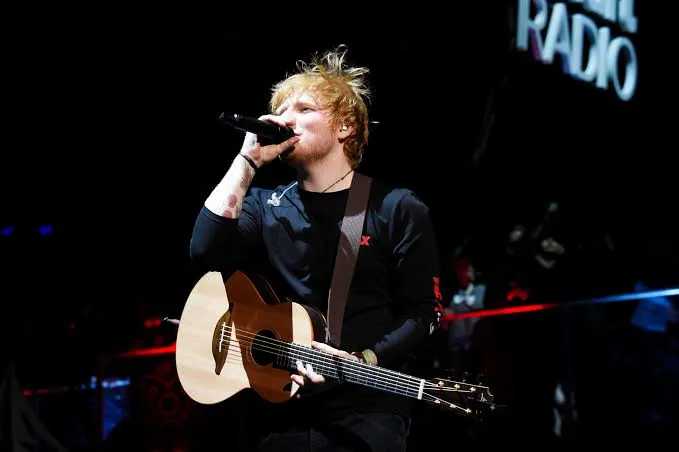
This has been all over the papers, so I’ll only give a brief synopsis: Ed Sheeran is on a US stadium tour, and has Macklemore as an opening act. Macklemore makes statements about Israel-Palestine on stage. A forthcoming stadium gig, at Robert Kraft’s Gillette Stadium in Massachusetts, is cancelled owing to Macklemore’s remarks, and other stadium owners follow suit. Sheeran’s concert promotor, Messina Touring Group, drops Macklemore from the tour. Sheeran does not protest, saying it is the promotor’s call. Sheeran’s other opening acts and his own back-up band quit in protest.
I’ve written before that if an artist is contracted for a gig, and their views on politics, and the nature of their performance, are well-known beforehand, then the organization or person that contracted with the artist has a duty to stand by them even if and when some people raise complaints.
Macklemore is a known commodity.
Very known: he has been accused of antisemitism (as the headline from twelve years ago puts it) – I’ll let readers be the judge. Macklemore has released songs about Gaza. Here is his official video for his song Hind’s Hall. In his concerts with Sheeran he said on stage he was committed to “Free Palestine”, which seems to have been the trigger for the cancellations, but he had said it pretty emphatically before.
In any case, everybody involved in this tour knew what they were getting with Macklemore.
Sheeran could have done more, and it surprises me that someone with that much experience on the big stage has been so deer-in-the-headlights in response. Obviously he was not entirely at the mercy of the tour promoter – he has significant bargaining clout when a contractual difficulty arises. Sheeran used his concert in Philadelphia to explain his position.
There’s no defending Robert Kraft. If you hire out your stadium to pop music concerts with various artists, there are going to be songs and acts and speech that are not necessarily to your taste, and to be shocked that Macklemore would say “Free Palestine” on stage, shocked to the point of demanding his removal from the tour, is a bit much.
There are lots of takes, of course. Jason Okundaye at The Guardian and Roxane Gay at the New York Times both think Sheeran is naive in thinking music and concerts can possibly be divorced from politics, though I see more assertion than reasoning. Gay writes about Sheeran:
He promised good music and a good time, no politics, even though after three hours, his fans would stream out of the stadium and return to their lives where they did not get to opt out of all of the problems politics creates — the immense emotional toll of so many civilians dying senseless deaths, not to mention high gas prices because of the war in Iran, inflation and stagnant wages.
How dare he promise a good time and some escapism – have you even seen the price of gas lately? I’ve been to many concerts where the musicians made no statements about politics at all – even in the 1970s when gas prices were very high – it really can be done. And it seems the case that when writers say you can’t divorce politics from art, or even (very) light entertainment, they mean politics that is on their side. Political cheerleading.
After all, “politics” at a pop concert means expressing bumper-sticker length slogans. Most musicians, like most people, do not have a great depth of knowledge of politics or history. Some musicians, like some people, do. But in a stadium-sized concert it will all reduce to the same thing: yay this, boo that. And to say “you can’t take politics out of music” is to say “I want to hear cheers for what I already believe.” It’s not what we could call any sort of discourse.
I think the most intelligent argument comes from Ludovic Hunter-Tilney at the Financial Times: If Sheeran wants shows that aren’t political, he shouldn’t have asked a political musician to open for him. That choice was the primary cause of this debacle. But once he made that regrettable call, he needed to stand by it.
Cross-posted at https://michaelrushton.substack.com/
Leave a Reply