Improvisation in music did not begin with jazz. Bach and Chopin were noted improvisers, as was 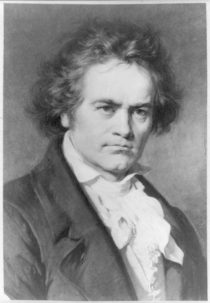 Beethoven. One of the great Beethoven stories is about the flamboyant pianist Daniel Steibelt (seen right) challenging Beethoven (seen left) to an improvisation contest, in effect a musical duel. Steibelt played first. When it was Beethoven’s” turn, he used
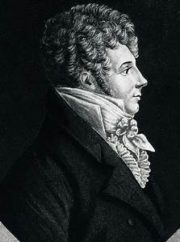 a few notes of Steibelt’s score, turned the page upside down,” mocked his” opponent’s first notes and built a brilliant improvisation. In that early nineteenth century cutting contest, Steibelt was humiliated. The younger man announced that he would leave Vienna, never to return as long as Beethoven lived there. Beethoven died in Vienna in 1827. Steibelt, as promised, stayed away.
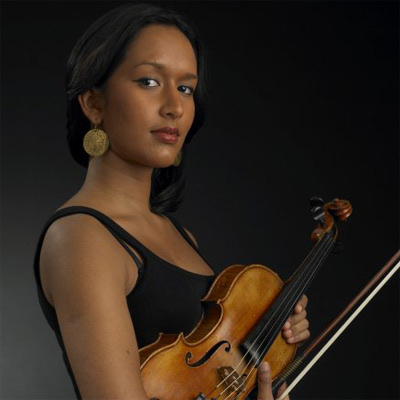 Many of today’s classical musicians are also master improvisers. One of the most flexible, prolific and daring is Mandhira de Saram, a British violinist of Sri Lankan origin. She is, among other things, the founder and leader of the Ligeti String Quartet. In this video provided by the British Music Collection, she discusses her music and introduces performances by a variety of colleagues, including pianist Steve Beresford and the Ligeti Quartet.
Thanks for the interesting story and video. I didn’t know classical musicians improvised at all (thought they just played the music as written). Don’t you have to be very good at playing written music before you can improvise?
I also always wonder where musicians get their talent. Is it inherited or does it come with a lot of hard work? Many musicians seem to be the children of musicians, like this lady in the video.
Musicians and other Rifftides readers are encouraged to answer Ms. Orsolya’s questions.