Charges about biased reporting are as old as journalism itself. President-elect Donald Trump’s accusations against The New York Times—and journalists in general—during and after his campaign would sound familiar to one of his predecessors. Six years into his second term as president, Thomas Jefferson wrote in 1807, “Nothing can now be believed which is seen in a newspaper. Truth itself becomes suspicious by being put into that polluted vehicle.†And yet,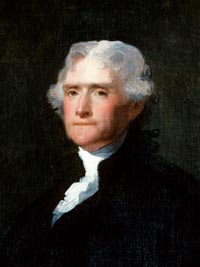 one of Jefferson’s most frequently quoted beliefs came in correspondence years earlier, before he endured the scrutiny that comes with being president:
The basis of our government being the opinion of the people, the very first object should be to keep that right; and were it left to me to decide whether we should have a government without newspapers or newspapers without a government, I should not hesitate a moment to prefer the latter.
In our time, as newspapers struggle, news outlets proliferate. Traditional networks, cable news channels and the digital entities collectively known as social media have assumed the dominant role that newspapers once played. Do those sources of news recognize their responsibility for the free flow of unbiased information upon which democracy depends? That disturbing question carries serious implications for the country’s future. It has been disturbing for much longer than I have been a journalist. But in New York it came to a head when a reporter declared that he could also be a political advocate. Here is a 1972 commentary that I did for a program called New York Closeup when I was at WPIX-TV.
WABC-TV’s solution to the Geraldo Rivera problem is to give him a leave of absence until after the election so that he can campaign for Senator George McGovern in his bid for the presidency. Rivera is a reporter for Channel 7 who claims that he has the constitutional right to engage in partisan politics regardless of the company’s policy against newsmen taking public stands on issues. He says he doesn’t report on politics, he reports on social issues, therefore he doesn’t have to be objective on political matters.
By its decision to give Rivera time off to campaign for McGovern, Channel seven is approving a newsman’s claim that he doesn’t have to be publicly nonpartisan in order to be a trusted reporter. They are saying—in effect—that, having become an advocate in one area, the reporter can nonetheless function as an independent, fair and objective journalist in another.
Perhaps he can, but it’s going to be much more difficult for his audience to accept his reporting as independent, fair and objective than it was before he declared himself on the political issue.
Rivera thinks and speaks of himself as an advocate. He reports passionately and often tearfully on social issues, and he has drawn attention to some deplorable conditions. In a situation like this, it would be realistic of his employers to halt the fiction that Rivera is a journalist in the traditional sense and label his work for what it is—social commentary. In that way, the station can be honest with itself and its news audience, help solve an ethical crisis in the broadcast journalism profession, and in good conscience take advantage of the colorful attraction they have developed in Rivera.
As television news struggles through a period in which show business values and news values often seem locked in mortal combat, the Geraldo Rivera phenomenon is likely to arise more and more frequently. Only the most hard-bitten journalist would deny a news operation the right to employ colorful people for their audience-attracting virtues. And only the most naïve would deny a station the right to expose social evils.
The challenge is in recognizing news as news, social commentary as social commentary, and show biz as show biz. There is now a confusion of those elements.
In 2016 has the confusion been resolved?
This was a great commentary in 1972 and remains so today. Clearly, the confusion has not been resolved in 2016. In fact I believe it is much worse today. “Social commentary” of Geraldo Rivera’s kind is rampant and not only is it not labeled “social commentary,” it is too often presented as “news.” Today social media has made the situation much worse—”fake news” has become “news” too often. There remain several fine newspapers along with a few TV & radio outlets with high journalism standards. There are also some good online journalists. However, they are too few and good journalism (and good journalists) continue to decrease in number. I am hopeful, but not confident, that this pattern will reverse. Thank goodness we have at least one good jazz journalist, Doug Ramsey.
Those are kind words, but many fine journalists belong to the Jazz Journalists Association. The JJA has a category for people who are not working journalists but support the association’s goals. Click on the link in the previous sentence to learn about it.
Has the confusion between “news as news, social commentary as social commentary, and show biz as show biz” been resolved?
No way!
The blurring of fact and fiction in today’s media world is a dangerous problem. The Geraldo anecdote in your post addressed broadcast news, which has always been challenged by time constraints from doing an in-depth job of news reporting. Even 60 Minutes had only—well, throw in the ads and it was actually quite a bit less than 60 minutes to do its job. Another limitation is the medium’s appetite for dramatic visuals and good-looking “talking heads” who often end up interviewing each other instead of reporting the news. Still, you can’t beat the medium when it comes to reporting breaking news.
In the past, the shortcomings of broadcast news have been offset by the print media—newspapers and news magazines, which had the space for in-depth reporting compiled by large staffs of reporters and editors. The print media could explain in detail that which the broadcast media could only report in brief.
Unfortunately, that balance has shifted in a not-good way. Print newspapers and magazines are disappearing. Even The New York Times (which I read daily) and the Washington Post are feeling the pinch. The ad dollars just aren’t there. Now information-hungry citizens are left with the digital worl—a mish-mash of “news” sites, including the “fake news” sites which very possibly influenced the election.
I was a print newspaper guy (now retired); I admit I have a bias toward print news. But I was also on the edge of my seat when CBS’ Walter Cronkite was reporting the JFK assassination and the moon landing. That was broadcast news reporting at its finest.
Unfortunately, Walter is gone and newspapers are going. The “confusion” you cite is too often the rule as we stumble through the digital wilderness. Jefferson was right. Our democracy depends on a free press. The challenge for each of us is to recognize the difference between a news source that is credible from one that is not.
A Tweet is NOT a good news source!
Brilliant, Doug. I will be sharing this.
For a while I’ve been saying (as I’m sure others have) that the biggest disservice to journalism may be what FOX, CNN and MSNBC have done in mixing commentary and opinion with straight news and not much distinction about which is which.
When CNN has a panel that includes an anchor and real reporters on egual footing with paid consultants and campaign surrogates, how can we expect the public to sort it out? Many will just think it’s biased coverage and will not begin to separate it from the straight news reporting done by one of its correspondents.
When FOX and MSNBC have shows anchored by people who are commentators or clearly partisan, and those people are interviewing the network’s reporters, what do they expect the public to think about their unbiased reporting?
When MSNBC’s election coverage is co-anchored by both a straight news anchor and a partisan news commentator, how do we expect viewers to know which is which?
All of this has been done as en effort to cheaply fill the 24-hour news hole. But I worry there has been a great cost to the image of journalism and, potentially, a free press.