
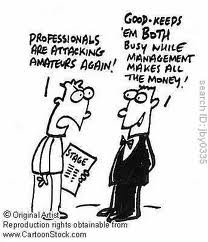
 As someone who resides in a country where the terms “professional” and “amateur” have become practically meaningless in the world of the theatre, I was fascinated to read in yesterday’s edition of The Stage that Britain’s mighty Royal Shakespeare Company will feature “an increased focus on amateur theatre” when it re-opens on November 24 in Stratford-Upon-Avon.
Alistair Smith’s article quotes RSC director Michael Boyd as saying:
“As part of a programme of work between now and 2012 with the World Shakespeare Festival, we are very interested in trying to renegotiate the relationship between amateur theatre and professional theatre in this country. We’re sticking the amateurs centre stage with our opening – with an open house night of local amateur performers, with another night where there’s amateur choirs from across the UK, as well as a major thing from school kids…There’s been a sort of crucifix and garlic mutual relationship between the amateur sector and the professional sector for too long. It’s been fine for professionals to work in ‘community theatre’, that’s been kosher, but to actually acknowledge that quite a substantial proportion of people working in professional theatre started out in local amateur groups, that is a well kept secret. People pretend they know nothing about it, but it is the case. I think there is something about the relationship that an amateur theatre has with its audience that we in the professional theatre can learn from, and there are obviously skills that we can share.”
The RSC’s decision is very much in keeping with a general trend where museums, symphony orchestras, dance companies and myriad other types of arts organizations are looking for ways to make their work more inclusive and interactive.
I wonder if theatre is the final frontier in the UK for bringing so-called amateurs and professionals together? It strikes me that there has always been such a stigma against “am dram” in Britain. This view doesn’t exist to the same degree in the US. I don’t think that it will go away just because the RSC has decided to acknowledge the place of community theatre, especially since much of the amateur-inclusive programming appears, at least as it’s described in the article, to be more of a gesture to draw attention to the launch of the new RSC than a concerted effort to engage amateur theatre people in the long term. It’s a laudable gesture, mind you. But perhaps the RSC’s move signals the start of a greater acceptance that the worlds of amateur and professional performance have a lot more in common than people like to think?
Over here, the two categories have been bleeding into one another for decades, partly because of the paucity of funding for theatre at any level. The Brits could learn a thing or two from watching how the worlds of amateur and professional theatre, such as they are, interact in the US.
 A friend and I had a discussion this morning about how possible it is for an audience member to detach his or her experience of seeing a staging of a play from the play text itself. We disagreed.
 Every day I read articles in the press about how important it is for anyone involved in the arts world (or indeed, any world) to use social media as a way of marketing one’s “product”. I know how useful tools like Twitter and Facebook are from what I’m told by others. And technologies that enable organizations to mail out information to select members of their mailing lists or entire lists at the touch of a button has revolutionized the way we spread the word about what we’re doing, reach new and familiar audiences, generate enthusiasm and even build funds.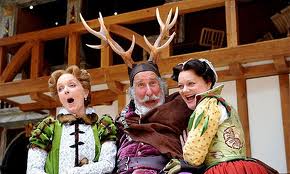
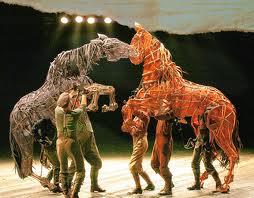 Just returned from a revivifying trip to the UK. Saw a couple of shows while I was there, which couldn’t have been more different in terms of the emotions they provoked in me:
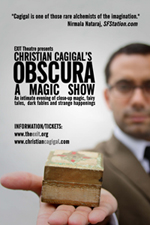 Three very contrasting cultural experiences this weekend. In brief:
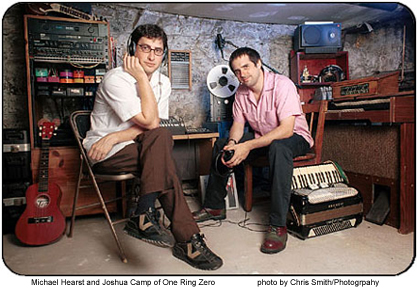 I have to take exception to one paragraph in John Jurgensen’s otherwise expansive “The Secrets of Songwriters”
 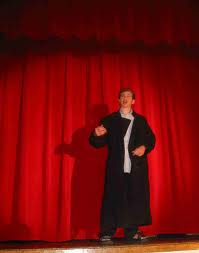 There are probably laws dictating that theatre companies need to make public safety announcements at the start of performances. But I wish companies wouldn’t do it. There’s no greater Joy Kill.
 Community groups are up in arms in San Francisco about Proposition L — the proposed Sit-Lie Law on San Francisco’s November 2010 ballot, which, if passed, would mean that no one may sit or lie on a city side walk after 11 pm at night. One of the less likely outcomes of the news is the formation of a new vocal group.
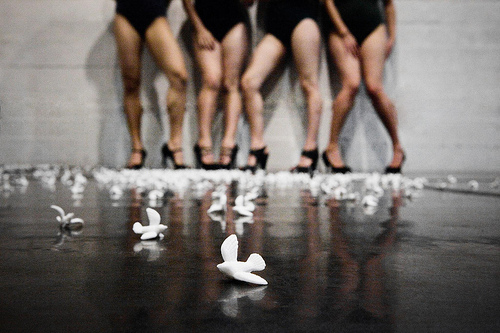 Do you ever feel like, culturally-speaking, you’ve been thrown back into another era? Depending on the experience in question, this can be a good or bad thing. Many great works of art owe their greatness to the fact that they make us feel like we’ve stepped into a different age from our own. But then there are those experiences that take you back in time unintentionally — in other words, they’re “old hat.”
 Spent just over 24 hours in Santa Cruz this past weekend. Caught the opening night concert of the
 I just downloaded the new