
 The all-male, a cappella vocal ensemble Clerestory was one man down for last Saturday’s concert in Berkeley. The ensemble usually has nine members. That night, thanks to some last-minute redistribution of parts and the wise decision to move one piece forward in the program and cut another entirely, the men of Clerestory acquitted themselves exceedingly well with eight. (Countertenor Jesse Antin, a key member of the group, had suffered a family bereavement and had to leave town at short notice.)
Regardless of this fact, the event was to my mind a model of what a great choral concert should be. Here’s why:
1. Many choruses, even good ones, outstay their welcome, thinking that audiences are desperate to sit through an entire mass and about 20 other pieces. But Clerestory’s concert, which featured a selection of mini song cycles and short individual songs organized around a single theme, was just the right length.
2. There was a little bit of casual talk from the stage in between a few of the songs. The choir members spoke to us comfortably like we were friends. They didn’t ramble, over-articulate as if speaking to a group of toddlers of the hard of hearing (which is so often the case in choral concerts) or preach to us. The information they imparted was helpful and concise.
3. The theme for the concert, “Night Draws Near” (also the title of the group’s new CD) tackled the popular Halloween-time subject of death, decay, the cycles of nature and related ideas, in a fresh way. The music veered between a short movement from a Medieval Requiem Mass by Claudin de Sermisy and “Three Short Elegies” by the 20th century composer Gerald Finzi to the contemporary Finnish composer Jaako Mantyjarvi’s ghoulish setting of “Double, Double Toil and Trouble” from Shakespeare’s Macbeth and an electrifying battle song, “War Music: On Horseback,” by the contemporary Bay Area-based, British composer Paul Crabtree. In other words, the ensemble’s broad approach to programming had a cumulative effect on the listener: The singers tackled their chosen theme with breadth so I never got bored. On the other hand, the choice or repertoire was so inspired and the singing so beautiful, that I felt the kind of depth of connection with the music and people in the room that I more often feel when a concert is more narrow and focused in scope.
4. The intonation was perfect and full of emotion yet restrained when it needed to be. The sound was gorgeously balanced and the singers evoked a wide variety of moods.
If there’s anything that didn’t work quite right in the program, it was the contemporary composer John Musto’s “Nunc Dimitis/The Birds Have Vanished”. The decision to move this languorous, knotty, and sustained piece from the finale position forwards in the second half was a good one: The singers didn’t want to leave it to last because of the difficulty of singing it without their ninth member on stage. And their lack of confidence in being short of one vocalist showed in the slightly hesitant nature of their performance.
But even with Antin on stage, I don’t think that Musto’s work would make for a good finale. I’m guessing that the group put it there because they wanted a quiet and thoughtful ending to the program. When I listened to a recording of the track on the group’s new CD the following day, the composition struck me as being a bit half-hearted. It’s an after-thought rather than a memorable expression of closure. I wonder if the Clerestory clan might consider positioning the song earlier in the program for its concert in Sonoma this coming weekend? Whether one man down or not, the robust yet stern sound of the shape note tune “New Morning Sun” by S. Whit Denson, creates a potent and less clichedly elegiac ending.
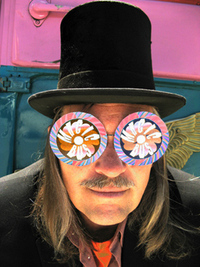 I wish I had enjoyed my tour on Saturday afternoon on The Magic Bus more than I did. But I didn’t. The experience left me feeling deflated and slightly nauseous.
 It was a tough decision to make — and stick to. The Giants were heating up AT&T Park and inching ever closer to victory (for the first time, I am told, in years); The Alonzo King Lines Ballet was packing them in for its fall season at Yerba Buena Center for the Arts. There were all manner of rehearsals, performances and late-night art exhibitions I could have been at last night.
 I’m teaching a class this semester on 21st century composers and their music at UC Berkeley. The class is being run under the auspices of the Osher Learning for Life Institute (OLLI), an organization which specializes in offering educational courses on a wide range of subjects to older members of the community, and the Berkeley Symphony, which recently appointed me as its resident dramaturg.
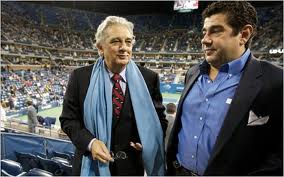 Baseball was clearly in the air at
  The journalist Farhad Manjoo (one of my favorite commentators on new media and technology in general) has written a
  I am just about to go off the grid for a few days and am in a festive mood. So I thought I would regale my readers with some terrible jokes about choirs that I dug up on a whim while procrastinating on the Internet recently. I’ll be back in the blogging saddle next week sometime. For now, read these and be happy you’re not a chorister. Or if you are, be happy you have a sense of humor about it…
 By far the best thing about attending
  It’s gotten to the point where hearing about how fed up people are about the decline of arts reviews in the press is becoming boring and not helpful in terms of finding a solution to replace the loss.
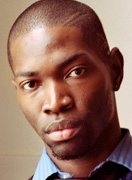 I just got the following email from a friend about In the Red and Brown Water, the first part of The Brothers/Sisters Plays, a trilogy of dramas by Tarell Alvin McCraney (pictured). The trilogy is currently being rolled-out in three Bay Area theatres: