
 Why are arts organizations so obsessed with anniversaries? Every day it seems, some museum, presenter, dance troupe, alternative arts space or theater company is celebrating a milestone birthday, be it 25, 50 or 75 years with a retrospective or special series of events of somesuch. But to what extent are anniversaries really worth observing from an artistic perspective? Or are they merely crutches for programming, pegs to attract media coverage or excuses for amping up fundraising efforts?
In a sense, an anniversary is definitely something to make a fuss about, especially in this country. Arts organizations often have to weather extreme hardship from a financial perspective every few years and face competition from the endless new forms of entertainment that can have the effect of distracting audiences. There’s little about the current cultural climate that favors longevity, so to make it through even five years without going under deserves some form of recognition.
But all too often it seems to me that anniversaries and the hooplah that organizations make around them are artificial constructs. Is it enough that an organization is turning 30 to merit an exhibition of photographs covering its years of existence? Why should we all be as excited that a museum is turning 75 as the museum is itself?
Some organizations, such as the San Francisco Museum of Modern Art, seem to have put a lot of thought into their anniversaries. The museum is at least as concerned with looking backwards through its history as it is in thinking about the next 75 years of its future. The anniversary tagline “75 years of looking forward” is well met by balancing exhibitions that highlight the organization’s legacy eg “The Anniversary Show” with activities like commissioning local artists from a variety of different disciplines to create audio tour material.
But not all organizations come up with anniversary celebrations that are as well-thought-out. Perhaps it’s time for arts institutions to move beyond marking time, either by finding more organic ways of celebrating key milestones rather than bland “let’s raid the attic”-style retrospectives. I love an excuse for a party as much as the next culture fan. But really there’s nothing wrong with letting a jubilee pass quietly by once in a while without a fanfare.
 The world is full of madcap ideas that don’t come to fruition. But thankfully there’s always a place to talk about them, even if they end up not getting realized.
 Do classic plays always lend themselves to adaptation into different cultural idioms? What makes a certain story resonate in particular with a particular setting? Luis Alfaro’s Oedipus el Rey, currently receiving its world premiere production at the
  When I was growing up, I used to think it strange that the mother of a close friend of mine had empty antique picture frames covering almost every spare bit of wall in the entrance hall of her Victorian townhouse. The walls above the stairs were also covered in frames, making the surfaces of the house look like they were adorned with the whites of eyes.
 The British TV show,
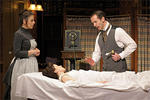 The winner of the 2009 Will Glickman Award for best play to have had its world premiere in the Bay Area is playwright Sarah Ruhl for In the Next Room (or the vibrator play). The work premiered last February at
 Patti Smith only heard the news about her friend Howard Zinn’s death shortly before going on stage at the Herbst Theatre in San Francisco last night to talk about her
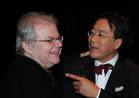 The most palpable thing about watching Yo-Yo Ma and Emanuel Ax perform a recital of works by Schumann, Chopin and Peter Lieberson last night at


 It’s so often the case out here on the West Coast that by the time an arts happening reaches us, it’s been so talked about that it can feel stale or overexposed before it even arrives. This happens a lot with touring Broadway shows (e.g. Doubt and August: Osage County.) The hype can have an adverse affect on the productions, setting expectations too high which often leads to disappointment.
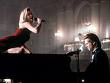 It seems odd to me that an artform should be defined by the space in which it is presented rather than anything intrinsic to the art itself. But this seems to be the case with cabaret. The word literally means “room”. Here’s the definition from the