
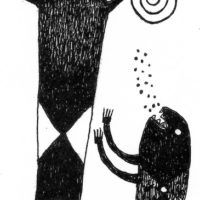
Some old proto-Freudian
out of the German Yellow Pages
is looking up at me
from the kitchen floor
where he’s installing a new P-trap
under my kitchen sink,
telling me about how things are
and how they used to be . . .
Is a Poem Ever Finished?
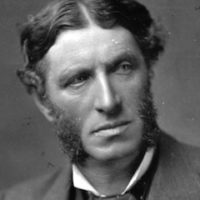
It took Matthew Arnold 12 years to finish “Early Death and Fame,” which was first published in Fraser’s Magazine, in May 1855, and went through several changes until, in 1867, it found its final form. The changes were small. Were they fussy? I think not.
Tabloid Photographer + Rock Star + White Supremacy
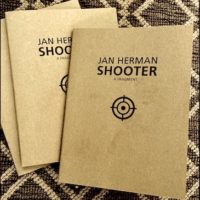
“SHOOTER: A Fragment” is just out from Moloko Print in its new chapbook series. It begins: “Jerry Crane did not believe in perfection any more than he believed in his real name. If he had, he would never have worked as a shooter for the tabloids. Crane was born Jiri Kiranek, a truth-telling fabulist, tall and lean, a refugee from wealth and privilege. In his younger days he was often high speed, always riffing, full of imagination, his bitter humor tinged with sardonic taunts. Now not quite in middle age, he still had a facile street-smart intellect. He told ambling, long-limbed tales. It was a peculiar form of truth-telling.”
Independent Filmmaker, Principled Artist

Kenneth Anger held to his vision over a lifetime and, just as important, to his convictions.
Jörg Fauser: Outsider Among Outsiders
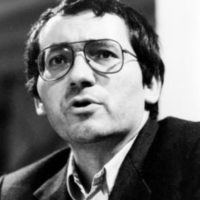
Lou Schneider liked his manuscript of ‘Stamboul Blues’ and got him started as a published writer. It was the cold junky eye, the alienation and disillusionment, the unemphatic humor—acid but deadpan—that appealed to Schneider, though perhaps I’m projecting what appeals to me.
A New Chapbook Series
Coming from Moloko Plus, This Is One of Them

‘Shall we / be lighthearted / to ward off / the shitstorm? / Tra-la la-la. / Or shall we / bite our elbows / to the bone? / Tra-la.
A Life as Yet Unfinished
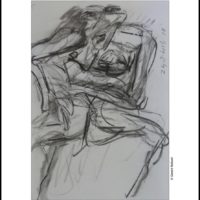
“The leg is dead,” she says
and drags the left behind,
while the best of her —
impassioned lips and eyes —
gathers for the burial.
Counter Culture Chronicles

Retro vinyl is a thing. But retro cassette? Does anyone still have or use a cassette player? Apparently some do. René van der Voort has produced more than 100 cassettes by a wide range of poets, writers, and artists. His label, Counter Culture Chronicles, lists audio performances by Aram Saroyan, Charles Plymell, Jürgen Ploog, Stuart Perkoff, Allen Ginsberg, Nanao Sakaki, Angus MacLise, Ed Dorn, Ken Kesey, Joel Oppenheimer, Jack Kerouac, Gary Snyder, Ted Berrigan, Peter Orlovsky, Gerd Stern, Ira Cohen, Michael McClure, Fielding Dawson, Steve Dalachinsky, Neeli Cherkovski, Ed Dorn, and ruth weiss. My own cassette has just been released. The recording runs for 30 minutes.
‘Burning Boris’ by David Erdos

Poem 6 from ‘The Bastards Charter’
Kosti, the Earl of Wordship
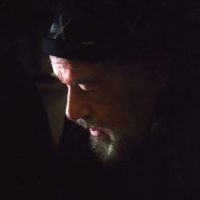
Also known as Richard Kostelanetz, or, as the NYTimes dubbed him, “the bibliomaniac of Ridgewood,” he is the author of hundreds of books — yes, hundreds, you read that right — and recently turned 82.
Celebrating William Wyler
His Hometown in Alsace Puts on a Hollywood Show

Wyler was Laurence Olivier’s mentor, the love of Bette Davis’s life, John Huston’s best friend, Audrey Hepburn’s inspiring taskmaster, and Barbra Streisand’s father figure. His major motion pictures were touchstones for an entire generation. He guided more actors to Academy Awards than any other director. He also won three Oscars himself. “Olivier once told me he learned more about film acting from Wyler than from any other director; I can say the same,” Terence Stamp recalled in my Wyler biography “A Talent for Trouble.” Despite his reputation as a demanding director who sometimes drove actors to tears, he was a beguiling personality in private.
A Body of Work: ‘He could hear it breathing’
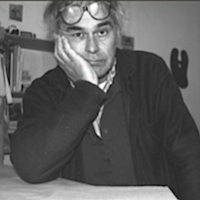
The pulse of Cold Turkey Press depends on a publisher* who maintains that well-made limited editions can be more influential than widely disseminated mainstream publications. But it also depends on the dissident poets and artists like Malcolm Ritchie, the late Heathcote Williams, Mark Terrill, the late Thomas Brasch, Jay Jeff Jones, David Erdos, William ‘Cody’ Maher, and others whose work he has chosen to publish.
On Ambition: From Nixon to Keats to Elvis, from Little Richard to Samuel Johnson, from Moses to Hannibal, Lenin to Alexander the Great, Spinoza to Ghandi to Albert Camus

I know of no writer who covers as much territory with as much lighthearted intelligence as A. Robert Lee. Here he is on the subject of ambition in his latest book, OUTSIDE IN: Hinges and Swivels, just out from Time is an Ocean Publications. — jh
These Many Years Later, Algren for Real

For the first time, yesterday, I saw the DVD cover art of “The End Is Nothing the Road Is All,” a 2015 documentary. I was poking around on my laptop when I came across it by accident. Except for the fact that it showed up on Facebutt, which I try to avoid, it was a nice surprise.
Imagine That!
A Swiss Counterweight to Conformism

UPDATED with videos of the performance. In the heart of St. Gallen, a town not far from Zurich, where Dada began, there is a haven for the outlandish and the curiously extravagant. It is a place for the exchange of ideas and information, passionate discussion, chamber music, and for poetry. The American poet Louise Landes Levi, who is based in Japan, performed there on Tuesday, June 7.
A Uranium Jubilee for the Queen of the Arms Trade

How Queen Elizabeth II profits. Text by Heathcote Williams. Editing and narration by Alan Cox.
Memory Lane: ‘It Was a Burning Hot Day in Paris’
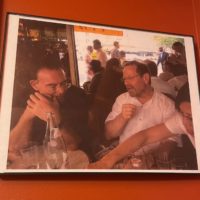
“After going to see the Villa Seurat, where Henry Miller lived when he wrote ‘Tropic of Cancer,’ we stopped at the Café Zeyer for drinks. The Zeyer, which he described as ‘a gaudy place with red plush and mirrors and polished brass,’ was where Miller often took a ‘fine à l’eau’ and argued metaphysics with friends.” — Supervert