
November 4, 2009

Can you stage the internet? I'm just back from the sweetest, saddest performance I've seen in ages - and also the first that, in barely more than an hour, tells the story of the web's utopia turning to dystopia.

Chris Goode is an utterly beguiling theatre maker, and The Hippo World Guest Book opened Lean Upstream, a festival devoted to his boundary-blurring work. Goode's erudite, funny website burrows into ideas or sets them juggling. He is also the only person to have performed a play in my home. We Must Perform a Quirkafleeg was a deceptively rambling tour round geekboy obsession, full of facts and whimsy, but building towards pure wonder. At the close, he simply left the building, after having traced his outline in salt on the floor. We stepped around the salty silhouette for days, as if living in a Weegee crime scene. (He did, however, refuse food, a terrible rebuke to my inner Jewish mother, even though I pursued him round the room with platters of filo pastry.)

Homestyle suits Goode's manner - he's a big chap, with a shy boy's bulk and an enthusiasm that feels personal. He has, I remembered tonight at the beginning of The Hippo World Guest Book, the gentlest smile and softest voice, both wonderfully employed here to suggest the beaming hopes of early web communities. Other than a recorded introduction by Oliver Postgate, the late, solemn-toned master of British children's television, all the words come from the edited guestbook of an American hippo-fancier's website. Goode beautifully replicates the juddery spelling and grammar, recites the punctuation (exclamation mark) and obeys the convention that capital letters might suggest RANDOM SHOUTING. The early sections of the show are hippo-snortingly funny.

But a site designed to burble enthusiasm for all things hippoid (hippotudinous?) is soon rattled by recalcitrant schoolkids, glinting pornsters and people who really really dislike hippos - or, at least, who wish to vex those who love them. 'Osama bin Laden' is just one of the hippo haters. Defenders of the portly grey beast refute them, perhaps unwisely; their harried, desperately reasonable messages read like outtakes from Ban Ki-moon's email account.

Goode approaches the scamps, trolls and cyberanonymous postures perfectly seriously - as if even the crudest, daftest, attention-baiting message represents an expression of inner need. He beams sweetly whenever someone says they love hippos ('sooooo much'); or, with grave sincerity, he opines that hippos are less attractive than, say, Johnny Depp, or that hippos may be working with the squid to undermine humanity. Even the shouts seem wrenched from a place of distress (the net turns out to be a place where people can hear you scream) - Goode waggles his hands helplessly as the sudden volume jolts his body forwards.

All these voices slowly disappear, and the guest book becomes an unweeded garden, its visitors howling at an empty cybersky. The site grinds to a close, choked by spam - but even here, Goode excavates a nugget of hope, wistfully seizing on the filter-dodging, cliffhanger scraps of narrative embedded in autogenerated spam.

Goode prefaced the performance by saying it was the last time he'd perform the piece. But he has Postgate's recording, and a small stuffed hippo - someone should really persuade him to revive it again. And again. I felt melancholy by the end, and slipped away before Goode's post-performance conversation with the estimable critic Matt Trueman. Perhaps real people, chatting in a real room, would have cheered me up.

November 4, 2009 1:08 AM | | Comments (0) |
October 30, 2009

It has been a while since the performance monkey put paw to keyboard, but he has still been, y'know, seeing stuff in theatres. Some of these things have been terribly cool, and have involved magical oracles, properly good nervous breakdowns and St Paul's Cathedral. And some of these things have been terribly lame (including a ballerina asking us to share her therapy, a playwright mawkishly disinterring the dead, a once-sharp writer utterly losing the plot). But what I miss - what we all miss, surely? - is ecstasy.

It's fitting that the monkey's estivation coincided with the death of Pina Bausch. Shocking though the grim reaper's turning his attention to dance this summer, also taking out Merce and Jacko too, Bausch's death was the one I took personally. I'd never met her, but as a spectator her work took me to places I'd rarely experienced.

The headiest rush of summer reading came via a gift from my friend Martel, a part of the Melbourne University Press' cherishably neat On... series of books. Short, sharp and unnervingly orange, On Ecstasy is by Australian opera and theatre director Barrie Kosky. I've never seen a production by this opinion-cleaving enfant terrible, but I now have a good idea of what drives him: Kosky writes in a state of blissful delirium, from his early exposure to recordings of Madame Butterfly ('why did her voice caress my skin, sink into my flesh and whirl around in the middle of my stomach?') to applauding the way Mahler induces 'vertigo, claustrophobia and neurosis.'

Kosky wants performance (and, possibly, life) to operate as an exalted, alchemical sensorium, with no place for timid souls. By the time he described his productions of Wagner (The Flying Dutchman is 'a seasick phantasmagoria', and the score of Tristan and Isolde tears through text 'like a knife slashing meat'), I was almost giddy.

The most mind-boggling was his production of The Dybbuk, staged in an abandoned Melbourne warehouse, in which the heroine and her possessing spirit were exorcised, both in filthy underwear, first in a barrow of mucky potatoes, then rolling and screaming around the floor. Dead, their near-naked bodies hung from butcher's hooks, the heat of their frenzied bodies visibly steaming in the icy space. It was, Kosky confirms, 'one of the most beautiful things I have ever seen in the theatre.'

And that, my friends, is what I want from a night out. Cerebral theatre, architectural dance can both be alluring, and I love knotty, difficult things - Mark Morris' dense new piece to a mad Charles Ives score or Fiona Shaw's barnstorming stomp through Mother Courage have both set my head whirring in recent weeks, even if they leave my heart still. But is it so wrong to long for performance that sinks its teeth into your neck, shakes you till you are breathless and then leaves you, weeping and shuddering in a corner?

I'm just about to leave the house to see Michael Clark's new dance piece, set to his glam rock heroes, which promises disconcertingly intent dancers and music cranked up to eleven. That might do it...

October 30, 2009 12:21 AM | | Comments (4) |
June 30, 2009

There was no halfway house with Pina Bausch. As my editor remarked earlier today, you were either a devotee or sceptic, and if a devotee you were very devoted. There will be many tributes to Pina Bausch in the next few days - I'm writing one myself. So this is just a memory. Of the first time.

For many years, Bausch's company (Tanztheater Wuppertal) didn't appear in London - there was no stage suitable for her intimate epics. Only when Sadler's Wells refurbished did she return. And the first show was Viktor.

I was ill that day, with the winter sniffles, and feeling unprepared for my first encounter with a choreographer noted for her gruelling demands. Four hours later, I emerged exhilarated. This was art made during and about a long, bad century - it offers a social veneer then crushes it underfoot like the carpet of pink carnations in Nelken. There's a collective and individual pain, in the bone and in the society. But also astonishing was what Bausch believed you could put on stage, and how long you could keep it there.

I thought I'd seen extremity on stage, but it was almost impossible to believe how long she was prepared to extend a sequence, how many repetitions she would demand of her dancers, how much attention she would ask of us. A stark example: in Viktor, a woman is used as a water pump. She swallows, her body is worked like a lever, she blurts out water. It seems like a fairly simple metaphor for male cruelty. Except that Bausch repeats and repeats the sequence, until we're feeling it and dreading it, and then almost getting used to it. It becomes a terror, and then a habit - which is terrifying.

We never pay enough attention - and performance rarely goes at a speed which makes it possible. But Bausch made it not only possible, but unavoidable. As with the loss of any great artist, I feel bereft - because now I'll have to do it for myself, make myself look hard, feel keenly.

June 30, 2009 11:58 PM | | Comments (1) |
June 28, 2009

I was much tickled this afternoon to read the performance artist and lecturer Lois Weaver recalling a visit to David Hare's play The Secret Rapture. Her colleague Peggy Phelan, a reluctant co-attendee at the matinee performance ('this sea of the well-behaved'), became exercised during the scene in which the heroine's dangerously obsessive ex bursts in on her with a gun. The dynamic of the play was pointing to the passive heroine copping it, but when the ex-boyfriend dropped his weapon, Phelan's infuriated cry through the polite afternoon atmosphere: 'Pick up the gun and shoot the bastard!'

It's a brilliant reminder of the many-headed nature of a theatre audience, a factor that is often taken for granted. Weaver's story is in her foreword to Theatre & audience, part of Palgrave Macmillan's neat new series of accessible theatre studies theory. The book itself is by Helen Freshwater, who notes both how often critics, academics and practitioners describe audience reactions as monolithic (the monkey holds up a guilty paw: he often uses the grand critical 'we feel,' 'we see,' 'we realise'). And she also wonders why theatrical theorists often regard the audience with 'a complex mix of hope, frustration and disgust.'

As a post-performance discussion will often reveal, audiences offer a hugely varied body of opinion, squirming like a sackful of ferrets. The bravura Melbourne-based blogger Neandallus even uses such disputations as the basis for his reviews, presented as florid, piercing Platonic dialogues.

Yet any performer will tell you that audiences each have their own individual collective character. While on stage, they seem not to experience contradiction, but consensus. Playwright David Edgar in How Plays Work, his rewarding examination of theatrical craft, frequently returns to the weight of audience expectations, and how authors can exploit or undermine them. Genre expectations are so deep-rooted, he considers, that 'theatre's dirty little secret' is that 'audiences know the ending of most plays (or certainly the sort of ending) before they begin.'

It's difficult to think and write about audiences in ways that don't treat them as monoliths, or as passive, or as neatly-defined target groups. It's a fascinating exercise - how do we describe spectators' involvement and investment in performance in ways that respect their individuality but don't become too separate to be meaningful? Are we - sorry, you - a flock of sheep or a chaotic convocation?

June 28, 2009 11:58 PM | | Comments (4) |
June 25, 2009

We critics - dressed in our usual dowdy - were discombobulated when we arrived at Sadler's Wells last week for English National Ballet's tribute to Diaghilev's Ballets Russes. There was a red (actually black) carpet, and a healthy jostle of paparazzi. Not, it turned out, for us (who knew?), but because there were British stars in attendance. Jeremy Irons, Stephen Fry, Matt Smith (who? The new Dr Who, that's who. Much excited squeaking in our corner of the foyer...). And the stars were there, because Karl Lagerfeld had created a fashion-forward tutu for ballerina Elena Glurdjidze, performing Anna Pavlova's signature solo The Dying Swan. See? Swan plus fashion plus celebrity = an Event.

Diaghilev, the matchless impresario who spun like a virtuoso, would have been proud. He both hired fashion designers (notably Chanel, now directed by Lagerfeld) and inspired them. However, as a monster among artistic monsters (Picasso, Stravinsky, Nijinsky, Fokine), he would also have been able to insist on changes to the Lagerfeld tutu, which was hideous. Glurdjidze didn't look so much like a dying swan as a fatally injured one - the feathered chocker was hefty as a neck brace, and the bodice swaddled her. As the Guardian's Judith Mackrell suggested, Lagerfeld disregards the needs of the dancing body (his own film of tubby the tutu is here). Where ballet costume works to give the illusion of weightlessness, this was earthbound - less swan than turkey.

The best thing about the programme was that it reminded us how various the Ballets Russes repertoire was, and how it altered during the twenty years of Diaghilev's exacting and unsentimental stewardship. Burning bridges as he went, he kept his eye on the next big thing. Fokine's limpid early pieces gave way to Nijinsky's startling primitivism; Nijinska, Massine and Balanchine followed and tugged the repertoire in new directions.

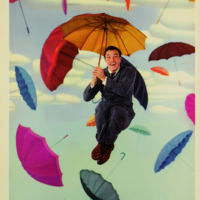
It was Fokine's perfume and exoticism that dominated the ENB programme. The wretched swan and Le Spectre de la Rose seem to have lost their scent - like flowers long ago pressed in a book, you know they must be important to someone, but struggle to guess who, or why. (Spectre's set, however, does have the most fab artistic wallpaper, except perhaps for Les parapluies de Cherbourg, a movie which is all about the wallpaper.)

There was also a world premiere, Faun(e) by David Dawson, set to Debussy's score to L'après-midi. It shared with Nijinsky's original a narcissistic, masturbatory impulse: two men in grey rehearsal frocks, watching and dancing, older and younger shadowing each other's memories and fantasies in an empty theatre.

A programme bookended by Apollo's diamond patterns and Schéhérazade's deranged tumble of gems and garnets, to begin with Balanchine and work back to Fokine, is to see how Diaghilev steered a path for his company between popular entertainment and stark modernism. And he kept the work coming, and kept people guessing what he'd do next. The unpredictable is always in fashion.

June 25, 2009 11:32 PM | | Comments (0) |
June 23, 2009

Helen Mirren sickens in the sunlight, bends double with torment, makes clammy advances to her stepson and scrabbles at herself in remorse. It's quite unlike the starchy home life of our own dear queen, as portrayed in Mirren's previous Oscar-winning performance. But this is a Racine queen - Phèdre, whose toxic desire blights her family in the 1677 French tragedy.

Many have welcomed big-screen opera, live and in high-definition. But theatre is a new development: on Thursday, the National Theatre pioneers an innovative scheme to bring its productions to new audiences, both in Britain and beyond, when its new production of Phèdre is broadcast in over 200 cinemas across the globe.

The National's inaugural productions aren't cosy choices - next up is Shakespeare's problematic fable All's Well That Ends Well. And Racine is a notoriously tough nut to crack for Anglophone theatre. I saw Nicholas Hytner's production at the weekend - not in cinematic close up, admittedly, but certainly up close, as we were goggling from the third row. It's certainly worth a goggle, with some ripe performances and a strong design (set: Bob Crowley; lighting: Paule Constable): a rocky Greek terrace, cut by searing sunlight from which Phèdre cowers in her guilty love.

Mirren, in particular, is great: sardonic notes catch on the iron edge of her voice, while her body appears to be wasting away, as if to tame the heart through sickness.

But I'd also like to hear it for the translation by poet Ted Hughes. First performed in 1998, it has now received a pummelling by critic Michael Coveney, who claims 'You simply don't get the tragic tread of the French alexandrines in a bolshie arrangement of free verse with the odd iambic pentameter thrown in. And there's no formal rhyming, essential to the meaning in Racine, so you're left with a po-faced series of encounters between rather boring people.'

It's true that language is meaning in Racine: the tight verse form mirrors his characters' lack of wriggle room. In Cheek By Jowl's recent Andromaque, for example, the French cast inhabited a cruel geometry that mirrored their situation. Hughes didn't claim to ape the original: he calls his text a 'version', and though it can't reproduce the aural effect of the alexandrines, he makes Phèdre a distinctively pained experience.

This is a play in which desire turns monstrous, curdling relations between stepmother and stepson, father and son, husband and wife. And desire and rage are all interiorised - Racine's protagonists speak to themselves or unload on a hapless confidante (I hope you'll appreciate Margaret Tyzack's magnificent bloodhound features as Phèdre's nurse Oenone: as the queen bangs on about her misbegotten passions, Tyzack looks concerned, mortified and profoundly irritated).

It's true, Hughes makes the tragedy, um, Hughesian - and on its own terms it's a powerful piece of dramatic writing. He truffles for the way emotion turns interior in Phèdre. Unable to find mutual expression, desire feeds on itself, or turns on itself in revulsion, and Hughes richly images that interiorised churn. It's a visceral register: Phèdre wants to empty the blood from her rival's carcass, fears that truth will vomit out of her mouth, feels bloated with her crimes.

See the play as a masterpiece about revulsion as much as desire, and the translation makes perfect sense - culminating in a gory report of an atrocity (delivered with appalled fury by John Shrapnel) that left 'a rag of flesh on every thorn' and feels 'like a great wound through my body.' Hughes returns the body to Racine, locates poisoned passions in the gut and in the blood.

Anyone planning to spend a night with Phèdre? Let me know where you were, and what you thought...

June 23, 2009 11:53 PM | | Comments (2) |
June 19, 2009

We can probably file this under marketing rather than fund-raising, but the Goodman Theatre's latest wheeze - a money-back guarantee for a new play by Migdalia Cruz - is certainly eye-catching. I've written a piece for the Guardian's theatre blog here, wondering if punters would really have the gall to demand a refund after sitting through an evening at the theatre. Early comments suggest that many people are way less forgiving of an unsatisfactory night out than I might be.

Actually, mediocrity is less forgivable than ambition that doesn't quite come off. I fervently hope that 2009 doesn't hold any plays more lame than the duddest of this year's duds: Nicholas de Jongh's bafflingly overpraised drama Plague Over England and the quickly buried recession comedy Ordinary Dreams. Admittedly, I was on review duty those nights, so money-back wasn't an option (but, oh, how I resent those lost hours). Even so, my heart went out to actors working like demons to flog some life into lines that fell dead from the page. Would it take a heart of stone to demand a refund? Or am I just a big softy?

And, fundamentally, is this refund scheme really the best use of the Richard H Driehaus Foundation's dosh? Was the real point to get attention? If so, job done. But look at how cleverly Britain's National Theatre has used sponsorship - notably the Travelex scheme offering low ticket prices. This scheme has helped attract audiences to sometimes challenging work (this season including new plays and rare revivals). The result is a theatre that buzzes, an audience that is at home with multimedia experiments and audacious stagings, that hangs out in the bars and foyers. Surely growing an audience is more about strategy than stunts.

June 19, 2009 7:23 PM | | Comments (0) |
June 16, 2009

Many theatres search for a stonking family show that will unite the generations, and it is hardly surprising that they frequently turn to classic children's literature.

Those classic stories, though: aren't they weird? No, really. Especially those developed in the dark stew of Victorian morality and the hothouse of the subsequent fin-de-siecle. The period provides a rich source for theatrical adaptation: Alice in Wonderland, The Secret Garden, The Wind in the Willows, among other works by E Nesbit and Rudyard Kipling - and the most poignant wish-fulfilment fantasy of them all, Peter Pan.

A new version of Peter Pan opened last week in a state-of-the-art tent in Kensington Gardens - which is fitting, as it's here that JM Barrie developed the story while attaching himself like a winsome leech to the Llewelyn Davies family. What is it like to watch these plays as an adult?

Some thoughts about that after the click:

June 16, 2009 3:44 PM | | Comments (0) |
June 14, 2009

If there was an award for best-dressed Hamlet, Jude Law would walk it. His smart-suited performance bucks a trend for geek-chic Hamlets. Admittedly this isn't a brand new trend: since David Warner's Aldermaston scarf in 1963 or Mark Rylance's stripy pyjamas (nothing better to suggest an antic disposition) in 1989, Hamlets have dressed to express that they are off message and out of joint in the Elsinore spin cycle. The prince's inky costume would have proclaimed catwalk - but not smart - melancholy in the very first production in c1600, while his subsequent deconstructed doublet and pale pale shirt would have nailed the 'careless desolation' of this most fashionable malaise.

It may seem shallow as a puddle to discuss Hamlet through the cut of his suit, but it encapsulates Jude Law's version. He's an angry prince, in part because he's primed to step onto the Danish throne. We never learn what he was studying at Wittenburg, but I'd guess an MBA - with that and the threads he's good to go and fire up his first power point presentation for the cabinet ('Norway: trade is the new diplomacy').

This is quite unlike the outsider Hamlets of recent years. Few have sought power, from Simon Russell Beale's self-hurtingly wry prince and George Anton's extreme provocateur for Calixto Bieto, to David Tennant's antic hero (which, no, I didn't see, thanks for reminding me. But I saw the production that framed him, and at least there's a chance to catch it on screen). Peter Brook staged it as a carpet-bound meditation with Adrian Lester, while the Wooster Group pays impish homage to Richard Burton's landmark filmed version.

Most of these Hamlets have been dangerously funny, or at least witty (as Russell Beale showed, wit cuts both ways). But not Law: he's serious, even stern, and speaks snappily but with odd halts, as if his mind was racing ahead of his tongue. The speed characterises Michael Grandage's production, which gallops through its cut text. People march on, gabble and march off again before they've built a character. In a play haunted by moments of moral choice and possibility, there's no time in which the action can hinge.

This can only limit the prince himself, a man who apprehends more possibilities than most, even as they hem him in. Law is fine (bitter, big hands stretched wide), but he's not my idea of Hamlet. And the production, which closes the Donmar Warehouse's season of classic plays in a West End theatre, suggests that Michael Grandage has retreated from the sharp finesse of his best work.

I'm reluctant to rubbish the season, because it's such a fine idea: yummy casts in nourishing plays, with seat prices far cheaper than the West End norm (I sat in the middle of the back row of the balcony for a remarkable ten quid). But Grandage's productions have been culinary. They look ravishing: set designer Christopher Oram's weathered, beaten textures and Neil Austin's fog and diamond lighting are heart-stopping. Hamlet stages 'To be or not to be' amid snowfall at the back of the granite stage, Law sinking to the ground against the black back wall. Swoony visuals can't themselves make plays sing: if Grandage missed the probing wit in Hamlet, he ducked the darkness in Twelfth Night, and he failed to detect any point at all in Mishima's wigtastic Madame de Sade (Judi Dench and the rest of the cast not so much acting as holding up a wall of heavy rhetoric, hoping it didn't fall and crush them). Only Chekhov's Ivanov emerged as an urgent, necessary play - a black-hearted tragicomedy of depression and debt. It's yelping despair was what we needed to hear. Hamlet's furrowed brow and smart clothes look good but won't help in a crisis.

June 14, 2009 11:04 PM | | Comments (2) |
June 7, 2009

Well, maybe it is great, after all. Am still in a bit of a fanboy daze about Arcadia, Tom Stoppard's 1993 play which has just received its first major London revival. I was asked to write something in advance about its claims to be a 'great' play, and had to confess that I was uneasy about the term.

Greatness, especially in theatre, is a mutable concept: each age takes what it needs from the past, and often those choices are unpredictable. Who would have thought that the acrid Troilus and Cressida or quibbling Love's Labour's Lost would have come to seem among Shakespeare's most pertinent texts? Or that Schiller's impassioned realpolitick would have secured a place on British stages?

Among more recent plays, it's even more difficult to predict what will stick. When text is increasingly a secondary element in so much memorable theatre, we have to wonder which of our own era's drama will survive, and in what form.

Nonetheless, Arcadia is a marvel. David Leveaux's revival is drier than Trevor Nunn's romantic original, and less charismatically cast. But to this fluffy-headed arts monkey it nails the science much more strongly, and the sense that ideas matter, terribly, to everyone onstage is thrillingly conveyed. This is in part due to a remarkable performance from Stoppard's own son, Ed, as the maths whizz Valentine tracking grouse populations on his Apple. He's knobbly and awkward - these are some of the most expressive ankles and cheekbones you'll see on the stage. And he not only gives the impression that he thinks as he speaks, but that he thinks as he listens. It's a rare gift.

Stoppard stretches between Romantic poetry and chaos theory, between the Georgian age and our own. The panorama of his subject matter may be wide, but not his social focus. The play nestles rather too adoringly among the ruling elite, plus the aspiring clever-clogs who hope to join them. Even so, the idea that we can define ourselves by what we think about as well as what we feel is both inspiring and quietly moving. I'm still not comfortable with labelling lays as 'great' or otherwise: but it's hard to think of many modern British plays that so confidently lay claim to the term.

June 7, 2009 11:42 PM | | Comments (0) |

About

Performance Monkey This is what theatre and dance audiences do: we sit in the dark, watching performances. And then, if it seems worth it, we think about what we've seen, and how it made us feel. The blog should be a conversation, so please comment on the posts and add your thoughts. more

David Jays I am a writer and critic on performance, books and film and currently write for, among others, the Sunday Times and Literary Review. I'm also a lifelong Londoner: it's the perfect city for connecting to art forms that both look back and spring forward. more

Contact me I'd love to hear from you, so click here to send me an email... more

Archives

Archives: 85 entries and counting

Blogroll

Find recent content on the main index or look in the archives to find all content.

Creative Commons License
This weblog is licensed under a Creative Commons License.