During Jeremy Lin's dizzying rise from obscurity to fame, before the New York Knick's promotion department had even printed the fan posters, the point guard had been held up as poster boy for a variety of things. Christian faithful pointed to his unabashed faith, fashioning him the successor to quarterback Tim Tebow on a touched-by-god run. Author Gish Jen reflected on his success with a New York Times Op-Ed. piece titled "Asian Men Can Jump." And Lin has become, for many, the newest little guy who can topple giants (in the NBA, that works even if you're 6'3").
But for me the message in the story of this undrafted benchwarmer who was about to be waived from his third team, a guy who two weeks ago was hoping to simply play in the NBA and now, suddenly, can harbor legitimate dreams of lasting stardom, is simply the fact that his ability to do what he's done--to score 20-plus points in six straight games, distribute 13 assists in a seventh, beat the Lakers in crunch time and then go one better by burying Toronto with a three-pointer in the waning second of regulation--eluded the many coaches, scouts and experts charged with evaluating talent and achievement potential.
Click on Winter Issue to Preview
Aside from his prowess as a drummer, his restless need to invent on the bandstand and his compassionate embrace of musical partners young and old, famous and not, Paul Motian, who died very early this morning at 80, was a real person. The kind you need to meet and sit with a while to understand. And then you get up and leave, feeling better and wiser in ways you can't yet process. Motian didn't want to meet with me for the July Cultural Conversation piece I wrote about him for The Wall Street Journal back in July. His stalwart and wonderful publicist, Tina Pelikan, finessed my way in. Motian told me up front how unhappy he was with his decision to do another interview. ("What haven't I said yet?") Then, two hours later, I could scarcely get him to stop his soft-spoken, stop-start, painterly flow of words, which were not entirely unlike his drumming.
I don't know if I'll write anything new in commemoration of Motian's life and career. I do know that I'm reflecting on it today, and that I welcome any news of memorial concerts or gatherings. Here's that Journal piece again:
http://online.wsj.com/article/SB10001424053111903461104576459980345305492.html
Just a bit of reflection on hurtling balls of precipitation and anniversaries.
A email on Thursday from Long Island's Stephen Talkhouse informed me that, with Irene (then still a bona fide hurricane) on its way, last weekend's shows by Trombone Shorty and his Orleans Avenue band would be cancelled.
"Having lived through Katrina," the promoter explained,
"they have opted to head home."
A New Orleans musician heading back home from New York to avoid a hurricane--to feel safe. Irony is only a few letters removed from Irene. It turned out that, for New Yorkers, Irene wasn't the monster it appeared to be--and could well have been. Not to dismiss the floods, blackouts, damages, costs, and even, up and down the East Coast, several losses of lives. But we were braced for something far more devastating and it looked real.
In my Brooklyn neighborhood, save for a few fallen trees, Irene was mostly just heavy rains and howling winds while holed up inside. But don't head to a hardware store the day before a forecast hurricane. There is the smell of panic. Flashlights? Gone. D Batteries? Sold out. Duct tape? Shoulda come yesterday.
Only days earlier, I'd been rethinking my plans, considering heading down to NOLA for what I hesitate to call an "anniversary" of the landfall of Hurricane Katrina, the precipitating event of the levee failures that caused the flood of 2005, leading to a manmade disaster of unprecedented and long-running proportion. It felt odd not to be covering the day for a newspaper or magazine, as I have each of the past six years, save for the one, three years ago, when my boy Sam was newborn. For me, the 29th is more than an anniversary or commemoration; rather, it has been a peg to draw national (and editors') attention to both the ongoing needs and glories of a city I've come to hold as dear as the family with which I was holed up.
A quarterly magazine takes some time till publication. So here's my piece in the Winter issue of JAZZIZ, inspired by Sonny Rollins and, sort of, by my brother Leslie.
Blu Notes
Winter 2010
Sonny Skies
by Larry Blumenfeld
Pull quote: "It was a metaphysical
experience, not a musical experience. You had to be there."
It was the best thing I'd ever done for my older brother Leslie -- a seventh-row
seat to Sonny Rollins 80th birthday concert at New York's Beacon Theater in
September. Back in the '70s, when I was listening to Billy Joel, Leslie was into
modern jazz. I couldn't wrap my head around the music he listened to then -- Dexter
Gordon, Thelonious Monk, Rollins. A few years later, while he was off studying
music at college, I grew to appreciate those LPs enough to steal them before
heading off for my sophomore year at Boston University.
Though he
earns his living in computers in Jacksonville, Florida, Leslie remains a
dedicated reedman, playing on weekends in wine bars and restaurants. (I like
him best on tenor sax, Rollins' instrument of choice.) But he had never heard
Rollins in person. So with Leslie turning 50 and Rollins turning 80, I figured
it was time to get the former in front of the latter. Who knew how many more
chances there'd be? I sprung for concert and plane tickets.
Rollins no longer performs in clubs. The Beacon show was his first in New York in three years, making it the sort of hot ticket rare these days in jazz. Rollins was billed with his working quintet, plus trumpeter Roy Hargrove, guitarist Jim Hall and bassist Christian McBride and "surprise special guests." Since Rollins' last New York concert, at Carnegie Hall, featured him in trio with McBride and drummer Roy Haynes, I suspected Haynes would be among the surprises. At least I hoped so. At Carnegie, Haynes and Rollins had maintained a musical dialogue loose as a barbershop conversation. For all his harmonic genius, Rollins' rhythmic prowess (and an adventurousness grounded in that ability) has been just as elemental to the brilliance of his epic solos. Haynes' driving and utterly organic brand of swing time -- which has anchored music by Louis Armstrong through Charlie Parker, John Coltrane and today's best -- is the perfect complement. I couldn't wait for another taste of that hookup. I happened to interview Haynes for an article about jazz families the day before the Rollins show. He confirmed that he'd be on the date. "And there's someone else, too," he said, eyes agleam. "Not gonna say who, though."
I've been back from Barcelona for more than a week, but it seems like yesterday.
If Barcelona is one of the world's most alluring cities--and it is--its Voll-Damm International Jazz Festival must be counted as one of the world's most distinctive and complete jazz events.
The audacious architectural achievements of Gaudí, the searching experimentalism of early works at the Picasso Museum, and the unexpected culinary inventions (what, for instance, Catalan chef Isma Prados can do with tomatoes, strawberries, and sardines) all figure into a novel context for great and adventurous music, and for concert-going in general. The "tenderness sutras," as he calls them, offered by saxophonist Charles Lloyd and his terrific quartet seemed especially radiant there, and both the intimacy and the ostentation of Cuban pianist Chucho Valdés's music were perfectly matched by his setting, the Palau de Música. Not to mention the graciousness of artistic director Joan Anton Cararach, a former music critic himself, his exceedingly lovely wife, Doan Manfugas, whose deeply felt ideas about music owe to her early training in Havana's finest conservatories, and the suave General Director Tito Ramoneda, whose dream of a cultural event linking his city with both New York and Rio de Janeiro seems just crazy enough to work.
So I'm finally stepping up as a sibling, doing something deep and grand: Flying my older brother Leslie, who happens to play tenor saxophone, to New York so that he can sit tomorrow night in the seventh row of the Beacon Theater, at the feet of Sonny Rollins. The occasion? Leslie's 50th and Sonny' 80th birthdays.
No saxophonist should walk through life without at least once listening in Rollins's presence. Hell, no human should. There is so much spiritual presence embedded in Rollins's sound, so much intellectual wonder invested in how he treats a melody, so much musical history referenced in his solos, and yet more--philosophy, politics, and a sense of social purpose--reflected in simply how he conducts himself on and off the stage.
Here's an interview I did with Rollins for The Village Voice, during which we dealt mostly with extra-musical affairs, including for instance why music is an appropriate response to terror. I'd also suggest this lovely piece, full of reminiscences of the Harlem in which Rollins grew up, by my colleague Marc Myers in The Wall Street Journal.
About
Larry Blumenfeld
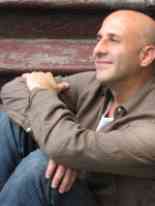
I'm a writer and editor living in Brooklyn, New York. Most of the time, whatever I'm up to, I'd rather be listening to live music or playing basketball. When I'm not covering jazz for The Wall Street Journal or another publication, I'm probably writing about the fight for and beauty of New Orleans culture, which began with my work as a
Contact me Click here to send me an email... more
Blogroll
CultureGulf
be.jazz
rifftides
Alex Ross: The Rest is Noise
Dave Douglas: Greenleaf Music
birdlives
Lerterland
point of departure
Jazziz magazine
Jazz Journalists Association
Steve Smith: nightafternight
Willard Jenkins: Open Sky Jazz
music/food/justice in NOLA
Howard Mandel's JazzBeyondJazz
Stereophile:Fred Kaplan
