Bach on the organ? Of course. On the piano? Certainly. On the cello? Naturally. On the violin? Sure. But Bach on the banjo? The ukelele? The mandolin? How about the glass harp? Or the clarinet, the guitar, and the double bass. And let’s not forget a cappella. You hear them all — brilliantly filmed and recorded — courtesy of BACH & friends, a gorgeous two-hour documentary by Michael R. Lawrence.
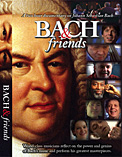 The film, three years in the making, is not a stunt. It delivers musicianship of the highest order on every one of the instruments. We’re talking Joshua Bell, Hilary Hahn, Simone Dinnerstein, Richard Stoltzman, the Emerson String Quartet, the Swingle Singers, Bobby McFerrin, and Matt Haimowitz. We’re also talking Felix Hell (organ), Zuill Bailey (cello), Manuel Barrueco (guitar), Edgar Meyer (double bass), Chris Thile (mandolin), Bela Fleck (banjo), Jake Shimabukuro (ukelele), and the pianists Mike Hawley, Hilda Huang, John Bayless and Anatoly Larkin.
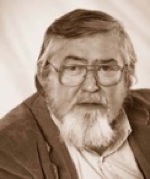
“I’m still shocked that all these people did it,” Lawrence says. “Nobody was paid.” How did he get them to do it? “Absolutely cold calls.” It must’ve helped that Lawrence, 64, is an Emmy-nominated filmmaker who has written, produced, and directed more than 20 documentaries, including productions for PBS, CNN, HBO, and the Library of Congress. And it couldn’t have hurt that he is a graduate of the Peabody Conservatory of Music who performed widely on the classical guitar before making films.
Lawrence didn’t just seek out celebrated virtuosos. He made it his business to approach little-known musicians he believed in — Shimabukuro, for instance, whose performance of the “Two-Part Invention No. 4 in D minor” is out of this world. Matter of fact, was a ukelele ever meant to sound that grand?
“I became familiar with Jake via the Web and his performance of ‘While My Guitar Gently Weeps,'” the filmmaker says. “When I read that he was going to be in my area” — Lawrence lives in Baltimore –“I contacted his agent. She said he was making a Bach CD. I accepted him without an audition because I knew what a terrific musician he was. I figured if he is working on Bach it must be good. It turned out there was no CD. Jake hadn’t even played Bach before. He learned the piece just for the movie. No teacher. No instruction. He taught himself. What a talent!”
 There are so many enthralling performances — an hour-and-a-half’s worth on a bonus video disc that comes with the movie DVD — that it’s hard to single one out. My favorites besides Shimabukuro’s include Hell’s “Fugue in D-Major,” on the organ; Fleck’s “Presto, Violin Sonata No. 1 in G minor,” on the banjo; Thile’s “Partita No. 2, Gigue in D minor,” on the mandolin; Barrueco’s “Fugue from Sonata No. 1 in G minor,” on the guitar; Robert Tiso‘s “Toccata and Fugue in D minor,” on the glass harp; and Bailey’s cello performance of the “Allemande, Suite for Solo Cello No. 6.”
The Swingle Singers doing the “Badinerie, Orchestra Suite No. 2” is a pure delight — especially soprano Joanna Goldsmith-Eteson, who cannot go unmentioned; nor can Dinnerstein’s piano performance of “Variation 13, from the Goldberg Variations” and Bell’s “Chaconne, Partita No. 2,” on the violin. “It’s the first time Josh has recorded the ‘Chaconne,'” Lawrence points out. “His record label objected because he hasn’t done it for them. But he insisted, and the record company went along.”
If I were forced to pick one performance, however, Stoltzman playing the “Chromatic Fantasy in D minor” on the clarinet — Bach wrote it for piano — would have to rank at the top. It’s breathtaking, no pun. “Richard did his own transcription,” Lawrence says. “Leon Fleisher was supposed to play. But he changed his mind and backed out of the project. I don’t know why he decided not to participate, but I’m glad he did or I wouldn’t have had Richard’s transcendent performance.”
Bach & friends also offers a curious MRI exam, demonstrating how the brain functions during improvisation. It’s intriguing, but what I thought more enlightening is the smart musical commentary by the performers. Particularly informative are remarks by Swingle Singers’ founder Ward Swingle. “He came from Paris on his own dime to be in the film,” Lawrence notes.
Philip Glass, although he does not perform, reflects on his deep admiration for Bach. But he has more revealing things to say, it seems to me, in a sequence that did not make the final cut. The composer describes how he devoted nearly three years of study with Nadia Boulanger exclusively to Bach counterpoint. “She basically rewired my brain,” he says. Lawrence, who has posted the entire clip on his Web site — it’s a Quicktime file — has future plans for it. “I will include that section in BACH & friends II,” he says.
Hell, I’m not complaining. However Lawrence wants to slice things, I’m in awe. You may have noticed.
(Crossposted at HuffPo)
Arts, Media & Culture News with 'tude

This blog published under a Creative Commons license
an ArtsJournal blog
This is great, Jan. The other day a teenaged relative of mine asked which James Dean film to watch first (!). At first I felt envious that he’s got so much more to experience for the first time. But coming across posts like this reminds me how many great things remain for ME. More than I could possibly fit into ten lifetimes. Thanks for pointing us to this!
More than welcome, George. The Bach docu really is a gas. And any way you can count James Dean’s movies on one hand.