
By Jan Herman
Covering National Public Radio’s flank in the David D’Arcy case, NPR ombudsman Jeffrey A.
Dvorkin has effectively backed NPR management’s decision to dump D’Arcy (below) after the
Museum of Modern Art complained about his report on an ownership dispute over a painting by
Egon Schiele. Well, take it from an insider who emailed me: “It’s more CRAP from NPR re:
D’Arcy.”
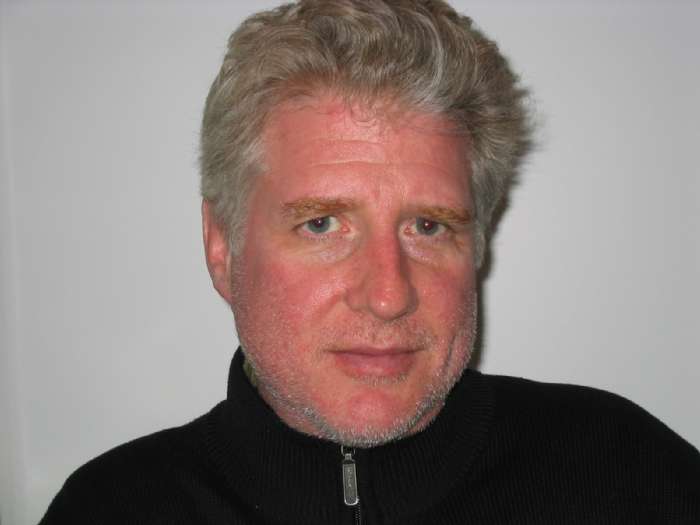 On the NPR ombudsman page (scroll down to “Reporting on the Powerful”), Dvorkin denies that “NPR caved in to pressure from a powerful cultural institution.” He continues, “Sounds like a classic story of big cultural institution running over the rights of dispossessed owners of great art, right? But the story is more complicated: the original report did not, in my opinion, fully and accurately present all of the facts.”
Aarrrgghhh!! Now take it from the most comprehensive and damning letter to NPR so far. It comes from Randol Schoenberg, a lawyer and the grandson of the composer Arnold Schoenberg. It’s deep, heavy and involved. It was leaked to me by an insider who thinks D’Arcy is getting the shaft. I’m posting it below. It was sent to Dvorkin, so I see no reason not to use it because, for all intents and purposes, it’s a matter of public record. It’s long, detailed and technical — so be prepared — and it makes the case for D’Arcy in spades.
Another point of interest: D’Arcy is a freelancer and the others responsible for overseeing his MoMA report are represented by unions. Who you gonna boot? The employee who is protected and could win this case hands down? Or the independent contractor with no rights?
From: E. Randol Schoenberg randols@bslaw.net
Date: Tue, 15 Mar
2005 23:23:19 -0800
To: jdvorkin@npr.org
Cc: kklose@npr.org>
Subject: David d’Arcy
Dear Mr. Dvorkin,
David d’Arcy has been keeping me informed of the recent controversy surrounding his report
on the Schiele case. Since I was interviewed and quoted in the story, I have up to now not
commented on what was transpiring, thinking that I would be considered an interested party and
therefore not objective. I hope however that you will consider this e-mail in the constructive
manner in which it is intended.
First, I have a question: Is it really true that Mr. d’Arcy has been “fired” because of the
Schiele piece? I find it hard to believe that this could be the case. The whole dispute seems to me
to have been blown completely out of proportion.
When Mr. d’Arcy interviewed me, I was in New York for a talk at Christie’s. This was a week
before the MoMA opening and so it was on my mind and his as we discussed various issues
related to art restitution litigation. (I am fortunate to be involved in several of the leading cases in
the field, including Altmann v. Austria which I argued and won before the US Supreme Court last
year. NPR has covered my cases on numerous occasions. See http://www.bslaw.net/news.html.) Mr. d’Arcy accurately
quoted me in the story and reflected my views concerning MoMA’s position in the Schiele
case.
I have read your recent response to the story in artnet.com.
You wrote “the original report did not, in my opinion, fully and accurately present all of the
facts.” No doubt this is true of Mr. d’Arcy’s story — as it is true of each and every story aired on
NPR. No 5-minute story “could fully and accurately present all the facts” of a historical case
concerning events 65+ years ago, the litigation of which has lasted now for over seven years and
generated no less than six court opinions concerning complex legal issues beyond the ken of even
NPR’s above-average listeners. So your comment, while true, is hardly a criticism. Notably, you
fail to mention any inaccuracies in the report. If there are any, they are certainly minor.
You wrote: “Nor did it present MoMA’s position on the ownership question.” I presume it is
true that MoMA declined to be interviewed for the story. That of course makes it more difficult
for the reporter. But Mr. d’Arcy did attempt to convey the museum’s position, and even found a
supporter (Mr. Hawkins) whom he quoted in the story [italics added]:
D’ARCY: None
of the parties to the case would be interviewed for this report, not MOMA’s lawyer, not the US
attorneys, not the Bondi family and not the Leopold Foundation. In motions filed in federal court,
Leopold’s lawyers argue that Lea Bondi waited too long to claim the portrait; that the Nazi who
seized it was acting under laws of the then legal government and that Dr. Leopold never knew it
was stolen. When MOMA has discussed the case over the past seven years, the museum has said
it’s bound by its loan contract to return the painting, and that position is backed by the American
Association of Museums, by art museums throughout the country and by Ashton Hawkins, a
former museum lawyer who advises dealers and collectors. He contends that the Schiele case has
had a chilling effect on international art loans.
Mr. ASHTON HAWKINS (Art Adviser): I think that people who would have
previously considered lending now simply don’t consider it. You can’t quantify it very well, but I
know from my colleagues who arrange these exhibitions in New York and in other cities that
lending to the United States and particularly to New York has been more of a problem than it
used to be. It doesn’t mean you can’t get the loans; you can. But many people just don’t want to
offer it up.
Mr. Hawkins certainly presented one of MoMA’s many arguments concerning this case,
namely that if such suits are permitted, lenders will not allow their paintings to be exhibited in
shows at American museums. No doubt you agree that through Mr. Hankins, Mr. d’Arcy
accurately conveyed one of MoMA’s many “positions”. See United States v. Portrait of Wally,
2002 U.S. Dist. LEXIS 6445 *18 n4 (S.D.N.Y. 2002) (“MoMA further argues, dubiously in my
view, that it is injured because the forfeiture has diminished the likelihood that other art of
questionable ownership will be available for loan to MoMA.”) That Mr. d’Arcy did not recount all
of MoMA’s positions cannot seriously be considered a criticism of his story.
You wrote: “The painting has been in federal custody for years.” Mr. d’Arcy’s story said
(more completely and accurately):
When the Bondi family spotted it, authorities were notified, and Manhattan District
Attorney Robert Morgenthau subpoenaed the picture on the charge that it was stolen property. A
New York state appeals court overruled Morgenthau. At that point the federal government
stepped in. US attorneys ordered the painting held again in 1999, preventing its return to
Austria.
I take it you do not disagree with Mr. d’Arcy’s more accurate report.
You wrote: “and MoMA’s position is that the Austrian courts must decide the painting’s legal
owners, since the painting was in the United States only as part of a loan arrangement.” Mr.
d’Arcy stated: MOMA opposes a Jewish family’s effort to recover the painting.
The two statements are not inconsistent. MoMA clearly does oppose the efforts to recover
the painting through the legal action in the United States. The museum has raised numerous legal
issues in its filings with the various state and federal courts that have handled the matter. Notably,
MoMA filed its own claim in the forfeiture action and filed a motion to dismiss the claim of the
Bondi family. See United States v. Portrait of Wally, 2002 U.S. Dist.
LEXIS 6445 *12 (S.D.N.Y. 2002) (“The Leopold’s and MoMA’s motions to dismiss make many
of the same or related arguments, and the Leopold has incorporated MoMA’s arguments by
reference into its own motion.”) In its motion, MoMA clearly opposed the
Bondi family’s claims to recover the painting, under U.S. and Austrian law. Id. *45 (“The Leopold’s motion to dismiss begins, logically, with the
argument that this court has already decided that Wally is not stolen property, which would
preclude a § 2314 violation. (Leopold Mem. 2 at 20) MoMA echoes this argument. (MoMA
Mem. 2 at 8).” The Court rejected each and every one of MoMA’s
arguments. For example, on the argument that the claim is barred by prescription under Austrian
law, the Court stated:
MoMA persists that even if Dr. Leopold was aware of Bondi’s
claim, the Complaint does not rebut the possibility that he may have been a confident owner based
on his own investigation of that claim and his conclusion that it was meritless. MoMA cites Dr.
Leopold’s discussion with the Belvedere regarding Bondi’s claim, in which Dr. Garzarolli told him
that Bondi never made a claim to the painting and assured him that the painting [*58] was theirs.
(Compl. PP 5b) Further, the Leopold and MoMA argue that “Dr. Leopold may also have had
confidence in the legality of his ownership of Wally based on the belief that the Belvedere, even if
it did not acquire title to Wally directly from the Rieger heirs, had acquired title to Wally by
prescription.” (MoMA Reply Mem. 1 at 16) So long as Dr. Leopold reasonably believed this, they
argue, the fact that the belief was erroneous is not enough to defeat his prescription of the
painting. (Id.; Leopold Mem. 2 at 37).
First, to the extent that this theory relies on Dr. Garzarolli’s report of his conversation with
Dr. Leopold, set out in his letter to Bondi’s lawyer, Dr. Garzarolli’s contentions are not allegations
in the Complaint that are to be taken as true on this motion to dismiss. In fact, as discussed above,
they are legitimately suspect. Second, the facts alleged in the Complaint are sufficient to rebut the
argument that Dr. Leopold had the requisite confidence to become Wally’s legal owner. As noted
above, at this stage of the proceedings, the allegation that Bondi told Dr. Leopold of her claim is
enough. That Dr. Leopold may have been able to whistle past the graveyard [*59] with enough
confidence to fool even himself is a hypothesis I need not indulge at this stage of the case.
Because neither the Belvedere nor Dr. Leopold obtained legal ownership of Wally through
prescription, the Leopold did not acquire good title to Wally through its predecessors, and the
painting did not lose its taint on that basis.
Mr. d’Arcy accurately referred to this passage of the Court’s opinion in his story:
D’ARCY: As the public lines up to enter MOMA’s $1/2 billion new home, in court, a
federal judge has come close to mocking the Leopold Foundation’s position. The judge’s ruling
that allowed the case to go forward compared Leopold’s insistence that the property wasn’t stolen
to whistling past the graveyard.
Mr. d’Arcy could have also accurately said it was MoMA’s position that was being mocked.
But he chose to save the museum that embarrassment, In case you are not familiar with Judge
Mukasey’s opinion, I attach a copy for your review.
Finally, you contend: “Most important, in an issue of journalistic fairness, the report did not
give MoMA a chance to respond to specific and direct charges leveled against it by numerous
critics.” First, this is very unfair, given that Mr. d’Arcy requested an interview and MoMA
declined. As a journalist, you certainly know that a party should not be able to “kill” a story
simply by refusing to comment. Second, in order to find that Mr. d’Arcy was unfair, you would
have to find that something could be said in defense of MoMA’s position that was not stated. In
other words, the story could have made MoMA look better than it did. But this would have been
nearly impossible, because after every argument made by MoMA, Mr. d’Arcy, in all fairness,
would have had to point out that the district court had soundly rejected the argument. If anything,
MoMA’s comments would have only made the museum look worse. Which is exactly why the
museum refused to comment in the first place.
You conclude: “The original report was wrongly framed, and NPR was right to air a
clarification in early January.” I am not sure what “wrongly framed” means, although it sounds
damning. After reviewing Judge Mukasey’s opinion rejecting MoMA’s myriad arguments seeking
dismissal of the Bondi family claims, do you really think the report was “wrongly framed”?
As for the so-called “clarification” it read:
Correction: The government, not the museum, has custody of the artwork. The
museum says it took no position on the question of the painting’s ownership. NPR failed to give
the museum a chance to answer allegations about its motivations and actions.
But the story accurately reported “US attorneys ordered the painting held again in 1999,
preventing its return to Austria.” So that part at least could not be considered a correction. It is of
course false to say that the museum “took no position on the question of the painting’s ownership”
as Judge Mukasey’s opinion make clear. Perhaps you have not actually read the opinion or
MoMA’s pleadings in support of its motion to dismiss. That is the only explanation I can think of
for this purported “correction” which isn’t one. Finally, the allegation that the museum was not
“given a chance to answer allegations about its motivations and actions” is misleading, given that
the museum declined an opportunity to take part in the story, and further implies that they would
have had some answer to give. What is the answer that was missing?
I simply cannot believe that Mr. d’Arcy could have been “fired” over this story. I have known
him for 10 years now, since he came out to Los Angeles to interview me in a story concerning the
lawsuit to move my grandfather’s archives from the University of Southern California. Mr. d’Arcy
told me after that interview that he had come out with a completely different story in mind (one
showing the silliness of heirs who try to control legacies) from the one he ultimately aired
(showing the mendacity of the University in its dealings with our family). In other words, he had
an open mind and was willing to be convinced by the evidence presented. What more could you
want from a reporter?
I must say that as much as I have enjoyed being interviewed by NPR, I will now have to think
twice before I make myself available for another story. As someone who believes in journalism (I
was editor of my high school, college and law school newspapers) I don’t think I can support an
organization that would treat one of its reporters so unfairly.
Thank you for taking the time to consider this e-mail. I hope that things are not so far along
that a reinstatement of Mr. d’Arcy cannot be considered. He is, after all, a loyal and hard-working
reporter who has served NPR well for so many years.
E. Randol Schoenberg
Burris & Schoenberg, LLP
12121 Wilshire Blvd., Suite
800
Los Angeles, CA 90025-1168
Tel: (310) 442-5559
Fax: (310)
442-0353
eFax: (425) 740-0483
Email: randols@bslaw.net
http://www.bslaw.net
I hope the letter knocks the wind out of Dvorkin and NPR. I’m out of breath just reading it.