Back with the round-up!
-
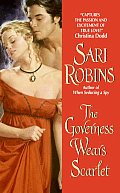 Fifteen years ago, if you wanted to write about the Victorian governess -- all of those formidable women from Mary Wollstonecraft to the steamy romantic heroine to Anna in The King and I -- you had to dig for primary sources, says Kathyrn Hughes. Not many people felt the memoirs of nannies were worth keeping. Now comes a new history of the governess, and nothing new is to be said? And it turns out Anna was a more hard-headed sort than generally thought:
It wasn't just her past that Leonowens faked. Much of her highly spiced account of the years she spent at the "barbarous" court of King Mongkut was later revealed as a work of titillating fancy. Leonowens was determined to find a way of buying herself out of the schoolroom, and if writing passages of barely veiled erotica was the cost, then she was prepared to pay it.
- The kind of lead sentence in a review that gets a professional journalist/critic's attention:
First the good news. It won't be long before borderline illiterate half-wit blowhards like me, with our fat salaries, expense-account lifestyles and stranglehold on the means of expression, become obsolete. Wikipedia, Second Life, Craigslist, MySpace, Bebo, Facebook, Flickr point the way to the lovely future where sharing caring groups of amateurs can connect in ways that will be experientially satisfying, community-boosting and, fingers crossed, democratically revivifying. I and 35,000 other paid journalists in the UK plus lots more worldwide face the knacker's yard.
The bad news is that the if two books under question are right, "most professions will be undermined by web-based social tools in similarly harrowing ways... So don't look so smug." But what book/daddy wants to know is ... "expense -account lifestyles"? I seem to have missed some serious perks.
- The National Portrait Gallery in London has opened an exhibition on the "bluestockings," the 18th century female intellectuals who pioneered feminism, and subsequently had the term -- why is this not a surprise? -- turned on them as an insult.
These opulent salons attracted not just women, but also men - among them Dr Johnson, Joshua Reynolds and the actor-manager David Garrick. The term "bluestocking", which had been employed to abuse Cromwell's Puritans a century earlier, was revived in 1756 when the poet and botanist Benjamin Stillingfleet turned up at Montagu's house wearing blue worsted stockings instead of the fashionable white silk.
The event is recorded in Boswell's Life of Johnson, in which the author observes that Stilling fleet's conversation was so sparkling that in his absence people declared: "We can do nothing without the blue stockings."
It is a curious origin for a word that came to be so closely associated with intellectual women, but the term's history - quickly becoming a mark of approbation, then one of abuse - is just as singular. During the conservative backlash against the French Revolution, it became associated with women's striving for sexual freedom, personified by Wollstonecraft's unconventional private life - she had a child outside marriage with an American, and then married the atheist philosopher William Godwin after becoming pregnant with his child. Only later did the label acquire connotations of sexlessness and asceticism.
The bluestockings were acceptable, in other words, as long as they clothed their intellectual accomplishments in the trappings of conventional femininity.
- Shakespeare had a lot to say about leadership. What might he say about the current crop of presidential candidates? "The Bard as pundit" is not as silly a hypothesis as it sounds.
Categories:
Blogroll
Critical Mass (National Book Critics Circle blog)
Acephalous
Again With the Comics
Bookbitch
Bookdwarf
Bookforum
BookFox
Booklust
Bookninja
Books, Inq.
Bookslut
Booktrade
Book World
Brit Lit Blogs
Buzz, Balls & Hype
Conversational Reading
Critical Compendium
Crooked Timber
The Elegant Variation
Flyover
GalleyCat
Grumpy Old Bookman
Hermenautic Circle
The High Hat
Intellectual Affairs
Jon Swift
Laila Lalami
Lenin's Tomb
Light Reading
The Litblog Co-op
The Literary Saloon
LitMinds
MetaxuCafe
The Millions
Old Hag
The Phil Nugent Experience
Pinakothek
Powell's
Publishing Insider
The Quarterly Conversation
Quick Study (Scott McLemee)
Reading
Experience
Sentences
The Valve
Thrillers:
Confessions of an Idiosyncratic Mind
Crime Fiction Dossier
Detectives Beyond Borders
Mystery Ink
The Rap Sheet
Print Media:
Boston Globe Books
Chicago Tribune Books
The Chronicle Review
The Dallas Morning News
The Literary Review/UK
London Review of Books
Times Literary Supplement
San Francisco Chronicle Books
Voice Literary Supplement
Washington Post Book World

1 Comments