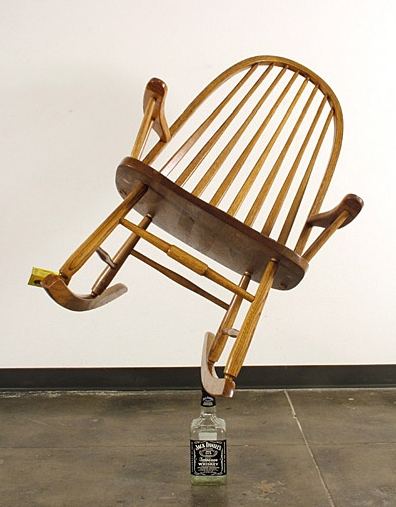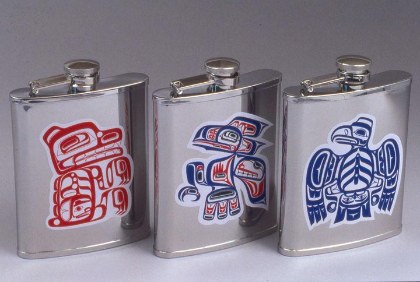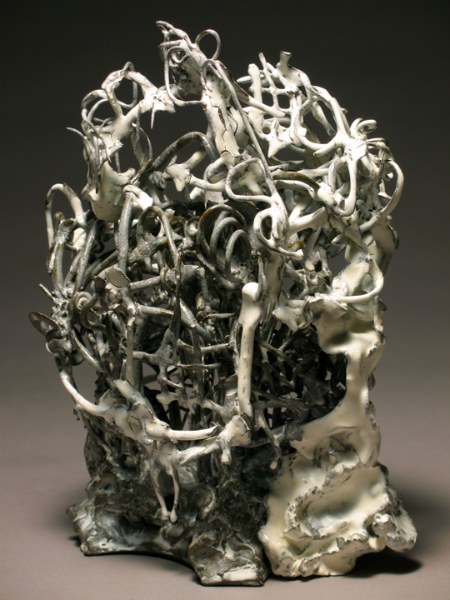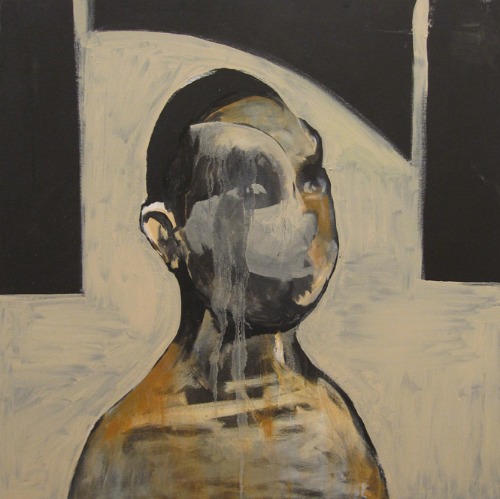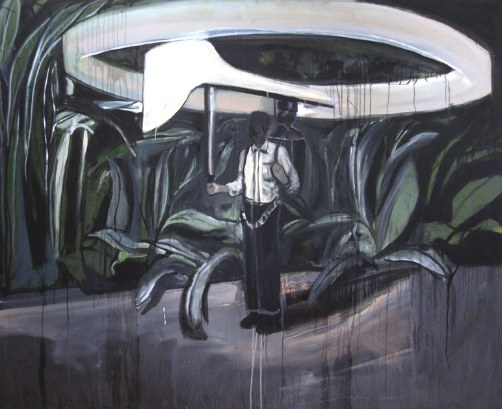
Son of glass artist Paul Marioni, Dante grew up with glass, taking his first rod out of the furnace at age 10 and saturating himself in his teens in the practice, history and aesthetic possibilities of the medium.
By high school, he was a pro and saw no need to interrupt his career with college.
Raised among those who prized art over craft, he found his identity in the craft camp. What moved him was skill and polish. Growing up in Seattle in the 1970s, he was in a good position to acquire both.
In 1971, Dale Chihuly helped found Pilchuck Glass School and hired Venetian master craftsmen to teach there. Following the lead of Venetians such as Lino Tagliapietra and Venice-trained Americans such as Ben Moore and Richard Marquis, Marioni became so skilled that he was in demand on top glass-blowing teams while still in high school. In 1987, at age 23, he had his first solo show at the William Traver Gallery and sold it out. (Those were the days.)
In spite of his insistence that he's a craftsman first and foremost, there was never been any doubt that he's an artist. The objects he makes are a response to the world in which he lives. They are his blend of ancient pottery, Art Deco, comics and above all a Pop sensibility, fused and purified by his natural inclination toward the crisp, witty and lean.
His straight-shot tones are cunningly uncomplicated, both direct and silky. His mosaic patterns have an airy, smoky quality. The colors that define them look as if electric currents left them burnt and fragile at their roots.
Every year, working within a well-defined vocabulary, he gets better and better. Sunday is the last day for his latest at Traver Gallery. Eric Yahnker isn't in it but could have been. The freak note would have been welcome.
This too. Nothing like a Jackson Family-Cobain mash up.Kurt could have featured YouTube tributes in a corrdior, any corridor. My personal favorite, also, of course, not in the show, is from the Ukulele Orchestra of Great Britain. Smells Like Teen Spirit traveled many miles to get there.
Wanting more doesn't suggest a lack of respect for curator Michael Darling's excellent product. I love this show. My review in Modern Painters. Last in, Ben Davis on ArtNet here. Davis does a fine job. Only one paragraph stopped me:
Inasmuch as there is another possibility for relating to pop culture in this show, it comes in the form of Charles Peterson's black-and-white images of the early Nirvana onstage. Yet as stirring as these pics are, they feel like documentary, not art.Ben: The is-documentary-photography-art question was resolved before you were born. Anyone who can look at Peterson's version of Nirvana and question whether it's art has a hole-in-soul. There's death all over it, death and love.
Davis is right on about Alice Wheeler, however.However, at least one piece at SAM does offer the sought-after spark of connection with Kurt Cobain, in spirit as well as in subject matter: Northwest photographer Alice Wheeler's image of a young man, with bleached, Cobain-esque hair, and the whisper of a beard, staring out at us with an indecipherable intensity. He wears a Nirvana T-shirt, beneath a red-checked lumberjack shirt. The old Seattle Kingdome sits in the background (long since demolished to make way for not one, but two wasteful replacement stadiums, with corporate names), time-stamping the picture. He stands in front of one of Seattle's tent cities for the homeless, which, you guess, he calls home. People used to knock grunge as "homeless chic." Here things flow the other way.
Tent City, Seattle, WA, April, 1999, as the piece is called, touches on the relationship of art, celebrity and the real world, like all the other art here, but the stakes are vivid and clear. Wheeler's photo hurts a little to look at, because you have the sense of something frail and confused and human looking back at you. But let's be honest: Only something that hurts a little can be true to the past that this show tries to tap into, or, for that matter, to our present.
Like the quilters from Gee's Bend, Marita Dingus uses what she has, in her case, rags, pop tops, pull tabs, computer innards, film negatives,
bottles, shells, stones, eye glass lenses, yarn, telephone wire, crime
scene tape, drains, battered baking tins, light-bulb sockets, paper clips, plastic flowers, paint brushes, bits of wire, bent silverware, pacifiers, colored tape, paint and coarse thread.
And glass. Her glass heads (thick, flat and transparent) and bodies (pearish) were created in the hot shop at the Museum of Glass under her direction. Her work has a burrowing mole feeling, as if she's digging ever deeper into the earth. Glass gives her burrowing intensity a point of light, a contrast that functions as an intensifier. She paints features on them and embeds in each aspects of a different personality.
Currently at the Francine Seders Gallery are a series of her baskets and babies, both haunted by the idea of family.
Another family-obsessed Seattle artist, Richard Hugo, took Theodore Roethke's poetry class at the University of Washington in the late 1940s and puzzled over a final exam question, "What should the modern poet do about his ancestors?"
According to Straw for the Fire: Notebooks of Theodore Roethke, 1943-63, (edited by David Wagoner, 1972), Hugo raised his hand. "Do you mean his blood ancestors or the poets who preceded him?"
Roethke gave nothing away. "Just answer the question," he said.
Hugo, like Dingus, turned the answer into a life's work.For Dingus, the ancestral pull is the African diaspora, the trauma of slavery and its cultural reverberations. From her mother and grandmother, she learned to use a sewing machine as someone else might use a pencil, to articulate form and inflect it with personality. Her baskets are a kind of quilt you can hold in your arms.They evoke the rough grace of a garden with its dirt and worms and catch the visual pulse of an erratic pattern.
Ragged grace is her signature. What she can pick up for free she cuts, sews, paints and tapes into her sculptures.In everything she does, there is always the wound and the struggle to survive it. What Roethke wrote about cut flowers applies to her work:
This urge, wrestle, resurrection of dry sticks,
Cut stems struggling to put down feet,
What saint strained so much,
Rose on such lopped limbs to new life?
Through Sept. 5.
Alonso was born in Havana in 1956, three years before Fidel Castro came to power. Alonso remembers food being scarce and people being taken away at night for speaking with less than revolutionary fervor. When he was six, his mother died, and when he was 9, his father sent him to Miami to live with relatives. His career charts a quiet persistence, an insistence that he will one day produce something of consequence. He was 40 before he found his mature style, a breakthrough that Jacob Lawrence might have been the first to notice. In 1997, when ARTnews asked Lawrence to recommend a young artist who was worthy of greater attention, he wrote back:
The person who comes to mind is Juan Alonso, a Cuban-born painter. His work is deeply personal, autobiographical, figurative but not illustrative, and it could only be produced by someone from the Caribbean.Alonso works in layers of matte and shine in ink, graphite and varnish, building a structure that gives the moist atmospherics around it a ground to engage.
Snakes and chevrons, horizon lines repeatedly breaking over a mountain: These things he suspends in the cloudy mixtures of memory. Alonso has not yet returned to Cuba, and is ambivalent about friends to visit and come home full of praise.
Alonso:
I don't think they realize that Cubans working in the tourist hotels are not allowed to eat there or even talk freely to the customers. I have a nephew in that position. It's real. But Americans visit and say the place is lovely. I say, yes, my island is lovely. It's a lovely police state.At Francine Seders through Sept. 5.
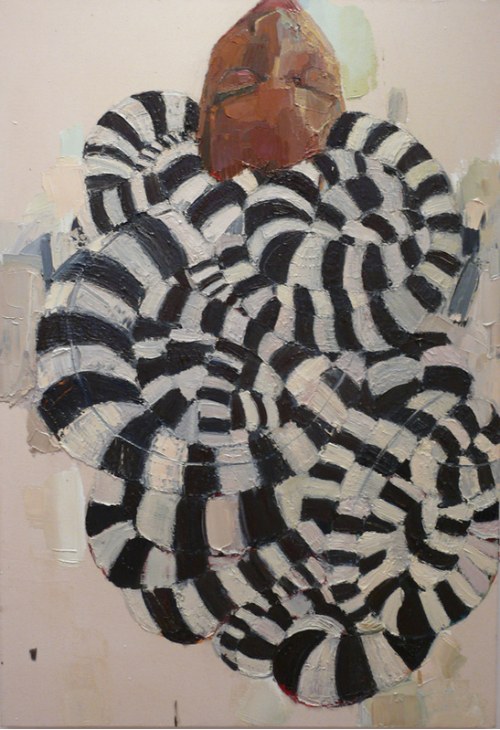
1. Held her breath.
Adriana Zarate
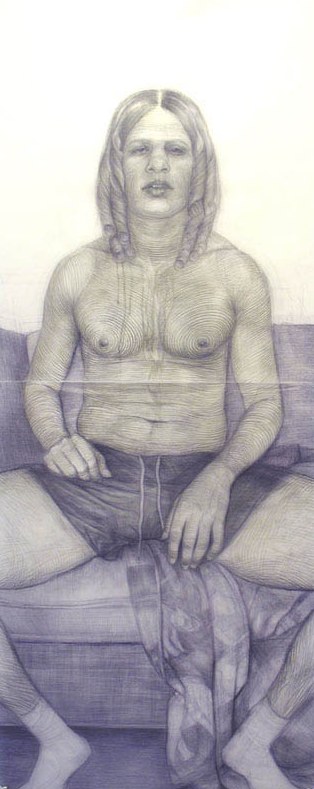
2. Shed her heavy clothes and swum to shore.Alan Graham Dick
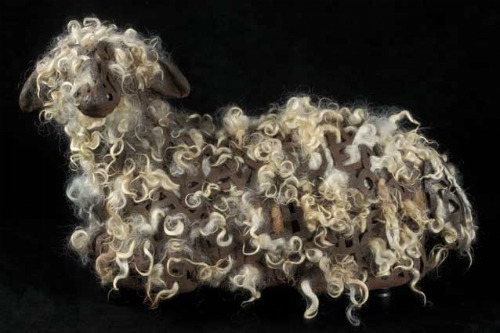
3. Kept her clothes on, relying on youth and excellent muscle tone to pull through.Ryan Jeffery
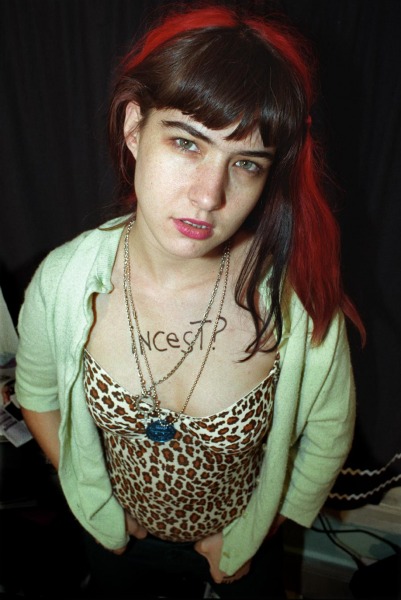
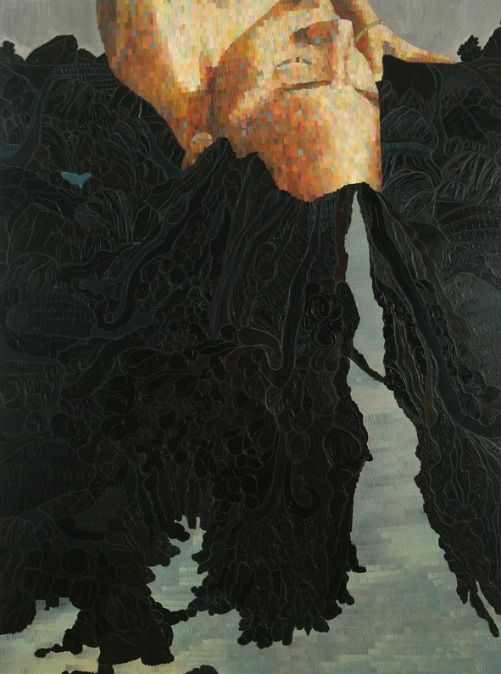
4. Let her grievances keep her afloat.Eric Fortune
5. Sought RevengeMartina Randles
6. Remembered that, as Tom Robbins likes to say, it's never too late to have a happy childhood. Lina Raymond


The process is the product: both forlorn and fugitive, like shoveled smoke.
At Vermillion through Sept. 4.Molly Norris, Self-Portrait, 1982
A character in Sarah Schulman's 1988 mystery novel, After Delores, felt confident she had cracked the code.Where are we going?As a straight woman, I hope it isn't true, but I fear it's a more reliable guide than slicked-back short hair and a man's shirt.
Charlotte's place. I have the key.
How did you know it was okay to come out to me so quickly? I asked.
Easy. Charlotte taught me the trick. She says that if you're talking to a woman and she looks you in the eye and really sees you and listens to what you have to say, then you know she's gay.
What Do-Ho Suh floats, Yamamoto makes as heavy as a tomb.
Currently at Greg Kucera: GRANDFATHER'S SHED, 2008-10 Lāna'i City, Island of Lāna'i Digitally carved and hand finished marble
Hawaii is a symbol of an easy life, with fish crowding the seas and fruits ripe for the plucking, and yet, following World War II, canned goods became a staple, particularly (and inexplicably) Spam. Yamamoto's rendering in vitreous china gives the cans the purity of Communion wafers.
PROVISIONS, POST-WAR, Pacific Asia and U.S. (Spam), 2007-10
Vitreous china
Just as human immigrants came to the island in waves, displacing the first peoples, insects immigrated with them, pushing the original occupants out of their niches. Yamamoto's work is so beautifully crafted and physically recessive, it hides as much as it reveals. The exception is her embroidery on found doilies, which she displays from the back side, with black knots providing the relish of a coarse vitality: Dollies undone.INSECT IMMIGRANTS, AFTER ZIMMERMAN (1948), 2009-10 Embroidery on found doilies
Camamponotus maculates (carpenter ant)
Through Oct. 2.The first time he saw Vegas he was 14, visiting his father after the divorce, leaving the airport in a Cadillac. From a bleak London neighborhood, Bavington rode into the culture of flash American Etch-A-Sketch.
He'd grown up drawing. Drawing is as natural to him as brushing his teeth or turning on the telly. By the time he met Jeremy Gilbert-Rolfe, Bavington was making good money working on The Simpsons, drawing everything but the animations. (Pick up a Simpsons' calendar or comic book from the '90s, chances are pretty good you're looking at his work.)
Abstraction intrigued him. He followed Dave Hickey's advice and enrolled in graduate school in Las Vegas, where Hickey was on the faculty. Hickey isn't for everybody, but for Bavington, he was key to a wider world.
As a painter, he especially admires abstraction from the '60s, first, Bridget Riley, but also Gene Davis and Kenneth Noland. They were all improvisers from the jazz tradition, but Bavington is not only a planner, he's rock 'n' roll to his boots. When he gets to jazz, it's through rock, as in, John Coltrane from Jimi Hendrix.
Admiration of elders is a necessary first step, locating an artist in a particular territory, but as Lester Young told the teenage drummer Max Roach, "You can't join the throng till you write your own song."
Currently at Greg Kucera, a survey of Bavington's terrain: echoes of Ed Ruscha, but in color, not language.
IT'S GOOD (TO BE FREE), 2008 Synthetic polymer on canvas 54 x 72 inches
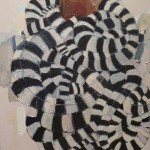
Using synthetic paints, his colors have a digital glow. Their edges are vague, as if their focus
needs adjusting. In their shimmer is a kinder, gentler version of his '60s forerunners. Some of his stripes are based on
commercial bar codes writ large and radiant. Others relate to music. But
instead of the metaphoric music/art tradition of early 20th-century
modernists such as Kandinsky, Bavington's in sync with a wised-up
literalism.
He matches the 12 tones of a musical scale with 12 tones from the color
wheel, assigning each note a particular color, the bandwidth of
each stripe determined by the length of each note with a musical
sequence.
OUT OF TIME, OUT OF TUNE (FRETBOARD), 2010 Synthetic polymer on canvas 12 x 112.5 inches
Much has been made of Bavington's methods - the match between color and sound a deadpan echo of Kandinsky's early 20th Century efforts to paint music. His success is not in his self-assigned marching orders, however, but in the march itself. His colors are candy, but they have the toughness of black and white. Lester Young also warned Max Roach about being a "repeater pencil." Bavington, like Roach way before him, is in no danger of that. His strategies are elastic, with his latest work resembling some sort of merger between Gene Davis and Uta Barth, veering back to Rothko.
JUMP ON IT, 2010 Synthetic polymer on canvas 24 x 24 inches
Through Oct. 2.Life With A Star:
I was born here, I knew almost every street, I had my own cafe, my movie house, my newsstand and tobacco shop.Weil faked a suicide so his name would be struck from the Nazis' list; he survived the war in hiding. His characters didn't fare as well.
At one time we all dreamed of miracles and now we didn't like it when they occurred. We would have preferred to live calmly and simply, instead of on the edge of our seats....
Digging our graves, we counted every minute separating us from death. As long as we held the handles of our shovels, as long as our fingers held a handle, as long as our fingers were freezing and the skin on our hands was raw, we were alive...
We would never have admitted that our lives were worthless, because they were our lives, our unique and unrepeatable lives.I thought of these sentences looking at Jesse Edwards' photos of bleak marginalia. Our unique and unrepeatable lives....

And I thought of the video tribute to The Hooters, below. We are still living in the hangover of those European murders, but as Weil who witnessed them was able to report, the important thing to the victims was not their deaths but their lives.About
Regina Hackett ... is the former art critic for the former Seattle P-I. I loved that job every day, but it's gone and I've moved on. As they say in the movies, to infinity and beyond.
more
Contact me Click here to send me an email, or email me directly at anotherbb(at)gmail.com. My mailing address is 300 Queen Anne Ave. N. Seattle, WA 98109
more
Blogroll
SEATTLE (AND REGIONAL) ART BLOGS
. Artdish
· Best Of
. Culturephile - Portland Arts
. Eva Lake
. Freese
· Hank
. Port
. SOAP
SEATTLE GALLERIES
. Facere (Jewelry)
. Friesen
· Grey
. Joe Bar
. Ohge Ltd
· Platform
· Punch
· Soil
· Traver
REGIONAL ART SPACES
· Open Satellite
· Photographic
Center Northwest
· Wright
Exhibition Space (No Web Site)
SEATTLE (AND REGIONAL) ART MUSEUMS
· Museum of Contemporary
Craft
· Whatcom Museum of
History and Art
SEATTLE (AND REGIONAL) ARTIST WEBSITES
· Troy Gua
· Eva Lake
· Oregon Department of Kick
Ass
· SeaShow
. 39 Forks
. Liz Tran
· Dan Webb
· XOM
EVERYWHERE ELSE BLOG (And Beyond Blog) LINKS
· ANABA
· ARTADOX
. Artblog
· Artinfo
. ArtsBeat (NYT)
· Everything Everywhere All Of The
Time
. Eyeteeth
· Greg.Org
. Los Angeles County Museum On Fire
. My Love For You Is a Stampede of Horses
· Rhizome
· VVORK
AJ Blogs
AJBlogCentral | rssculture
Terry Teachout on the arts in New York City
Andrew Taylor on the business of arts & culture
rock culture approximately
Laura Collins-Hughes on arts, culture and coverage
Richard Kessler on arts education
Douglas McLennan's blog
Dalouge Smith advocates for the Arts
Art from the American Outback
Chloe Veltman on how culture will save the world
For immediate release: the arts are marketable
No genre is the new genre
David Jays on theatre and dance
Paul Levy measures the Angles
Judith H. Dobrzynski on Culture
John Rockwell on the arts
innovations and impediments in not-for-profit arts
Jan Herman - arts, media & culture with 'tude
dance
Apollinaire Scherr talks about dance
Tobi Tobias on dance et al...
jazz
Howard Mandel's freelance Urban Improvisation
Focus on New Orleans. Jazz and Other Sounds
Doug Ramsey on Jazz and other matters...
media
Jeff Weinstein's Cultural Mixology
Martha Bayles on Film...
classical music
Fresh ideas on building arts communities
Greg Sandow performs a book-in-progress
Harvey Sachs on music, and various digressions
Bruce Brubaker on all things Piano
Kyle Gann on music after the fact
Greg Sandow on the future of Classical Music
Norman Lebrecht on Shifting Sound Worlds
Joe Horowitz on music
publishing
Jerome Weeks on Books
Scott McLemee on books, ideas & trash-culture ephemera
theatre
Wendy Rosenfield: covering drama, onstage and off
visual
Public Art, Public Space
Regina Hackett takes her Art To Go
John Perreault's art diary
Lee Rosenbaum's Cultural Commentary


Recent Comments