

"Let's move before the raise the parking rate." Palmerston North, New Zealand, has the latest in dynamic pricing for parking. From Offsetting Behavior (via Marginal Revolution): The 33-space carpark in the city’s Church Street has been kitted out with solar-powered sensors by local parking technology firm Frogparking that can tell which parks are occupied. Drivers pay for parking through their smartphone. Frogparking has been providing ticketless parking systems to Palmerston North for a few years, but director Don Sandbrook said the new … [Read more...]
the sunk cost fallacy

You've got to know when to fold 'em. Yesterday at Indiana University we hosted Peter Frumkin, who talked about his new book (co-authored with Ana Kolendo) Building for the Arts: The Strategic Design of Cultural Facilities. The book contains a range of case studies of significant building or renovation of cultural facilities in the United States. A key finding, maybe not surprising, is the very high proportion of projects for which new revenues were highly overestimated, and costs of construction, and subsequent operations, were highly … [Read more...]
Do we need more Nutcrackers?

Matt Yglesias thinks there could be benefits for the economy if we had a little more Christmas. Maybe he is being tongue-in-cheek, but for what it's worth I will take him at face value: The real economic case for Christmas is macroeconomic. There's an old Keynesian saying: It takes a lot of Harberger triangles to fill an Okun Gap. Which is to say that the total amount of harm done by micro-inefficiencies is small compared with the massive harms associated with the macroeconomic slack of recessions. Most people do not realize this because … [Read more...]
What is a movie star worth?

Is there pay discrimination against female movie stars? Helaine Olen at Reuters thinks so. She writes: Why should we begrudge [Robert] Downey a $50 million payday for The Avengers? The film brought in $1.5 billion globally. Downey’s take was a mere 3 percent of the haul. However ... Hunger Games producers first signed [Jennifer] Lawrence to a deal in 2011. She was still a relative unknown, albeit one with an Oscar nomination on her credits. So they could sign her to play the lead, Katniss Everdeen, for less than $1 million — a relative … [Read more...]
Droit de suite

Legislation is proposed to bring droit de suite - a rule in which some artists receive a share of proceeds from some resales of their art - to the United States. The New York Times reports here, and blog neighbour Lee Rosenbaum analyses the proposal here. I will just deal with one point. Patricia Cohen in the Times writes: Artists have long complained that unlike composers, filmmakers or writers, they do not receive a share of future sales. But that is a very partial view. All artists in all genres can receive one or both of two kinds of … [Read more...]
Today in film tax credits (Updated December 2, 2014)

It never ends: production companies asking for, and getting, tax credits for local production when the economic case is cloudy, to say the least. The Washington Post reports: A few weeks before Season 2 of “House of Cards” debuted online, the show’s production company sent Maryland Gov. Martin O’Malley a letter with this warning: Give us millions more dollars in tax credits, or we will “break down our stage, sets and offices and set up in another state.” ... Both seasons of “House of Cards” were filmed in Maryland, mostly in Baltimore and … [Read more...]
Today in tax advice: the winner takes it all
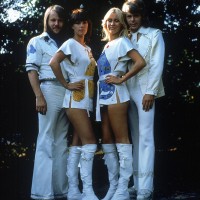
The Guardian reports on Swedish tax incentives: The glittering hotpants, sequined jumpsuits and platform heels that Abba wore at the peak of their fame were designed not just for the four band members to stand out – but also for tax efficiency, according to claims over the weekend. Reflecting on the group's sartorial record in a new book, Björn Ulvaeus said: "In my honest opinion we looked like nuts in those years. Nobody can have been as badly dressed on stage as we were." And the reason for their bold fashion choices lay not just in … [Read more...]
Is Amazon good for readers?

I enjoyed George Packer's New Yorker article on Amazon, and recommend it. ArtsJournal's link to the story has the heading "Is Amazon good for books? Not just publishers, but books themselves?" The New Yorker's own sub-heading is "Amazon is good for customers. But is it good for books?" I find the question a bit puzzling. I can understand asking whether the rise of a particular corporation is good for buyers, publishers, authors, or other types of person. But what does it mean to ask, as a separate question, whether Amazon is "good for … [Read more...]
Pricing to fill the house

ArtsJournal links to this piece from Britain's Guardian on pricing at the Met (see here for an earlier post of mine on the subject). Tom Service writes: They filled just 79% of the seats in that huge, red-velvet covered house, and made only 69% of their projected box-office revenue. For all the millions who watched the cinema broadcasts, those are astonishingly low figures for the world's most expensive opera house. The Met's general manager, Peter Gelb, admits an experimentation with a more flexible pricing structure, borrowed from Broadway, … [Read more...]
Scaling the house, fifty years ago
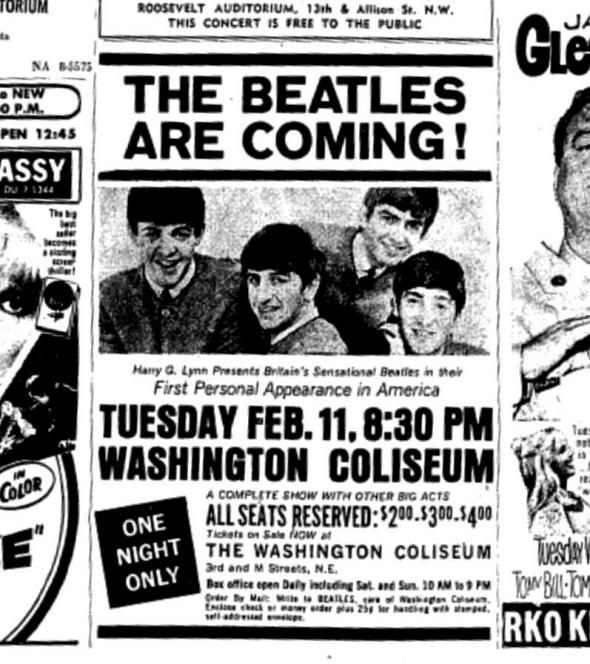
Were there people who thought '$4 is an awful lot for a pops concert, I think I'll just go for a $2 seat'? Via Matt Yglesias. … [Read more...]