
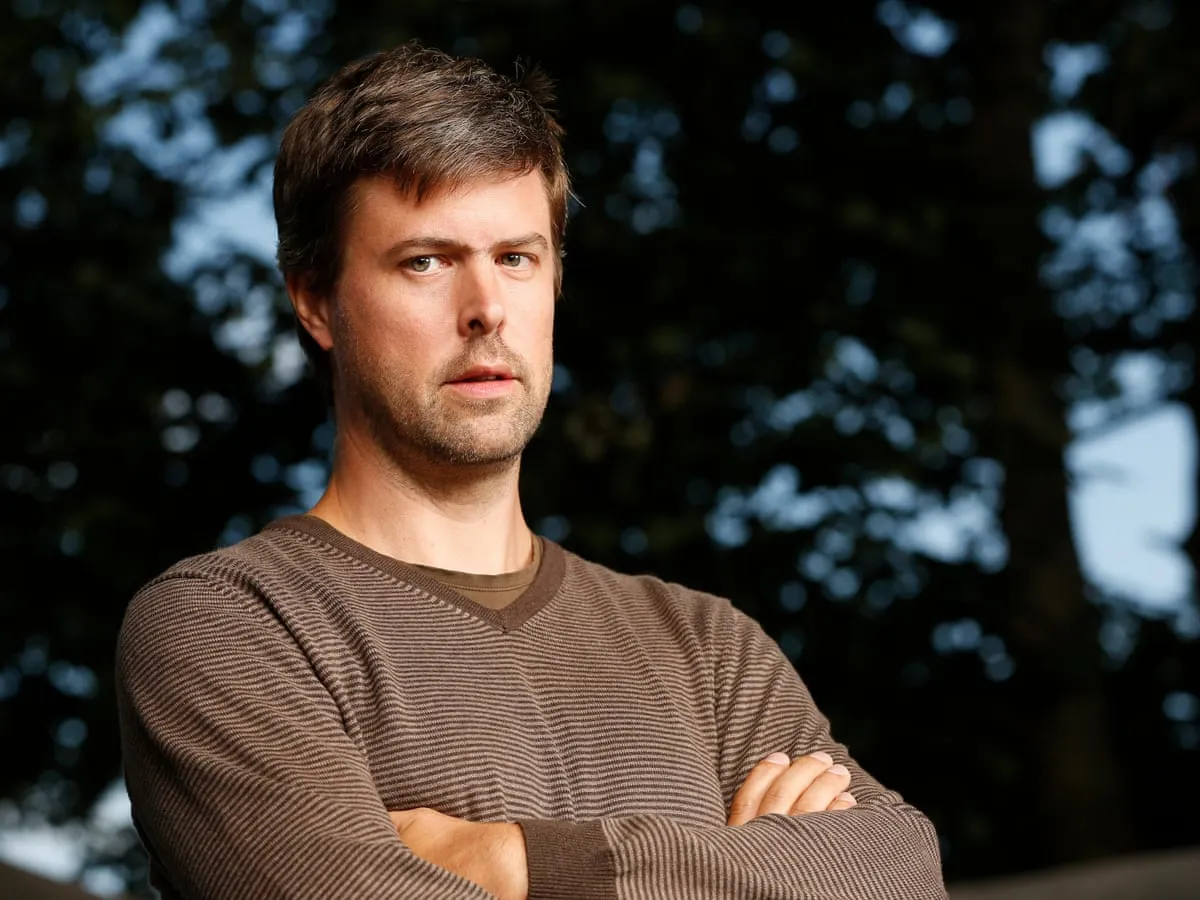
[A human named David Szalay].
Paul Bloom posted this note on Substack:
I’ve always thought that I would never want to read an AI-written novel, no matter how objectively well-written it is. But I’m starting to question this. I’m on a real David Szalay kick these days; last night, I finished “London and the South-East”, which was terrific, and I’m looking forward to starting his “Spring” later tonight. But I wondered: Suppose I discovered that there is no David Szalay, just a David-Szalay-GPT. Would I still want to read “Spring”? Yes, I would. This discovery would persuade me that AIs are fully human, in the best sense, and so my reluctance would go away.
In the comments, at time of writing I’m the only person to have disagreed. I wrote off the top of my head:
I am on the same kick – London and the South-East was terrific (and very funny) and I have Spring in my queue. And yet, I would not have this reaction. When I read a Szalay novel, I have in mind as I read that there is a man named David Szalay who lives in this world who sat down and wrote this, that this human had a story he wanted to tell, hoping readers would get something from it. If I were told there is just David-Szalay-GPT, I would feel tricked (much as people in the past have been tricked by fake paintings), and I would know the copy of Spring on my shelf was not written by a man with a story he wanted to tell, and I would put it in the recycling bin. In music, painting, fiction, I want to know there is a human trying to say something – I’m not just looking for pleasing sounds and images and words.
So let me try to expand with something beyond the top of my head.
All an AI novel (or song, or visual image) can do is draw upon what exists in digital form on the internet. Programs can get very good at drawing from those sources – whilst there is an awful lot of AI slop out there, I feel pretty certain that it will eventually get less sloppy. But it is still limited to a particular, and limited, sort of knowledge.
Any artist worth the name brings something to their work beyond the art that has gone before. Their lives, their emotions, their sensations. And none of this is available to an AI program. I could try to prompt AI into writing something like David Szalay, and it could read his previous works as well as other authors, but that would be its only source. A good program could fool at least some readers, no doubt. But they are being fed a placebo. And placebos don’t work once people are told that’s what it is.
I imagined an artist who specialized in drawings of cats. At a gallery opening, someone says to the artist, “you must really like cats – how many do you have?” And the artist replies, “well, I don’t actually have any cats. In fact, I’ve never actually seen a cat. I’ve never played with a kitten, I’ve never felt a cat’s fur, I don’t know what a ‘purr’ sounds like. But I’ve seen pictures and videos of cats.”
I don’t think the main problem with AI-generated entertainment is that it is always terribly executed. More often than not it is, but these fakes will get better. I don’t think the main issue is putting real artists out of work. I am (naively?) optimistic that enough people feel like I do about real music and real writing. And that a greater appreciation can be developed in the young to recognize what is authentic and what is worthwhile.
The main problem for me is that the point of art is human connection. It is not about the “content” of what is being produced; it is about an artist trying their best to connect with listeners and readers. I might be tricked by AI masquerading as human – no doubt I already have been at times. But once I know it was a trick, I’m out. I’m not just looking for a sequence of words. I want to hear from somebody who has lived.
Cross-posted at https://michaelrushton.substack.com/
Leave a Reply