


Frederick Wiseman’s La Danse: Le Ballet de l’Opéra de Paris / Film Forum, NYC / November 4-17, 2009
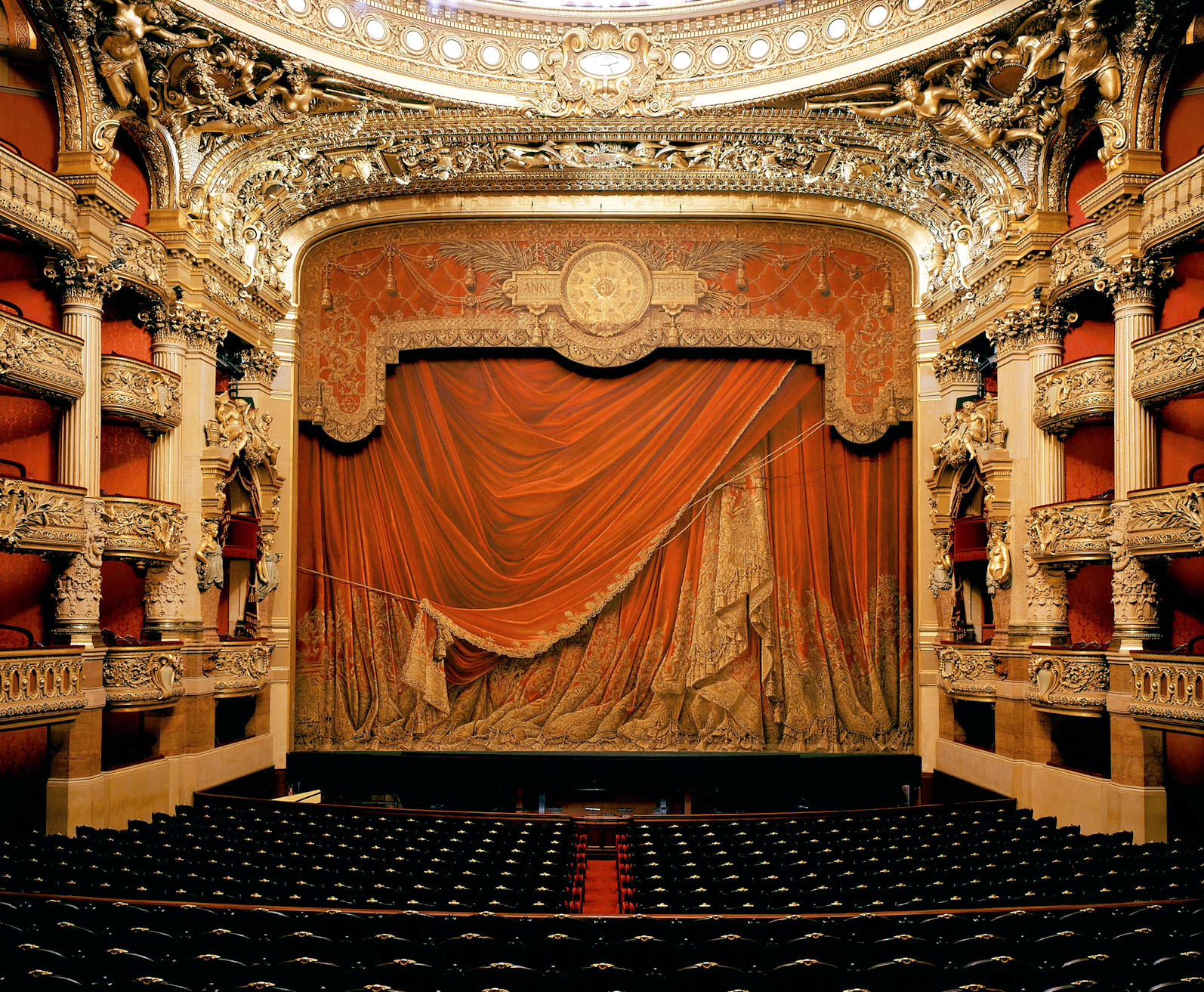
The Paris Opera, as seen in Frederick Wiseman’s La Danse: The Paris Opera Ballet
Courtesy of Zipporah Films
The ticket line at Greenwich Village’s Film Forum November 4-17 for Frederick Wiseman’s latest grand-scale documentary, La Danse: Le Ballet de l’Opéra de Paris, will surely contain as many dance fans as film buffs. And I suspect the local dance crowd will enjoy the movie more. It offers extensive, if necessarily fragmented, footage of the Paris Opera Ballet’s remarkable skills, and the celebrated French company rarely visits the States. Dedicated movie-goers, especially those familiar with Wiseman’s complete body of work, are likely to be disappointed.
Wiseman’s earliest films–shot in black and white, which suited his subjects and his style–still remain his most meaningful works. He treated his topics lawyerly (prior to his film career he was a lawyer).
Frederick Wiseman
Courtesy of Zipporah Films
From his first film, the harrowing Titicut Follies (1967), in which he treats Massachusetts’ State Prison for the Criminally Insane, he piles up the evidence point by point like a star prosecutor, allowing concrete facts alone, unadorned by appeals to sentiment–or, indeed, any explication whatsoever–to reveal the obvious verdict.
Later in his film career, he was lured by the siren song of color, even later by the fiction that “everything is beautiful at the ballet,” which brought him into my own field, dancing. In 1993 he examined American Ballet Theatre; recently, the Paris Opera Ballet. In both films, he coolly inspects the dance company as an institution, but without much point that I can discern.
La Danse finds him applying his familiar tactics: He opens by placing the institution he’s scrutinizing in context. We see a stunning series of freeze-frame shots of Paris, moving closer and closer to the opulent Palais Garnier, where the phantom of the opera held sway, at least fictionally, and which the Paris Opera Ballet has long made its home. (Now it has a second home at the Bastille, about which the less said, the better, and Wiseman says nothing.) Throughout the film, these shots of the city and the Palais Garnier’s dark, claustrophobic underground corridors are repeated, but not as a respite from intense emotion, while giving emotion a wider and more natural vein, as Ozu used shots of wind-stirred trees and the like, but instead–well, why actually? La Danse has no easily discernable drama or intention. It just goes on “forever” (158 minutes, to be exact), then peters out.
Oddly, Wiseman doesn’t dwell on the gaudy magnificence of the Palais Garnier’s public spaces–the gilt, the marble, the mirrored halls, the bronze statues, the crystal chandeliers; we eventually catch glimpses of them as the camera follows a cleaner–but throughout Wiseman emphasizes the gloomy corridors and winding passageways of the interior, the flooding in the lower regions where fish have set up housekeeping, as well as the no-better-than-institutional studios and offices.
As soon as Wiseman has oriented us to the particular domain he’s chosen to examine–as always, in his films, a world in itself, sealed off from a wider reality–he introduces the people who inhabit these nondescript backstage spaces: the dancers, the element most likely to seize a viewer’s attention. We see them taking the daily morning class essential to professionals and then learning or rehearsing or being coached in their roles.
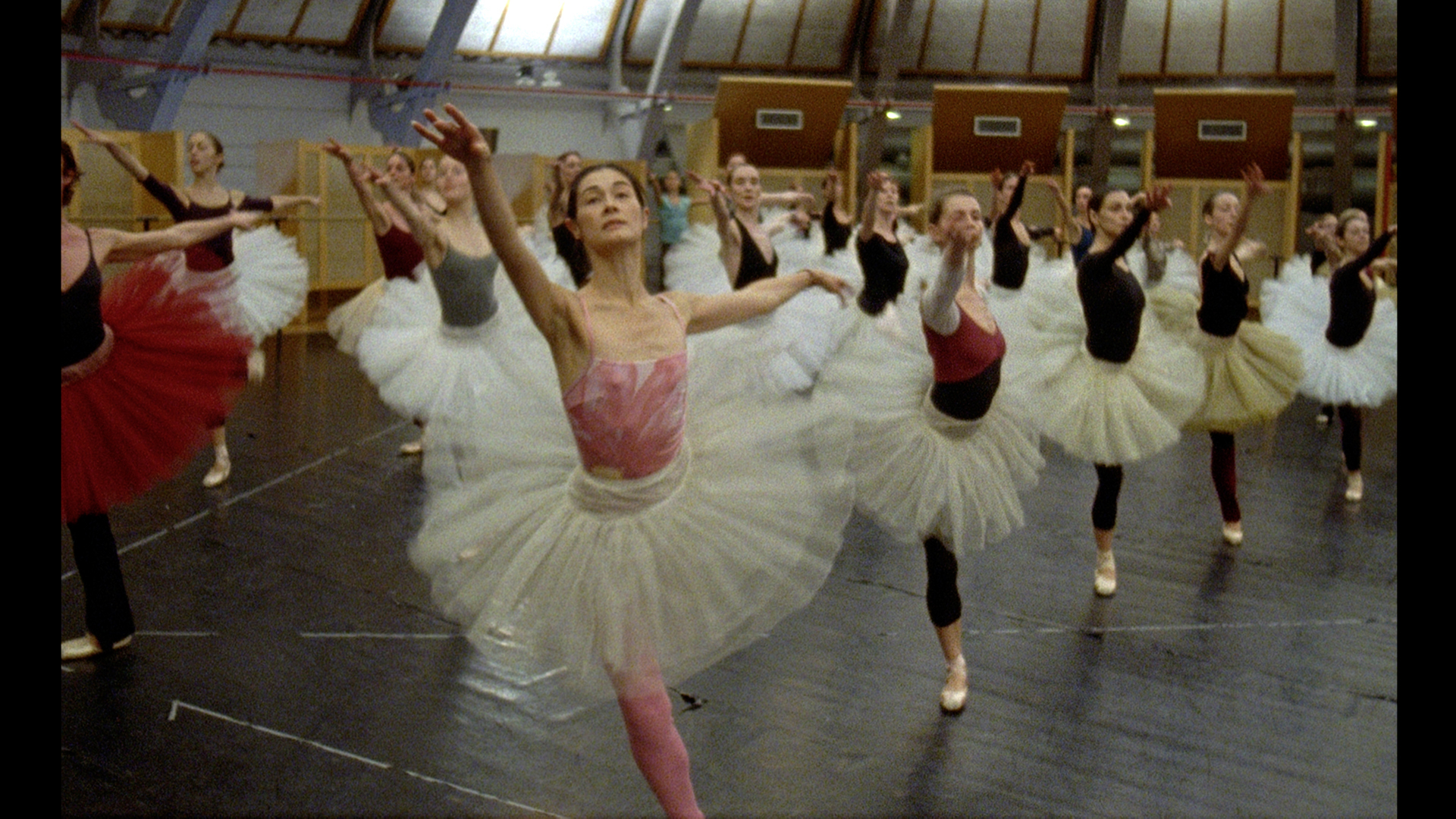
A scene from Frederick Wiseman’s La Danse: The Paris Opera Ballet
Courtesy of Zipporah Films
The dancers’ bodies are exceedingly svelte, lithe, and strong–capable of marvels. These dancers are the survivors of a rigorous schooling from about age eight and an equally rigorous weeding out of the pupils not up to standard, throughout the decade that it takes to turn a child with the right anatomy and unquenchable desire into a professional dancer. The POB dancers’ technical prowess is stupendous, but everyone seems to take it for granted, and we never see how it came about; nothing is shown of the academy in which these “acrobats of god” are trained, though it is a unique institution in itself.
In the company’s studios, the ever-present coaches clearly make a dancer’s professional life that of an eternal student. They are forever being corrected, in order to attain some Platonic ideal of execution. These elders who supervise the rehearsals, usually once leading dancers themselves, are encyclopedias of information about how things were done in the past and what might be achieved now. Their bodies have thickened, their legs have lost their spring, but their eyes have become piercingly sharp.
As is typical of Wiseman, not one of the dancers or coaches is named. Similarly, the ballets we see excerpts from are not named; their choreographers unidentified, though some of them appear on camera to coach their own work. (Apart from the familiar nineteenth-century classics, the choreography is nothing to write home about.) This information is revealed only in the Shaker-plain closing credits, another Wiseman hallmark.
Wiseman’s familiar use of anonymity while revealing both personality and job description is best effected in the scenes involving Brigitte Lefèvre, the Paris Opéra’s director of dance–in other words, POB’s boss. Her calm yet steely authority and well-calculated empathy for her dancers (she was once one of them herself) emerge gradually but unmistakably from the several scenes in which she’s the focal point. You don’t know her name or exactly what she does, but you know what she is.
Wiseman persuades us to understand Lefèvre solely from how she behaves in a series of different situations in which she deals with dancers, repertory, casting, company policy, and money. This is no mean achievement.
It’s also in the scenes involving the administration that we begin to realize the grand scope and complexity of the POB as an institution. Wiseman also covers the scenic department, where thick but deft fingers are pictured adding gleaming paillettes to the tulle or velvet of a costume, the sewing crew working under short white tutus that are suspended from the ceiling like so many chandeliers. The more pedestrian aspects of a life in dance are recorded too, as in a view of the company’s cafeteria that, amusingly, offers us freeze-frames of dishes like the ones we accepted, faute de mieux, in college.
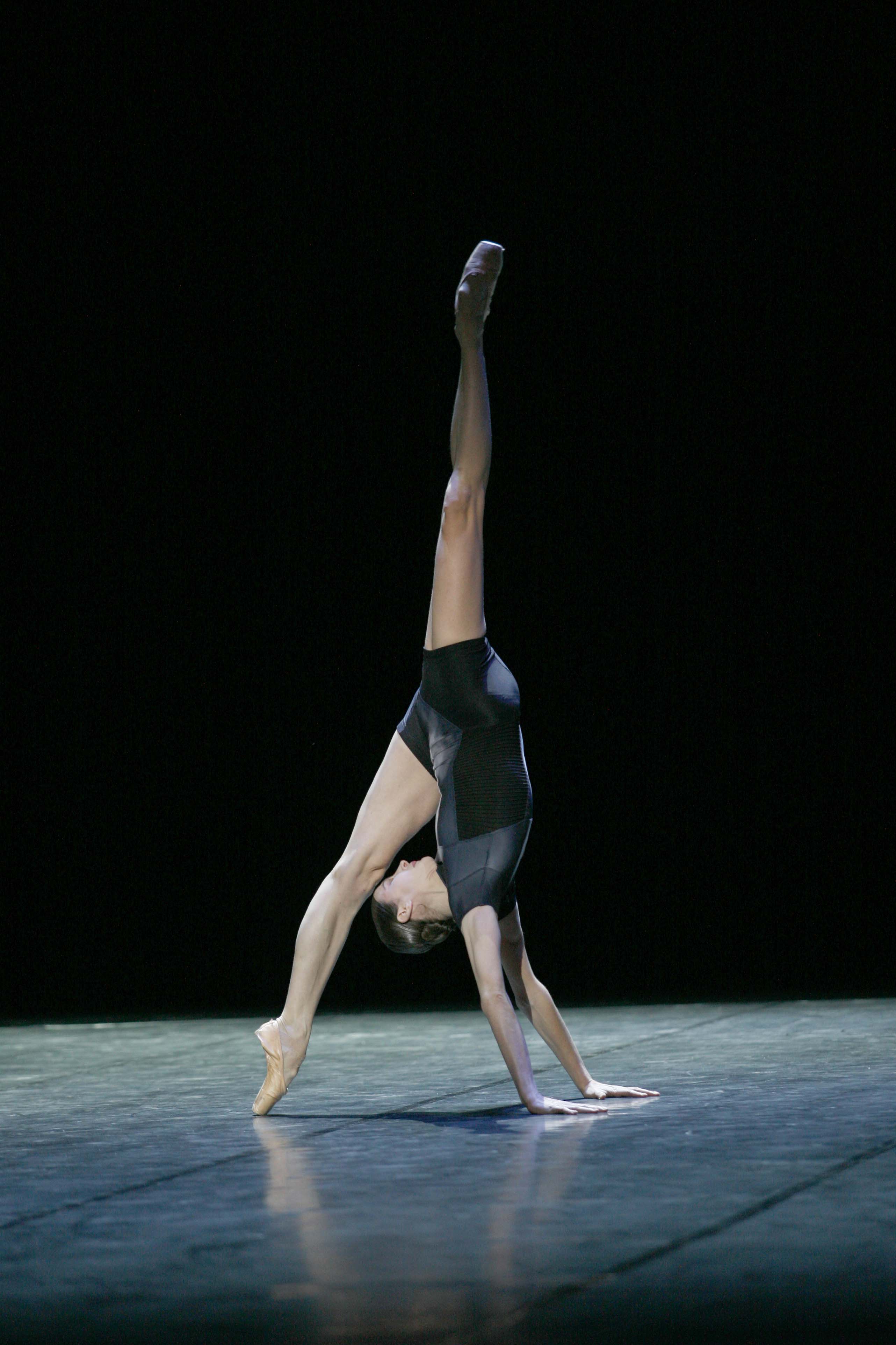
A scene from Frederick Wiseman’s La Danse: The Paris Opera Ballet
Courtesy of Zipporah Films
The film progresses from work in the studios to rehearsals onstage in an auditorium hauntingly devoid of spectators. All of these activities and the behind-the-scenes work as well–a studio being spackled and painted, the dancers having their make-up applied–are arranged as a collage in time, but the elements are bricks without mortar to make them adhere, to build something. What does Wiseman himself derive from all the material he’s presenting to us? What are we to make of it?
Damned if I know.
Towards the end of this seemingly endless film without drama, climax, or even resolution, there’s a stirring, extended excerpt of a performance, by Delphine Moussin, of Medea murdering her children in Angelin Preljocaj’s eponymous ballet. And there’s been a very brief shot of the public entering the lobby of the Paris Opéra, with its exquisite curving double staircase, but to the best of my recollection, we never witness a dance being viewed by the public it’s meant for. And, sadder yet, we never hear it applauded.
© 2009 Tobi Tobias
Beautiful, comme toujours, writing about what is apparently a less than beautiful or compelling film. There is a French film made a very long time ago, pre-World War II I think, at the POB, called in English “Ballerina,” starring Mia Slavenska. It’s about one of the “petit rats” [children being trained at the POB’s school] who arranges to have the Mia Slavenska character’s rival fall through a trapdoor on the stage, thus crippling her and putting her career to an end. Or maybe it’s the Mia Slavenska character who falls, can’t remember. But my point is it’s a fascinating film that does show the children in class, the backstage rivalries, the splendor of the opera house, and the perfume, if you will, of the POB politics of the time. Moreover, it is shot in black and white. I think I’ll skip Wiseman’s film and be satisfied with this one.
Tobi, I enjoyed your essay. I also write about “La Danse” on my blog, artsmeme. We had it this week in Los Angeles at the AFI film festival and I covered it for the film crowd.
I was able to cull more meaning than you from Wiseman’s gorgeous visual tour; the layers you describe did accrue for me over film-time and the journey took me to a very spiritual place. I’m musing how we dance folk drive language and literal-meaning people crazy with our ambiguous art form–and that Wiseman has kind of beaten us at our own game. I must add that I could enjoy the beauty of “La Danse” only after pausing my dvd player and researching what I was looking at. But I deeply questioned my need to do so. From L.A., Debra Levine
Tobi, I saw this movie yesterday and agree completely with your review. All the others I’ve read were so enthusiastic and I don’t see why.
All Monday’s screenings were sold out; if I had not arrived 25 minutes before the screening, I would have had to sit in the front row. Before the film started, I eagerly scanned the audience. I noticed some young dancers, others who were obviously retired from dance, and lots of interesting faces. The 81-year-old woman next to me had studied with Balanchine at SAB and her former dance partner was with her. Then down the aisle walks an imposing man with gray hair. My 81-year-old and I simultaneously said, “I know him.” I realized he had been a major star with Paul Taylor in the 70’s and 80’s. I could not sit quiet and, with my 81-year-old goading me on, I tapped him on the shoulder and said, “I may be wrong, but I think I have enjoyed many exquisite performances when you danced with Paul Taylor. He responded with a genuine and warm “Thank you so much.”
Ah, I loved Wiseman’s film. It captivated me, it drew me in. I eagerly looked for POB dancers, teachers, and ballet masters whom I might recognize in it. I loved the present artistic director of the company, whom I believe had been an etoile. And the dancers are so powerful, brilliant, and gifted that I just wanted to be inside every rehearsal and performance and immediately dash off to Paris. I have not seen that gorgeous city in more years than I care to remember.
Well, I regret that I didn’t keep my pledge and skip this film–good grief! I saw it last night here in Portland and I found it self-indulgent and in many places exceedingly boring–how many shots of those corridors did we need to see, although the panorama of Paris roofs made me want to jump on the next plane.
I agree with Ms. Tobias that the scenes of the dancers working with coaches, and some of the choreographers were interesting and instructive, but since I believe Martha Graham’s “Cave of the Heart” is a masterpiece, I was enraged by Mr. P’s bloody rip-off. And thank the good lord I don’t have to see Nureyev’s “Nutcracker,” since the POB doesn’t tour.
Thanks again, TT, for this insightful review and the witty description of the fish setting up housekeeping–probably my favorite part of the film!
I saw the film and read your review. Wiseman boiled away all feeling, and left us with austere, cold takes on the POB. The segments never cohered into a unity–a distraction more than a perspective.
I like Wiseman and I definitely like dancing, but I have to say that this film just didn’t cut it for me. It seems to me it has very little substance. I just didn’t get it. It left me cold and bored.
I was able to cull more meaning than you from Wiseman’s gorgeous visual tour; the layers you describe did accrue for me over film-time and the journey took me to a very spiritual place. I’m musing on how we dance folk drive language and literal-meaning people crazy with our ambiguous art form–and the fact that Wiseman has kind of beaten us at our own game. I must add that I could enjoy the beauty of “La Danse” only after pausing my dvd player and researching what I was looking at. But I deeply questioned my need to do so. From L.A., Debra Levine
I like Wiseman and I definitely like dancing, but I have to say that this film just didn’t cut it for me. It seems to me it has very little substance. Only after pausing my DVD player and researching what I was looking at did I understand what the film was about. But I deeply questioned my need to do so.
merci pour cet article
Je vous en prie. tt