


Royal Danish Ballet: Bournonville Festival / Royal Theatre, Copenhagen / June 3-11, 2005
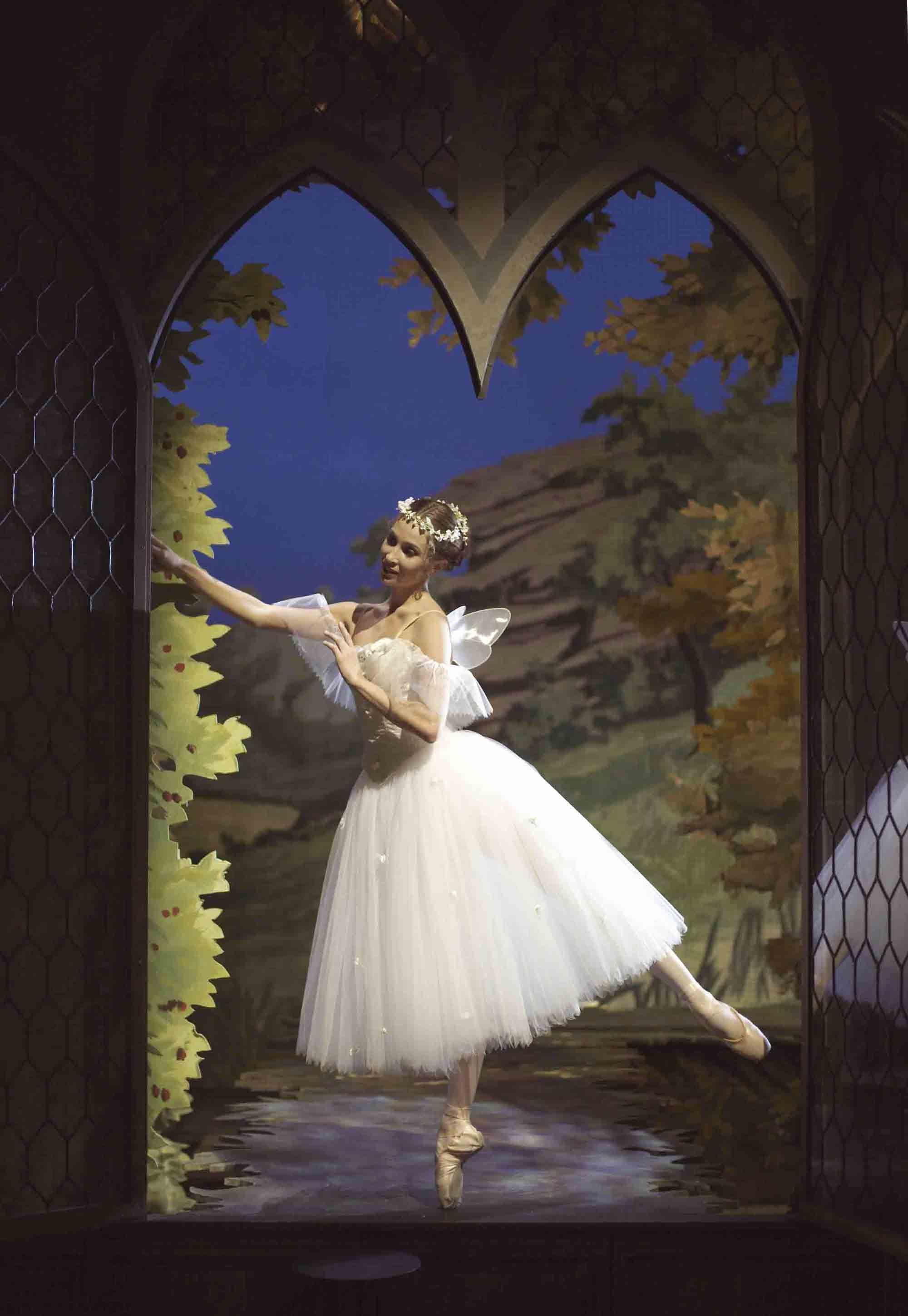
It’s been almost two years since I wrote about the Royal Danish Ballet’s La Sylphide in these pages. The occasion was the premiere of the new production—by Nikolaj Hübbe—of the celebrated work. Having just seen that staging in the Festival, with nearly all the principals from the original cast, I find that my response to it now is very close to my response then. So, asking my readers’ indulgence, I refer them to my earlier essay.
Since its premiere, Hübbe’s production has amplified its already considerable dramatic power. The entire first act—even the communal reel, which traditionally relied on folk-dance charm—surges forward, just short of melodrama, from one compelling event to another, as if the characters were speeding along a roadway from which there was no escape. This salutary take on the material has the effect of moving it from a familiar past tense to a gripping present one.
Gudrun Bojesen and Thomas Lund have matured in the roles of the Sylphide and James. Bojesen has, as was inevitable, left the dewy innocence of her early career behind her. Now more womanly, she’s positively incandescent, and her Sylphide tempts James away from his bourgeois existence into the ecstatic unknown more as a dangerous siren than as an ethereal spirit. Lund, whose technique, like Bojesen’s, is surer than ever, has boldly continued down the path of spontaneity and sincerity in his acting. He doesn’t simply believe in his role; he is James—lost in dreams, perpetually confused as they begin to materialize, and finally spurred to the decisive action that will be his tragic undoing. One of the most shocking and novel effects between Lund’s James and Bojesen’s Sylphide comes when, frustrated by her luring him on while refusing to let him touch her—that is, possess her—he forcibly binds her to him with the scarf the witch has poisoned, covers her bosom with kisses, and thus destroys her. The action, which looks like a rough embrace, registers as a rape.
Both Lund and Nicolai Hansen, as James’s more down-to-earth rival, Gurn, did themselves proud in the famous back-to-back solos of the first act —with high-charged, space-eating dancing that nevertheless remained buoyant, musical, and immaculate in matters of shape and articulation. In the second act, where the Sylphide introduces James into her own world—nature at its loveliest and most haunted—his dancing became increasingly heroic while hers shifted between an airy quality increasing until she seemed well-nigh impalpable and a seductiveness that fleetingly echoed the malevolence of the witch.
Lis Jeppesen’s portrayal of Madge has grown more solid physically, but it still lacks adequate emotional depth and conviction. The witch is as significant a character in the ballet as the Sylphide and James; to portray her superficially inevitably lessens the work’s impact. In the small mime role of Anna, Kirsten Simone provided a stunning moment when, her son James having jilted her niece, Effy, she gives the young woman permission to decide if she will marry Gurn, decidedly a second choice. As Effy thinks it over (and, being a practical girl, appears ready to accept what’s available to her), Simone’s face becomes a mask of sorrow, that of a mother mourning an irremediable loss.
Simone was giving her last performance in the role, her last in the ballet, in which she has, in her time, played both Sylphide and witch. At 70, Simone has reached the age when even the hardiest of the Danish dancers retire from the stage, so these days her appearances are in the nature of farewells. She took her La Sylphide curtain call hand in hand with the featherweight feisty-spirited little girl entrusted with the featured children’s role in the show. The pair made an emblem of continuity. Rooted as the Royal Danish Ballet is in tradition, in renewal unequivocally dependent upon its links to the past, one could not wish the company anything better than this.
Accompanying Kermesse in Bruges on opening night and, later in the week, La Sylphide, was a new production of La Ventana (The Window). Though it’s a short, unassuming ballet, it’s memorable for two set pieces: the Señorita’s dance with her mirror image and a pas de trois for nameless figures up to some serious technical high jinx. The trio, which can be successfully performed out of context (as it is in the New York City Ballet’s Bournonville Divertissements), does nothing to further the plot, which is negligible anyway. The piece is essentially a bagatelle, all situation without the conflict-requiring-resolution that would make for drama. It’s simply an occasion for demonstrating technical panache under a gossamer veil of grace and, of course, in its Señorita and Señor, personal allure and panache.
The challenges of the pas de trois are fiendish, among them simultaneous unsupported pitched arabesques for the two women, and fleet, intricate batterie for the man. The Señorita’s dance revives a venerable theatrical trick of having a well-matched pair of dancers reflect each other’s moves so accurately, the viewer is tempted to think the reflection couldn’t possibly be flesh and blood. The trick is augmented by the having the lady and her double turn their backs to each other several times, so that they’re bringing off the feat blind, so to speak. The rest of the ballet is charming but generic—the Danes being Spanish. The Señorita, rightly played, is a mix of sweetness and allure.
The new production of the piece has been mounted by a pair who have been with the RDB since childhood: Frank Andersen, presently the company’s artistic director, and his wife, Eva Kloborg, now a character dancer and a teacher in the school. These two have certainly got history on their side, but their new staging has three things wrong with it: Christian Friedländer’s new set; a pointless prologue that’s been tacked on to Bournonville’s choreography; and dancing that, despite the usual Danish spirit and charm, is only fitfully Bournonvillean in style.
Instead of the traditional set showing the Señorita’s boudoir (a private space) and, subsequently, the courtyard beneath her boudoir window (a public space, to which the lady moves to meet her lover and their friends—the pas de trois folks and a vivacious little ensemble—only after we’ve gotten to know her), Friedländer first gives us a humongous painting in the style of Old Spain depicting, at one remove, so to speak, a bustling nineteenth-century courtyard. In front of this painting, Andersen and Kloborg have set a mini-prologue that introduces, in brief inconsequential solos, first the spirited, captivating Señorita, then her duly ardent admirer, the Señor. This accomplished (for no reason that I can fathom; Bournonville understood that we shouldn’t meet the Señor until we were intimate with the lady), the painting flips around to reveal an unconvincing boudoir that surrounds the all-important curtained mirror with a museum-like wall of paintings. Why, I wonder, would a beauty be putting the finishing touches on her toilette in an overcrowded room at the Prado? Most baffling is the fact that this boudoir-in-the-abstract has no window from which the lovely lady, preparations for her rendezvous completed, can throw a rose down to the courtyard where her lover eagerly awaits her, not for a secret tryst but accompanied by the liveliest of crowds.
Alternating as the Señorita in the two Festival performances, Gitte Lindstrøm and Izabela Sokolowska, were both radiant with erotic promise, the latter, just elevated to soloist rank from the ensemble, irresistibly so. The dancing, from principals through ensemble, was animated throughout, though in the main both Señoritas and Señors seemed to be operating in what the Danes call the International Style, by which they mean post-Bournonville—more like, say, the polyglot manner in which American Ballet Theatre performs. Diana Cuni, one of the women in the second-cast pas de trois, achieved the single fully Bournonvillean moment in her solo, where suddenly the venerable technique, with its great beauty and even greater challenges, looked not like something dutifully learned in the classroom and conscientiously practiced in performance, but like gorgeously shaped movement blessed with the air of improvisation, it was so buoyant and free. Bournonville always insisted on danseglæde (the joy of dancing), and this was it.
Photo: Martin Mydtskov Rønne: Gudrun Bojesen in the title role of August Bournonville’s La Sylphide
© 2005 Tobi Tobias