


Paul Taylor Dance Company / City Center, NYC / March 1-20, 2005
Celebrating its 50th anniversary with a tour to the full 50 United States, the Paul Taylor Dance Company is playing three weeks in New York City, its hometown. The repertoire encompasses a host of golden (and silver) oldies and a pair of new works. Newish, anyway; both had their premieres out of town.
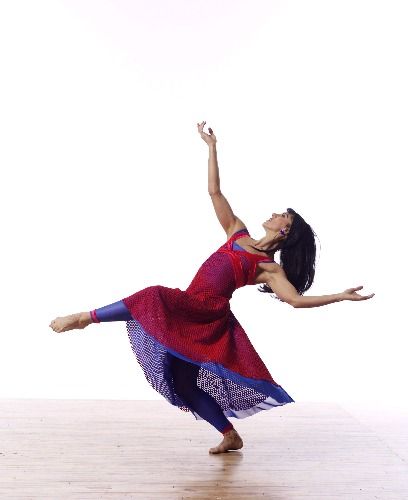 Klezmerbluegrass honors an even more venerable anniversary than Taylor can lay claim to. The piece was commissioned by the National Foundation for Jewish Culture to celebrate 350 years of Jewish life in America. (The celebrants have in common the fact that it hasn’t been easy going.) It’s typical of the bemused perversity that characterizes Taylor’s mindset that the choreographer, while executing his commission, should combine the folk music of itinerant bands in eastern Europe with another folk genre: American bluegrass. What these two share, of course, is a vigorous dance impulse. Margot Leverett, who arranged the music and plays it (on clarinet) with the Klezmer Mountain Boys, has, indeed, arranged a reasonably convincing marriage of the genres. Taylor, maverick miracle worker that he is, combines them even more seamlessly in dance. If the resulting piece never digs deep into the human condition, as the best of Taylor does, it supplies a thoroughly enjoyable surface exuberance.
Klezmerbluegrass opens with four couples doing square dancey stuff; the moment this registers, three more couples join in to give the lie to the restrictions of foursquare structure. This is an aspect of Taylor’s genius: He never dwells on the obvious; he simply states it briefly to give the viewer a firm reference point and then moves–swims, skedaddles, slips–on, creating variations on the theme so inventive he seems at time to depart from it entirely (though not quite).
The gleeful opening section gives way to a somber, melancholy dance for the work’s seven men, which cleverly uses the motif of line or chain dancing both as a structural device and a decorative one. One at a time, a single man emerges for the briefest solo stint in front of the moving wall, then lets himself be absorbed back into the quietly throbbing matrix of the tight-knit community.
A raucous passage, follows, led by Richard Chen See. Evoking wild–perhaps ecstatic–release, it’s succeeded, a tad too obviously (at this stage of his career, Taylor occasionally operates on automatic pilot), by a sultry female quintet led by Silvia Nevjinsky. Taylor has Nevjinsky evoke all the stock images of the houri, and she does so so beautifully and with such unemphatic conviction, they are somehow renewed. Chain dancing appears here again, with a single gesture spilling, wave-like, down the line and, at one point, a witty reference to Balanchine’s compulsive daisy chains. Eventually five men arrive to shadow the women, then partner them, as if to imply that the female display, which we took to be what women do (or discuss) in a private, intimate women’s world was, after all, only a device to attract the men with whom they’re destined to mate.
Next, logically, comes the obligatory “love” duet of the piece, but it’s more playful than romantic here, with the tiny Julie Tice becoming a plaything (albeit a feisty one) in the arms of the lanky Michael Trusnovec. At the end of their tête-à-tête, the two are held aloft and paraded around, mounted on the shoulders of the ensemble like the bridal pair at a Hasidic wedding.
As the dance winds down, Taylor gives us the “Ah, but . . .” with which he typically qualifies any proposal of the world’s perfection. The neatly coupled 14 dancers of the piece are joined by the loner, the outsider–here in the form of Annmaria Mazzini. She’s given a long, sensuous solo of yearning, tailor-made, if the pun can be forgiven, for her expressive power. I suspect–this is just on one viewing, mind you–that, choreographically speaking, the solo doesn’t amount to much, that its meanderings are charged with a sensuous melancholy Mazzini could project simply doing her daily exercises, but it grabbed my heart nonetheless. In the final moments of the dance, the ensemble returns, comforts Mazzini’s character a little, and allows her to leave. The point is quietly made, but made nonetheless: an effective social matrix must cast off the occasional person who doesn’t fit in. By definition, community has little space for the aberrant.
When Taylor turns out the pair of new pieces he assigns himself to create annually, he usually adheres to the practical formula of one upbeat, one gloomy. Dante Variations, set to music by György Ligeti, falls into the dark-night-of-the-soul category, with its pointed epigraph from the Inferno, its opening and closing frieze of recumbent writhing bodies, and its prevalent mood of torment and despair.
Early on, the fallen figures of the frieze struggle to their feet and move from a gray-blue gloom into a glowing peach-colored light that lets us witness, as if in the reflection from hellish flames, some particulars of their plight. Nevjinsky, however, remains in the ominous fog, futilely extending a pleading hand to a merciless fate; eventually she’s joined by three lurking men for couplings right out of Hieronymus Bosch. Elsewhere, a small crowd of figures reverting to their animal instincts surrounds Michelle Fleet (in happier circumstances, worthy of her surname), who sits on the floor as if rigid with fear, legs wide open. When the men in the group lift her high, displaying her as prey, she beats her thighs with her fists. Then this treacherous little community blindfolds her with a narrow length of white cloth, watches as she fumbles and staggers through a miasma of lost dimensions, and abandons her to grope her way out of our view, alone. The bandage-like strip of fabric appears elsewhere to thwart the body by “handcuffing” it at the wrists or knees–or, in a mistaken deviation into slapstick, tripping it up.
It’s only to be expected that the obligatory central duet, given to Trusnovec and Lisa Viola, should examine the antithesis of love. The two take turns in the dusky light and the bright glow. She’s frenetic; he’s riddled with shame and incapacity. Eventually they get together for a series of horrific moves that, again predictably, provides solace to neither of them. Their final flight takes them to opposite corners of the stage.
Everything Taylor makes his dancers do in this piece, he’s had them do before–with greater conviction and intensity. Looking uninspired and recycled, Dante Variations provides little illumination for its audience. But, while I don’t think this venture amounts to much, it did make me realize how much of Taylor’s work argues–and argues convincingly–that we humans are a breed of cripples aspiring to sublimity. Who, after all, so in need? Who, after all, so deserving?
Photo: Lois Greenfield: Silvia Nevjinsky in Paul Taylor’s Klezmerbluegrass
© 2005 Tobi Tobias