If all of July is like this, I'll be a happy cyclist. My Italian friend Vigorelli Bianchi and I did
22 morning miles. The air and light had a crystalline quality more usual In October than summer. The cherry crop looks splendid,
loading the trees so heavily that in places the branches bowed low near enough to the road that I could almost have plucked the fruit as I rode by. This is the stage at which cherry growers pray for no rain.
Thinners are in the apple trees making room for the fall fruit to develop. Th
e orchards have all the earmarks of a bumper apple crop.
Fruit workers waved and smiled as I passed, approaching motorists nodded and lifted fingers from their steering wheels in greeting, dogs barked more out of a sense of duty than intent to pursue, and not one pickup truck tried to run me into the ditch. It was one of those rides when I felt stronger at the end than the beginning. It was great out there.
I had to tell someone.
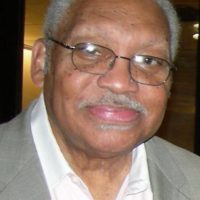
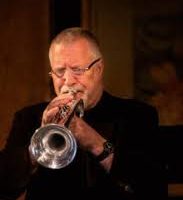
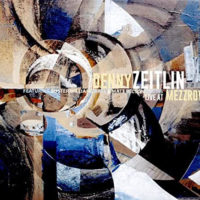
Please go to the center column and scroll down to Doug's Picks. There, you will find recommendations for two tenor saxophonists, a pianist who sings (or a singer who plays the piano), a pianist and a poet. Yes, a poet.
Ted O'Reilly writes from Toronto about the item in the following exhibit:
Nice stuff with the DBQ. I agree with your comments about the sound quality especially. It was in the days of Professionals when that was recorded: both musicians (who knew how to play together) and technicians. "Balance Engineers" who could listen to a group play, then simply(!) put THAT sound on the air, or disc usually capturing it with three or four well-placed microphones.
I am still in awe of the hundreds of performance airchecks I have by Ellington/Basie/Herman et al. which stand up so beautifully over decades. It sure is a differently-made beast that is presented to our ears these days...
Ted's communiqué put the Rifftides staff in mind of Roy DuNann's imperishable engineering for Contemporary Records. To read about him, see this archives piece.
YouTube has posted a few excerpts from programs the Dave Brubeck Quartet did for BBC television in 1964. The musical and the black and white video quality are superb. In the first one, I am struck by Brubeck's delicacy at the keyboard and by the fullness of Paul Desmond's alto saxophone sound. The critic Steve Race was the program host.
Race interviews Brubeck leading into a feature for bassist Eugene Wright. In the discussion, Brubeck earnestness and shyness are as noteworthy as Wright's playing. One other point: Desmond used to speak with enthusiasm about Brubeck's skill and sensitivity as an accompanist. In "The Wright Groove," Brubeck's comping behind Wright's solo is evidence of what Paul was talking about.
Up to my ears in curricular and non-curricular matters since my return from New York, I may or may not get around to writing more about last week's Jazz Journalists Association awards afternoon. In the meantime, Arnold Jay Smith posted a lively summary on Ted Gioia's jazz.com blog. In his lead paragraph, he alludes to the demise in the past few months of of several jazz magazines, including Jazz Times, Coda and Jazz Review.
In the face of what is fast becoming a debacle of biblical proportions for jazz, the Jazz Journalists Association held its 13th Annual Awards buffet at Jazz Standard on Tuesday, June 16. From all over the globe they came; scribes, radio and computer folks, business and professorial types, from the east, Midwest and western U.S., from across the pond, from up Scandinavia way, from down in the Caribbean, out of Africa, India, Russia and Kazakhstan. Proving once again that jazz is a multi-cultural, international language.
To read all of A.J.'s report, click here. The photo below shows Mr. Smith and Sharony Andrews preparing for the arrival of guests at the 2002 ceremony at the Jazz Standard. He was just as impeccably attired this year. His face, unfortunately, is mostly obscured by the brim of his chapeau, but his shoes are on full display.
![]()
JJA President Howard Mandel's exhaustive report on the afternoon, generously illustrated with photographs, is in PDF form at this internet address.
Finally, as evidence that I really did show up this year, in this photo by JJA member
Steve Sussman, I am announcing that the 2009
award for lifetime achievement in jazz journalism goes to Mike Zwerin (shown here on the left). Mike is most likely the only jazz writer of standing who doubles on bass trumpet and trombone. He was in the original Miles Davis-Gerry Mulligan-Gil Evans Birth of The Cool band. For decades, he has written from Paris with forthrightness, humor and the insights of a trained musician. Zwerin was unable to attend. His friend the novelist Rafi Zabor accepted for him.
Each man reads his own meaning into New York. --Meyer Berger
One belongs to New York instantly, one belongs to it as much in five minutes as in five years. --Thomas WolfeI miss New York. I still love how people talk to you on the street - just assault you and tell you what they think of your jacket. --Madonna
I love short trips to New York; to me it is the finest three-day town on earth. --James Cameron
It is an ugly city, a dirty city. Its climate is a scandal. Its politics are used to frighten children. Its traffic is madness. Its competition is murderous. But there is one thing about it-once you have lived in New York and it has become your home, no other place is good enough. --John Steinbeck
At Grand Central Station, I plop into a chair in a semi-circle of what look like overstuffed maroon leather armchairs, a hard plop; the chair is molded plastic. One of New York's great free shows is underway in the lower concourse, with a cast of thousands. It's the evening commute to the northern suburbs. Many of the commuters are running. The picture doesn't do justice to the activity and energy of the place.
![]()
"Attention, please. The 5:36 express for Tarrytown, leaving on Track 6 in one minute."
A young woman runs by in Dolce and Gabbana jeans. I can tell that they are Dolce and Gabbana because a shiny silver badge on the waist band announces the fact. Hey, if you're going to wear 400-dollar pants, why keep it a secret? Her lower body is clad in high fashion and she looks great, but there's discomfort in her expression. Those tight jeans were meant for striking poses, not running. If she could afford 400 bucks for pants, she could take a limo to Scarsdale. One in five people (ratio not scientifically confirmed) is on a cell phone. Many of them are running.
"I just called to tell you I can't talk. I'm running for the train."
"I missed the 5:10. I'll be 20 minutes late. Pick me up. 'Bye. Gotta run."
An old woman in short grey hair, a boxy grey suit and mannish brown shoes walks by with a three-year-old boy by the hand. The boy's other hand is in the hand of a girl of about six. Surrounded by the streaming crowd, the children look bewildered, fearful. The woman is forging ahead, determined and grim. Grandmother? Governess? Kidnapper?
A number of the young women are wearing shower shoes, as they used to be known. Later, they were called zoris. Now, the acceptable term is flip-flops. As the girls run, the footwear neither flips nor flops. The sound is flap, flap, flap, flap, flap. I wonder if they wore those things all day at work or shopping in Manhattan. Wouldn't their feet get dirty? A drastically short woman in tight capri pants and four-inch heels speeds by. She has what my father used to call a hitch in her getalong, and her sound is clack, de-clack, clack, de-clack, echoing through the concourse.
Five people standing together at the top of the ramp in front of the Oyster Bar break into applause. I look for what inspired them. Nothing is evident, but they look delighted. It probably wasn't the extremely tall Hassidic gentleman strolling toward his track with dignity, a tall black hat and a briefcase the size of a small trunk. I wonder if he's from the diamond district, carrying a load of samples to a wealthy client in Bronxville.
A sign of the times: I see elderly men in suits--more than a dozen in a few minutes--clutching briefcases, wearing their weariness on their faces, slumping toward their trains. Did they expect still to be working at their ages, still catching trains?
A young man slips into the big maroon chair next to mine. His afro is stuffed into an enormous knit cap puffed into the shape of turban. His gold ear ring is fashioned to look like a small horseshoe. He eats a half-pint of yogurt or cottage cheese, then promptly falls asleep. His head slowly leans until it is parallel to his right shoulder. The clack de-clacking, flap-flapping, departure announcements and general hubbub do not interrupt his nap. As I leave, I hope he doesn't miss his train.
The woman to my left gets up at the same moment I do. I say to her, "It was a great show, wasn't it?" She looks startled, then laughs and says, "Yeah...if that's what you want to call it."
I do.
Rifftides Washington, DC, correspondent John Birchard attended last week's descent of several Marsalises on the nation's capital.
THE MARSALIS FAMILY GOES TO WASHINGTONBy John BirchardMonday, June 15th, 2009, was a day to remember in this capitol city. A jazz-loving First Family welcomed New Orleans' First Family of Jazz to 1600 Pennsylvania Avenue for an unprecedented session in jazz education. Veteran pianist and educator Ellis Marsalis and his musician sons Branford, Wynton, Delfeayo and Jason conducted workshops for 150 students aged 8 to 18 in three rooms of the White House, where they were welcomed by First Lady Michele Obama. (The nation's Number One jazz fan was occupied elsewhere with health care reform.The Presidentis pictured here with Wynton Marsalis at the White House in January.)
Following the workshops, the students gathered in the East Room for a short concert featuring Cuban saxophonist Pacquito D'Rivera and a teen-age combo. The events were held in conjunction with Washington's fifth annual Duke Ellington Jazz Festival and the Thelonious Monk Institute of Jazz, which paid for some of the students to travel to Washington.Among her comments, the first lady said, "There's no better example of democracy than a jazz ensemble - individual freedom, but with responsibility to the group." She noted that growing up in Chicago, jazz was always playing in her family's household.
As extraordinary as the day was, the celebration didn't end at the White House. Monday evening, the Marsalises convened at the Kennedy Center where, in the sold-out 2,400-seat Concert Hall, they were joined by Dr. Billy Taylor and another Crescent City product (and ex-Ellis Marsalis student) Harry Connick, Jr. in a salute to the family patriarch. Additional starters were bassist Eric Revis and drummer Herlin Riley.
Very rarely do the members of the Marsalis family appear on the same stage and Monday's concert gave them an opportunity to share their love and appreciation for the father who guided them all toward careers in jazz. One after the other, the sons offered anecdotes of their upbringing, laced with humor and respect. They kidded each other and they also made clear how much they love and appreciate their mother Dolores for her role in the family.Branford told the audience that the evening's program would be made up of tunes associated with various points in their father's career. The first came from when their father and mother were courting - Louis Jordan's "Choo Choo Ch-Boogie" done in suitably old-timey style. From the bebop era came "Donna Lee", featuring Wynton in a cup mute and Jason astonishing the audience with some expert whistling as he traded fours and eights with his older brother. Jason also showed impressive skill with the vibraphone on a later tune. Delfeayo got off some excellent work on trombone and Branford was expressive on tenor sax. Wynton remains an extraordinary trumpet player delivering several crisp and soulful solos during the evening.
The second half of the concert opened with twin pianos - Ellis Marsalis and Billy Taylor, doing "Body and Soul." The two senior citizens (Marsalis is approaching 75 and Dr. Taylor will soon be 88) may be a trifle bent with age, but they still can negotiate the keyboard. Then, Taylor departed to be replaced by Harry Connick, Jr., who joined Ellis for a funky reading of "Sweet Georgia Brown." Connick told of being a student of Marsalis, of hanging out at the Marsalis household and being picked on by Branford and Wynton. Connick then sang "Stardust" with his former teacher accompanying.
The "boys" came back on stage to round out the evening with one of Jason's compositions, a quirky stop-start melody underpinned by a distinctly New Orleans beat. The solos were rousing and the ensembles were tight, just as you would expect from such a gifted group. An ovation from the full house was warm and enthusiastic for Ellis Marsalis and his talented offspring. It was a happy end to a unique day in American musical history.
The Jazz Journalists Awards ceremony yesterday at the Jazz Standard on New York City's east side was more than three hours of jam-packed activity in a crowded club. The highlight of the afternoon was 90-year-old Hank Jones accepting the Pianist of the Year award. Beautifully dressed, erect, looking 20 years younger than his age and speaking prose as elegantly constructed as one of his solos, he said "This is encouragement to do better," and, "It's just the end of the beginning."
There is little of Mr. Jones's degree of class left in jazz. There is little of it in American life. "I'll see you at this event in 20 years," he said.
I hope that we are that fortunate.
For a complete rundown of the award winners and a marvelous photograph of Hank at the ceremony holding a photograph of Hank, please see the JJA web site by clicking here.
I like New York in June. I'd like it more if we didn't have heavy rain, with more in the forecast. Umbrellas crowd the streets. People discussing the weather give that "Hey, whaddaya gonna do" New York shrug. Last night at the Tutuma Social Club, Gabriel Alegria and Laurandrea Leguia told me that in Lima, Peru, umbrellas are unknown because it never rains. Lima is their home town. They are New Yorkers now, making a name for their band, blending Peruvian and Caribbean influences with jazz to make music as subtle as the Peruvian food served at Tutuma. To see a Rifftides review of an Alegria concert, click here.
The Tutuma is a new midtown restaurant and music club that one of its owners, Santina Matwey, told me is in a "soft opening" phase. Nonetheless, it seems to be fully operational, with not only a menu of the small individual servings of the delicacies known as tapas, but also a full-sized portion of music delivered by Lisa Harriton. Ms. Matwey and her husband visited Peru and fell in love with its people, music and cuisine. They came back to New York and, with Gabriel and Laura Alegria as advisors, applied their restaurant experience and skills to the creation of this happy little basement room on 56th Street just off Third avenue.
Lisa Harriton, with the Alegrias' rhythm section as collaborators, sang and played a set of songs in approximately the same trans-genre spirit as the music made by the Alegrias and, increasingly, by North American musicians including Maria Schneider, Geoffrey Keezer, Ingrid Jensen and Jon Wikan. Harriton's impeccable Spanish, her hip phrasing and her piano solos might come as a surprise to those who know her only for her work with the alternative rock band The Smashing Pumpkins.
She studied at the University of Southern California with, among others, Shelly Berg and Alan Pasqua. After graduation, she took work with The Smashing Pumpkins because, as you may have heard, entry level gigs are hard to come by for young jazz musicians. The Pumpkins engagement has ended, probably bad fiscal news for her. For those who heard her last night, it was good listening news.
Tonight at Tutuma, the Alegrias will perform following a set by Harriton. I'm thinking of spending another of my precious New York nights there.
Later in the day, I'll try to post a little something about the Jazz Journalists Association and ASCAP Jazz Wall of Fame awards events that brought me to town.
Many thanks to Michael and Kaitlyn of Starbucks at 19th Street and Eighth Avenue for coming to my internet rescue and making this entry possible and to Starbucks for playing Miles Davis and Ella Fitzgerald while I wrote it. Additional thanks to my matronly cross-town bus driver. When my Metrocard popped up short half a dollar and I didn't have two quarters to drop in the box, she said, "You got a dollar? Let's see if we can get you some change. Anybody got change for a buck?"
"I do," said a women seated on one of the side seats. Fifty cents in the box and we were on our way east on 23rd Street. I profusely thanked the driver.
"I just wanted to help you, baby," she said.
I like New Yorkers in June.
About
...Doug Ramsey Doug is the 2008 winner of the lifetime achievement award of the Jazz Journalists Association. He lives in the Pacific Northwest, where he settled following a career in print and broadcast journalism in cities including New York, New Orleans, San Francisco, Los Angeles, Seattle, Portland, San Antonio, Cleveland and Washington, DC. His writing about jazz has paralleled his life in journalism... more
...Doug's books
Doug's most recent book is a novel, Poodie James. Previously, he published Take Five: The Public and Private Lives of Paul Desmond. He is also the author of Jazz Matters: Reflections on the Music and Some of its Makers. He contributed to The Oxford Companion to Jazz and co-edited Journalism Ethics: Why Change? He is at work on another novel in which, as in Poodie James, music is incidental.
Contact me Click here to send me an email... more
Other Places
Terry Teachout
All About Jazz
JerryJazzMusician
Carol Sloane
Jazz Beyond Jazz: Howard Mandel
Here, There and Everywhere: Don Heckman
Dave Frishberg
Jessica Williams
Mule Walk And Jazz Talk
Darcy James Argue
Jazz Profiles: Steve Cerra
be.jazz
Marc Myers: Jazz Wax
Night Lights
Jason Crane:The Jazz Session
Jazz.com
JazzCorner
ArtistShare
Michael J. West
DevraDoWrite
Second Draft, Tim Porter
Alex Ross: The Rest Is Noise
Jazzportraits
John Robert Brown
Jim Wilke's Jazz After Hours
Freedom of the Prez
PressThink (Jay Rosen)
On An Overgrown Path
Jazz Scene
Bill Crow
The People vs. Dr. Chilledair
blognoggle
Sequenza 21
Gregory Curtis
Bill Evans Web Pages
Jazz Spotlight on Sinatra
Remembrance of Swings Past
Jazzitude
Night After Night
Do The Math/The Bad Plus
Jazz My Two Cents Worth
Prague Jazz
Bruno Leicht
Russian Jazz
Wonderful World of Louis Armstrong
AJ Ads
AJ Arts Blog Ads
Now you can reach the most discerning arts blog readers on the internet. Target individual blogs or topics in the ArtsJournal ad network.
Advertise Here
AJ Blogs
AJBlogCentral | rssculture
Terry Teachout on the arts in New York City
Andrew Taylor on the business of arts & culture
rock culture approximately
Laura Collins-Hughes on arts, culture and coverage
Richard Kessler on arts education
Douglas McLennan's blog
Dalouge Smith advocates for the Arts
Art from the American Outback
For immediate release: the arts are marketable
No genre is the new genre
David Jays on theatre and dance
Paul Levy measures the Angles
Judith H. Dobrzynski on Culture
John Rockwell on the arts
Jan Herman - arts, media & culture with 'tude
dance
Apollinaire Scherr talks about dance
Tobi Tobias on dance et al...
jazz
Howard Mandel's freelance Urban Improvisation
Focus on New Orleans. Jazz and Other Sounds
Doug Ramsey on Jazz and other matters...
media
Jeff Weinstein's Cultural Mixology
Martha Bayles on Film...
classical music
Fresh ideas on building arts communities
Greg Sandow performs a book-in-progress
Exploring Orchestras w/ Henry Fogel
Harvey Sachs on music, and various digressions
Bruce Brubaker on all things Piano
Kyle Gann on music after the fact
Greg Sandow on the future of Classical Music
Norman Lebrecht on Shifting Sound Worlds
publishing
Jerome Weeks on Books
Scott McLemee on books, ideas & trash-culture ephemera
theatre
Wendy Rosenfield: covering drama, onstage and off
Chloe Veltman on how culture will save the world
visual
Public Art, Public Space
Regina Hackett takes her Art To Go
John Perreault's art diary
Lee Rosenbaum's Cultural Commentary
Tyler Green's modern & contemporary art blog