
1760 wasn’t all that great a year for art, at least according to Wikipedia. Thomas Lawrence and Hokusai were the most prominent painters born that year, and Guardi and Shen Quan were among those artists who died. Wikipedia’s Year in Art doesn’t list any art works created in 1760.
 But in Paris, a man named Giovanni Battista Torre established a shop called “Cabinet de Physique Experimentale,” which sold scientific instruments, books and prints. He set up another shop, in London, in 1767.
From this enterprise, which depended on print sales for its first 150 years, came Colnaghi, the great Old Master dealer. Colnaghi now claims to be “the world’s oldest commercial art gallery,” and since mid-June and through July, it has been celebrating with an exhibition about its fascinating history — pulling out manuscripts, drawings, prints, photos and account books from its archives. I wish I were in London — the shop is now located at 15 Old Bond Street (not far from where I once worked, for four years, in London, but I was too intimidated by its presence to enter) — to see it.
Paul Colnaghi went to work for Torre’s son Anthony in 1783 (against the advice of Benjamin Franklin, who told him to move to America), and took control of the business by 1788.
 Colnaghi moved into Old Master paintings in the last quarter of the 19th century, and says it sold many masterpieces to the Berlin Museum and many great paintings bought by Henry Frick, Isabella Stewart Gardner, and Andrew Mellon — works that “form the backbone of some of the greatest American museum collections.”
Artists wrote many of the documents on view:
- John Constable wrote to Dominic Colnaghi asking if he could help arrange shipment of a painting (not identified in the letter but known to be The Cornfield, now in the National Gallery in London) to the Paris Salon.
- Delacroix asked Colnaghi for help getting a painting accepted at the British Institution.
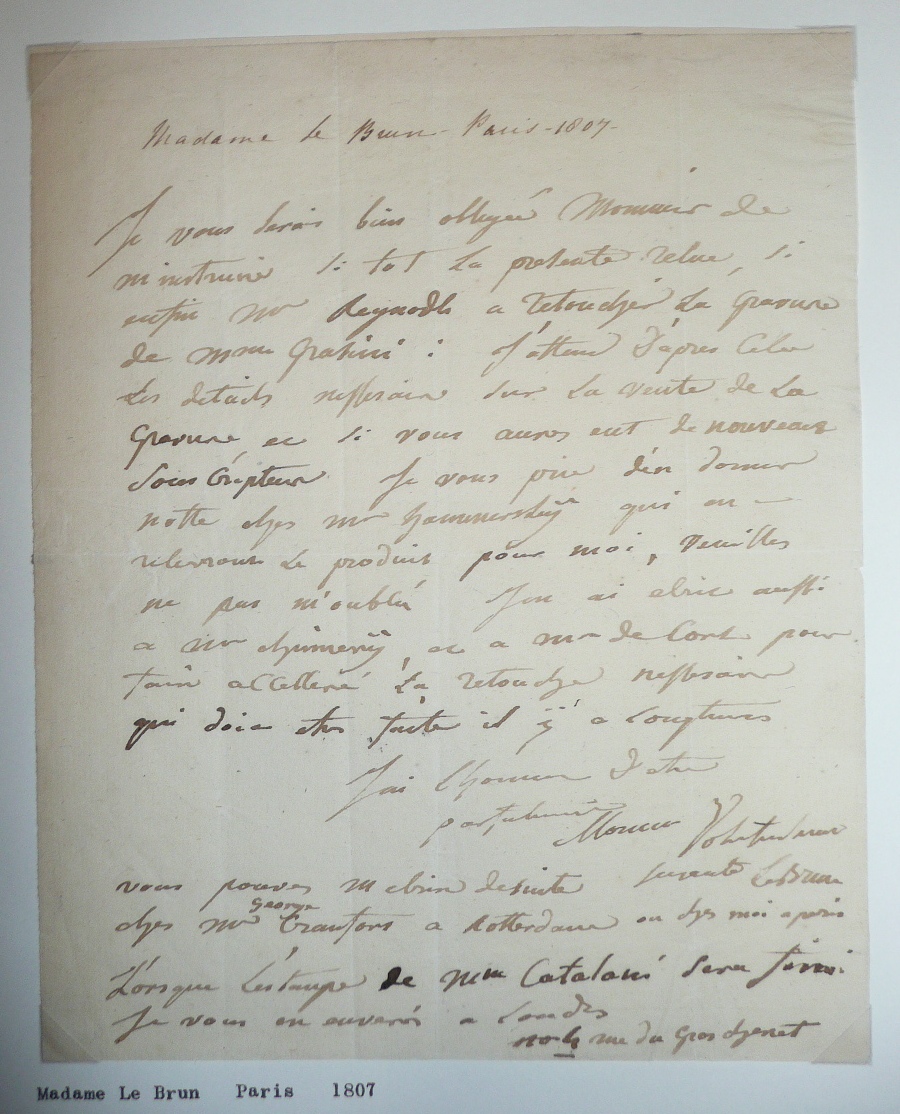
- Elisabeth Vigee Le Brun wants help finding sales of engravings of one of her potraits (top).
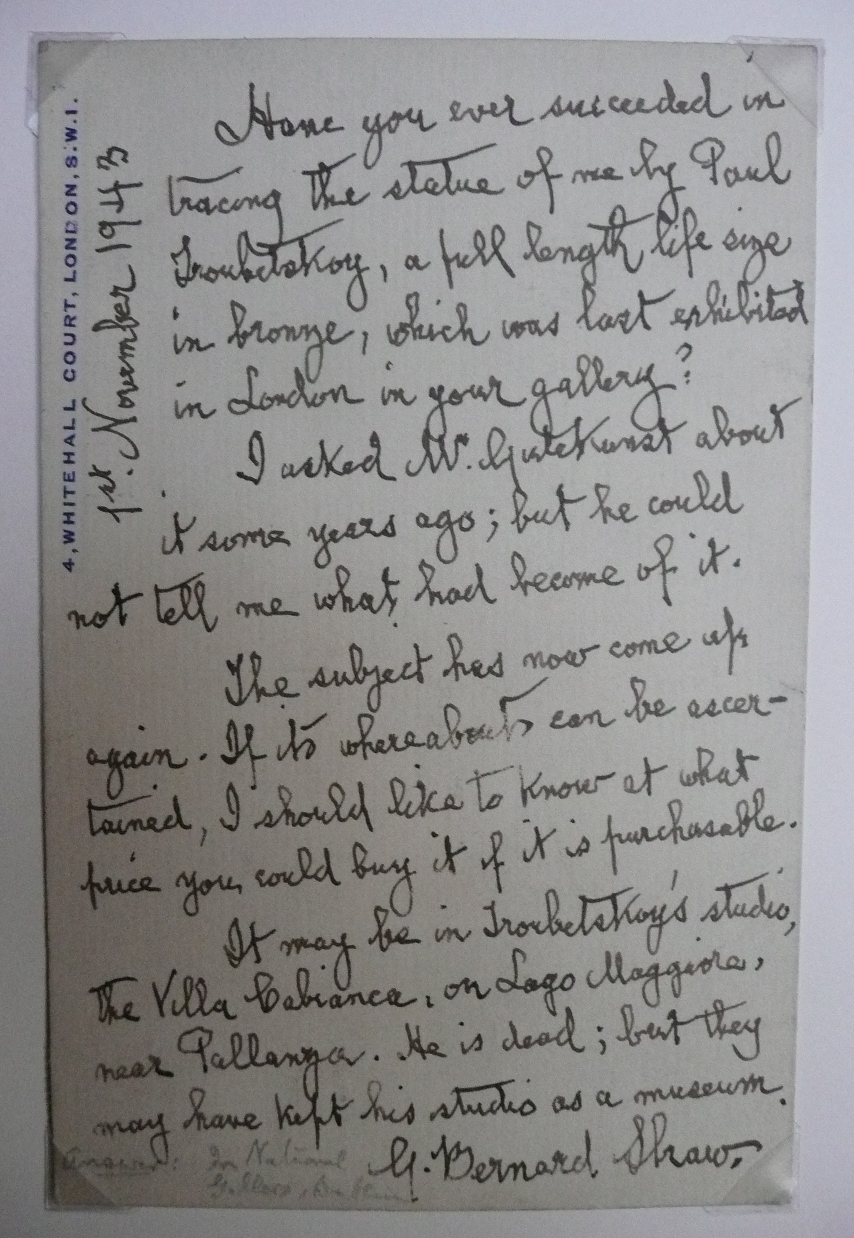
- George Bernard Shaw writes to ask where a portrait bust he lent to an exhibition is (bottom).
Colnaghi has also put on view the letters, photos, account books that trace the sale of one of his most transactions to Americans: Titian’s Europa, bought by Gardner, which some view as the most important Italian Renaissance painting on these shores.
There’s much more to the gallery’s history — though not all is there, either (including its one-time branch on New York — if anyone remembers why it close, please comment below). It would probably take a book.
Colnaghi held a study day about its history and art during the period on July 2, too, and all I can say is, congratulations.
A few more images are below:
The Constable letter and a cartoon from the June 1909 Westminster Gazette, which refers to the Holbein dutchess saved for the nation.
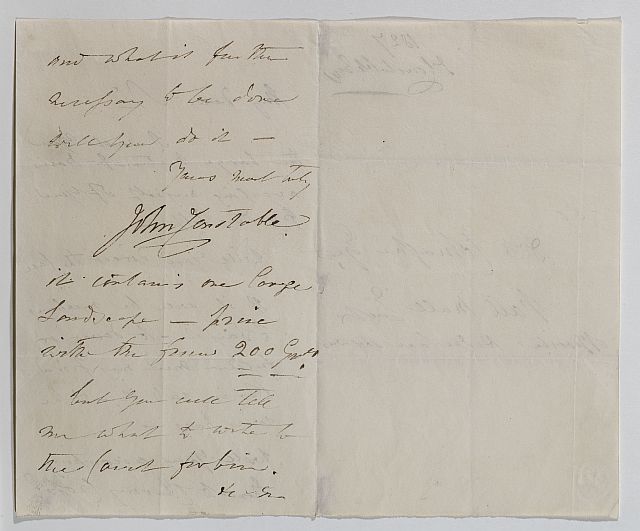
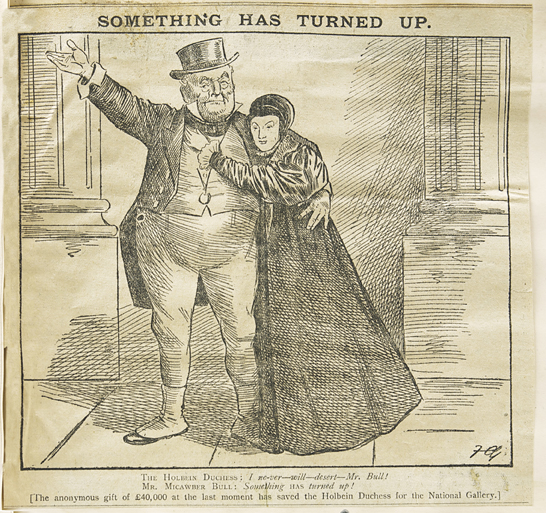 Photo Credits: Courtesy Colnaghi