
Academie d'Underrated: Matthijs Vermeulen

[Update below] I've been intending to write more about my European sabbatical, but I'm rather frantically composing on deadline. I have five world premieres coming up in the next several months, and two of the pieces aren't finished. Thanks to my extended leave from teaching, I wrote seven works in 2007, totaling some 85 minutes of music - not much by some people's standards, but a personal record for me. And I have two movements of The Planets to finish before school starts, so that the Relache ensemble can start practicing the entire 75-minute, ten-movement work - my own Turangalila, I like to think of it as - for their performance in Delaware in May. Also, my European trip was a lot to process: seven countries in eleven weeks, giving six concerts and ten lectures, meeting lots of composers, and hearing tons of new music. Unlike the American businessmen in novels, every American artist goes to Europe hoping to be changed. I'm not sure I was, but I did need time to think about it.
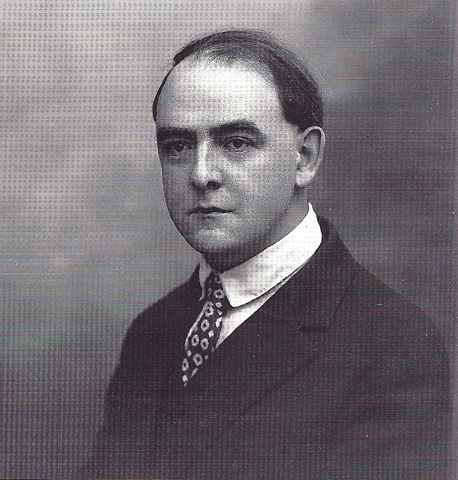
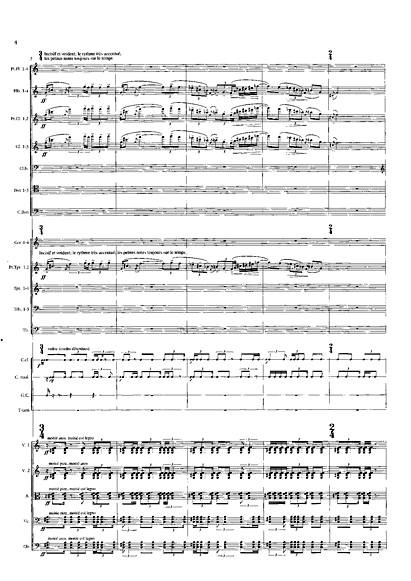
Vermeulen.jpgWhat I can do, though, is tell you about the most astonishing composer I learned about there: Matthijs Vermeulen. The Dutch call Vermeulen (1888-1967) "the Charles Ives of Holland," and also their Varèse. He is the archetypal undiscovered composer. His Second Symphony - considered by many his most groundbreaking work (second page pictured below) - received its first performance in 1953, and Vermeulen himself first heard it in 1956. He had written it in 1920. The tone clusters, polyrhythms, percussion, and atonal counterpoint it opens with are easily as daring as anything Varèse would write in the next decade. To throw yet another comparison in, the Dutch refer to it as "the Dutch Sacre du Printemps." Curiously modest about promoting their national composers, they won't tell you anything about Vermeulen unless pressed, but if you mention how remarkable he was, they look proud as punch.
Vermeulen2-2.jpg

On top of the fact that he was decades ahead of his time, Vermeulen was just my kind of guy. Autodidact and too poor to buy concert tickets, he learned the repertoire by listening to orchestras play from outside the Concertgebouw, sitting in the garden. He found work as a music critic, one whose sharp and outspoken views earned him enemies and injured his chances for performance. (My apartment in Amsterdam was about six blocks from the Concertgebouw. After romanticizing the place for my entire life, I was pretty let down to find that it simply translates as "Concert Building.")

The most famous incident of Vermeulen's life, the one every commentator mentions, occurred while he was working as a critic in November of 1918. Following a performance at the Concertgebouw of the Seventh Symphony of the rather conservative Dutch composer Cornelius Dopper, Vermeulen, to express his contempt, yelled "Long live Sousa!" - by which he meant that even the little-respected John Philip Sousa was a better composer than Dopper. Much of the audience understood him, however, to have shouted "Long live Troelstra!", which was the name of a socialist revolutionary who had attempted to start an uprising only days before. For awhile Vermeulen was banned from the Concertgebouw by the orchestra's management. Unable to make a living in Amsterdam, he moved to Paris for a 25-year exile, eking out a living as a music journalist and travel writer. You can see why my heart goes out to the guy. I have a feeling Vermeulen and I would have been thick as thieves.

After World War II, and the war-related deaths of his wife and son, Vermeulen moved back to Amsterdam, and his works started to be heard. There is a "Complete Matthijs Vermeulen Edition" of his recordings on two three-CD sets on Donemus, sold in every record store in Amsterdam but rather difficult to locate on internet retail outlets. His twenty-odd works are easily listed:

Symphonies:

No. 1, "Symphonia carminum" (1912-14)
No. 2, "Prelude à la nouvelle journée" (1919-20)
No. 3, "Thrène et Péan" (1921-22)
No. 4, "Les victoires" (1940-41)
No. 5, "Les lendemains chantants" (1941-5)
No. 6, "Les minutes heureuses" (1956-8)
No. 7, "Dithyrambes pour les temps à venir" (1963-5)

Chamber music:

Cello Sonata No. 1 (1918)
String Trio (1923)
Violin Sonata (1924)
Cello Sonata No. 2 (1938)
String Quartet (1960-61)

Songs with piano:

On ne passe pas (1917)
The Soldier (1917)
Les filles du roi d'Espagne (1917)
Le veille (1917; also in orchestral version of 1932)
Trois salutations à Notre Dame (1941)
Le balcon (1944)
Preludes des origines (1959)
Trois chants d'amour (1962)

Other:

Symphonic Prologue, Passacaglia, Cortège, and Interlude to The Flying Dutchman (1930)

That's it: Vermeulen's life's work. The symphonies - only the Fifth of which is divided into movements - are amazing. All of his music is tremendously contrapuntal, with many lines competing in a vast rhythmic heterophony. Throughout his life he complained that musicians who looked at his scores warned that the music would never sound, but that no one would play it to prove the point - and when he finally heard his works, they sounded just the way he wanted. He flows back and forth across the threshhold of tonality and atonality, occasionally sounding like Ives or Ruggles depending, though really sounding very much like himself. One of his most lovely and characteristic effects is the atonal (or dissonant) background ostinato, over which lengthy melodies unfold. It's complex music, difficult to become familiar with, but not at all without personality. In weight and density one might compare the symphonies to those of Karl Amadeus Hartmann, although they are not nearly so complicated in form as Hartmann's, and easier to take in as a whole.

I was directed to Vermeulen by a casual comment from Anthony Fiumara, director of the Orkest de Volharding. The name was totally unknown to me. I would have never believed that I, lifelong connoisseur of obscure composers, someone who teaches Berwald and Dussek in the classroom, would discover, at 51, a major composer I had never heard of, let alone one who would quickly become one of my favorites. At Donemus I bought the scores to the Second, Third, and Sixth Symphonies. It turns out that my erstwhile Fanfare magazine colleague Paul Rapoport wrote a book titled Six Composers from Northern Europe, about Vermeulen, Vagn Holmboe, Havergal Brian, Allan Pettersson, Fartein Valen, and Kaikhosru Sorabji, which remains one of the fuller treatments of Vermeulen in English; the one existing biography is only in Dutch. And since I hate to tell you about any music you can't hear, I upload Vermeulen's Third Symphony for your listening pleasure. Keep in mind it was completed in 1922. It's amazing what you can reach your fifties without knowing, but delightful to realize how much left there is to learn.

UPDATE: I found an insightful and thorough article on Vermeulen here.

January 3, 2008 7:10 PM | | Comments (9) |

Categories:

9 Comments

Thanks Kyle---it's going on my iPod very shortly and from what I've listened to so far on my iBook, this is really nice stuff. I'd love to hear his other music. I recall many many years ago seeing something from Edition Donemus that was pretty avant garde, but I don't think it was by Vermeulen, but who knows (this was probably over 30 years ago).

In terms of discovering new composers, I'm still doing that, and it's part of the fun of all this. Thanks for making this happen by sharing some great information and music.

http://www.amazon.com/Complete-Matthijs-Vermeulen-Orchestral-Passacaille/dp/B0000049TX/ref=pd_bbs_sr_3?ie=UTF8&s=music&qid=1199437556&sr=1-3

KG replies: Indeed, Peter Schat (I thought you were dead). But they're used, and extremely expensive.

"Curiously modest about promoting their national composers, they won't tell you anything about Vermeulen unless pressed, but if you mention how remarkable he was, they look proud as punch."

Actually, Dutch cultural politics works just slightly differently. As a somewhat small culture with a very cosmopolitan position due to a relatively important position in world trade and an extensive colonial past, the Dutch feel a constant necessity to prove their worth to the world. This is however always to be accomplished by promoting its contemporary culture. For a small country, we have great composers, we have great graphic designers, we have a vibrant literature, etc. etc. The operative slogan, which I feel is the cornerstone of Dutch national sense, is "waar een klein land groot in kan zijn" - referring to things "in which a small country can be great". This formula is a perfect symbol for the typically Dutch form of quasi-modest national pride.

At the same time, however, the cosmopolitan openness to what happens in other countries makes the Dutch very unsure of their own cultural tradition. What is Dutch music history when you have all those Germans and Austrians sitting next door pulling off one work of genius after another? What could Dutch literature ever be with Proust just south of you, Shakespeare just west of you, Goethe one step to the east?

The two tendencies interestingly reinforce one another. The less we trust our own tradition, the more we stress the vitality of our current artistic situation. And so every generation promotes its own official subsidized artists and neglects its past. The contemporary gets to be overvalued to the same degree that the past gets to be undervalued. (I'd love to be able to claim that I'm not guilty of this, but looking at the music I listen to most and the books I read most, I think I don't entirely escape this picture)

Vermeulen must be exceptional, in that he really was somewhat of a maverick, which is extremely rare in our society, which is vastly more conservative and conformist than many people realise, particularly our music life with its huge investment in expensive institutions. The major composer of his period was considered to be Willem Pijper at the time; he was thought to have developed a radical new technique, "germ cell technique", but what I know of his work now strikes me as competent at best.

To add to this, I think the one big exception is painting - the Dutch Masters of the Golden Age are a source of national pride as much as they are loved all over the world. Interestingly, the greatest Dutch painters after the 18th century all had to leave the country sooner or later - Van Gogh, Mondrian, De Kooning. Which reminds me again of a particularly caustic remark by our local German curmudgeon composer and a strong polemicist, Konrad Boehmer, who defined a Dutch composer as "A composer who either comes from abroad, or moves there." - sure enough, Vermeulen fits the bill!

One interesting thing about that collection is that some of the performances go back quite a few years (you see names like Ernest Bour among the conductors) and I believe most or all were at one time issued for broadcast, courtesy of Radio Nederland. WKCR-FM in New York used to broadcast these Holland Festival programs. I especially remember the Second Symphony being aired, as it was the most surprisingly prescient thing this side of Langgaard's Music of the Spheres.

FWIW, the Chandos disk of Vermeulen's Symphonies 2, 6 and 7, is available through HMV Japan (a place to find many classical cds that are no longer available here) for about $20.

KG replies: That's the first one I bought, and was so impressed that I went back the same day to get the complete edition.

Greetings, and Happy New Year. This might not be fun to hear, given how difficult it is to find Vermuelen's music in the States these days, but if you worked at a radio station in the 1980s the Dutch consulate in the U.S. would send you pretty much anything you requested. I worked for WAIF in Cincinnati, a community station, and that's how I heard some of Louis Andriessen's music for the first time; just asking the Dutch consulate to send it. We got the two Vermeuelen sets in the summer of '86 and I had played basically all of the music, at one time or another, on Cincinnati radio by the summer of '87. I particularly like some of the chamber music - the Sonata for violin and piano and the song settting "Le balcon," and also the Fifth Symphony. There is something unique about Vermuelen's approach to architecture and formal development; he was a very, very patient composer.

KG replies: When Donemus was putting out CDs, they sent me all their releases because I was a critic (though never the Vermeulen, oddly). The Dutch don't brag about their composers, but they do an impressive job of making the music available.

I'm glad you discovered the visionary MV, and thanks for the mention of my article about him from 1978. It's a bit out of date now (and has a few wrong pieces of information); there was a good thesis about him 11 years ago by Ton Braas, but it is of course in Dutch. One of Vermeulen's own books is in French.

Thanks too for all your work. I remember with some fondness, among much else, your exegesis many years ago of the "secret" tuning in La Monte Young's Well-Tuned Piano.

KG replies: Hi Paul, nice to hear from you. I thought this might reel you in eventually.

Dear Kyle and dear Kyle-readers,
I would like to invite you all to visit the English pages on the website www.matthijsvermeulen.nl
There you can find information on and audio samples of his complete oeuvre.
Ton Braas
webmaster and Vermeulen's biographer

Leave a comment

Sites To See

Postclassic Radio! - Kyle Gann's internet radio station that accompanies the blog; see the playlist at kylegann.com

American Mavericks - the Minnesota Public radio program about American music (scripted by Kyle Gann with Tom Voegeli)

Kalvos & Damian's New Music Bazaar - a cornucopia of music, interviews, information by, with, and on hundreds of intriguing composers who are not the Usual Suspects

Iridian Radio - an intelligently mellow new-music station

New Music Box - the premiere site for keeping up with what American composers are doing and thinking

The Rest Is Noise - The fine blog of critic Alex Ross

William Duckworth's Cathedral - the first interactive web composition and home page of a great postminimalist composer

Mikel Rouse's Home Page - the greatest opera composer of my generation

Eve Beglarian's Home Page - great Downtown composer

Just Intonation Network - a meeting place for people interested in alternative tunings

Erling Wold's Web Site - a fine San Francisco composer of deceptively simple-seeming music, and a model web site

The Dane Rudhyar Archive - the complete site for the music, poetry, painting, and ideas of a greatly underrated composer who became America's greatest astrologer

Utopian Turtletop, John Shaw's thoughtful blog about new music and other issues

About this Entry

This page contains a single entry by PostClassic published on January 3, 2008 7:10 PM.

A Return, a Departure was the previous entry in this blog.

Wikicatch-22 is the next entry in this blog.

Find recent content on the main index or look in the archives to find all content.

AJ Ads

Introducing
AJ Arts Blog Ads

Now you can reach the most discerning arts blog readers on the internet. Target individual blogs or topics in the ArtsJournal ad network.

Advertise Here

AJ Blogs

AJBlogCentral | rss

culture
About Last Night
Terry Teachout on the arts in New York City
Artful Manager
Andrew Taylor on the business of arts & culture
blog riley
rock culture approximately
critical difference
Laura Collins-Hughes on arts, culture and coverage
Dewey21C
Richard Kessler on arts education
diacritical
Douglas McLennan's blog
Dog Days
Dalouge Smith advocates for the Arts
Flyover
Art from the American Outback
Life's a Pitch
For immediate release: the arts are marketable
Mind the Gap
No genre is the new genre
Performance Monkey
David Jays on theatre and dance
Plain English
Paul Levy measures the Angles
Real Clear Arts
Judith H. Dobrzynski on Culture
Rockwell Matters
John Rockwell on the arts
Straight Up |
Jan Herman - arts, media & culture with 'tude

dance
Foot in Mouth
Apollinaire Scherr talks about dance
Seeing Things
Tobi Tobias on dance et al...

jazz
Jazz Beyond Jazz
Howard Mandel's freelance Urban Improvisation
ListenGood
Focus on New Orleans. Jazz and Other Sounds
Rifftides
Doug Ramsey on Jazz and other matters...

media
Out There
Jeff Weinstein's Cultural Mixology
Serious Popcorn
Martha Bayles on Film...

classical music
The Future of Classical Music?
Greg Sandow performs a book-in-progress
On the Record
Exploring Orchestras w/ Henry Fogel
Overflow
Harvey Sachs on music, and various digressions
PianoMorphosis
Bruce Brubaker on all things Piano
PostClassic
Kyle Gann on music after the fact
Sandow
Greg Sandow on the future of Classical Music
Slipped Disc
Norman Lebrecht on Shifting Sound Worlds

publishing
book/daddy
Jerome Weeks on Books
Quick Study
Scott McLemee on books, ideas & trash-culture ephemera

theatre
Drama Queen
Wendy Rosenfield: covering drama, onstage and off
lies like truth
Chloe Veltman on how culture will save the world

visual
Aesthetic Grounds
Public Art, Public Space
Another Bouncing Ball
Regina Hackett takes her Art To Go
Artopia
John Perreault's art diary
CultureGrrl
Lee Rosenbaum's Cultural Commentary
Modern Art Notes
Tyler Green's modern & contemporary art blog
Creative Commons License
This weblog is licensed under a Creative Commons License.