
Stravinsky Captured in Words

I have sometimes used this space to complain about brilliant music books that have been allowed to go quickly out of print. This month, one of the best, perhaps the most brilliant music book written next to Charles Rosen's The Classical Style, has just come back into print: The Apollonian Clockwork by Louis Andriessen and Elmer Schönberger. Amsterdam University Press is reissuing it, officially this month. The astounding thing about the book is that, like Stravinsky's music itself, it is circuitous, unsystematic, unconcerned with completeness or consistency, a continuously inspired array of intellectual bric-a-brac. The essays are a potpourri of odds and ends. One explains why Stravinsky was the only mid-century composer whom no one could get away with imitating; another why Stravinsky's melodies are impossible to memorize; another, "The Utopian Unison," why his music is filled with false parallelisms; Stravinsky.jpg another details the incident in which Stravinsky was arrested by the Boston police for the unconventional major seventh chord in his arrangement of the "Star-Spangled Banner," illustrated with a reproduction of Stravinsky's mug shot; another explains why Stravinsky didn't subscribe to the aesthetics of his own Poétique musicale; another describes finding the piano on which the Rite of Spring was composed; another researches the 17th-century dance steps on which Agon is based; another offers an insightful point-by-point comparison of Stravinsky and Schoenberg. Andriessen and Schönberger can say things like:
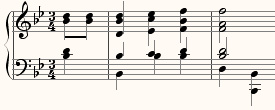
Requiem Canticles is the Requiem for the Requiem. After that, every composer who writes a liturgical requiem for large choir and orchestra, perferably in his old age, will seem like a taxidermist. He will be stuffing a skeleton with ersatz meat and then be putting a black hat on top of it. Then he will say: here is a man. But he will be wrong. It is no longer possible. Stravinsky's Requiem Canticles is Berlioz's Grande Messe des morts, shrivelled to an aphorism.

And again:

It is particularly because the late sonatas of Scriabin and the Sacre sound so different that it is interesting to look at their similarities. The ear easily passes over them. They are structural similarities. The glowing lava of Scriabin has solidified into the pumice of Stravinsky. Harmony, the clearest manifestation of the kinship, has coagulated.... The bars from Scriabin's Etude, Op. 65 No. 3, form the same chord that dominates the last page of the Sacre.

If you have any abiding interest in 20th-century music, buy this book and read it at once. If music as culture means anything to you, buy this book. It made so little splash the first time around that I've hardly run into anyone who's aware of it. But any composer living would give his left arm to be assured that so witty, wise, creative, simpatico, and insightful a book would be written about him after his death. Richard Taruskin has aptly called it "The one book about Stravinsky Stravinsky would have liked." And, thanks to an editorial miracle, it has reappeared after some 15 years' unforgivable absence.

September 3, 2006 10:35 PM | | Comments (4)

Categories:

4 Comments

Truly a great book. I loved that last essay about the octatonic-ness of Russian church bells.

Great news indeed and I second your recommendation and share your enthusiams, Kyle - Since I haven't yet read Rosen (I offer no apology), for me the book easily stands as the best book on music I've seen. It is not only important for the insights it may offer into Stravinsky, at the same time it is a vital (in more than one sense of the word) key work for understanding the spirit of what I now see as the Golden Age of Dutch composition - roughly the period from the mid-seventies (when the style and thought of The Hague School took its form) to the nineties (in the course of which I feel a certain complacencty set in), where the major intellectual influences were the two authors of the book (along with musicians such as conductor Reinbert de Leeuw).

The book has been unavailable for a long time even here in Holland which is an outrage.

Yes, Apollonian Clockwork is a wonderful book. But it's much more about Andriessen than Stravinsky (not a bad thing!).

Many thanks to Samuel Vriezen for confirming what I've suspected: that it gives us an insight into Dutch music of that period.

I also see it as a model for reception history that, alas, never caught on. We could definitely do with more books that - rather than functioning as yet another expanded encyclopedia entry - capture the excitement of what a composer means to an author.

Dear online community

Please could someone help me find the sketches Stravinsky drew of Renaissance, Bach, Wagner, and his own music? Renaissance was straight horizontal lines (polyphony). Bach was horizontal and vertical lines. Wagner was lines with circular scribbles. And Stravinsky's sketch of his own music was lines and nodes moving in all directions.

I have searched the web to no avail. I seem to remember the sketch was published in the Appolonian Clockwork, or it may have been in Conversations.

I would really appreciate some help, I need a URL for this diagram as soon as possible.

Agree that this is one of the most thought provoking book on any music. The last chapter on Bells and major/minor thirds has stayed with me too.

Kind Regards

Philos

Leave a comment

Sites To See

Postclassic Radio! - Kyle Gann's internet radio station that accompanies the blog; see the playlist at kylegann.com

American Mavericks - the Minnesota Public radio program about American music (scripted by Kyle Gann with Tom Voegeli)

Kalvos & Damian's New Music Bazaar - a cornucopia of music, interviews, information by, with, and on hundreds of intriguing composers who are not the Usual Suspects

Iridian Radio - an intelligently mellow new-music station

New Music Box - the premiere site for keeping up with what American composers are doing and thinking

The Rest Is Noise - The fine blog of critic Alex Ross

William Duckworth's Cathedral - the first interactive web composition and home page of a great postminimalist composer

Mikel Rouse's Home Page - the greatest opera composer of my generation

Eve Beglarian's Home Page - great Downtown composer

Just Intonation Network - a meeting place for people interested in alternative tunings

Erling Wold's Web Site - a fine San Francisco composer of deceptively simple-seeming music, and a model web site

The Dane Rudhyar Archive - the complete site for the music, poetry, painting, and ideas of a greatly underrated composer who became America's greatest astrologer

Utopian Turtletop, John Shaw's thoughtful blog about new music and other issues

About this Entry

This page contains a single entry by PostClassic published on September 3, 2006 10:35 PM.

Unrecognizable Voice was the previous entry in this blog.

The Deadly Listening List is the next entry in this blog.

Find recent content on the main index or look in the archives to find all content.

AJ Ads

Introducing
AJ Arts Blog Ads

Now you can reach the most discerning arts blog readers on the internet. Target individual blogs or topics in the ArtsJournal ad network.

Advertise Here

AJ Blogs

AJBlogCentral | rss

culture
About Last Night
Terry Teachout on the arts in New York City
Artful Manager
Andrew Taylor on the business of arts & culture
blog riley
rock culture approximately
CultureGulf
Rebuilding Gulf Culture after Katrina
Dewey21C
Richard Kessler on arts education
diacritical
Douglas McLennan's blog
Flyover
Art from the American Outback
Life's a Pitch
For immediate release: the arts are marketable
Mind the Gap
No genre is the new genre
Rockwell Matters
John Rockwell on the arts
Straight Up |
Jan Herman - arts, media & culture with 'tude

dance
Foot in Mouth
Apollinaire Scherr talks about dance
Seeing Things
Tobi Tobias on dance et al...

jazz
Jazz Beyond Jazz
Howard Mandel's freelance Urban Improvisation
ListenGood
Focus on New Orleans. Jazz and Other Sounds
Rifftides
Doug Ramsey on Jazz and other matters...

media
Out There
Jeff Weinstein's Cultural Mixology
Serious Popcorn
Martha Bayles on Film...

classical music
The Future of Classical Music?
Greg Sandow performs a book-in-progress
On the Record
Exploring Orchestras w/ Henry Fogel
Overflow
Harvey Sachs on music, and various digressions
PostClassic
Kyle Gann on music after the fact
Sandow
Greg Sandow on the future of Classical Music
Slipped Disc
Norman Lebrecht on Shifting Sound Worlds

publishing
book/daddy
Jerome Weeks on Books
Quick Study
Scott McLemee on books, ideas & trash-culture ephemera

theatre
Drama Queen
Wendy Rosenfield: covering drama, onstage and off
lies like truth
Chloe Veltman on how culture will save the world
Stage Write
Elizabeth Zimmer on time-based art forms

visual
Aesthetic Grounds
Public Art, Public Space
Artopia
John Perreault's art diary
CultureGrrl
Lee Rosenbaum's Cultural Commentary
Modern Art Notes
Tyler Green's modern & contemporary art blog
Creative Commons License
This weblog is licensed under a Creative Commons License.