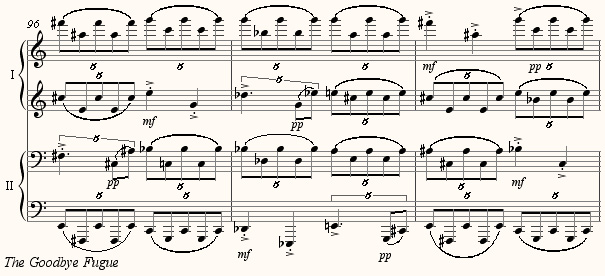
Postclassic Radio has been languishing lately, which I regret. But I've just put up a couple of major piano works. One is Ralph Shapey's Fromm Variations, played by Robert Black. Because Shapey landed a position at the University of Chicago, and deeply wanted to be in that orchestra-circuit crowd, he got a reputation as one of the academics, which I consider unfair. Never graduating from college, Shapey taught violin lessons for a living the first half of his career, and hung out in Manhattan with the same abstract expressionist painters as … [Read more...]
Going Down for the Third Time
If you've e-mailed me recently and haven't heard back, please be patient. I've had a few family things occupy me lately, and I am more than a month behind in my e-mail correspondence, absolutely inundated with legitimate messages that I'd like and need to answer (including three from bankers in Nigeria who are going to make my fortune, mark my word). If I did nothing else between now and September but answer them, I'd never get to them all, so some will undoubtedly fall through the cracks. Feel free to send a repeat message. Let me know if … [Read more...]
The Hit-and-Run Composer
The Mailman anecdote reminds me of another early disappointing encounter with celebrity. The first time I ever had a famous visiting composer look at my music, I was a freshman at Oberlin, and Lukas Foss was the composer. I had written a song for soprano, flute, and piano on a poem by Jean Valentine. It wasn't good - if I thought there were any risk of it being resurrected after my death I would burn the ms., but there is no cause for such apprehension - but it was seven or eight minutes long and rather elaborate, dissonant, effect-seeking, and … [Read more...]
Rogue’s Gallery
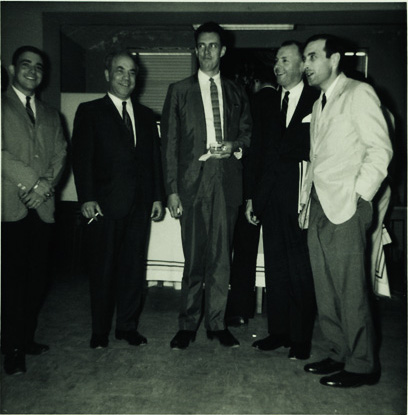
A friend sent me this old 1960s photo of five composers. If you can identify half of them, you're more of a 20th-century music wiz than I am: Give up? Recognize any of them? They are, from left to right, William Duckworth, Paul Creston, Sydney Hodkinson, Iain Hamilton, and Martin Mailman. Duckworth is the close friend who had the photo. Creston's music I've never gotten excited about, but I've always been curious because he was one of the few composers, along with Schoenberg, Ives, and Ruggles, that Henry Cowell championed with lengthy … [Read more...]
Four and a Half Cough-Free Minutes
Via The Rambler via Alex Ross (and sired by Seattle Slew), here's the video of the BBC Symphony Orchestra playing Cage's 4'33" at the Barbican in 2004. For inscrutable reasons that I imagine would have perplexed Cage, the audience suppresses their coughing until between movements (I mean, they don't often hold back much during normal symphonic works, now, do they?). Swelled to such proportions, the piece really does become an enormous joke, but one that the polite British seem eager to appreciate. … [Read more...]
Making the World Safe for Seduction
I'm writing a piece for piano four hands. The first four movements are already 25 minutes, and I'm adding at least one more. They're sort of sketches for pieces I've been wanting to try, and because they're not particularly related, I'm using the generic title A Book of Music. It's for a couple of students who have a piano duo, but it's also a project I've wanted to work on for more than a decade. I've always had a soft spot for two-piano, or four-hand, works, and it's rather remarkable the number of such works that are either my favorite, or … [Read more...]
Will the Real Scelsi Please Say “Cheese”?
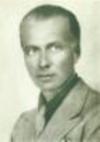
I was once told, on the good authority of someone who played his music, that there were no extant photographs of the reclusive Italian composer Giacinto Scelsi - he didn't like having his picture taken. I printed this factoid in the Village Voice, and in response someone sent me an indistinct photo of an old man in a wool cap, which the sender claimed was the only known photo of Giacinto Scelsi. Now, courtesy of Chicago critic Marc Geelhoed, whose name has graced these pages before, I find a photo of a young, dapper Giacinto Scelsi. Please send … [Read more...]
The Man in the Single Hat
Frank Oteri has asked for my reaction to an article by artist/critic Matthew Collings about the experience of being an artist/critic. It starts out, "For a long time I've led a double life. I've been an art critic and an artist." Well, the experience he describes isn't mine. I get a little pissed off when people describe me as "wearing two hats." Literally as well as figuratively, I only wear one. "Kyle Gann" is a construction of musical and other experiences reaching back into the 1950s, and those experiences condition every article he writes … [Read more...]
Low Imprisonment Threshold
Alex Ross, who has a nice article on Morton Feldman in this week's New Yorker, quotes, on on his blog, the late György Ligeti on his view of music history: "Now there is no taboo; everything is allowed. But one cannot simply go back to tonality, it's not the way. We must find a way of neither going back nor continuing the avant-garde. I am in a prison: one wall is the avant-garde, the other wall is the past, and I want to escape." I agree completely. But escaping from a room with only two walls has never struck me as particularly difficult. … [Read more...]
The French Disappearance
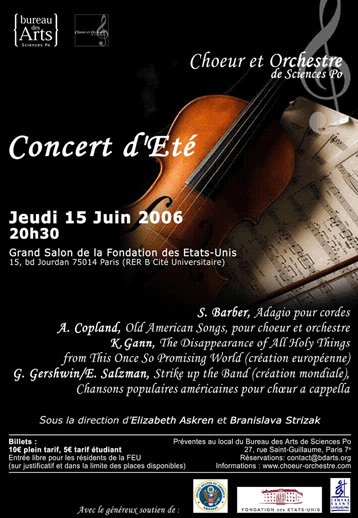
According to the Guinness Book of World Records, the longest song title ever was that of Hoagy Carmichael's 1945 ditty, "I'm a Cranky Old Yank in a Clanky Old Tank on the Streets of Yokohama with my Honolulu Mama Doin' Those Beat-o, Beat-o Flat-On-My-Seat-o, Hirohito Blues." I think I may possibly hold the record for the longest title of an orchestra piece: The Disappearance of All Holy Things from this Once So Promising World. Like several of my titles, it's a line from a poem by the great underrated poet Kenneth Patchen. The piece is being … [Read more...]
Some Have Versatility Thrust Upon Them
I just finished reading, and immensely enjoyed, A Talent for Trouble, the biography of film director William Wyler, by my fellow Arts Journal blogger Jan Herman. Two things at the end of the book struck me. One was Wyler's feeling about color photography, which he was late to switch to. "A red chair doesn't look unusual in reality," he once said, "but on the screen, you can't take your eyes from it. That's because the frame itself is not natural. It's delimited by the blackness surrounding it. We don't actually see that way with our natural … [Read more...]
Standing Up for Subjectivity
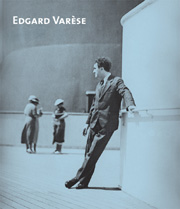
Some months back Felix Meyer and Heidy Zimmermann asked me to write an article on Edgard Varèse's impact on American music for a book that the Paul Sacher Foundation would publish. Well, the book - Edgard Varèse: Composer, Sound Sculptor, Visionary - is out, and rather than being the modest monograph I had envisioned, it is mammoth: a 500-plus-page coffee table compendium loaded with photos, diagrams, and manuscript facsimiles. Thirty-two authors are represented, and the articles cover Varèse's student days, politics, patrons, personality, … [Read more...]

Recent Comments
Phillip Bush on Ives, Caught Between Two Caricatures
One of the most perceptive things I've read about Ives, anywhere. Thank you! Ives' omnivorous vision (if one use such...mclaren on Ives, Caught Between Two Caricatures
Once again we get a high-octane musician slamming a composer for producing "naïve" work. And what, I ask you, is...Bob Gilmore on Ives, Caught Between Two Caricatures
Agreed. I love Ives 1, terrific piece. But I'd have to say my favourite of all the symphonies is the...M. on Ives, Caught Between Two Caricatures
Mr. Plush has already written, in his first sentence, what I would have liked to. Consider it seconded.Bill B on Ives, Caught Between Two Caricatures
You can hear it without going to it. The concert is streamed live over WQXR, as are all of...Vincent Plush on Ives, Caught Between Two Caricatures
Kyle, you have just reminded us (as if we needed reminding) why we regard you as one of the most...Steven Ledbetter on Minimalism Invented in England, It Turns Out
Sullivan did, indeed, brilliantly solve the problem set him by Gilbert's lyric, but he didn't find it easy. In fact...Paul Schleuse on Minimalism Invented in England, It Turns Out
The additive process is clearly there, but the harmony isn't really static. The alternation between D and D maj7/sus4 is...Gene on Minimalism Invented in England, It Turns Out
"Das Rheingold" opens with six minutes of tonic, not dominant. KG replies: But after six minutes of E-flat the curtain opens...Juhani Nuorvala on Minimalism Invented in England, It Turns Out
The minimalist I'm most reminded of by that Gilbert and Sullivan piece is Tom Johnson. - For additive process, there's...