
I always feel bad making a big deal out of a composer right after he dies. If I knew in advance, I’d make a big deal out of each one just before he died. (Don’t any of you write and tell me you’re not feeling well. I’ll need a note from a doctor.) It’s always made me happy that, a few months before he died, I called Morton Feldman, in print, the Greatest Living Composer, and he saw it. But even had I known in advance that Lucky Mosko (1947-2005) was going to die at 58, who knew he was that old already?
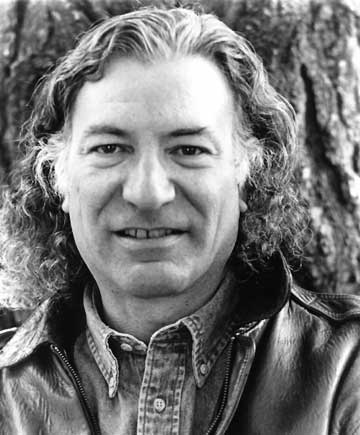 I had never heard Mosko’s music, but was well aware of his activities as a conductor. I once reviewed his Newport Classic recording of Feldman’s For Samuel Beckett as being the best available. Last week Art Jarvinen was kind enough to send me the O.O. Discs CD of Mosko’s music, performed by the California Ear Unit, and he tells me there’s a hard-to-find one on Cambria as well. I had no idea what to expect. Mosko’s music is thorny – or gnarly, in the parlance of our time – but his time sense is distinctive. Even when the music’s individual gestures are quick, it sustains its focus for many moments in succession, and changes slowly. It is quasi-atonal in a way that allows tonal passages to happen in a non-quotation-like way, almost as if it simply makes no distinctions among sonorities. Therefore it is playful rather than tense, with highly soloistic instrumental writing, and reminds me, more than anyone else, of Stefan Wolpe’s music. There is much stasis, dotted by delicate bursts of activity that build up no momentum. His early influences include Webern, Feldman, Cage, Icelandic folk music, and Sufi music, the first three more evident than the others.
While Mosko’s style is distinctive, each individual piece is difficult to characterize on just a few hearings. My favorite so far is Psychotropes of 1993, which, according to Josef Woodard’s liner notes, is structured as a series of 22 palindromes. If so, they’re well disguised; I can find fleeting phrases coming back in retrograde, but I have a devil of a time catching points at which things turn backwards. Mosko’s most famous pieces, by which I mean I had already heard of them, were a series of Indigenous Musics, which he wrote because he was the only composer living in Green Valley, California, and felt he had a right to determine what the area’s indigenous style was. He seems to have had a sense of humor as cute as his father’s, who nicknamed him Lucky because he was so lucky to have such a father, and it manifests in the music.
In any case, I’ve put up about an hour of Mosko’s music on Postclassic Radio, including the 1997 String Quartet that someone sent me an mp3 of. Let the critical absorption of his music begin, or if it has already begun, expand.