Richard Wright's centennial: A symposium
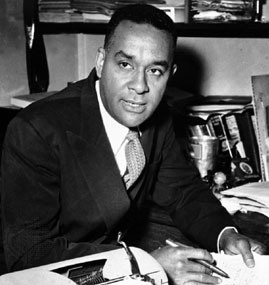 The African-American Museum in Dallas is presenting a celebration symposium of author Richard Wright this weekend to mark the centennial of his birth. Surrounding the symposium are a number of lectures and book club meetings.
Elaine Johnson: "Richard Wright was probably one of the first books that I read. But I didn't remember Black Boy and so when I read it again, I found it quite interesting that a lot of the racism - to me, it's like, 'Ooh, this reminded me of things today - especially with the election going on.'"
Elaine Johnson is a member of the Black Pearls Keeping It Real Book Club in Dallas. On this particular Saturday afternoon, the club has met at a Half-Price Bookstore to discuss Black Boy, Richard Wright's 1945 autobiography. It's his account of growing up in the South in the 1910s and '20s and escaping to Chicago.
Wright's family was so isolated, he didn't really encounter many white people until he was nearly in his teens. Because his father abandoned Wright's mother, the family was so desperately poor they ate lard gravy as a daily meal. As a result, Wright was seriously malnourished: By the time he was 20, he failed his first job application at the Post Office. He couldn't meet the minimum weight requirement of 120 pounds.
Wright's original title for Black Boy was -- American Hunger.
Doris Nelson is another Black Pearl member. She found the book's extreme poverty and isolation hard to get past at first:
Doris Nelson: "When you grow up and you have things, you figure everybody else has things, too. I just never thought that what they ate was lard gravy everyday. You know, poor people change up and eat something different sometime. And I was, like, well, all black people had when we was little was pork. We'd eat the pig from the front to the back."
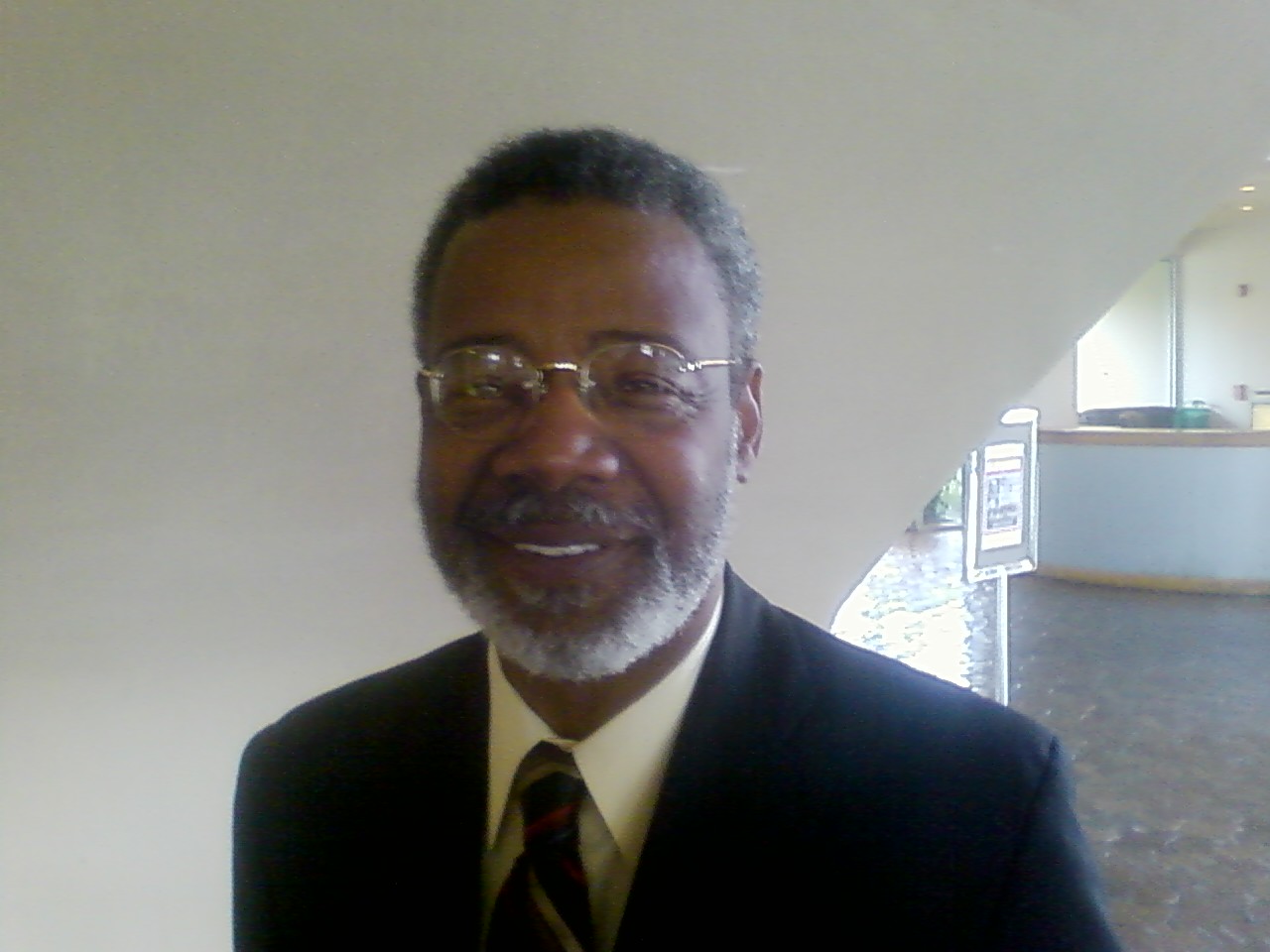
Can Wright's works - with their savage portrayals of segregation and their bleak alienation - still speak to readers in the Age of Obama? And what about younger readers, white or black, who have no real experience of the civil rights movement, let alone Jim Crow? Questions like these motivated Harry Robinson, president of the African-American Museum, to establish the centennial celebration, A Legend in His Own Wright. It's the first, he says, of an annual series the museum will present on black literary legends
Harry Robinson: "I think the people are hungry for some intellectual activism in this community. And as you say, the younger people have not been exposed to some of this. And that's why we plan to pursue this past the centennial symposium. We have an essay contest. And we hope we can get young people to delve into this thing, to read the book, to analyze it."
In fact, Robinson believes that relatively little has been done in America to mark Wright's centennial this year. (Although here is one conference, here's an international conference and here is a calendar of such events.) He looked into it, he says, and it has partly to do with the "taint" of Wright's Communist association -- even though Wright publicly broke with the party over what the author felt were its ignorant policies toward black Americans (his arguments are bitterly detailed in Black Boy).
Wright escaped the South for Chicago -- believing the North to be a haven, to be everything the segregated South wasn't. But what he encountered was mostly just different forms of racism and frustration. Wright was almost entirely self-taught. Yet he succeeded in writing Native Son, his landmark novel about Bigger Thomas, the young black chaffeur driven to murder. In 1940, it was the first book by an African-American to be picked by the Book-of-the-Month Club. Even with such success, Wright remained a contentious, defiant figure, quarreling with other writers, joining the Communist Party then quitting it angrily, leaving America to live in France.
As alienated as he was from white society, Wright felt little kinship with his fellow African-Americans (the irony is that his two marriages were with white women). For Wright, the Party would fail because there was no solidarity among African-Americans; translating them into a subset of the larger solidarity of the working class compounded the error. What's more, Wright's status as an African-American may have put him among the proletariat, yet his status as writer made him a "bourgeois intellectual" -- and therefore suspect. When Party officials tried to control his writing, Wright would have none of it -- they were just the latest in a long line of failed father figure-despots that he rejected.
Darryl Dickson-Carr is an American literature professor at Southern Methodist University. He teaches Wright in his classes, and he'll be speaking on the author for the centennial celebration. We read Wright, he says, because his stories can still grip us. And with his harsh urban realism, Wright fashioned a classic portrait of African-American life of his period. For what it's worth, Wright was inspired by H. L. Mencken to "use words as weapons," so his novels are acts of social protest against white oppression. They're hardly the most skillful literary works, but they are forceful, persuasive almost as acts of will. They were so influential, Dickson-Carr argues, that they continue to shape African-American literature, even as a negative model. Black writers (Ralph Ellison and James Baldwin, in particular) have dissented from Wright's politics and aesthetics. Or authors have consciously moved away from his heavy-handed realism (Ishmael Reed, Toni Morrison). Percival Everett's 2001 novel, Erasure, is even a parody of Native Son.
But in Black Boy and Native Son, Wright also created a portrait of Chicago, one etched in rage and bordering on the hopeless. And -- ironically, coincidentally -- this makes him more relevant than ever - this year. President-elect Barack Obama launched his political career in Chicago. He learned its wards and its projects as a community organizer.
But he responded differently to the city and its history of racism.
Dickson-Carr: "Wright is important for giving readers a sense of that history because if you lose what it was like to live in Wright's time, whether you're living in the deep South or you're living in the segregated North, then Obama makes no sense. Obama has another vision of the United States that isn't just casting aside that entire history. But it is trying to say that you don't have to be defined by that history."
As usual, you can listen to book/daddy deliver a radio version of this story here
Photos of Richard Wright from kodiakschools.org.
Categories:
Blogroll
Critical Mass (National Book Critics Circle blog)
Acephalous
Again With the Comics
Bookbitch
Bookdwarf
Bookforum
BookFox
Booklust
Bookninja
Books, Inq.
Bookslut
Booktrade
Book World
Brit Lit Blogs
Buzz, Balls & Hype
Conversational Reading
Critical Compendium
Crooked Timber
The Elegant Variation
Flyover
GalleyCat
Grumpy Old Bookman
Hermenautic Circle
The High Hat
Intellectual Affairs
Jon Swift
Laila Lalami
Lenin's Tomb
Light Reading
The Litblog Co-op
The Literary Saloon
LitMinds
MetaxuCafe
The Millions
Old Hag
The Phil Nugent Experience
Pinakothek
Powell's
Publishing Insider
The Quarterly Conversation
Quick Study (Scott McLemee)
Reading
Experience
Sentences
The Valve
Thrillers:
Confessions of an Idiosyncratic Mind
Crime Fiction Dossier
Detectives Beyond Borders
Mystery Ink
The Rap Sheet
Print Media:
Boston Globe Books
Chicago Tribune Books
The Chronicle Review
The Dallas Morning News
The Literary Review/UK
London Review of Books
Times Literary Supplement
San Francisco Chronicle Books
Voice Literary Supplement
Washington Post Book World

1 Comments