book/daddy knows an 'older genius' -- and it's not himself
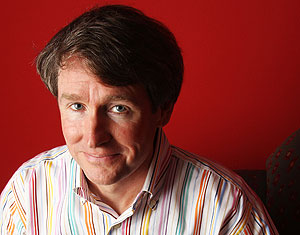
ben fountain.jpg

In The New Yorker, Malcolm Gladwell examines the popular tradition of the young genius:

Genius, in the popular conception, is inextricably tied up with precocity--doing something truly creative, we're inclined to think, requires the freshness and exuberance and energy of youth. Orson Welles made his masterpiece, "Citizen Kane," at twenty-five. Mozart wrote his breakthrough Piano Concerto No. 9 in E-Flat-Major at the age of twenty-one. In some creative forms, like lyric poetry, the importance of precocity has hardened into an iron law. How old was T. S. Eliot when he wrote "The Love Song of J. Alfred Prufrock" ("I grow old . . . I grow old")? Twenty-three. "Poets peak young," the creativity researcher James Kaufman maintains.

But studies have shown that this is simply not true, not true for lyric poetry, not true for music or literature. And Gladwell's leading example is Dallas' own Ben Fountain, a sweet guy whose terrific short story collection, Brief Encounters with Che Guevara, came out in 2006. book/daddy happily compared Ben's writing to Graham Greene -- albeit Graham Greene crossed with some South American magic realist..

But before you take heart -- you, in your cubicle, knowing that your brilliance at online poker will be recognized at any moment -- it's plain that as much as Ben's success is evidence that inspiration can strike later rather than earlier, it's testimony to his incredible persistence:

He quit his job at Akin, Gump in 1988. For every story he published in those early years, he had at least thirty rejections. The novel that he put away in a drawer took him four years. The dark period lasted for the entire second half of the nineteen-nineties. His breakthrough with "Brief Encounters" came in 2006, eighteen years after he first sat down to write at his kitchen table. The "young" writer from the provinces took the literary world by storm at the age of forty-eight.

It also didn't hurt that Ben had, in effect a patron -- his wife. Gladwell's point is that some insights come as "conceptual" breakthroughs -- the brilliant flash -- while others come incrementally, tentatively. And those artists need time (and support) to find their way.

October 14, 2008 9:30 AM | | Comments (0)

Categories:

Leave a comment

Recommending

Books I'm currently recommending . . . 

lush%20life.jpg

Richard Price's best novel since Clockers, Lush Life is a slice of life on the Lower East Side, complete with the ghetto kids, the new bohemians, the old Jews and the cops. A restaurant manager at 35 fears he's no longer the wannabe artiste who'd turn into a full-blown artiste some day. When he sees a younger version of himself get shot during a mugging (and then gets blamed by the cops), he comes apart. Price takes these cultures and stares through all of them. Lush Life is a crime novel, a terrific literary thriller, a sampler of Price's namebrand talents with dialogue and deadpan humor. Price is after more than just law-and-order, crime-and-punishment, justice-is-served. This is a portrait of big-city America..You think The Wire, Law and Order, the old Homicide are the best TV has to offer? This is all that -- between covers.

In Life Class, Booker Prize-winner Pat Barker returns to World War I, the setting for her magnificent Restoration trilogy. Where those novels followed shell-shocked poets Siegfried Sassoon and Wilfrid Owen through their convalescence, Life Class follows three painting students (based on real Slade School artists Christopher Nevinson and Paul Nash) as the war approaches. Elinor wants little to do with the war or with men: They're distractions from her art. Kit, a hot, young futurist, is primed for the war's industrialized destruction, while Paul flees his working-class background. As usual with Barker, the sexual relationships, war-time atmosphere and gruesome battlefield details are brilliantly conveyed: Her prose is lean but lyrical, compassionate yet cool-headed. No character is quite as compelling as Regeneration's bitter bisexual, Billy Prior, but the Great War's upheavals in art and combat, sex and class, provide Barker with material for exceptional historical novels. A new trilogy? One hopes so.

more

Best of the Vault

THE REVIEWS: 

Pat Barker, Frankenstein, Cass Sunstein on the internet, Samuel Johnson, Thrillers, Denis Johnson, Alan Furst, Caryl Phillips, Richard Flanagan, George Saunders, Michael Harvey, Larry McMurtry, Harry Potter and more ...

ESSAY: 

Big D between the sheets -- Dallas in fiction

ESSAY:  

Reviewing the state of reviewing

ESSAY:  

9/11 as a novel: Why?

ESSAY:  

How can critics say the things they do? And why does anyone pay attention? It's the issue of authority.

The disappearing book pages:  

Papers are cutting book coverage for little reason

Thrillers and Lists:  

Noir favorites, who makes the cut and why

more

Blogroll

About this Entry

This page contains a single entry by book/daddy published on October 14, 2008 9:30 AM.

Not a book, but a play -- so sue me. was the previous entry in this blog.

Texas Books, Texas Politics is the next entry in this blog.

Find recent content on the main index or look in the archives to find all content.

AJ Ads

Introducing
AJ Arts Blog Ads

Now you can reach the most discerning arts blog readers on the internet. Target individual blogs or topics in the ArtsJournal ad network.

Advertise Here

AJ Blogs

AJBlogCentral | rss

culture
About Last Night
Terry Teachout on the arts in New York City
Artful Manager
Andrew Taylor on the business of arts & culture
blog riley
rock culture approximately
CultureGulf
Rebuilding Gulf Culture after Katrina
Dewey21C
Richard Kessler on arts education
diacritical
Douglas McLennan's blog
Flyover
Art from the American Outback
Life's a Pitch
For immediate release: the arts are marketable
Mind the Gap
No genre is the new genre
Performance Monkey
David Jays on theatre and dance
Rockwell Matters
John Rockwell on the arts
Straight Up |
Jan Herman - arts, media & culture with 'tude

dance
Foot in Mouth
Apollinaire Scherr talks about dance
Seeing Things
Tobi Tobias on dance et al...

jazz
Jazz Beyond Jazz
Howard Mandel's freelance Urban Improvisation
ListenGood
Focus on New Orleans. Jazz and Other Sounds
Rifftides
Doug Ramsey on Jazz and other matters...

media
Out There
Jeff Weinstein's Cultural Mixology
Serious Popcorn
Martha Bayles on Film...

classical music
The Future of Classical Music?
Greg Sandow performs a book-in-progress
On the Record
Exploring Orchestras w/ Henry Fogel
Overflow
Harvey Sachs on music, and various digressions
PostClassic
Kyle Gann on music after the fact
Sandow
Greg Sandow on the future of Classical Music
Slipped Disc
Norman Lebrecht on Shifting Sound Worlds

publishing
book/daddy
Jerome Weeks on Books
Quick Study
Scott McLemee on books, ideas & trash-culture ephemera

theatre
Drama Queen
Wendy Rosenfield: covering drama, onstage and off
lies like truth
Chloe Veltman on how culture will save the world
Stage Write
Elizabeth Zimmer on time-based art forms

visual
Aesthetic Grounds
Public Art, Public Space
Artopia
John Perreault's art diary
CultureGrrl
Lee Rosenbaum's Cultural Commentary
Modern Art Notes
Tyler Green's modern & contemporary art blog
Creative Commons License
This weblog is licensed under a Creative Commons License.