9/11 as a novel: Why?

So just why do we expect our writers to produce the "Great 9/11 novel"?
Has there ever been a "great" Pearl Harbor novel -- the event most often compared to the Towers' collapse? From Here to Eternity is about all that one's memory can conjure up, and surely it doesn't qualify as great.
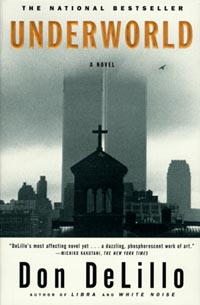
These thoughts struck me while reading Falling Man, Don DeLillo's astonishingly sharp yet ultimately unfocused new novel, as well as the reviews that have greeted it and the other attempts by novelists the past two years to come to grips with That Day. If ever an author has the literary chops to expound on those events, it would be DeLilllo -- considering all he's written about terrorism, assassination, disasters and the media. Indeed, the beautiful cover photo for Falling Man is an above-the-cloud shot looking down at the World Trade Center, eerily balancing the under-the-cloud photo that graces the cover of Underworld, looking up at one of the WTC towers. It's cut off by the fog, as if the book cover anticipated the building's billowing destruction a few years later.
But again -- Is there a "great" Stock Market Crash novel? Depression novels, yes. Word War II and Holocaust novels, of course. But we're talking about those singular, one-day catastrophes that change an era, re-direct history's course. Does anyone expect a great "Berlin Wall falling" or "Oklahoma City bombing" novel?
 In part, it was the growing self-consciousness of American culture after World War II -- our assumption of world leadership in politics and the arts, our perceived need to advance our values against the Soviets -- that led to this peculiar and unexamined expectation: Novels would be a "wiser journalism," the novelist a kind of news anchor rushing to get out his take on events before his competitors do. We -- meaning, especially we journalists and critics -- now regularly anticipate major authors to weigh in on momentous occasions in a timely fashion, to pronounce, to explain why the events are, indeed, momentous.
Of course, in Latin America and Europe, the novelist-as-engaged-political-commentator is a familiar figure. If journalism is "history in a hurry," then this makes the novel "journalism in an easy chair," journalism given time to think. "News that stays news" was Ezra Pound's reductive formula for art.
In America, the efforts of writers like Norman Mailer certainly played to this notion in a very late '60s-ish way: courting media and political prominence, trying to master the celebrity beast, to re-conceive the novelist's role as pugilist-pontificator. But it's a way of reaching the American public that seems to have passed. There seems to be no major novelist who matters to American readers anymore -- at any rate, not on that event-defining, consciousness-shaping level. The Executioner's Song, Mailer's last achievement in his journalist-as-sage mode, was 28 years ago -- a generation past.
Larry McMurtry devised the term "novels of information" for the hefty tomes written by post-World War II novelists like James Michener and Herman Wouk. They were popular social novelists who reported back from foreign lands or historical periods. It's certainly the case, as McMurtry has argued, that the prime function of their heavyweight sagas has been supplanted by cable TV, by the History Channel, the Discovery Channel and National Geographic. No one seems to write something like Michener's Poland or Chesapeake anymore, or if they do, they're not read at the volume that Michener once was. Thank God: Who says art doesn't progress?
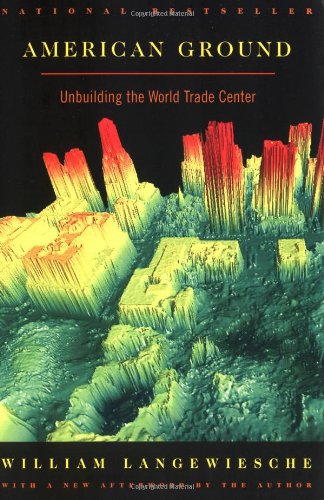 But now, "the novel of higher punditry" -- the expectation that a Didion or a Foster Wallace will explain events to us -- may have passed its effective prime time, too, killed off by TV news or the internet or the zeitgeist. It seems to have been a form most attractive to novelist-essayist-journalists like Didion or Mailer or Stone. Certainly, the dreadful Terrorist by John Updike (another novelist-essayist) doesn't stand up against such gripping non-fiction books as American Ground: Unbuilding the World Trade Center by William Langewiesche or Larry Wright's The Looming Tower: Al-Qaeda and the Road to 9/11.
True, such a comparison is hardly convincing: It sets a weak novel against two excellent pieces of long-form, in-depth reporting. It's also true that since the advent of New Journalism, narrative journalism has taken on much of the "reporting" function of the classic, 19th-century, social novel. And it is even true that -- regardless of what the journalists have done with 9/11 -- what our fiction writers have done so far to climb the Twin Towers (Philip Roth, Jonathan Safran Foer, Ian McEwan, Jay McInerney) -- their efforts do lend credence to reviewers fretting about the declining importance of the novel. Perhaps only Deborah Eisenberg's short story, "The Twilight of the Superheroes," impresses one as something on this topic that might last.
But this means that the (possible) collective failure of fiction may be not a failure of the form itself. It may simply be a failure of individual authors to find the right will, the right perspective. In which case, no big deal, no need for a death-knell manifesto. And no need for another crowing (or worried) declaration about how the internet has killed off print fiction. One doesn't feel that novelists shouldn't tackle such events or that they can't or that the form's province is now sidelined entirely to the domestic and the psychological while journalists are free to run wild being profound and relevant.
Yet when many novelists do take on pressing, topical events today, there often seems to be a note of hurry and desperation, a desire to be heard in our media-shouting world. But trying to say something more compelling or arresting than Anderson Cooper: Is this a novel's function?
 Actually, with Libra, DeLillo has arguably written what stands, so far, as the one, great novel on the JFK assassination -- that other epoch-marking, one-day tragedy. I believe it's a great novel, even though the book's overarching conspiracy theories aren't convincing to me. I'm a proud lone-nutter, as the assassination buffs would say, a member of the Oswald-did-it crowd, the ones who believe that a resentful nonentity can repeal an election or topple an archduke. Nonetheless, Libra masters all of these threads -- Oswald's mess of a life, the Cold War, the New Orleans mafia, the Cuban-CIA connection -- and makes a compelling portrait of American history and American loserdom. I can still be enthralled by it as a revelatory fiction and not accept it as a guidebook to actual events.
Much the same, after all, can be said for War and Peace. No one should read it as a military history of the Battle of Borodino.
And as noted, DeLillo is particularly well-equipped, even primed to tackle 9/11, given his New York home turf and his concern with the terrorist's "plot" now superceding any novelist's "plot" in shaping events. Falling Man also feels like a return to his strengths after the reflective but oddly insubstantial The Body Artist and the lightweight, Wall-Street-hotshot satire Cosmopolis.
With its main character, Keith Neudecker, stumbling down the street on the first page, Falling Man plunges us straight into the dust, disorder and flying glass of the Towers' fall, and this is bracing: There's nothing standing in the way of the horror. There's no grand, metaphoric invention that will re-conceive 9/11 as something else, no cultural inquest, no psychological portrait of the perpetrators -- these come later. For now, we return to the disaster full-force to understand why the metaphors and soul explorations would come. Recall DeLillo's treatment of the "airborne toxic event" in White Noise: This is his masterful brand of hallucinatory realism, his ability to make things shimmer with uncanny clarity so that they seem at once ordinary and extraordinary, banal and ominous:
"He started walking again. A supermarket cart stood upright and empty. There was a woman behind it, facing him, with police tape wrapped around her head and face, yellow caution tape that marks the limits of a crime scene. Her eyes were thin white ripples in the bright mask and she gripped the handles of the cart and stood there, looking into the smoke.In time he heard the sound of the second fall."
Keith is stumbling to the apartment of his estranged wife, Lianne, and his young son. He recovers there, and the family is partly, gingerly reconstituted, although he was always a hollow man and remains affectless in a very DeLillo manner: hard-nosed, silent, wary, elliptical. Eventually, Keith gives up any pretence of an office job and becomes a professional poker player. We get extended sequences about casinos and drifting through hotels -- the anomie and beauty of contemporary Western life that DeLillo is so good at conveying. And with the poker, we get the playing out of odds, the kind of randomness that let Keith survive 9/11. Underlining his luck are flashbacks to the towers falling, plus cross-cuts to Lianne and flashbacks to one of the 9/11 conspirators as he trains for that day. Life as gamble vs. life as locked-in plot.
The Islamic terrorist never really comes alive, though, and in the last third of the novel, the characters drift apart, not that they were ever energetically connected anyway. The novel as a whole seems to fail to cohere. This is a fault I found with Underworld, too, despite the widespread acclaim for that novel as DeLillo's masterpiece. My friend J. D. O'Hara explains Underworld as a "novel without a hero," which is a fair claim. But in Falling Man, we do have an "antihero," more or less. Or a "family" around which the narrative centers, and the novel still feels as if it dissolves or trails away, perhaps to connote futility, no exit.
It's odd that we seem to have this particularly urgent push for big-time topicality from our novelists. It's odd because the novelist's take on events has almost always been the historical novelist's take on events. Authors have the luxury to deal in almost geological reflection. War and Peace came out 50 years after the Napoleonic wars. Gravity's Rainbow was a speedy little rocket in comparison: Pynchon wrote it only 30 years after the V2s blitzed London. John Steinbeck was quite the nimble penman: Grapes of Wrath was released less than five years after the Dust Bowl (and the drought continued well into 1939 when the novel came out).
I'm not in any hurry for a fictional re-conception of 9/11. There are plenty of ways to grapple with it in nonfiction books already -- politically, strategically, photographically, even its effects on engineering and city planning. And none will fully satisfy -- at least not yet. We still don't really know how the larger war in Iraq will be viewed by history: idiot-devious neo-con escapade or valiant first beachhead for re-shaping the region. Some might claim we still don't even know what really happened on that single day.
So the question is not "why no great 9/11 novels?" The question is: "To retain any relevance in a culture running on a panicked, 24/7 news cycle, must the novel compete in the information overload?" Many novels actually offer a retreat from the shouting match, a solace. But even today, some novels still cut through the din to be heard. Surely, the novel can participate meaningfully in the culture without being . . . so insistently pertinent, so urgently newsworthy. It's as if we want the damned things to be useful and relevant, to help us understand ourselves -- now-now-now. And only that matters.
In this light -- the light of a video monitor -- the "need" for a Great 9/11 Blockbuster Novel -- coming up next! -- is clearly a journalism value, a value of corporate media, not an artistic value. Immediacy is not one of the novel's deep purposes. This 'need' is more likely a response to the hunger of that 24/7 news cycle: After any major crisis, networks call on every resource, every talking head to feed the media beast -- and that means you, too, author-sitting-at-your-desk-mulling-things-over.
As noted, this expectation for "pundit novelists" arose during the Cold War. This also happens to be the same period that saw American journalists rise to white-collar respectability and cultural visibility. Inevitably, perhaps, we important journalists judge novels as important when they reflect our important priorities. And our urgent deadlines. Note our lack of interest in the Great 9/11 Abstract Painting or the Great 9/11 Epic Poem or Short Story or Performance Piece. These are forms without mass media clout, they have no instantly sizable audience, therefore, they have no instantly sizable import. They speak in slow, gathering voices.
The novel does, too, at times. You want immediacy, topicality -- go get yourself a broadband connection. The era when novelists had a hold on the Big Megaphone of Now turns out to have been an aberration in the history of fiction, certainly the history of the American novel. McMurtry was right: As long as novels provided us with rafts of information, information that we couldn't access more quickly, more easily from other sources, then Americans turned to them, even American males did, and they have always valued data over fiction. Hence, the wide readership that a Michener or Wouk once commanded: They had little competition and they fulfilled a useful function. They kept us informed.
One understands, then, why today's writers might pursue that fast-disappearing media podium: It once granted them access to what was the Great American Audience. To gain a near-permanent place on our nightstand reading pile, to be consulted on the evening news, to be called on in a time of crisis: All of these mean an author can reach an audience beyond the dreaded midlist purgatory. It's an audience that novelists will likely never get any other way these days -- unless they're caught in a hotel room with Angelina Jolie or an airport men's room with Senator Craig.
But it's a novel-reading audience that may no longer be there, considering the recent NEA studies of the decline in avocational fiction reading. Look at the brand-name novelists that have managed to hold that mass audience's attention. The vast majority of top 10 best-selling novels today are written by only six writers: the Kings, the Grishams, the Steels, the Clancys. So it's not that fiction has been killed by media competition or the internet or by narrative journalism. It's only this particular kind of pundit novel, the "cultural crisis" novel, that has passed, and only this particular kind of broad-based audience that went with it.
Personally, I would start worrying about American authors' supposed failure to treat 9/11 in a memorable fashion if 50 years from now, we reviewers were still fussing with the issue. Over in England, Pat Barker managed to write one of the finest World War I novels, The Ghost Road -- in 1995. No one complained: "What kept you?"
At the same time, we Americans have only comparatively recently seen tremendous nonfiction narratives from historians, narratives that encompass the full range of the civil rights movement. So where is the great novel of the '60s race riots? Or more relevant to this discussion: Where is the novel of James Earl Ray and that day in Memphis when Martin Luther King walked out on the balcony of the Lorraine Motel?
No novelist has touched it. But talk about a history-changing act of terrorism.
Categories:
Blogroll
Critical Mass (National Book Critics Circle blog)
Acephalous
Again With the Comics
Bookbitch
Bookdwarf
Bookforum
BookFox
Booklust
Bookninja
Books, Inq.
Bookslut
Booktrade
Book World
Brit Lit Blogs
Buzz, Balls & Hype
Conversational Reading
Critical Compendium
Crooked Timber
The Elegant Variation
Flyover
GalleyCat
Grumpy Old Bookman
Hermenautic Circle
The High Hat
Intellectual Affairs
Jon Swift
Laila Lalami
Lenin's Tomb
Light Reading
The Litblog Co-op
The Literary Saloon
LitMinds
MetaxuCafe
The Millions
Old Hag
The Phil Nugent Experience
Pinakothek
Powell's
Publishing Insider
The Quarterly Conversation
Quick Study (Scott McLemee)
Reading
Experience
Sentences
The Valve
Thrillers:
Confessions of an Idiosyncratic Mind
Crime Fiction Dossier
Detectives Beyond Borders
Mystery Ink
The Rap Sheet
Print Media:
Boston Globe Books
Chicago Tribune Books
The Chronicle Review
The Dallas Morning News
The Literary Review/UK
London Review of Books
Times Literary Supplement
San Francisco Chronicle Books
Voice Literary Supplement
Washington Post Book World

10 Comments