
A reader, Kevin, asks if I had seen this new report by Brian Shearer at Vanderbilt University on legal remedies for high prices charged by different sorts of firms (airports, hospitals, car dealerships, etc) on “captive” consumers. I had not. I am no lawyer, and so I cannot speak to the various laws discussed in the paper. But I can say something about pricing at arts venues as an economist.
Here is what Brian Shearer says about pricing at events:
The cost of attending live events such as concerts and sporting events held in stadiums or theaters has increased in recent years due to both the increasing ticket prices and increasing prices for concessions at these events. Similar to travelers in airports, hungry concertgoers and sports fans begrudgingly accept higher prices for food and drinks at stadiums and other event venues due to the lack of alternatives and restrictions on bringing outside food and drink into venues. Meals at some music festivals cost as much as $100 per person. In 1985, the average fan spent $5 on concessions at Major League Baseball All-Star games (a little less than $15 in today’s dollars). But now, a singular can of the cheapest domestic beer costs $15 at a Washington Nationals game. While some stadiums maintain reasonable prices (e.g., the Houston Texans stadium charged $2 for a hotdog and $5 for a small beer in 2022) other stadiums take advantage of the “island effect” to charge double or even triple what is charged at other stadiums (e.g., the Tennessee Titans stadium charged $6 for a hotdog and $10.50 for a small beer in 2022). The general trend is upwards, and stadiums are continuing to increase concession pricing every year. One notable exception is Atlanta’s Mercedes-Benz Stadium, which realized it could actually increase revenue by 16% (via increased volume) by reducing hot dog prices to $2, beer prices to $5, and by giving free soda refills.
In days of yore I used to go to Atlanta Braves games at Turner Field (which was a very nice downtown park they should have kept), and I remember that you could get a ticket to the nosebleed section of the right field bleachers for little more than a dollar, and a plastic cup of warm “beer” for nine dollars.
By “island effect” he means that as a consumer you are stuck with paying the concessions prices in the venue or having nothing at all, but there is no competition.
So, should there be a law against this sort of pricing? I don’t think so.
The economics of all this was elegantly explained by Walter Oi in his 1971 paper “A Disneyland Dilemma: Two-Part Tariffs for a Mickey Mouse Monopoly” A sports stadium, a performing arts venue, a cinema, a theme park with rides, sets two sorts of prices: a fee to get in, and prices for what is inside. Oi’s example was admittance to the theme park and the price of individual rides, but you can also think of a club with a cover charge and prices for drinks, or a cinema with a ticket to see the movie and prices at the concession stand. Owners of these establishments choose these prices as a set, knowing that the higher the prices for what is inside, the less people will be willing to pay to get in (and, conversely, a high cover charge had better be justified by cheap drinks).
Although the Shearer study focuses on the high prices on the “inside”, notice that is not always the strategy: Disneyland charges a small fortune to get inside, but rides, if you don’t count the waiting times, are free. On fourth street in my humble town, restaurants offer lunch buffets which essentially have an entry fee, but then all-you-can-eat once inside – if you want seconds on the butter chicken, help yourself, you won’t be charged extra.
So what determines the choice between high or low entry fees and high or low prices on the inside?
It comes down to price discrimination. This is the strategy used by many, many firms, both commercial and nonprofit, to see if they can get customers who are willing to pay quite a lot to actually do so, while at the same time collecting a lower price from those customers who are rather on-the-fence about attending, and will only do so if the price is right. It why venues “scale the house”, it’s why they offer discounts to students and seniors, it’s why manufacturers produce standard and luxury versions of their product. When I taught this stuff to my classes I was able to tell students the hundred ways their local grocery store price discriminates (now at least they now why the day-old discount bread rack is never put beside the fresh bread).
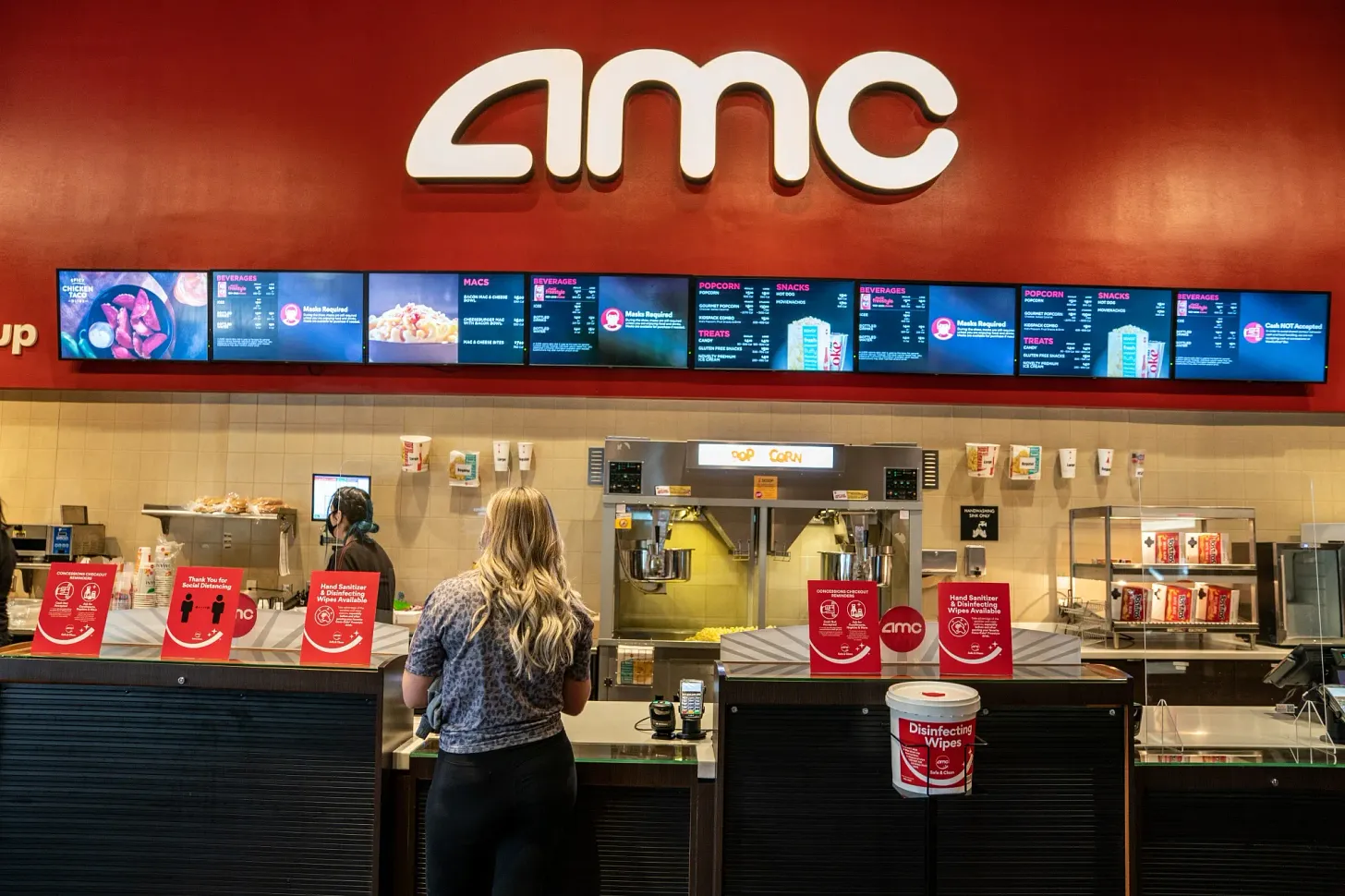
So, let’s use your local movie multiplex as the example. First of all, consumers are not “stuck.” Everybody who goes to the movies, everybody reading this article, knows that popcorn and pop are very expensive inside the cinema. And they have the option, knowing this, of eating snacks before the movie, or going for a bite after the movie, forgoing eating during the movie. It’s only a couple of hours! And it is not like anybody has been tricked.
How does price discrimination come into this? Let’s think of two sorts of moviegoers. Strong customers simply love going to the movies, they go every weekend even if the offerings are a bit ordinary, they are happy to open their wallets for a night at the movies. Weak customers, attend much less, and only go if there is something really worth seeing on a big screen, and if the price is reasonable. Theatre-owners have found with experience that it is the strong customers who tend to visit the concession stand, and weak customers who don’t. It didn’t have to be this way, but it turns out it is. So, how do you get lots of money from your strong customers but still fill what would otherwise be empty seats with weak customers? Keep your ticket prices reasonable (so weak customers will attend) and get your money from the strong customers at the popcorn stand. Here’s the science.
This also explains why some firms choose the opposite strategy. Let’s go back to Disneyland. Yes, I know I am ignoring the many, many ways you can rid yourself of money at Disneyland – let me, like Oi, just focus on the free rides. Suppose there are some people who just love to be at Disneyland, it is a regular vacation spot for them, they are willing to spend a lot to be there. There are others who are on the fence, would maybe go if others were, but look carefully at prices. Which type of customer really loves the rides? Suppose it is the on-the-fence person. The strong Disney customer loves being there, but isn’t super interested on going on every single ride. Then the Disney price-setters will say: “let’s have a very high admission charge, which our strong customers are perfectly willing to pay. How do we entice the weak customers? Free rides – they love rides.”
So that’s the reason we see the prices that we do. And it’s why I think any policy report looking at whether there needs to be a law against very high concession prices needs to focus on the whole menu of prices, not just the “inside” prices.
Cross-posted at https://michaelrushton.substack.com/
Leave a Reply