
• Home
  • About
    • For What it’s Worth
    • Michael Rushton
    • Contact
  • AJBlogs
  • ArtsJournal

For What It's Worth

Michael Rushton on pricing the arts

Why tax breaks for commercial theatre?

May 23, 2014 by Michael Rushton Leave a Comment

coherent arts policyThe Stage reports (and I repost the story in full here):

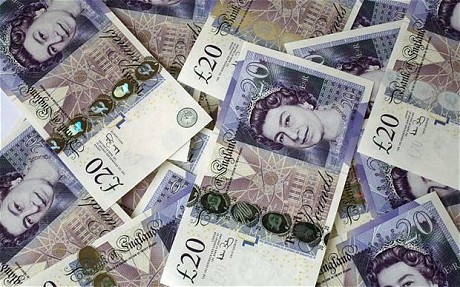
Tax breaks for the theatre industry to be introduced this autumn could bring in £100 million for commercial theatre and £20 million for touring productions in coming years, Arts Council England’s chair PeterBazalgette has said.

He said the initiative was a “highly significant move” from the government, whose film tax credit scheme has far exceeded original estimations that it would bring in £60 million investment a year, with the figure estimated to be worth £260 million annually. “Think about if that transferred to theatre,” Bazalgette said.

In his Budget in March, chancellor George Osborne confirmed producers of touring shows would be able to claim 25% tax relief, while other productions would be eligible for a 20% tax credit.

Speaking at UK Theatre’s annual meeting this week, Bazalgette said the extension of the credits to the theatre sector represented the emergence of a coherent policy for the creative industries as a whole.

“If we seize the opportunity, it’s going to be highly significant within the context of the creative industries because there is already a tax credit for film, TV dramas and computer games. Now we need more coherent policies in other areas,” he added.

I posted on this policy a few weeks ago, asking what is the goal of the policy? And I still don’t see it. The way this story is written, it looks like the single goal, and metric of success, is to transfer funds. How it is a “highly significant move”, or how it is “coherent”, still eludes me.

Share:

  • Click to email a link to a friend (Opens in new window) Email
  • Click to share on Facebook (Opens in new window) Facebook
  • Click to share on X (Opens in new window) X
  • Click to share on LinkedIn (Opens in new window) LinkedIn
  • Click to print (Opens in new window) Print

Related

Filed Under: issues

Leave a Reply Cancel reply

Your email address will not be published. Required fields are marked *

Michael Rushton

Michael Rushton taught in the Arts Administration programs at Indiana University, and lives in Bloomington. An economist by training, he has published widely on such topics as public funding of the … MORE

About For What It’s Worth

What’s the price? Everything has one; admission, subscriptions, memberships, special exhibitions, box seats, refreshments, souvenirs, and on and on – a full menu. What the price is matters. Generally, nonprofit arts organizations in the US receive about half of their revenue as “earned income,” and … [Read More...]

Archives

Recent Comments

  • antonio c. cuyler on Equality, the arts, and the problem of expensive tastes: “I applaud your courage in dissenting, Michael, even if it may place you at odds with the sector. I also…” Feb 2, 10:57
  • Michael Rushton on Equality, the arts, and the problem of expensive tastes: “Thank you David. In terms of costs, the quick, and I think too-easy answer, is cost-disease, which affects any sector,…” Feb 1, 15:04
  • David E. Myers on Equality, the arts, and the problem of expensive tastes: “Hi Michael, Always grateful for your perspectives, though as you know, I do not always agree. At the risk of…” Feb 1, 11:16
  • Michael Rushton on Equality, the arts, and the problem of expensive tastes: “Thank you, antonio. There’s a lot here – I’ll answer bit by bit… 1. I’m not sure the “equality vs…” Jan 29, 09:43
  • antonio c. cuyler on Equality, the arts, and the problem of expensive tastes: “As economists educated to believe that “some inequality” is not bad, I appreciate reading how you and Robert Reich think…” Jan 29, 09:21
Return to top of page

an ArtsJournal blog

This blog published under a Creative Commons license

Copyright © 2026 · Magazine Pro Theme on Genesis Framework · WordPress · Log in