
February 7, 2010

Jay-Z and the voice of Rihanna opened Super Bowl XLIV with a remix of "Run This Town" featuring The Rutgers Symphony Orchestra under the baton of Kynan Johns (read up on that here). The tweet lines immediately lit up with reviews of "dope" and "sick."

So seriously, kind of America's truest orchestral music in 2010 if we're going to get all genre merged and democratic about it, right? All the way down to the high drama, fireworks spectacle, and pulse-manipulating production values...you know, orchestra music. Enjoy it or hate it, in light of that big, scary, plummeting audience graph, it's worth being conversant about, me thinks.


UPDATE: Lest we get distracted:

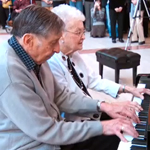
about kanye. look at the bloody orchestra. they are the ones with real talent. fuck that pianist is epic.

February 7, 2010 7:05 PM | | Comments (7) |

icebars.jpgWell, we survived Snowpocalypse 2010 here in Charm City, and maybe the most striking thing about the weekend--aside from the 26" of snow, at least--is how silent it's been compared to our normal urban life. I mean that in the most literal acoustic sense. No traffic except for the snow plows, no going out aside from short trips to admire the views or excavate the car. In those bursts of activity, though, the scrape of the shovel or the drip of the melting ice actually seems amped up to 11.

snowshopping.jpg

We talk a lot around here about the insane weight of all the information we're digitally consuming these days, but even a short break from the sensory assault we usually function under seems to have recharge something fundamental in my ears. Maybe "normal" is also "too much" in a way that it would pay to be more frequently mindful of independent of Mother Nature's urgings.

February 7, 2010 5:08 PM | | Comments (0) |
February 3, 2010

Empty ear candy or the resonant soundtrack of our lives (even if some tunes make us want to claw mercilessly at our ears)?


I'm thinking about this because even the classic rock that meant the most to my dad, say, I still have rattling around in my brain tied firmly to his life experiences (or my imagined/absorbed versions of them). In many cases, music holds all the history of my life and strongly shapes the way I experience the world. And talk about blurred genre boundaries and autobiographical organization of records.

A question with your Wednesday morning coffee: Share or just give it a minute's personal reflection, but what sounds, profound or not, illustrate the arc of your life?

February 3, 2010 8:34 AM | | Comments (0) |
February 1, 2010

opfeet.jpgDespite the many adventures, sonic and otherwise, offered by the Grammy's on Sunday night, I think it was specifically a reference to the performance by "Italian opera star" Andrea Bocelli that truly had my hand smacking my forehead. It wasn't just that "classical music" was hidden away from the prime time audience (which, if you check out the numbers, would be somewhat hard to argue with), but that the field was actually being painted over with something else entirely while everyone was looking.

On Monday morning reflection, it seemed like the intonation disasters and unfortunate genre collisions were obvious to fans of all persuasions. But it drove home an issue that seems to be much on the minds of performing arts administrators across the land as they consider the numerous studies released of late covering the health of the field: what are we really talking about when we talk about "the arts and culture" in America? Opera performances and symphony orchestra concerts? Does jazz, which is, after all, "America's classical music," count, or is there not enough gold leaf in those venues? The NEA tacked on "Latin, Spanish, or salsa music" to their arts participation study in 2008. The Americans for the Arts National Arts Index included figures for "Attendance at Live Popular Music" but the majority of the report seemed squarely focused on the more traditional non-profit institutions and the constituencies they serve. Perhaps most tellingly, when the Fine Arts Fund in Cincinnati conducted their research, they found that the survey participants ("average Cincinnatians") did not define "the arts" or "culture" in the same way that the field's insiders used these same terms. "Arts could be things like roller-skating, if you do it that way," said a 49-year-old man. Interpretive roller derby, anyone?

So as we motivate our way every day towards a more "democratic" creative culture, lowering the hurdle to participation through slick software and communications technology, will we need to shift our definitions and lose the death grip we have long held on the European derived "high arts" or do we need to clamp down even harder or risk being washed away in the muddle? Can we shake ourselves awake and figure out how we want to connect with our communities before we slip further from American consciousness? Reviewing these arts reports and considering the Grammy performances, I can see why a little rain cloud might feel like it's hovering over American culture at the moment, but on reflection I considered all the art being created that also didn't see the light of day on CBS that night, and suggest that it's not quite a Rome Before the Fall scenario. Maybe, actually, we can look at the Grammy train wreck as an indication that the Billboard charters are the ones on that path, and with some planning, perhaps we can capture new ears desperate for something better.

Related: The mom sitting across the aisle from me on this Amtrak train is telling her friend all about how heartwarming it was to see that "creepy weird girl" perform with Elton, so you know, there's also that. Watch out, Michael Buble. She's coming for you!

February 1, 2010 9:40 PM | | Comments (2) |
January 25, 2010

I know this is possibly ill-considered of me to admit, but I love video paired with live music performance primarily because I often find watching musicians themselves to be kind of distracting. "But Molly!" you may cry, if you're an exceptionally motivated person, "you're missing the artistry, the profound beauty of bows across strings and souls out there on the stage building this beautiful thing before your eyes!" And I'd say I know you have a point, and yes sometimes that's true. But just as often I find that it is not the case at all and it helps me chill out and concentrate on what's really central to the experience if I can have a milder place to park my eyes while partaking in the aural experience (and because, let's face it, closing them seems a bit melodramatic, don't you think?). It's more akin to putting certain senses on mute and giving them permission to remain quiet, not violently turning them off completely.

This may be a very personal thing. I also loved performing in spaces where I was in a pit orchestra or in the balcony of a church where the "audience" couldn't see me that easily. It helped focus things, I always felt. But today I came across a visual manifestation of music that actually kind of rattled me at the core. This wasn't some cheesy "visualizer" option in my mp3 player, but a video directly tied to the shape of the sound. It tweaked something weird in my brain, and I'm still working on what and why that is. Maybe it was just the novelty, but it seemed to plug the sounds into a different ear socket, so to say, in way that I found enjoyably compelling.


[via waxy]

January 25, 2010 6:25 PM | | Comments (0) |
January 21, 2010

Conan O'Brien is not the only one in a creative tussle with the man. Have you heard the one about OK Go, EMI, and YouTube? Er, well, this isn't quite as brutal an argument as Coco's, but still: the map to the future of music is at stake. By which I mean finding the money.

So, here's what's up: OK Go, the band that rose to stardom arguably on the backs of its videos (remember the synchronized treadmill dance?), is in a bit of a bind: EMI, which is now their record label, says OK Go videos shall be "embedding disabled by request" on YouTube (to pick up the page view ad revenue, I assume). How does this kind of move impact a band that was probably built on the power of viral marketing? Does it get them closer to the money at this stage or risk moving the pot further away again?

Frontman Damian Kulash typed a poignant exegesis on the band's plight. There was also an engaging interview.

Clearly, the future is confusing for everyone and the increasingly pressing problem of financing that future is making people extra edgy, but what can we take from this? That once you get to a certain level--major motion pictures, platinum albums, best selling crime fiction--the rules change and that's fine (same as it ever was)? The early years of web development were fun and exciting and all, but maybe the business-minded middle men are not going to go quietly into that good night. Are they (and their control issues) finally going to catch up to things and redirect our course? Maybe we are just at the bumpy beginning of the stage where money is awkwardly reintroduced into the equation, starting (and perhaps remaining) with many of the same major players in any industry. We've been running so hard looking for the cash to support our content creation ventures and sweating out our passion along the trail, but I'm worried that when we find it, it will look like the real world--most people will pull into an intellectual Wal-Mart, pay to access the "good stuff" they have been advertised and that has been standardized and preselected for their convenience.

Too dystopian a vision? Maybe I just need a nap. A long one. And when I wake up, hopefully you people will have this headache sorted out.

January 21, 2010 5:57 PM | | Comments (0) |
January 18, 2010

hold.jpgWe dropped by Baltimore's Contemporary Museum on Saturday night to catch the opening of Participation Nation, an exhibition focused on projects that nudge viewers out of their passive role as mere observers and invite them to actually contribute to the art on display. I wasn't in the door three seconds when what to my wondering eyes did I spy but a project honoring the work of Maryanne Amacher, courtesy the friendly folks at Neighborhood Public Radio.

Even if you are not lucky enough to live in Baltimore, you can join in the fun. According to NPR:

As part of the Baltimore Contemporary Museum's PROJECT 20 series, celebrating their 20th Anniversary, Neighborhood Public Radio will host a coast-to-coast audio-project for broadcast.

In homage to sound pioneer Maryanne Amacher, who died in October, NPR will re-imagine her seminal radio-locative sound project CITY LINKS (1967) as a community remix project to be aired locally in Baltimore, and streamed to Portable Radio Instruments for broadcast in San Diego, Chicago, and Albuquerque.

Broadcasts will occur every Sunday night at 9pm (EST).

We will collect these recordings every week and remix and process them for broadcast. We will also post the files on our website, inviting anyone to remix and reuse the recordings.

If you remix these sounds, send them to: nprphoneup@gmail.com and we'll put them on the air.

I've had some conversations lately with creators in which they lamented an observed trend towards increasing self-involvement among their audience--a fear of the "my opinion should count because I can Twitter it" critical leveling on display of late. Wouldn't this mark the beginning of the end for great artistic expression? Wouldn't quality be washed out with tsunami force when anyone, regardless of expertise, could participate?

I thought about this as I walked through the exhibitions, particularly one room in which participants had created shrines inside plain wooden boxes. Whether the individual behind each box was honoring a lost loved one or an abandoned vice, the quiet, personal works were remarkably affecting. If this show is an example of what comes when more members of a community are invited to take a creative role, we have little to fear and much to learn from our neighbors.

January 18, 2010 8:45 PM | | Comments (1) |
January 13, 2010

thinker.jpgWord processing changed the way we write, and music notation software changed the way we compose, but how is the internet changing the way we think?

There are long and short answers to this query, but either way, you can easily lose many, many hours while people (of variable expertise) pour thoughts (of various interest) into your brain.

I think that's how I'd answer the question, actually.

UPDATE:


January 13, 2010 7:45 PM | | Comments (0) |
January 11, 2010

Wow, now this is engagement. Are you watching, cultural organizations? Feel that?


And if you're sitting there wondering what all that was even about:


January 11, 2010 4:27 PM | | Comments (3) |
January 10, 2010

topple.jpg

So, after my last "technology is changing my life and I might want to get off this ride" S.O.S. post, I've been thinking a lot about what I'm truly anxious about in 2010.


When everything is available, what is special (and how on earth are you supposed to find it)?
We're drowning in a sea of choice, and though we learn daily how to more effectively deal with our new reality, it's still often a source of significant stress and anxiety. How can we even begin to discover things to love and admire when wading through this much stuff? I find myself perversely shutting down to new experiences as more and more of them present themselves.

Everything is forever and yet nothing is forever.
In our digital lives, there are no magazines to recycle when all the articles are online and no music collections to move when it's all in the clouds, yet servers fail and things disappear, sometimes with witnesses to sound the alarm, sometimes without comment or explanation. Though I have letters from middle school, every email I sent before 2005 no longer exists.

Keeping up with how technology is changing our lives feels like a marathon I am about to lose.
As technology increases the pace of our lives, will a backlash come? I can't help but imagine a coming trend in which a group of people very consciously makes the decision to unplug themselves from this culture of constant digital sharing. There will be stories about these people deleting all their social networking accounts and turning in their smart phones. People will praise and disparage them with a shocking intensity that reflects their own personal struggles with these changing social paradigms.

I am a *music* *journalist*.
Sometimes I feel like I'm standing with a foot on the deck of two different sinking ships. Right now pretty much any venture that counted on selling copies to pay the bills looks like a toppled game of Jenga. As we begin 2010, we remain in a period of redefinition and recalibration, but we seem to be getting a better handle every day on how to develop even as problems and their solutions continue to morph and change before our eyes. The fun, if we're optimistic and flexible about it, is in figuring out how to restack these blocks into a relatively stable form: distilling things down to what is essential about these pursuits, and coming to terms with what is merely disposable (and dated) window dressing--the superficial, if comforting, shells that we continue to cling to at our peril.

UPDATE: The future, or the journalism part at least, solved! Classical music, however, seems destined for a bumpy ride.

January 10, 2010 5:57 PM | | Comments (5) |

About

Mind the Gap
Great performances have nothing to do with how many MySpace friends you have, but in today's cultural marketplace it can certainly feel that way.

more

Molly Sheridan

Molly reads, writes, and thinks about music more than a person probably should.

more

Contact me more

Archives

Archives: 250 entries and counting

Blogger Book Club III

July 27-31: The MTG Blogger think tank reads The Whuffie Factor: Using the Power of Social Networks to Build Your Business by Tara Hunt and considers how the performing arts are embracing technology and social networking for better and worse

- Blogger Book Club III: The Take Away
- Blogger Book Club III: Everyone in the Pool, it's an e-Swim!
- Blogger Book Club III: Holding Back the Flood
- Blogger Book Club III: Classical Music vs New Technology
- Blogger Book Club III: Little Boxes

more entries

Blogger Book Club II

June 22-26, 2009: The bloggers start in on this summer's non-required reading list and discuss The Invisible Dragon: Essays on Beauty, Revised and Expanded by Dave Hickey

- Blogger Book Club II: Beautiful Meaninglessness
- Blogger Book Club II: Wrestling With Beauty
- Blogger Book Club II: Musician in the Middle
- Blogger Book Club II: Painfully Normal and Incredibly Sincere
- Blogger Book Club II: Something I Liked

more entries

Blogger Book Club

March 16-20: Bloggers discuss Lawrence Lessig's Remix: Making Art and Commerce Thrive in the Hybrid Economy Participants: Marc Geelhoed Steve Smith Alex Shapiro Matthew Guerrieri Marc Weidenbaum Corey Dargel Brian Sacawa Lisa Hirsch

- Blogger Book Club: We Love Amateurs
- Blogger Book Club: Bangers and Mash-ups
- Blogger Book Club: Taking What They're Giving, 'Cause I'm Working For a Living
- Blogger Book Club: The Art of Imitation
- Blogger Book Club: Dust In the Wind

more entries

Me Elsewhere

Blogroll

Find recent content on the main index or look in the archives to find all content.

AJ Ads


AJ Blogs

AJBlogCentral | rss

culture
About Last Night
Terry Teachout on the arts in New York City
Artful Manager
Andrew Taylor on the business of arts & culture
blog riley
rock culture approximately
critical difference
Laura Collins-Hughes on arts, culture and coverage
Dewey21C
Richard Kessler on arts education
diacritical
Douglas McLennan's blog
Dog Days
Dalouge Smith advocates for the Arts
Flyover
Art from the American Outback
Life's a Pitch
For immediate release: the arts are marketable
Mind the Gap
No genre is the new genre
Performance Monkey
David Jays on theatre and dance
Plain English
Paul Levy measures the Angles
Real Clear Arts
Judith H. Dobrzynski on Culture
Rockwell Matters
John Rockwell on the arts
State of the Art
innovations and impediments in not-for-profit arts
Straight Up |
Jan Herman - arts, media & culture with 'tude

dance
Foot in Mouth
Apollinaire Scherr talks about dance
Seeing Things
Tobi Tobias on dance et al...

jazz
Jazz Beyond Jazz
Howard Mandel's freelance Urban Improvisation
ListenGood
Focus on New Orleans. Jazz and Other Sounds
Rifftides
Doug Ramsey on Jazz and other matters...

media
Out There
Jeff Weinstein's Cultural Mixology
Serious Popcorn
Martha Bayles on Film...

classical music
Creative Destruction
Fresh ideas on building arts communities
The Future of Classical Music?
Greg Sandow performs a book-in-progress
Overflow
Harvey Sachs on music, and various digressions
PianoMorphosis
Bruce Brubaker on all things Piano
PostClassic
Kyle Gann on music after the fact
Sandow
Greg Sandow on the future of Classical Music
Slipped Disc
Norman Lebrecht on Shifting Sound Worlds
The Unanswered Question
Joe Horowitz on music

publishing
book/daddy
Jerome Weeks on Books
Quick Study
Scott McLemee on books, ideas & trash-culture ephemera

theatre
Drama Queen
Wendy Rosenfield: covering drama, onstage and off
lies like truth
Chloe Veltman on how culture will save the world

visual
Aesthetic Grounds
Public Art, Public Space
Another Bouncing Ball
Regina Hackett takes her Art To Go
Artopia
John Perreault's art diary
CultureGrrl
Lee Rosenbaum's Cultural Commentary
Modern Art Notes
Tyler Green's modern & contemporary art blog
Creative Commons License
This weblog is licensed under a Creative Commons License.