
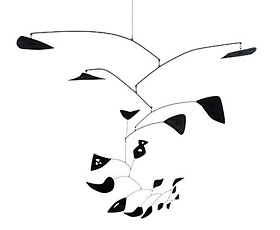
 Yesterday, the San Francisco Museum of Modern Art (SFMOMA) held a press preview for its inaugural Fisher Collection exhibition — “Calder to Warhol: Introducing the Fisher Collection” — which opens to the public on Friday.
The exhibition is big news because it marks the start of SFMOMA’s collaboration with the Fishers, the founders of the GAP clothing chain and the owners of one of the world’s most enviable private contemporary art collections. In February, SFMOMA announced a partnership to house and display the collection of Gap founders Doris and Donald Fisher which includes more than 1,100 works by iconic 20th century artists. The museum is currently selecting an architect to build a new wing specially for the collection, much of which has never been seen by the public before now. In the meantime, the partnership is kicking off with the entire top two floors of the museum, including the Rooftop Garden, displaying more than 160 paintings, sculptures, photographs, and video works by Alexander Calder, Chuck Close, Anselm Kiefer, Roy Lichtenstein, Agnes Martin, Gerhard Richter, Cy Twombly, Andy Warhol, and other world-class artists.
I spent the morning wandering around the exhibition halls with my mouth aGAPe. I’ve seen one or two Calder mobiles hanging in galleries before, but never a roomful all in one go. And beyond a special exhibition dedicated to the works of Anselm Kiefer which I saw a few years ago, I’ve never seen such a variety of the artist’s work all displayed next to each other in one space. The depth of the offerings as well as the breadth made my head spin.
I expect that this show will fill SFMOMA’s coffers. But if I have any criticism of it, it’s that there’s so much iconic work on display that it feels very much like a “greatest hits” experience. With so much amazing artwork all available in one place, it’s hard for individual pieces to stand out.
I think the best way to experience this enviable exhibition is to go many times and just hit one room with every visit. Otherwise I think it’s very possible to experience art overload or burnout.
 Is it better for a grant-making organization to dole out funds to arts organizations as a result of a closed-door decision-making process in which a panel of “experts” decides which organizations are most worth supporting or to let the public decide by leveraging the power of a popular social networking tool?
 The
The 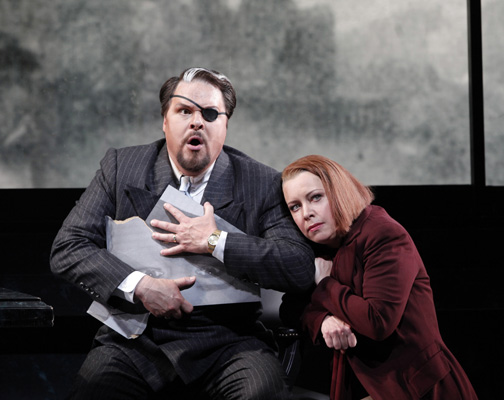 After the snoozefest that was Faust, the
  The
The 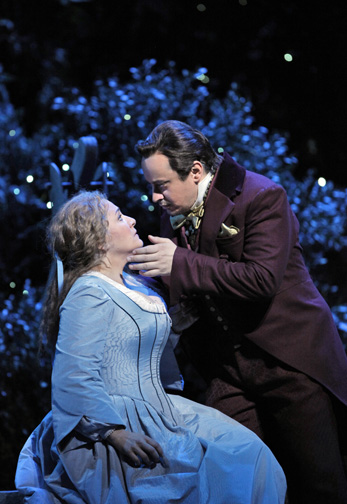 The
The  Yesterday afternoon, I spent a wonderful hour or so at Frankie’s (aka 21 Club). Frankie’s is a dive bar in the Tenderloin neighborhood of San Francisco at the corner of Turk and Taylor Streets. Few tourists venture there. I was at Frankie’s at the invitation of Elvin Padilla, Executive Director of the
 The slow food movement has become very much a part of Bay Area culture, alongside organic and local approaches to cuisine. Besides a few “No MSG” signs, Chinatown, however, has been somewhat slow to embrace the slow.
 You can never predict what will happen to a small theatre in San Francisco. When I last wrote about
 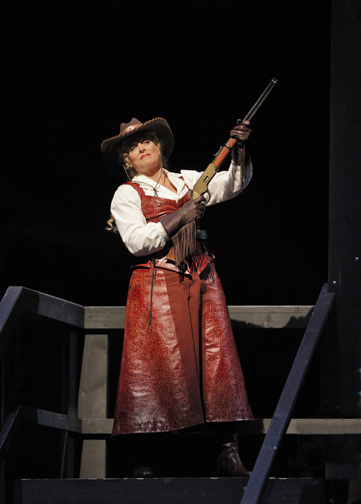 When Deborah Voigt appeared on stage in a pair of red leather chaps astride a horse in the final scene of the
 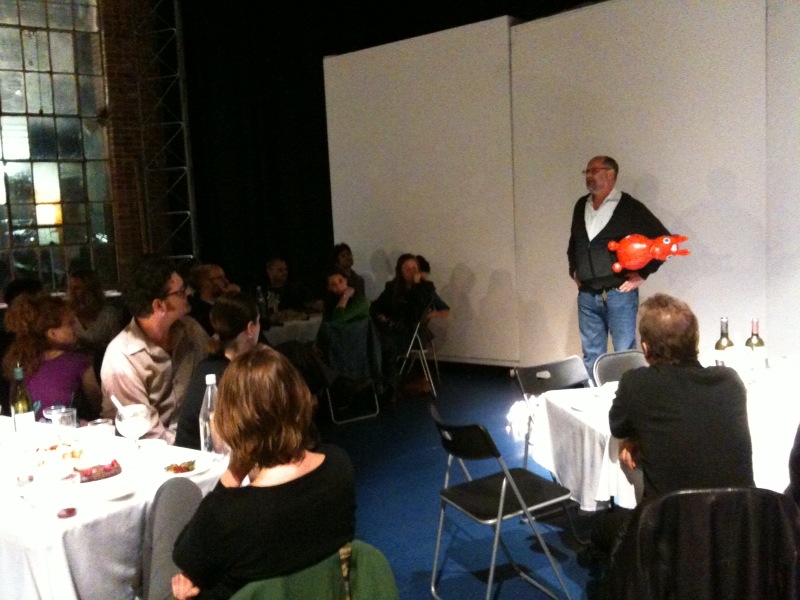 What’s the formula for staging a successful cultural salon? I’ve been putting them on and going to them for several years now and I feel like I should have figured out the formula. The truth is, there is no formula. Sometimes, soirees that are carefully orchestrated with many beautiful features such as live performances, well-crafted discussion points, a convivial space, good food and wine and a great, lively crowd go horribly awry. Sometimes, you turn up without having much of a clue about who’s going to be there, what’s going to be discussed and little more than a baguette and a few cheap bottles of plonk to entertain people with and the proceedings progress marvelously. It’s a bit of a crapshoot really.