<?xml version="1.0" encoding="utf-8"?>
<feed xmlns="http://www.w3.org/2005/Atom">
    <title>Seeing Things</title>
    <link rel="alternate" type="text/html" href="http://www.artsjournal.com/tobias/" />
    <link rel="self" type="application/atom+xml" href="http://www.artsjournal.com/tobias/atom.xml" />
    <id>tag:www.artsjournal.com,2008-02-19:/tobias/10</id>
    <updated>2008-07-19T22:02:27Z</updated>
    <subtitle>Tobi Tobias on Dance et al.</subtitle>
    <generator uri="http://www.sixapart.com/movabletype/">Movable Type Open Source 4.1</generator>

<entry>
    <title>Dancing `Czar&apos; Finds Lull in Crazy-Quilt of Chaos</title>
    <link rel="alternate" type="text/html" href="http://www.artsjournal.com/tobias/2008/07/dancing_czar_finds_lull_in_cra.html" />
    <id>tag:www.artsjournal.com,2008:/tobias//10.14320</id>

    <published>2008-07-19T16:58:26Z</published>
    <updated>2008-07-19T22:02:27Z</updated>

    <summary>This article originally appeared in the Culture section of Bloomberg News on July 19, 2008. Helen Pickett as Agnes, top, and Jim De Block as Mr. Pnut take part in the Royal Ballet of Flanders production of &quot;Impressing the Czar&quot;...</summary>
    <author>
        <name>Seeing Things</name>
        <uri>http://www.artsjournal.com/tobias</uri>
    </author>
    
        <category term="Main" scheme="http://www.sixapart.com/ns/types#category" />
    
    
    <content type="html" xml:lang="en" xml:base="http://www.artsjournal.com/tobias/">
        <![CDATA[<p><P><em>This article originally appeared in  the Culture section of Bloomberg News on July 19, 2008.</em></P></p>

<p><span class="mt-enclosure mt-enclosure-image" style="display: inline;"><img alt="itc.jpg" src="http://www.artsjournal.com/tobias/itc.jpg" width="488" height="360" class="mt-image-center" style="text-align: center; display: block; margin: 0 auto 20px;" /></span></p>

<p><small>Helen Pickett as Agnes, top, and Jim De Block as Mr. Pnut take part in the Royal Ballet of Flanders production of "Impressing the Czar" on Nov. 22, 2005. The ballet, created by William Forsythe in 1988, will be performed by the Royal Ballet of Flanders at the Rose Theater in New York as part of the Lincoln Center Festival through July 20, 2008. Photographer: Johan Persson/Royal Ballet of Flanders via Bloomberg News</small> </p>

<p>July 19 (Bloomberg) -- Imagine an evening-length ballet with two unfathomable sections of pretentious chaos and frenzy surrounding an oasis of logic and calm.</p>

<p>That's ``Impressing the Czar,'' created by William Forsythe in 1988 for Ballett Frankfurt, reconstructed by the Royal Ballet of Flanders in 2005 and now brought by that troupe to Manhattan's Rose Theater, where it runs through tomorrow as part of the Lincoln Center Festival.</p>

<p>Acts I and III are busy and loud, jam-packed with action and lacking in sense but crammed full of stuff: people rushing about to a foolish mix of music; raucous, often patently silly, spoken text; a conglomeration of dance styles, ballet basics predominating; gold-painted props portentously exuding ambiguous meanings; gorgeous or outlandish clothes inspired by different locales and times.</p>

<p>What is Forsythe trying to tell us? In Act I, that past eras of art are rich in treasures but that we're poor custodians of them, treating them as if they were interchangeable parts of the present moment? In Act III, that the culture, in which everything is for sale, has gone to hell in a hand basket? Your guess is as good as mine, probably better; I have little patience for highbrow shenanigans.</p>

<p>The second of the ballet's three acts, ``In the Middle, somewhat elevated,'' has nine dancers in practice clothes, a pair of golden cherries hanging above them, execute an abstract work that Forsythe made for the Paris Opera Ballet in 1987. The next year it became the centerpiece of ``Czar'' and is now danced on its own by several distinguished classical companies.</p>

<p>Cool Chic</p>

<p>Although the Flanders performers are earthier, less finely honed than the Paris crowd, you can still see the cool chic of the choreography. There's no postmodern froufrou here; Forsythe relies on the intricacies and beauties of more complex classical steps and on form and pattern, mingled judiciously with pedestrian actions like strolling, running and just hanging out, watching. It did him a world of good.</p>

<p>Aki Saito stood out in this section, her movement now like the slice of a lethally sharp knife, now melting like chocolate in the sun.</p>

<p>The inordinately ambitious choreographer is trying to do three things in ``Impressing the Czar.'' Not content with emulating Balanchine with ``In the Middle,'' he wants to outdo him. Balanchine took Marius Petipa's 19th-century achievement forward, building from it -- and from his own genius -- ballets that would define classical dance in the 20th century and beyond.</p>

<p>No Balanchine</p>

<p>Forsythe, certainly a talent though hardly on the scale of Balanchine, wants to be the man who revitalizes the genre for the 21st century. Yet his deconstruction of the technique he's inherited from his role model remains theoretical -- handsome enough but devoid of feeling.</p>

<p>In the first and final acts, Forsythe wants to indulge his interest in art and architecture, which is keen, tasteful, even imaginative -- though it often overwhelms the movement. He also seems to think that if spectators fail to be impressed by the intellectual underpinning he claims for his choreography, they'll find some thrills in the gaudy chaos and violence to which he gives full rein in this rule-breaking extravaganza.</p>

<p>It's easy to see that these aims are incompatible.</p>

<p>At the Rose Theater, Broadway at West 60th Street; +1-212-721-6500; <a href="http://www.lincolncenter.org">http://www.lincolncenter.org</a>.</p>

<p><P><em>© 2008 Bloomberg L.P.  All rights reserved.  Reprinted with permission.</em></P></p>]]>
        
    </content>
</entry>

<entry>
    <title>Undertow</title>
    <link rel="alternate" type="text/html" href="http://www.artsjournal.com/tobias/2008/07/undertow.html" />
    <id>tag:www.artsjournal.com,2008:/tobias//10.14283</id>

    <published>2008-07-16T19:58:41Z</published>
    <updated>2008-07-16T23:22:11Z</updated>

    <summary>Noche Flamenca Theater 80, 80 St. Mark&apos;s Place, NYC / July 9-August 12, 2008 Soledad Barrio and Noche Flamenca. Photo courtesy Noche Flamenca. The cast members work as a team to provide mounting excitement, but Soledad Barrio is still the...</summary>
    <author>
        <name>Seeing Things</name>
        <uri>http://www.artsjournal.com/tobias</uri>
    </author>
    
        <category term="Main" scheme="http://www.sixapart.com/ns/types#category" />
    
    
    <content type="html" xml:lang="en" xml:base="http://www.artsjournal.com/tobias/">
        <![CDATA[<p><em>Noche Flamenca</em></p>

<p><em><small>Theater 80, 80 St. Mark's Place, NYC / July 9-August 12, 2008</small></em></p>

<p> <span class="mt-enclosure mt-enclosure-image" style="display: inline;"><img alt="Soledad4web.jpg" src="http://www.artsjournal.com/tobias/Soledad4web.jpg" width="480" height="333" class="mt-image-center" style="text-align: center; display: block; margin: 0 auto 20px;" /></span><center><small>Soledad Barrio and Noche Flamenca. Photo courtesy Noche Flamenca.</small></center></p>

<p><br />
The cast members work as a team to provide mounting excitement, but Soledad Barrio is still the one who takes you to places you might never have reached without her, emotional states that bare the toughest truths about human existence.</p>

<p><em><FONT size=1>The full article appeared in Voice of Dance (<a href="http://www.voiceofdance.org">http://www.voiceofdance.org</a>) on July 15, 2008. To read it, click <a href="http://www.voiceofdance.com/v1/features.cfm/1577/Undertow-Noche-Flamenca-577.html">here</a>.</FONT></em></p>]]>
        
    </content>
</entry>

<entry>
    <title>Mark Morris Rethinks Prokofiev&apos;s `Romeo&apos; as Lusty, Gender Bending, Not Tragic</title>
    <link rel="alternate" type="text/html" href="http://www.artsjournal.com/tobias/2008/07/mark_morris_rethinks_prokofiev.html" />
    <id>tag:www.artsjournal.com,2008:/tobias//10.14173</id>

    <published>2008-07-07T21:01:50Z</published>
    <updated>2008-07-09T04:16:28Z</updated>

    <summary>This article originally appeared in the Culture section of Bloomberg News on July 7, 2008. Noah Vinson and Maile Okamura dance during a rehearsal of Mark Morris&apos; &quot;Romeo &amp; Juliet, On Motifs of Shakespeare,&quot; in New York, on June 11,...</summary>
    <author>
        <name>Seeing Things</name>
        <uri>http://www.artsjournal.com/tobias</uri>
    </author>
    
        <category term="Main" scheme="http://www.sixapart.com/ns/types#category" />
    
    
    <content type="html" xml:lang="en" xml:base="http://www.artsjournal.com/tobias/">
        <![CDATA[<p><P><em>This article originally appeared in  the Culture section of Bloomberg News on July 7, 2008.</em></P></p>

<p><span class="mt-enclosure mt-enclosure-image" style="display: inline;"><img alt="mmrj.jpg" src="http://www.artsjournal.com/tobias/mmrj.jpg" width="488" height="360" class="mt-image-center" style="text-align: center; display: block; margin: 0 auto 20px;" /></span></p>

<p><small>Noah Vinson and Maile Okamura dance during a rehearsal of Mark Morris' "Romeo & Juliet, On Motifs of Shakespeare," in New York, on June 11, 2008. Photographer: Johan Henckens/Mark Morris Dance Group via Bloomberg News</small></p>

<p>July 7 (Bloomberg) -- Leave it to Mark Morris to create a ``Romeo and Juliet'' danced to Prokofiev that features no balcony, no crypt, no pointe work, plenty of passion and violence, yet no final tragedy. The lovers simply move on to some higher plane, enveloped in a star-studded sky.</p>

<p>Morris, 51, is fanatically committed to presenting his dances with live music, so it's only fitting that this celebrated and controversial choreographer should be the first ever to use Prokofiev's recently recovered original score for the world premiere of ``Romeo and Juliet, On Motifs of Shakespeare'' as part of Bard College's Summerscape Festival.</p>

<p>Material for the reconstruction of the score was recently discovered in a Moscow archive by musicologist Simon Morrison. This original version, occasionally dissonant and rhythmically complex, was intended to show passionate youth challenging feudal conventions about marriage and family. (The blissful-end narrative was worked out with the experimental theater director Sergey Radlov.) It was barred from production by both the Soviet regime and ballet community beginning in 1935.</p>

<p>Desperate to see his work staged, Prokofiev resigned himself in 1940 to a more bombastic and melodramatic alternative, now familiar to dance fans from productions by the Kirov Ballet's Leonid Lavrovsky, then by John Cranko, Kenneth MacMillan and Frederick Ashton, to name a few.</p>

<p>Homemade Air</p>

<p>The production at Bard, in Annandale-on-Hudson, New York, uses the original music and offers many aspects of enchantment, though it hardly eclipses MacMillan's pull-out-the-stops extravaganza. Morris's version is tastefully small -- fewer than 20 dancers and a single set -- and captures the beguiling, homemade air of talented kids putting on a show.</p>

<p>It also relinquishes class distinctions to a great degree. Juliet's parents, for example, mingle with the throngs in the town square as friendly neighbors of women who don't even own shoes. The human intimacy of the whole affair is well matched to Bard's exquisitely proportioned, 500-seat Richard B. Fisher Center for the Performing Arts.</p>

<p>The choreography mixes a rather thin ballet vocabulary with robust modern dance and folk touches and lusty, centuries-old Italian mime -- a typical Morris blend. One of the best elements of the production, rare for this choreographer, is the detail with which the principals reflect the most fleeting emotion.</p>

<p>Tender Romeo</p>

<p>Rita Donahue as Juliet goes from the touching confusion of an inexperienced teen making her social debut to incredulous delight in David Leventhal's Romeo, who has crashed the party. Leventhal, whose initial reticence is wimpy, gains confidence by quick degrees from Juliet's response, assuring us (and her) that he will always treat her tenderly. This is fortunate because, in a unique interpretation, Bradon McDonald's Paris, the suitor with the senior Capulets' approval, acts as if he owns the girl, repelling her with his rough handling.</p>

<p>Lauren Grant is terrific as the Nurse (more of a multipurpose servant who participates in all of the family's affairs). As Prince Escalus, Joe Bowie's putting down the latest melee in the Capulet-Montague feud was my favorite passage. Resplendent in the black and gold of his authority, he faces the crowd in the blood-soaked town square and, with grave, calm gestures, preaches that reconciliation is the only path to peace.</p>

<p>The gender switch in the casting of Amber Darragh as Mercutio and Julie Worden as Tybalt was fun yet unconvincing. The biggest disappointment was the quartet of senior dancers -- now retired from the company, though some of the most memorable artists it has ever had -- summoned back to play the Capulet and Montague parents. Three had nothing meaningful to do; the fourth seemed not to include dramatic imagination among her gifts.</p>

<p>Leon Botstein conducted the American Symphony Orchestra in a sensitive reading of the score. Allen Moyer contributed handsome, clever scenery with a childlike air, raw-looking wood prevailing from swords to miniature houses representing Verona. Martin Pakledinaz was at less than his personal best with the costumes.</p>

<p>Mark Morris Dance Group and American Symphony Orchestra perform ``Romeo and Juliet, On Motifs of Shakespeare'' through July 9 at Bard Summerscape Festival, Annandale-on-Hudson, New York. Information: +1-845-758-7926; <a href="http://summerscape.bard.edu">http://summerscape.bard.edu</a>.</p>

<p>The $1.1 million production will travel to Berkeley, California, Sept. 25-28; London, Nov. 5-8; Urbana, Illinois, March 13-14; Norfolk, Virginia, May 8-10; New York's Lincoln Center, May 14-17; and Chicago, September 2009.</p>

<p><P><em>© 2008 Bloomberg L.P.  All rights reserved.  Reprinted with permission.</em></P></p>]]>
        
    </content>
</entry>

<entry>
    <title>Partial View</title>
    <link rel="alternate" type="text/html" href="http://www.artsjournal.com/tobias/2008/07/partial_view.html" />
    <id>tag:www.artsjournal.com,2008:/tobias//10.14064</id>

    <published>2008-07-02T17:10:20Z</published>
    <updated>2008-07-02T18:03:06Z</updated>

    <summary>Compagnie Maguy Marin: Umwelt Joyce Theater, NYC / June 17-22, 2008 Compagnie Maguy Marin in Maguy Marin&apos;s Umwelt. Photo by Ganet. Commentators claim that Marin, inspired by Samuel Beckett, considers the actions banal and underlines that quality by reiterating them...</summary>
    <author>
        <name>Seeing Things</name>
        <uri>http://www.artsjournal.com/tobias</uri>
    </author>
    
        <category term="Main" scheme="http://www.sixapart.com/ns/types#category" />
    
    
    <content type="html" xml:lang="en" xml:base="http://www.artsjournal.com/tobias/">
        <![CDATA[<p><em>Compagnie Maguy Marin:  </em>Umwelt</p>

<p><em><small>Joyce Theater, NYC / June 17-22, 2008</small></em></p>

<p><span class="mt-enclosure mt-enclosure-image" style="display: inline;"><img alt="maguy2web.jpg" src="http://www.artsjournal.com/tobias/maguy2web.jpg" width="500" height="369" class="mt-image-center" style="text-align: center; display: block; margin: 0 auto 20px;" /></span></p>

<p><small>Compagnie Maguy Marin in Maguy Marin's <em>Umwelt</em>. Photo by Ganet.</small></p>

<p>Commentators claim that Marin, inspired by Samuel Beckett, considers the actions banal and underlines that quality by reiterating them obsessively. I suspect she has a trick card up her sleeve. They certainly don't look banal to me; I think they take on an epic radiance. I'd guess that Marin is observing the everyday world and saying "Wow! Just look at that!"</p>

<p><em><FONT size=1>The full article appeared in Voice of Dance (<a href="http://www.voiceofdance.org">http://www.voiceofdance.org</a>) on June 24, 2008. To read it, click <a href="http://www.voiceofdance.com/v1/features.cfm/1569/Partial-View-Compagnie-Maguy-Marin-569.html">here</a>.</FONT></em></p>]]>
        
    </content>
</entry>

<entry>
    <title>A Coffee Éclair:  Personal Indulgences No. 9</title>
    <link rel="alternate" type="text/html" href="http://www.artsjournal.com/tobias/2008/06/a_coffee_eclair_personal_indul.html" />
    <id>tag:www.artsjournal.com,2008:/tobias//10.14066</id>

    <published>2008-06-25T17:27:05Z</published>
    <updated>2008-06-25T17:33:24Z</updated>

    <summary>I am in Paris with my husband. I have convinced him that he wants to accompany me to one of the city&apos;s legendary flea markets. It is way, way out on the edge of town, a lengthy pilgrimage on the...</summary>
    <author>
        <name>Seeing Things</name>
        <uri>http://www.artsjournal.com/tobias</uri>
    </author>
    
        <category term="Main" scheme="http://www.sixapart.com/ns/types#category" />
    
        <category term="indulgences" scheme="http://www.sixapart.com/ns/types#category" />
    
    
    <content type="html" xml:lang="en" xml:base="http://www.artsjournal.com/tobias/">
        <![CDATA[<p>I am in Paris with my husband.  I have convinced him that he wants to accompany me to one of the city's legendary flea markets.  It is way, way out on the edge of town, a lengthy pilgrimage on the Métro, past stops with names like La Fourche (the fork, as in a road, which it is), Montparnasse-Bienvenüe, Gaîté, Plaisance.  Eventually we arrive.</p>

<p>I shop; he watches.  After nearly two hours of this, even I--the indefatigable seeker after the old and unusual--get tired.  We exit and collapse onto the low, narrow concrete ledge in which the hefty chain-link fence that separates the market from ordinary life has been embedded.</p>

<p>We are both exhausted and the sun is turning brutal.  What's more, we're both hungry, a state that can lead to cranky in a matter of minutes.  (Has anyone ever studied the effect of low blood sugar on intimate human relationships?)  The two of us sit there gathering strength for our next move, which should be lunch--a <em>croque monsieur</em> and a beer, say, if we can find a café that's not too seedy.  Meanwhile, my husband has closed his eyes and retreated into the semi-comatose state of men haplessly extended beyond their tolerance.</p>

<p>Suddenly, some 200 yards away, I see a woman walking toward the market.  She's nibbling on something she holds in her hand.  If we were in the States, I'd assume, from the look of the thing, that it was a hotdog roll.  But we are not in the States.  We are in the land called Delicious.</p>

<p>As the woman comes nearer, I realize that it's pastry she's holding.  Even nearer:  Pastry of a lightness and flakiness that are the province of French baking.  Very close, just about to pass us:  The sublime pastry is coated on top with a gleaming stripe of icing the color of <em>café au lait</em> and filled with a silky-looking cream a shade paler.</p>

<p>"Come on, come on," I say to rouse my somnolent husband.  I'm standing now, tugging at his hand, pulling him to his feet.  "A coffee éclair!  It looked fabulous!  We'll just walk in the direction she came from," I urge, pointing to the woman now visible to us only from the back.  "The bakery can't be far away."  And it isn't.  Just about two and half blocks.</p>

<p>"How do you know these things?" my husband asks wearily, as if his question were rhetorical.</p>

<p>"I know everything about things like coffee éclairs," I reply with considerable--if somewhat defensive--dignity.  I may not know much about math or science, but I do know literature and dancing and coffee éclairs."  (I choose not to reveal to my husband that, as an Agatha Christie addict, I've deduced that the point of purchase must have been close enough for the pastry not to have been fully consumed when the woman passed us.)  My husband just shakes his head as we enter the fragrant shop.</p>

<p>Since I'm in charge of French in our marriage, I do the ordering:  a coffee éclair for me, a chocolate éclair for him.  He dislikes coffee, but I knew chocolate would be available, it being the default mode for éclairs.  He pays.  He understands foreign money.  When I'm alone, I just cross my own palm abundantly with silver and extend it to the seller, hoping he's honest.</p>

<p>Not surprisingly, this is the most delectable éclair I have ever tasted.  And it continues, in memory, to hold first place to this day, despite the passing of so many tastings and so many decades.</p>

<p><em><small>© 2008 Tobi Tobias</small></em></p>]]>
        
    </content>
</entry>

<entry>
    <title>Damian Woetzel Leaps Into Future at City Ballet Love-In  </title>
    <link rel="alternate" type="text/html" href="http://www.artsjournal.com/tobias/2008/06/damian_woetzel_leaps_into_futu.html" />
    <id>tag:www.artsjournal.com,2008:/tobias//10.14004</id>

    <published>2008-06-20T12:42:21Z</published>
    <updated>2008-06-20T13:33:38Z</updated>

    <summary>This article originally appeared in the Culture section of Bloomberg News on June 20, 2008. Damian Woetzel dances in &quot;Prodigal Son (Ballet in Three Scenes)&quot; during his farewell performance with the New York City Ballet at the New York State...</summary>
    <author>
        <name>Seeing Things</name>
        <uri>http://www.artsjournal.com/tobias</uri>
    </author>
    
        <category term="Main" scheme="http://www.sixapart.com/ns/types#category" />
    
    
    <content type="html" xml:lang="en" xml:base="http://www.artsjournal.com/tobias/">
        <![CDATA[<p><P><em>This article originally appeared in  the Culture section of Bloomberg News on June 20, 2008.</em></P></p>

<p><span class="mt-enclosure mt-enclosure-image" style="display: inline;"><img alt="dw1.jpg" src="http://www.artsjournal.com/tobias/dw1.jpg" width="488" height="360" class="mt-image-center" style="text-align: center; display: block; margin: 0 auto 20px;" /></span></p>

<p><small>Damian Woetzel dances in "Prodigal Son (Ballet in Three Scenes)" during his farewell performance with the New York City Ballet at the New York State Theatre at Lincoln Center in New York on June 18, 2008. Woetzel has danced with the NYCB to continual acclaim for 23 years, 19 of them as a principal. Photographer: Paul Kolnik/NYCB via Bloomberg News</small></p>

<p>June 20 (Bloomberg) -- Damian Woetzel has danced with the New York City Ballet to continual acclaim for 23 years, 19 of them as a principal. Wednesday night, at Lincoln Center's New York State Theater, the 41-year-old gave his farewell performance with the company, thus taking the decisive next step into his future.</p>

<p>Not, however, before both his colleagues and his fans treated him to ovations, bouquets and a shower of confetti that seemed to go on and on, as if doing so would keep the night from ending.</p>

<p>Woetzel belongs to the type best exemplified by Edward Villella -- a regular American guy, tough and likable, with craggy good looks and no fancy airs about him. When virtuosity is called for, he makes it look free and easy. When drama is needed, he projects emotions that are intense and true.</p>

<p>A natural for Jerome Robbins's work, which was what drew him to City Ballet in the first place, Woetzel chose to retire in the company's season-long celebration of the late choreographer on the 90th anniversary of his birth.</p>

<p><span class="mt-enclosure mt-enclosure-image" style="display: inline;"><img alt="dw2.jpg" src="http://www.artsjournal.com/tobias/dw2.jpg" width="488" height="360" class="mt-image-center" style="text-align: center; display: block; margin: 0 auto 20px;" /></span></p>

<p><small>Dancers, from left, Joaquin de Luz, Tyler Angle, and Damian Woetzel take part in a performance of "Fancy Free" during Woetzel's farewell performance with the New York City Ballet at the New York State Theatre at Lincoln Center in New York on June 18, 2008. Woetzel has danced with the NYCB to continual acclaim for 23 years, 19 of them as a principal. Photographer: Paul Kolnik/NYCB via Bloomberg News</small></p>

<p>For his last performance Woetzel appeared in ``Fancy Free,'' the ballet about three sailors on shore leave in New York that put Robbins on the map in 1944 and remains an audience favorite. He danced the role Robbins himself originated -- the guy with a way of seducing girls with his war stories and slinky rumba. His performance -- every move seemingly colloquial -- was a perfect expression of his blithe naturalness, his sense of humor, his sheer pleasure in dancing.</p>

<p>`Prodigal Son'</p>

<p>Of course he performed a landmark George Balanchine work as well. In the 1929 biblically based ``Prodigal Son,'' Woetzel plays a rebellious adolescent who learns humility, respect and love only after leaving home for the freedom of a hellish world. Woetzel's searing encounters with wild drinking, demonic sex and being stripped of everything he owns are capped by his return, bruised, filthy and crawling on his knees into his father's forgiving embrace. Every scene revealed his ability to make a ballet look newborn, and his pathos in the final passages was the most poignant I've ever witnessed.</p>

<p>At the end of the show -- which included Balanchine's ``Rubies,'' with Woetzel, partnering Yvonne Borree, making a surprise appearance -- the packed house stood, clapping and cheering (as they had for ``Fancy Free''). One by one, a bevy of principal dancers, some from friendly rival troupes, presented him with lush bouquets.</p>

<p>Glittering Confetti</p>

<p><span class="mt-enclosure mt-enclosure-image" style="display: inline;"><img alt="dw3.jpg" src="http://www.artsjournal.com/tobias/dw3.jpg" width="488" height="360" class="mt-image-center" style="text-align: center; display: block; margin: 0 auto 20px;" /></span></p>

<p><small>Dancer Damian Woetzel, on center stage, bows to the crowd after his farewell performance with the New York City Ballet at the New York State Theatre at Lincoln Center in New York on June 18, 2008. Woetzel has danced with the NYCB to continual acclaim for 23 years, 19 of them as a principal. Photographer: Paul Kolnik/NYCB via Bloomberg News</small></p>

<p>The rest of his colleagues joined the onstage crowd to applaud him while company director Peter Martins signaled for a shower of glittering confetti to fall from above. Audience members hurled their own floral tributes over the heads of the orchestra, refusing to go home even when the house lights went up.</p>

<p>The hoopla was not simply conventional. Woetzel has earned not just his fans' admiration but their love. You don't have to know the man personally to sense his intelligence and integrity; it glows through his dancing.</p>

<p>What's next? In tandem with the last years of his performing career, Woetzel earned a master's degree in Public Administration at Harvard's John F. Kennedy School of Government -- accepted though he'd never been to college -- and won acclaim as the new artistic director of the Vail International Dance Festival.</p>

<p>With the sensibility he's developed as a dancer combined with the administrative know-how he's acquiring, Woetzel seems a likely successor to Martins. He's already indicated to the press that he'd be very interested in the job -- when the time comes.</p>

<p>The New York City Ballet continues through June 29 at Lincoln Center, Broadway at 65th St. Information: +1-212-721-6500; <a href="http://www.nycballet.org">http://www.nycballet.org</a>. </p>

<p><P><em>© 2008 Bloomberg L.P.  All rights reserved.  Reprinted with permission.</em></P></p>]]>
        
    </content>
</entry>

<entry>
    <title>N.Y. City Ballet Lost Ratmansky, Gains His `Concerto&apos;: Dance</title>
    <link rel="alternate" type="text/html" href="http://www.artsjournal.com/tobias/2008/06/ny_city_ballet_lost_ratmansky.html" />
    <id>tag:www.artsjournal.com,2008:/tobias//10.13827</id>

    <published>2008-06-10T17:11:32Z</published>
    <updated>2008-06-10T17:25:52Z</updated>

    <summary>This article originally appeared in the Culture section of Bloomberg News on June 9, 2008. June 9 (Bloomberg) -- Alexei Ratmansky&apos;s ``Concerto DSCH,&apos;&apos; by far the most exciting new ballet I&apos;ve seen in ages, had its world premiere last week...</summary>
    <author>
        <name>Seeing Things</name>
        <uri>http://www.artsjournal.com/tobias</uri>
    </author>
    
        <category term="Main" scheme="http://www.sixapart.com/ns/types#category" />
    
    
    <content type="html" xml:lang="en" xml:base="http://www.artsjournal.com/tobias/">
        <![CDATA[<p><P><em>This article originally appeared in  the Culture section of Bloomberg News on June 9, 2008.</em></P></p>

<p>June 9 (Bloomberg) -- Alexei Ratmansky's ``Concerto DSCH,'' by far the most exciting new ballet I've seen in ages, had its world premiere last week in the New York City Ballet's spring season at Lincoln Center. At first it looks like a mere romp -- Jazz Age youth cavorting on the beach -- but almost immediately its unflaggingly deft and original construction becomes apparent.</p>

<p>Taking its title from its score, Dimitri Shostakovich's Second Piano Concerto, the ballet sets in motion a clear cast of characters, without getting bogged down in introducing them formally. Ratmansky arranges the action so ingeniously that the viewer can identify them even as the dance hurtles on.</p>

<p>Wendy Whelan (a cool mermaid) and Benjamin Millepied (her hopelessly ardent swain) provide fleeting summer romance; virtuosi Ashley Bouder, Joaquin De Luz and Gonzalo Garcia are like rough-and-tumble saltimbanques on speed. The 14-member ensemble, creating whirlwinds as a whole, also fractures into smaller units to serve as demi-soloists.</p>

<p>The marvel of the choreography is that the groupings keep combining and recombining, often very unusually placed on the stage. Ratmansky's virtues don't stop here. His choreography concerns itself with people, not just dancers and their phenomenal physicality.</p>

<p>Crouching God</p>

<p>He knows ballet history and uses it with wit, making a bow to the house he's working in, for example, by extending the ``swimming lesson'' of Balanchine's ``Apollo'': When the god crouches to float Terpsichore on his back, he walks her into the wings in that position. Most charmingly, the lovers' inevitable farewell echoes the separation of child hero and heroine at the end of the Christmas Eve party in Balanchine's ``Nutcracker.''</p>

<p>Earlier this year, Ratmansky said he planned to resign as artistic director of the Bolshoi Ballet in order to devote himself to choreography. His work, accomplished and fresh, is much in demand from world-class companies. City Ballet was considering him as a replacement for company choreographer Christopher Wheeldon, but the arrangement fell through. ``Concerto DSCH'' suggests it's time for the proposition to be reconsidered.</p>

<p>Meanwhile City Ballet continues its season-long celebration of Jerome Robbins. So far, the incontestable highlight has been ``Definitive Chopin,'' a program offering three ballets with music by the composer to whom Robbins repeatedly returned.</p>

<p>Teasing Gaiety</p>

<p><span class="mt-enclosure mt-enclosure-image" style="display: inline;"><img alt="rat1.jpeg" src="http://www.artsjournal.com/tobias/rat1.jpeg" width="488" height="360" class="mt-image-center" style="text-align: center; display: block; margin: 0 auto 20px;" /></span></p>

<p><small>Dancers, from left, Yvonne Borree, Rachel Rutherford, and Abi Stafford perform in the New York City Ballet production "Dances at a Gathering" in New York on May 27, 2007. Performances of the present production continue through June 29, 2008 at the New York State Theater at Lincoln Center. Photographer: Paul Kolnik/NYCB via Bloomberg News</small></p>

<p>The main entry is the 1969 ``Dances at a Gathering,'' in which the young people of a rural community bond with one another and with the land that is their home. Contentment, a teasing gaiety, emotionally stormy weather tempered by reconciliation, the qualified acceptance of a newcomer among them -- all are tinged with unclouded optimism, undercut by just one tableau that hints at the approaching destruction of war.</p>

<p>The present production is the most technically polished and musically sensitive I've seen since the premiere, which was buoyed by charismatic stars -- Edward Villella, Patricia McBride and Violette Verdy -- who have no equivalent in the company today. Most impressive among the 10 dancers were the radiantly girlish Rachel Rutherford, who was in her element and projected the deepest feeling among the group, and Sara Mearns, who played the flirtatious odd girl out on her own terms.</p>

<p><span class="mt-enclosure mt-enclosure-image" style="display: inline;"><img alt="rat2.jpeg" src="http://www.artsjournal.com/tobias/rat2.jpeg" width="488" height="360" class="mt-image-center" style="text-align: center; display: block; margin: 0 auto 20px;" /></span></p>

<p><small>Dancers, from left, Amar Ramasar, Jonathan Stafford, Jared Angle, Yvonne Borree, and Abi Stafford perform in the New York City Ballet production "Dances at a Gathering" in New York, on May 27, 2007. Performances of the present production continue through June 29, 2008 at the New York State Theater at Lincoln Center. Photographer: Paul Kolnik/NYCB via Bloomberg News</small></p>

<p>``Other Dances,'' created in 1976 for Natalia Makarova and Mikhail Baryshnikov, has deservedly become a keeper, performed by many stellar successors. Mainly lyrical in mood, it's inflected with middle-European folk-dance motifs, as if to remind us of where the composer came from. It's not a romantic duet but something more remarkable -- an illustration of the intimacy dancers forge with each other through the act of dancing.</p>

<p>Poetic to Absurd</p>

<p>This time out, Damian Woetzel, who retires from the City Ballet this season, partnered Julie Kent, a senior American Ballet Theater ballerina. Woetzel brought all his gifts to the occasion: virtuosic technical command, astute, gracious partnering, keen intelligence and craggy good looks. Kent, all ethereal delicacy, melted in his arms.</p>

<p>``The Concert'' (1956) is that welcome rarity, a successful funny ballet. It depicts the reveries, from poetic to absurd, of the concert-hall audience. Sterling Hyltin, her waist-length wavy blond hair prominent, shone as the production's ditzy siren, while the jokes about all-too-human types and choreographic discombobulation seemed new once again.</p>

<p>Through June 29 at the New York State Theater, Lincoln Center, Broadway at 65th St. Information: +1-212-721-6500; <a href="http://www.nycballet.org">http://www.nycballet.org</a>.</p>

<p><P><em>© 2008 Bloomberg L.P.  All rights reserved.  Reprinted with permission.</em></P>  </p>]]>
        
    </content>
</entry>

<entry>
    <title>Tharp Goes to Hell, Back in `Rabbit and Rogue&apos;: World Premiere </title>
    <link rel="alternate" type="text/html" href="http://www.artsjournal.com/tobias/2008/06/tharp_goes_to_hell_back_in_rab.html" />
    <id>tag:www.artsjournal.com,2008:/tobias//10.13796</id>

    <published>2008-06-07T02:28:51Z</published>
    <updated>2008-06-07T02:53:28Z</updated>

    <summary>This article originally appeared in the Culture section of Bloomberg News on June 5, 2008. Ethan Stiefel, right, performs in the American Ballet Theatre production of Twyla Tharp&apos;s &quot;Rabbit and Rogue&quot; at the Metropolitan Opera House in New York on...</summary>
    <author>
        <name>Seeing Things</name>
        <uri>http://www.artsjournal.com/tobias</uri>
    </author>
    
        <category term="Main" scheme="http://www.sixapart.com/ns/types#category" />
    
    
    <content type="html" xml:lang="en" xml:base="http://www.artsjournal.com/tobias/">
        <![CDATA[<p><P><em>This article originally appeared in  the Culture section of Bloomberg News on June 5, 2008.</em></P></p>

<p><span class="mt-enclosure mt-enclosure-image" style="display: inline;"><img alt="tt1.jpeg" src="http://www.artsjournal.com/tobias/tt1.jpeg" width="488" height="360" class="mt-image-center" style="text-align: center; display: block; margin: 0 auto 20px;" /></span></p>

<p><small>Ethan Stiefel, right, performs in the American Ballet Theatre production of Twyla Tharp's "Rabbit and Rogue" at the Metropolitan Opera House in New York on June 2, 2008. Performances continue through July 12 at the opera house, part of Manhattan's Lincoln Center. Photographer: Rosalie O'Connor/ABT via Bloomberg News<br />
</small></p>

<p>June 5 (Bloomberg) -- Ethan Stiefel, his Mr. Perfect technique softened since an operation for knee trouble, is the elder brother, all smart-alecky goofiness. Herman Cornejo, a whiz of a dancer, is his competitive kid brother. Driving each other nuts yet irrevocably bonded, the two are the heroes of Twyla Tharp's ``Rabbit and Rogue,'' given its world premiere Tuesday night in New York by American Ballet Theatre.</p>

<p>The pair sets out to see the world, accompanied by a colorful mix of music by the film composer Danny Elfman. Well, a postmodern idea of the world: They visit Hell, where Gillian Murphy and David Hallberg, alternately quarreling and making love, are the central patrons of a with-it nightclub where the required dress is black, skimpy and spangled. (Outfits by Norma Kamali.)</p>

<p>Next stop is Heaven, a peaceable kingdom, all white gowns and silver trousers, reigned over by Paloma Herrera and Gennadi Saveliev. In this place, one might find serene compatibility, even true love, perhaps bliss. Then the worlds commingle, as in real life.</p>

<p><span class="mt-enclosure mt-enclosure-image" style="display: inline;"><img alt="tt2.jpeg" src="http://www.artsjournal.com/tobias/tt2.jpeg" width="488" height="360" class="mt-image-center" style="text-align: center; display: block; margin: 0 auto 20px;" /></span></p>

<p><small>Dancers, from left, Herman Cornejo, Craig Salstein and Ethan Stiefel perform in the American Ballet Theatre production of Twyla Tharp's "Rabbit and Rogue" at the Metropolitan Opera House in New York on June 2, 2008. Performances continue through July 12 at the opera house, part of Manhattan's Lincoln Center. Photographer: Rosalie O'Connor/ABT via Bloomberg News</small></p>

<p>At this point, the ballet begins to feel too long and too diffuse.</p>

<p>The most remarkable thing about the choreography is that most of it travels in horizontal lines from one side of the stage to the other. The dancers look like an adrenalin-infused Greek frieze or simply a view of life's passing parade. Leave it to Tharp to break one of dance-making's cardinal rules about variety with deadpan confidence.</p>

<p>Steel-Trap Mind</p>

<p>From conventionally avant-gardish beginnings in the late 1960s, Tharp -- with her steel-trap mind, theatrical flair and inordinate ambition -- swiftly found her singular mode of combining classical ballet, jazz and vernacular moves. Her choreography has always been rigorous and complex, wittily melding popular with highbrow.</p>

<p>From exquisite pieces that caught the mood of a moment in cultural history, she switched to semi-narrative work that ran on rage. In recent years, she created high-voltage shows for Broadway. ``Movin' Out,'' set to Billy Joel songs, had legs; ``The Times They Are A-Changin,'' to Bob Dylan numbers, was a dud. ``Rabbit and Rogue'' brings her back to ABT after a long absence. Surprisingly, for she is a great inventor, it doesn't have much in it that seems new.</p>

<p>`Etudes'</p>

<p><span class="mt-enclosure mt-enclosure-image" style="display: inline;"><img alt="tt3.jpeg" src="http://www.artsjournal.com/tobias/tt3.jpeg" width="488" height="360" class="mt-image-center" style="text-align: center; display: block; margin: 0 auto 20px;" /></span></p>

<p><small>Sascha Radetsky, center, performs in the American Ballet Theatre production of Harald Lander's "Etudes" at the Metropolitan Opera House in New York on May 19, 2008. Performances continue through July 12 at the opera house, part of Manhattan's Lincoln Center. Photographer: Rosalie O'Connor/ABT via Bloomberg News</small></p>

<p>In 1948, Harald Lander created ``Etudes'' -- his best work, I'm afraid -- for the Royal Danish Ballet, which he headed. He left the company under unpleasant circumstances a few years later for the Paris Opera Ballet, where he reworked the piece into the souped-up version seen worldwide today. For reasons I can't fathom, ABT revived its production to accompany the Tharp.</p>

<p>Granted, ``Etudes'' is a crowd pleaser, but it's in execrable taste. It purports to show the classical dancer's training in a nutshell, goes on to hokey incarnations of the contrasting Romantic and Classical periods and climaxes in a series of escalating virtuoso feats performed in intersecting diagonal lines -- a situation that titillates the audience with its looming peril.</p>

<p>On the whole, ABT's dancers performed it with immaculate precision, a mark of commendable technique throughout the ranks. Still, the company might have done better to sacrifice neatness to more fire in the belly.</p>

<p>Through July 12 at the Metropolitan Opera House, Lincoln Center, Broadway at 65th Street. Information: +1-212-419-4321; http://www.abt.org.</p>

<p><P><em>© 2008 Bloomberg L.P.  All rights reserved.  Reprinted with permission.</em></P> </p>]]>
        
    </content>
</entry>

<entry>
    <title>Youth Movement</title>
    <link rel="alternate" type="text/html" href="http://www.artsjournal.com/tobias/2008/06/youth_movement.html" />
    <id>tag:www.artsjournal.com,2008:/tobias//10.13800</id>

    <published>2008-06-06T02:03:46Z</published>
    <updated>2008-06-25T17:16:41Z</updated>

    <summary>2008 School of American Ballet Workshop Performances Peter Jay Sharp Theater / Lincoln Center, NYC / May 31 &amp; June 2, 2008 Students of the School of American Ballet in Jock Soto&apos;s Interlude. Photo by Paul Kolnik. The performers of...</summary>
    <author>
        <name>Seeing Things</name>
        <uri>http://www.artsjournal.com/tobias</uri>
    </author>
    
        <category term="Main" scheme="http://www.sixapart.com/ns/types#category" />
    
    
    <content type="html" xml:lang="en" xml:base="http://www.artsjournal.com/tobias/">
        <![CDATA[<p><em>2008 School of American Ballet Workshop Performances </em></p>

<p><em><small>Peter Jay Sharp Theater / Lincoln Center, NYC / May 31 &  June 2, 2008</small></em></p>

<p><span class="mt-enclosure mt-enclosure-image" style="display: inline;"><img alt="SAB_interludeweb.jpg" src="http://www.artsjournal.com/tobias/SAB_interludeweb.jpg" width="500" height="300" class="mt-image-center" style="text-align: center; display: block; margin: 0 auto 20px;" /></span></p>

<p><small>Students of the School of American Ballet in Jock Soto's <em>Interlude</em>. Photo by Paul Kolnik.<br />
</small></p>

<p>The performers of Jerome Robbins's "2 & 3 Part Inventions" moved with a graciousness, fluency, and technical prowess you'd hardly expect from aspirants of their tender age. They also have a more than nascent command of style and remarkable stage presence. I was especially taken by Lauren Lovette. She has the grave dignity of a princess without being high and mighty about it.</p>

<p><em><FONT size=1>The full article appeared in Voice of Dance (<a href="http://www.voiceofdance.org">http://www.voiceofdance.org</a>) on June 3, 2008. To read it, click <a href="http://www.voiceofdance.com/v1/features.cfm/1559/Youth-Movement-School-of-American-Ballet-Workshop-Performances559.html">here</a>.</FONT></em></p>]]>
        
    </content>
</entry>

<entry>
    <title>Floozies, Lovers, Old Stars Herald ABT&apos;s Spring Season</title>
    <link rel="alternate" type="text/html" href="http://www.artsjournal.com/tobias/2008/05/floozies_lovers_old_stars_hera.html" />
    <id>tag:www.artsjournal.com,2008:/tobias//10.13650</id>

    <published>2008-05-21T12:31:01Z</published>
    <updated>2008-05-22T00:01:57Z</updated>

    <summary>This article originally appeared in the Culture section of Bloomberg News on May 21, 2008. May 21 (Bloomberg) -- American Ballet Theatre opened its eight-week spring season Monday night at the Metropolitan Opera House in Manhattan with a gala program...</summary>
    <author>
        <name>Seeing Things</name>
        <uri>http://www.artsjournal.com/tobias</uri>
    </author>
    
        <category term="Main" scheme="http://www.sixapart.com/ns/types#category" />
    
    
    <content type="html" xml:lang="en" xml:base="http://www.artsjournal.com/tobias/">
        <![CDATA[<p><P><em>This article originally appeared in  the Culture section of Bloomberg News on May 21, 2008.</em></P></p>

<p>May 21 (Bloomberg) -- American Ballet Theatre opened its eight-week spring season Monday night at the Metropolitan Opera House in Manhattan with a gala program offering tidbit star turns from stars past as well as present.</p>

<p>The 1938 ``Judgment of Paris,'' Antony Tudor's sardonic take on the Greek myth of a hero's choice among three goddesses, honored the centennial of the choreographer's birth. The sleazy- cafe scene replete with inebriated client, pandering waiter and triad of over-the-hill floozies was made gala-worthy by the inspired casting of five memorable former ABT dancers.</p>

<p>Kevin McKenzie, now the company's artistic director, was wonderfully understated as the john, his manners growing ever more finicky as he slipped into paralysis. Victor Barbee, a compelling actor-dancer who is now associate artistic director, brought Stanislavskian depth to the minor role of the waiter. The ladies of the evening, who really carry the show with their solos, were Kathleen Moore, Martine van Hamel and Bonnie Mathis.</p>

<p><span class="mt-enclosure mt-enclosure-image" style="display: inline;"><img alt="abt1.jpeg" src="http://www.artsjournal.com/tobias/abt1.jpeg" width="488" height="360" class="mt-image-center" style="text-align: center; display: block; margin: 0 auto 20px;" /></span></p>

<p><small>Dancers, from right, Kathleen Moore, Martine van Hamel and Bonnie Mathis perform in Antony Tudor's "Judgment of Paris" during American Ballet Theatre's opening night at the Metropolitan Opera House in New York on May 19, 2008.  Photographer: Marty Sohl/ABT via Bloomberg News</small></p>

<p>Each created a character that was funny, grotesque and pitiful in her own singular style. Van Hamel, in her day a lovely, sensuous ballerina, outdid them all with the unflinching realism of her portrayal.</p>

<p>Pretty Effects</p>

<p><span class="mt-enclosure mt-enclosure-image" style="display: inline;"><img alt="abt2.jpeg" src="http://www.artsjournal.com/tobias/abt2.jpeg" width="488" height="360" class="mt-image-center" style="text-align: center; display: block; margin: 0 auto 20px;" /></span></p>

<p><small>Dancers Irina Dvorovenko, right, and Maxim Beloserkovsky perform in Jessica Lang's "Splendid Isolation III" during American Ballet Theatre's opening night at the Metropolitan Opera House in New York on May 19, 2008. Photographer: Marty Sohl/ABT via Bloomberg News</small></p>

<p>Jessica Lang's new ballet, ``Splendid Isolation III,'' coupled Irina Dvorovenko, in a white gown whose skirt took up half the stage, with Maxim Beloserkovsky, nude but for skin-tight briefs. Apparently the pair was experiencing some sort of passionate but thwarted desire. Dances employing extravagant amounts of fabric are nothing new and always tricky to bring off. This one, despite occasional pretty effects, was no exception. Even when the lady belatedly shed her skirt, the simplistic choreography offered only cliches.</p>

<p>The balance of the evening was devoted to giving every principal dancer a number to shine in. The most moving among these was a segment from Act 2 of ``Giselle.'' As the eponymous tragic heroine, Nina Ananiashvili was, quite simply, ineffable. She was partnered by an eloquent Angel Corella, his usual pleasure-exuding affability and virtuoso feats here transformed by the gravity of love and remorse.</p>

<p>There were many reminders of familiar excellence, such as Herman Cornejo's dazzling technique, the lyrical ballerina Julie Kent's continuing development as an actress and Jose Manuel Carreno's seductive warmth.</p>

<p>Lightweight, Flashy</p>

<p>While this bodes well for the season, the programming for the coming weeks may make the bona fide dance lover flee and the corps feel suicidal. Four multi-act ballets -- ``Le Corsaire'' and ``Don Quixote,'' both largely lightweight and flashy, and McKenzie's hapless versions of ``Swan Lake'' and ``The Sleeping Beauty'' -- are each being danced for eight back-to-back performances.</p>

<p>The season will wind down with an unbroken week each of ``La Bayadere,'' ``The Merry Widow'' and ``Giselle.'' (Mercifully, ABT's productions of ``Bayadere'' and ``Giselle'' can still be called classical.) The sole mixed bill insists on following the season's potential highlight, a new work by Twyla Tharp, with Harald Lander's crowd-pleasing but alternately cloying and show- offy ``Etudes.''</p>

<p>These programming tactics suggest, overall, an attempt to save money and to sell tickets by satisfying the lowest common denominator of taste. It's a good thing ABT's dancers are so fabulous. But don't they, as well as their audience, deserve subtler and more varied challenges?</p>

<p>At the Metropolitan Opera House, Broadway at West 65th Street, through July 12. Information: +1-212-419-4321; <a href="http://www.abt.org">http://www.abt.org</a>. </p>

<p><P><em>© 2008 Bloomberg L.P.  All rights reserved.  Reprinted with permission.</em></P></p>]]>
        
    </content>
</entry>

<entry>
    <title>Younger Than Springtime</title>
    <link rel="alternate" type="text/html" href="http://www.artsjournal.com/tobias/2008/05/younger_than_springtime.html" />
    <id>tag:www.artsjournal.com,2008:/tobias//10.13571</id>

    <published>2008-05-13T23:45:35Z</published>
    <updated>2008-05-14T00:38:42Z</updated>

    <summary>1.2.3. Festival: Taylor 2; Ailey II; ABT II Joyce Theater, NYC / April 29 - May 11, 2008 ABT II in Raymonda. Photo by Rosalie O&apos;Connor. Surely you remember the old movies and tales in which a teenage dancer is...</summary>
    <author>
        <name>Seeing Things</name>
        <uri>http://www.artsjournal.com/tobias</uri>
    </author>
    
        <category term="Main" scheme="http://www.sixapart.com/ns/types#category" />
    
    
    <content type="html" xml:lang="en" xml:base="http://www.artsjournal.com/tobias/">
        <![CDATA[<p>1.2.3. Festival: <em>Taylor 2; Ailey II; ABT II</em></p>

<p><em><small>Joyce Theater, NYC / April 29 - May 11, 2008</small></em></p>

<p><br />
<span class="mt-enclosure mt-enclosure-image" style="display: inline;"><img alt="raymonda2web.jpg" src="http://www.artsjournal.com/tobias/raymonda2web.jpg" width="500" height="288" class="mt-image-center" style="text-align: center; display: block; margin: 0 auto 20px;" /></span></p>

<p><center><small>ABT II in <em>Raymonda</em>. Photo by Rosalie O'Connor.</small></center></p>

<p><br />
<p>Surely you remember the old movies and tales in which a teenage dancer is spotted at the recital of a provincial dance studio. There, a diamond in the rough, she stands out among aspirants clearly headed for careers in more pedestrian fields and goes on to glory. Taylor 2, Ailey II, and ABT II, sharing two weeks at the Joyce Theater billed as the <em>1.2.3. Festival</em>, convince you to get those dated romantic notions right out of your head.</p></p>

<p><em><FONT size=1>The full article appeared in Voice of Dance (<a href="http://www.voiceofdance.org">http://www.voiceofdance.org</a>) on May 12, 2008. To read it, click <a href="http://www.voiceofdance.com/v1/features.cfm/1553/Younger-Than-Springtime-1-2-3-Festival-Taylor-2-Ailey-2-Abt-2553.html">here</a>.</FONT></em></p>]]>
        
    </content>
</entry>

<entry>
    <title>Robbins Brought Charm, Glamour to N.Y. City Ballet</title>
    <link rel="alternate" type="text/html" href="http://www.artsjournal.com/tobias/2008/04/robbins_brought_charm_glamour.html" />
    <id>tag:www.artsjournal.com,2008:/tobias//10.13401</id>

    <published>2008-04-29T12:23:34Z</published>
    <updated>2008-04-29T13:04:26Z</updated>

    <summary>This article originally appeared in the Culture section of Bloomberg News on April 29, 2008. Jerome Robbins, second from the left, observes a New York City Ballet rehearsal in New York in this undated handout photo. Starting April 28, 2008,...</summary>
    <author>
        <name>Seeing Things</name>
        <uri>http://www.artsjournal.com/tobias</uri>
    </author>
    
        <category term="Main" scheme="http://www.sixapart.com/ns/types#category" />
    
    
    <content type="html" xml:lang="en" xml:base="http://www.artsjournal.com/tobias/">
        <![CDATA[<p><P><em>This article originally appeared in  the Culture section of Bloomberg News on April 29, 2008.</em></P></p>

<p><span class="mt-enclosure mt-enclosure-image" style="display: inline;"><img alt="jrcrrr1.jpg" src="http://www.artsjournal.com/tobias/jrcrrr1.jpg" width="307" height="360" class="mt-image-center" style="text-align: center; display: block; margin: 0 auto 20px;" /></span></p>

<p><small>Jerome Robbins, second from the left, observes a New York City Ballet rehearsal in New York in this undated handout photo. Starting April 28, 2008, at Lincoln Center's New York State Theater, the New York City Ballet begins a season-long homage to the late Jerome Robbins on the 90th anniversary of his birth. Photographer: Paul Kolnik/NYCB via Bloomberg News<br />
</small></p>

<p>April 29 (Bloomberg) -- The ringmaster of a mock circus directs 48 little girls from the School of American Ballet who finally spell out JR, the initials of the performance's honoree. Tonight at Lincoln Center's New York State Theater, the New York City Ballet begins a season-long homage to the late Jerome Robbins on the 90th anniversary of his birth. It's an unabashedly show-bizzy gesture for a choreographer who was, in truth, better suited to the Broadway stage than to ballet's.</p>

<p>Think of ``West Side Story,'' the reimagining of the Romeo and Juliet legend as a timely saga of teenage street-gang conflict and young love; the lusty ``Fiddler on the Roof'' and the sheer enchantment of the ``Small House of Uncle Thomas'' ballet from ``The King and I,'' each created for Broadway.</p>

<p>Robbins's choreographic debut in the ballet realm, ``Fancy Free,'' (made for American Ballet Theatre), following the escapades of three sailors out on the town, was a dazzling hit and remains a repertory favorite. Like all of Robbins's choreography, it's set down to the last fingernail -- while creating an illusion of naturalness that Robbins never achieved again.</p>

<p><span class="mt-enclosure mt-enclosure-image" style="display: inline;"><img alt="jrcrrr2.jpg" src="http://www.artsjournal.com/tobias/jrcrrr2.jpg" width="289" height="360" class="mt-image-center" style="text-align: center; display: block; margin: 0 auto 20px;" /></span></p>

<p><small>Dancers, from left, Daniel Ulbricht, Tyler Angle and Benjamin Millepied perform in New York City Ballet production "Fancy Free," choreographed by Jerome Robbins, in New York on Feb. 11, 2006. On the evening of April 28, 2008, at Lincoln Center's New York State Theater, the New York City Ballet begins a season-long homage to the late Jerome Robbins on the 90th anniversary of his birth. Photographer: Paul Kolnik/NYCB via Bloomberg News</small></p>

<p>He could be a demon in the rehearsal studio -- terrible tales abound -- but his implacable demands served vaulting creative visions he felt were just beyond his grasp. One must add, to his credit, that when he decided to commit himself, long-term, to a classical company, he chose to work in the shadow of George Balanchine at the New York City Ballet. In any other company, he would easily have been top guy.</p>

<p>Package Deals</p>

<p>The City Ballet's nine-week season will offer 33 Robbins ballets. As is the troupe's current custom, the repertory is arranged in package deals -- groups of ballets that can only be seen as a unit. The tactic is bound to squelch the enthusiasm of dance fans who attend regularly and appeal, instead, to a general audience reassured by group labels like ``All American Fare'' and ``Generation Next.''</p>

<p>The Robbins packages being offered in the first two weeks contain only two ballets I'd recommend unreservedly: ``Les Noces'' (better than anyone else's version but Bronislava Nijinska's) and ``Fancy Free.'' Matters improve later with ``Afternoon of a Faun,'' ``The Cage'' and an all-Chopin program containing ``Dances at a Gathering,'' ``Other Dances'' and the still hilarious ``The Concert.''</p>

<p>Topping the list of ballets you'd be happier skipping is the endless, slow-motion, pseudo-philosophical ``Watermill.'' Still, it's bound to sell well since the company has been astute enough to call Nikolaj Hubbe out of recent retirement to play the lead. Hubbe, with his maverick imagination, and the creator of the role, Edward Villella, all rugged intensity, are the only two I can imagine making something riveting of such navel gazing.</p>

<p>Of course, all of it -- the splendid, the so-so and the experiments that never worked -- deserve their moment in the spotlight on this occasion, if only as an indication of the scope and evolution of Robbins's work.</p>

<p>At Lincoln Center through Jun. 29. Information: +1-212-721-6500; <a href="http://www.nycballet.com">http://www.nycballet.com</a>.</p>

<p><P><em>© 2008 Bloomberg L.P.  All rights reserved.  Reprinted with permission.</em></P> </p>]]>
        
    </content>
</entry>

<entry>
    <title>Gerry&apos;s:  Personal Indulgences No. 8</title>
    <link rel="alternate" type="text/html" href="http://www.artsjournal.com/tobias/2008/04/gerrys_per4sonal_indulgences_n.html" />
    <id>tag:www.artsjournal.com,2008:/tobias//10.13290</id>

    <published>2008-04-21T01:14:36Z</published>
    <updated>2008-04-21T01:12:16Z</updated>

    <summary>The dress on my back, the cloth on my dining table--unique, beautiful, old, and absurdly cheap. &quot;Where&apos;dja get it?&quot; the appreciative and envious exclaimed. Gerry&apos;s, of course. I came across Gerry and his goods plowing my way home through a...</summary>
    <author>
        <name>Seeing Things</name>
        <uri>http://www.artsjournal.com/tobias</uri>
    </author>
    
        <category term="Main" scheme="http://www.sixapart.com/ns/types#category" />
    
        <category term="indulgences" scheme="http://www.sixapart.com/ns/types#category" />
    
    
    <content type="html" xml:lang="en" xml:base="http://www.artsjournal.com/tobias/">
        <![CDATA[<p>The dress on my back, the cloth on my dining table--unique, beautiful, old, and absurdly cheap.  "Where'dja get it?"  the appreciative and envious exclaimed.  Gerry's, of course.</p>

<p>I came across Gerry and his goods plowing my way home through a street fair devoted, as these events are nowadays, to the peddling of tube socks, junky electronic gizmos, bras and bikinis ostensibly name-branded, off-brand sheets, discontinued makeup and food as likely to kill as to nourish you.</p>

<p>It was high summer and the weather was stupefyingly hot and humid; the wares, depressingly tacky.  Suddenly I spied, manifesting itself like an oasis-in the-desert mirage, a long rickety table heaped with fabric that all but spelled out "vintage" in neon light.  I spent the next three hours there, pawing through the mound, finding things, among a crowd of enthusiasts.  From them I learned that the scruffy youngish man in charge was called Gerry and that he and his offerings appeared irregularly--this was part of the mystique--at such fairs.</p>

<p>Every Sunday morning in the next month, I went out hunting for the elusive Gerry's "show" (as I found he called it), sometimes successfully, sometimes not.  Eventually, I got on a semi-secret phone-alert list that made me privy to the dates and venues of upcoming shows, relayed by a disembodied young female voice.  From then on, on the next designated date, fifteen minutes before the appointed hour, I would join the faithful gathered at the indicated Upper West Side locale, waiting in a state of anticipation comparable to that of a very young child on the morning of his birthday.  I was rarely disappointed.</p>

<p>Here's how the maverick operation worked:  From the back of a roomy SUV, Gerry, the sole proprietor and impresario of the enterprise, drew a large collapsed trestle table and set it up in the street.  Then, with the help of a few volunteers from the eager crowd, he removed dozens of giant trash-bagged bundles from his vehicle and piled them high on the table.  They formed a veritable mountain that loomed high over the heads of the participants.  Only after the last bag had been stacked did Gerry give the signal that his low-end boutique was open for business.  We, his clients, then precipitously threw ourselves upon the bags, ripped them open, and began rooting through the loot.</p>

<p>Just before the opening gun, Gerry had thrust at each prospective shopper a large plastic bag of an institutional royal-blue hue.  A horizontal oval cut out near the top of the bag created a handhold.  In these circumstances, however, you grabbed your bag, slung it over your arm, and pushed it way up to the elbow so you'd have both hands free.  Digging for treasure chez Gerry was definitely a two-handed job.</p>

<p>What, exactly, was in the mountain?  Delicate christening gowns, an amazing number of them.  Spunky daytime dresses that women wore before jeans were declared to be the uniform for ordinary life.  Cocktail dresses, ball gowns, and tuxedo jackets (which today's women know look fabulous over their uniform of white t-shirt and faded Levis).  Tablecloths galore, sometimes with matching napkins, in every size imaginable--from bridge-table squares to banquet-length double damask.  Towels of every ilk, including those divine European linen ones with the owner's initials embroidered at a corner in red cross-stitching.  Yesteryear's baby clothes and kidwear, a study of which would make a fertile dissertation subject for a budding sociologist.  Undergarments that included pantalettes from the Victorian era and peach-colored corsets your grandmother might have worn (both find rakish uses today).  Hats, shoes, and gloves (occasionally the white kid "Opera length" kind that reaches from impossibly slender fingers to above the elbow).  Shards of ravishing embroidery, beading, or lace--all sheared from their original location but considered by some unknown salvager--bless her or him!--too wonderful to jettison.</p>

<p>The basic endowments for your initial search through this merchandise were a keen eye, speed, and ferocity of purpose.  The idea was to stow away in your increasingly heavy blue bag anything at all that spoke to your imagination.  The elimination process would come later.</p>

<p>Everything was  "used," of course.  And nearly all of it was old, some of it, as I've indicated, seriously old.  Rips, frayed edges, not quite obliterated coffee or wine stains, and other signs of age often made the garment--or linen item--somehow more precious, the way wrinkles give a mature face character.  Occasionally I bought examples of meticulous mending, an art that has vanished in today's throwaway culture.  The love, labor, and deftness with which a hole in an antique linen sheet had been repaired never failed to pierce my heart.</p>

<p>In the world of Gerry's, age was a plus.  His customers seemed to agree that clothes were better "back then," whether they thought "then" was the Sixties and Seventies or the Thirties and Forties.  (I admit to the insufferable snobbery of believing that fashion--in a classical sense that includes wearabililty and grace--ended in the Forties.)  Clothes were certainly better made back in the day.</p>

<p>Among my favorite acquisitions were black and midnight-blue dresses from the Twenties through the Forties that became mainstays of my "look," and then, skipping ahead to the extravagances of the Seventies, a killer-flamenco dress--several pounds of flirtatiously ruffled black lace that I never wore but took out to revel in at least twice a year.   My oddest find from the stylish past?  Two pairs of men's white suede summer oxfords with those characteristic perforations--very Great Gatsby.  They were almost brand new, and they actually fit.</p>

<p>A small percentage of Gerry's offerings were actually theatrical costumes.  Another small percentage--one I cherished--comprised extremely old items.  A wisp of a white finely embroidered handkerchief, at least two centuries old, from the look of it--you could, as they say, read a love letter through it and time had lent it a faint sepia cast--had managed not to give up the ghost in the ravages we perpetrated on the dense, twisted pileup of cloth.  I rescued it, washed and ironed it with scrupulous care, and took it to Renée, my dear friend in Paris.  Utterly in sympathy with it, she had it framed and hung it in her bedroom, in the company of leather-bound books equally antique.</p>

<p>Where on earth did Gerry get his stuff?  Of course we were curious, but in vain.  He was cagily vague on this subject, even if questioned directly.  "Oh, here and there."  Costume-museum cast-offs was one of the most shocking and unlikely sources he'd mention when pressed further, though the nature of his more compelling holdings hinted that he was telling the truth.</p>

<p>Gerry's clientele was largely female and divided between two subsets:  those who dressed with debonair éclat, looking to add to their holdings, and those--collagists and quilters among them--who converted their acquisitions radically, giving them a completely new identity. </p>

<p>Regular Gerry's customers got to know each other and, while frenetically mining the fabric mountain for items that would suit them, always took the time to find things for their sisters.  "Who's into lace?" one might call from one side of the heap, holding high a gossamer white cloud, then pitching it across the towering stack toward the ebullient voice that replied.  Or, "Mirelle," uttered in a shriek of pleasure, "you're gonna love this!" and the said Mirelle's arm would shoot up--palm cupped, fingers splayed--to catch the soft missile being flung in her direction.</p>

<p>The only motionless figure I ever saw in this crowd was Sienna, a  ravishing child about seven years old, with red-gold hair falling to her shoulder blades and curling in pre-Raphaelite tendrils around her pale face.  She was exquisitely poised and unusually silent.  By contrast, Estella, the middle-aged grandmother in charge of her, was an earthy, loquacious type with gypsy looks.  Physically and temperamentally, they seemed entirely unrelated.  I guessed that Estella was buying for a modest private resale enterprise, perhaps to put bread into the child's mouth.</p>

<p>At one Gerry's session, I insisted upon buying Sienna a winter coat that the gods had obviously designed, a half-century back, with just this eerily lovely child in mind.  Executed in black poodle-fur, with a neat little collar and a double row of buttons parading primly down the front, it was cut to hug a slender torso, then flare out at skirt level as if whipped suddenly by a November gust.  Perfect in its propriety, imaginative in its fabric, meticulous in its tailoring, it was fit for the heroine of Frances Hodgson Burnett's A Little Princess in her days of good fortune.</p>

<p>To return to the Gerry's ritual:  Once you felt you had fully inspected the hoard of stock (this took at least an hour and a half), the next step in the selection process was to dump the contents of your blue bag out onto the adjacent sidewalk and inspect it, piece by piece, to see which items you really must have or die.</p>

<p>While you did this, another client might hover nearby, politely if sometimes pointedly waiting until you, the original claimant, were done considering a good percentage of your items.  The observer wouldn't touch a thing until the moment seemed right to inquire, "Can I look at your discards?"</p>

<p>A cooperative client (and most were) would then sort her haul into three distinct piles that she indicated were, as far as her own taste and needs went, Keeper, Maybe, and Forget It.  The waiting observer was entitled to examine--and stash in her own blue bag--anything in the Forget It pile.  By an unspoken courtesy, she would shoulder the responsibility of returning the items she didn't want back onto the still-looming mountain on the trestle table--unless yet another hopeful connoisseur of discards stood waiting (body motionless, avid eyes scanning) behind her.</p>

<p>Of course these rules, which evolved logically from the needs of the situation, were written nowhere and spoken about only when a newcomer to the process, at a loss as to how the system worked, asked for initiation.  The conduct of the whole affair was a convincing argument for letting women run a nation's government.</p>

<p>Decisions about household linen--whether for table, bed, or bath--can be made by eye and feel alone.  Sheer guesswork prevails in choosing articles of clothing you plan to present to your near and dear.  But garments you may allow to enter your own wardrobe must be tried on, though an intuitive few can look at a lavish night-life costume or a sober pencil-slim skirt and know if it will fit them flatteringly.  Most of Gerry's clients needed to try on the clothes that had snagged their attention and so created dressing rooms of an invisible architecture on the sidewalk, close to the building line, as if having a bricks-and-mortar structure only inches away from your all but naked body somehow preserved your modesty.</p>

<p>A typical Gerry's customer, you see, would arrive at the scene clad in the usual flea market costume--jeans or shorts that had seen far better times, a ratty t-shirt, and a banana pouch to hold the bare necessities (money--needless to say, Gerry accepted only cash; a bank card for getting more money; a Metro card; a piece of i.d.; a comb).  The savviest among us learned to skip regulation underwear--bra and bikini pants, an outfit the New York police consider adequate for the beach but insufficient coverage smack in the middle of town--and substitute some sort of cat-suit arrangement cut back to biker-shorts height on the legs and singlet sleevelessness on top.</p>

<p>No mirrors were available, not even the usual flea market looking-glass, shakily angled against an unreliable support, so cheap it reflected you with fun-house distortion.   With luck, shop windows, if a shop's interior was dark enough, would provide a murky likeness.</p>

<p>Other than that, we used our own finely honed instincts about how a garment felt on our body and our sister shoppers' opinions.  "What do you think?" we'd ask, presenting ourselves dead-on to the friend we had brought to the scene or an acquaintance we had made on the spot, then revolving in slow motion to be inspected from various perspectives.</p>

<p>Nearly always, the negative responses combined truth with tact.  The positive ones, in their enthusiasm, were less decorous.  "It's totally you.  You'd be insane not to take it."  Or, "If you don't take it, I will--and cut it up into a dozen pieces and make pillows."  The dismantling threat often convinced the doubtful model of the garment that it was her moral duty to extend its life intact.  Pillows could come later, after she had worn it to death in its original form.</p>

<p>Once a client had winnowed her holdings to the pieces she really wanted, she stuffed them back into her blue bag, deposited any further discards that hadn't been gobbled up back on the heap, and placed herself at the end of a line of people that led up to Gerry.</p>

<p>The line could be long, but the pricing system had the swift efficiency of a guillotine.  One by one, you'd remove the items from your bag and Gerry would tersely quote a price.  "Three bucks."  "One."  "Five."  "Ten."  On each item, the shopper was allowed only one of two responses--yes or no.  Haggling was forbidden.  If you answered yes, Gerry scribbled the number down in a notebook that had seen much service.  If your response was no, Gerry took the item and tossed it back on the heap.  Once everything in your bag had been priced, Gerry added up the numbers in his notebook, announced the result, and you forked over that many dollars.  The entire process clocked in at under three minutes.</p>

<p>You then scooped your yeses back into your blue plastic sack--or, if you were a Big Buyer, like Estella, into one of those ubiquitous plaid zippered shopping bags you'd presciently brought along--and moved on to the nearest Starbucks for a restorative dose of caffeine.</p>

<p>Needless to say, once the madness of the moment had subsided, some of our purchases would turn out to have been mistakes.  But, as my frequent companion on these forays--Andrea the quiltmaker, author, swimmer, and Ph.D. candidate--points out, sighing with nostalgia, the entertainment value of The Gerry Experience was reward enough for the lavish investment of time and the ridiculously  modest investment of cash.</p>

<p>Nostalgia?  Yes, after several madcap years, Gerry's enterprise folded.  Not even his most persistent regulars could trace the man.  Having created his unique delight for a time, he was gone--like Mary Poppins.  Dozens of us fans were left broken-hearted--and with Sunday mornings once again at our disposal.  Finally we might have time to clean our closets.</p>

<p><em><small>© 2008 Tobi Tobias</small></em></p>
]]>
        
    </content>
</entry>

<entry>
    <title>Kirov&apos;s Spirited Nymphs, Swans Shimmer in Classic Ballet Briefs</title>
    <link rel="alternate" type="text/html" href="http://www.artsjournal.com/tobias/2008/04/kirovs_spirited_nymphs_swans_s.html" />
    <id>tag:www.artsjournal.com,2008:/tobias//10.13203</id>

    <published>2008-04-10T23:10:38Z</published>
    <updated>2008-04-11T00:32:32Z</updated>

    <summary>This article originally appeared in the Culture section of Bloomberg News on April 10, 2008. April 10 (Bloomberg) -- Ethereal spirits of the wood, dream visions of love, luscious adulterers and a tragically expiring swan -- the Kirov Ballet can...</summary>
    <author>
        <name>Seeing Things</name>
        <uri>http://www.artsjournal.com/tobias</uri>
    </author>
    
        <category term="Main" scheme="http://www.sixapart.com/ns/types#category" />
    
    
    <content type="html" xml:lang="en" xml:base="http://www.artsjournal.com/tobias/">
        <![CDATA[<p><P><em>This article originally appeared in  the Culture section of Bloomberg News on April 10, 2008.</em></P></p>

<p>April 10 (Bloomberg) -- Ethereal spirits of the wood, dream visions of love, luscious adulterers and a tragically expiring swan -- the Kirov Ballet can offer them all in a one-man show.</p>

<p>The company's second program -- in an engagement that runs through April 20 at New York's City Center -- offered four key ballets from the early 20th century by Michel Fokine. The choreographer was a neo-Romantic reformer who countered the diamantine brilliance of the 19th-century master Marius Petipa with a pearly glow.</p>

<p><span class="mt-enclosure mt-enclosure-image" style="display: inline;"><img alt="kir2.jpg" src="http://www.artsjournal.com/tobias/kir2.jpg" width="488" height="360" class="mt-image-center" style="text-align: center; display: block; margin: 0 auto 20px;" /></span></p>

<p><small>Members of the Kirov Ballet perform Mikhail Fokine's "Chopiniana" at the Mariinsky Theatre in St. Petersburg, Russia, on Jan. 10, 2005. Kirov Ballet will be performing at New York's City Center through April 20, 2008. Source: Mariinsky Theatre via Bloomberg News</small></p>

<p>``Chopiniana'' (aka ``Les Sylphides'') depicts a musing poet's encounter with a flock of gauzy apparitions in a moonlit glade. It is the loveliest of the Kirov's presentations so far. The female corps de ballet and three soloists seemed to be buoyed into the air on their own breath or wafted side to side by an errant breeze. Their feet touched the ground as softly as cats' paws. The prevalent mood was not spooky, as in most renderings, but one of gentle delight.</p>

<p>In the ballet's only male role, Anton Korsakov offered beautifully measured dancing yet couldn't project the inspiration the poet is presumably feeling. Ekaterina Osmolkina, in the variation of surging cross-stage leaps and in the pas de deux, was perfection.</p>

<p>Commanding Technique</p>

<p>``Le Spectre de la Rose'' showcases a male virtuoso who embodies the spirit of a rose in full bloom, awakening a virginal young woman to love's sensual pleasures. The role was made for Vaslav Nijinsky; the only dancer I've ever seen get the upper hand of its bravura feats (and petal-garnished costume) was the Kirov-trained Mikhail Baryshnikov. Though the young Leonid Sarafanov commands the technique for the assignment, not one of the three dancers I saw captured the tendril quality of the wreathing arms and the figure's creaturely nature.</p>

<p>Fokine created ``The Dying Swan'' for Anna Pavlova, who made the brief solo her signature piece. Today, depending on the performer, the avian death throes can look hackneyed or convey something basic and poignant about the human condition.</p>

<p>Alternating in the role, both Uliana Lopatkina and Diana Vishneva did creditable jobs. All fragility and jagged angles that expressed pain, Lopatkina was essentially pictorial. Working from the inside out, Vishneva was the more convincing. After witnessing her visceral interpretation, it should be hard for the viewer to remain indifferent to the corpse of even of the most insignificant sparrow lying on the pavement.</p>

<p>Favorite Wife</p>

<p><span class="mt-enclosure mt-enclosure-image" style="display: inline;"><img alt="kir1.jpg" src="http://www.artsjournal.com/tobias/kir1.jpg" width="488" height="360" class="mt-image-none" style="" /></span></p>

<p><small>Mariinsky Theatre in St. Petersburg, Russia, on Sept. 15, 2006. Kirov Ballet will be performing at New York's City Center through April 20, 2008. Source: Mariinsky Theatre via Bloomberg News</small></p>

<p>Vishneva and Lopatkina alternated again as the Shah's favorite wife in ``Scheherazade,'' an over-the-top extravaganza that mates sex with danger in an exotic locale. Lopatkina attempted a Stanislavskian job, at first canoodling with the Shah like a sex kitten, yet intermittently revealing her discontent with her master. Vishneva threw herself into the melodramatic proceedings body and soul, especially in the long duet with her underclass lover, the Golden Slave, which seems to be all coital undulating. Though the prolonged orgy inevitably grows tedious, the fabulous Leon Bakst-derived costumes always gave the enthusiastic audience something terrific to ogle.</p>

<p>Following the Fokine showings, the Kirov returned to its display of the Petipa tradition -- unfortunately offering three flashy pas de deux in succession. The tactic may wow the crowd, but it undermines the art. Still, Victoria Tereshkina made all tawdriness vanish with her clear, bold, unaffected dancing; Balanchine would have loved her. Another consolation was the presence of Ekaterina Kondaurova, whose dancing, like her appearance -- very tall, very slender, her aristocratic face capped with gleaming, copper-colored hair -- is the epitome of elegance and sophistication.</p>

<p>Through April 20 at City Center, 131 W. 55th St. Information: +1-212-581-1212; <a href="http://www.nycitycenter.org">http://www.nycitycenter.org</a>. </p>

<p><P><em>© 2008 Bloomberg L.P.  All rights reserved.  Reprinted with permission.</em></P></p>]]>
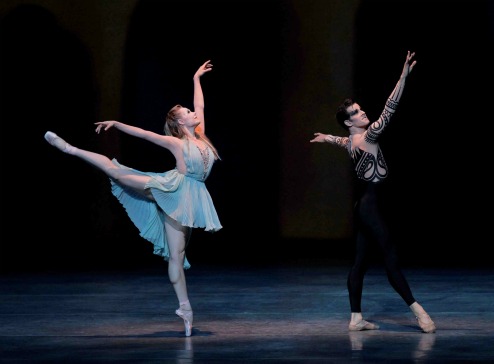
        
    </content>
</entry>

<entry>
    <title>Kirov Dazzles With Exquisite Bodies, Tough Hearts</title>
    <link rel="alternate" type="text/html" href="http://www.artsjournal.com/tobias/2008/04/kirov_dazzles_with_exquisite_b.html" />
    <id>tag:www.artsjournal.com,2008:/tobias//10.13135</id>

    <published>2008-04-04T16:53:41Z</published>
    <updated>2008-04-04T17:25:50Z</updated>

    <summary>This article originally appeared in the Culture section of Bloomberg News on April 4, 2008. April 4 (Bloomberg) -- The Kirov Ballet&apos;s three-week run at New York&apos;s City Center opened Tuesday with wall-to-wall choreography by Marius Petipa, the grandest master...</summary>
    <author>
        <name>Seeing Things</name>
        <uri>http://www.artsjournal.com/tobias</uri>
    </author>
    
        <category term="Main" scheme="http://www.sixapart.com/ns/types#category" />
    
    
    <content type="html" xml:lang="en" xml:base="http://www.artsjournal.com/tobias/">
        <![CDATA[<p><P><em>This article originally appeared in  the Culture section of Bloomberg News on April 4, 2008.</em></P></p>

<p>April 4 (Bloomberg) -- The Kirov Ballet's three-week run at New York's City Center opened Tuesday with wall-to-wall choreography by Marius Petipa, the grandest master of 19th- century ballet. That makes sense. The company is widely revered in America as the font of such dancing, having given the world Pavlova, Nijinsky, Nureyev, Makarova and Baryshnikov.</p>

<p><span class="mt-enclosure mt-enclosure-image" style="display: inline;"><img alt="kirov1.jpeg" src="http://www.artsjournal.com/tobias/kirov1.jpeg" width="488" height="360" class="mt-image-center" style="text-align: center; display: block; margin: 0 auto 20px;" /></span></p>

<p><small>Members of the Kirov Ballet perform at the Mariinsky Theatre in St. Petersburg, Russia, on March 30, 2005. Kirov Ballet will be performing at New York's City Center through April 20, 2008. Source: Mariinsky Theatre via Bloomberg News<br />
</small></p>

<p>It wasn't one of Petipa's multi-act works on view this week, though, but rather the showiest segments from several, as if the presenters feared losing the attention of their audience.</p>

<p>The bill consisted of the festive third act of ``Raymonda,'' (think medieval Hungary as conceived by a tsarist imagination); the Grand Pas from ``Paquita,'' (which offers a ballerina, her cavalier and a bevy of soloists every chance to display their technical audacity in both allegro and legato modes) and the sublime ``Kingdom of Shadows'' scene from ``La Bayadere,'' where the scrupulously schooled female corps de ballet becomes a star in its own right.</p>

<p><span class="mt-enclosure mt-enclosure-image" style="display: inline;"><img alt="kirov2.jpeg" src="http://www.artsjournal.com/tobias/kirov2.jpeg" width="488" height="360" class="mt-image-center" style="text-align: center; display: block; margin: 0 auto 20px;" /></span></p>

<p><small>Members of the Kirov Ballet perform at the Mariinsky Theatre in St. Petersburg, Russia, in this undated handout photo. Kirov Ballet will be performing at New York's City Center through April 20, 2008. Source: Mariinsky Theatre via Bloomberg News</small></p>

<p>The season features Uliana Lopatkina, in whom nearly every human quality is subjugated to forge an icon of classical ballet. Lopatkina is eerily slender, with muscles so fine-honed they mask her steely control. Stretching her long limbs in arabesque, she etches a line from fingertips to toes that is impeccably graceful. The slow-streaming lyricism of her movement is echoed in the moods that flicker across her face, usually tender, somewhat melancholy and aloof. Whatever she does is a marvel of exquisitely calculated delicacy.</p>

<p>Down to Earth</p>

<p>Viewers who find this type too rarefied may prefer the other ranking ballerina, Diana Vishneva, more compactly built and more down to earth. Vishneva can do everything -- every step and every style -- with vibrant aplomb. When she whipped off the 32 fouette turns in ``Paquita,'' punctuating them neatly with doubles, she made this old challenge look like a game she was confident of winning. From the heady dramatic works she performs in annual stints with American Ballet Theatre to the jazzy off-kilter work of Balanchine's ``Rubies,'' she's on the mark.</p>

<p>The Kirov's men are conspicuously less distinguished, apart from the wunderkind Leonid Sarafanov. Small and slight like Peter Pan, he projects a ferocious desire to surpass even his present astonishing virtuosity.</p>

<p>His spectacular feats, flawlessly brought off, seem to be fueled by well-nigh manic energy. His leaps are high and wide, his whiz-bang turns have perfect control, his landings are as sure-footed as a mountain goat's. Andrian Fadeev, another of the young men the company is bringing forward, doesn't yet have the technical security to match his personal charm.</p>

<p>Meticulous Execution</p>

<p>In general, the company dances as if to the manner born, giving first allegiance to meticulous execution. Even the folk- tinged segments in ``Raymonda'' sacrifice their rightful lustiness to the aristocratic demeanor. It comes as no surprise, then, that the performances aren't emotionally persuasive. No doubt this will loosen up in the course of the season, allowing for some of the spontaneity that is an essential part of dancing.</p>

<p>Starting this weekend, the Kirov will offer programs dedicated to Michel Fokine, William Forsythe and George Balanchine.</p>

<p>Through April 20 at City Center, 131 W. 55th St. Information: +1-212-581-1212; <a href="http://www.nycitycenter.org//">http://www.nycitycenter.org</a>.</p>

<p>More Dance</p>

<p>In addition to the balance of the Kirov season, the most noteworthy dance programs on the horizon are:</p>

<p>Ballet Tech's ManDance Project (Joyce Theater, April 9-20), for which Eliot Feld has choreographed a new solo for Fang-yi Sheu, the pre-eminent Graham dancer to appear in decades;</p>

<p>Edward Villella's Miami City Ballet (Long Island's Tilles Center, April 25 and 26; Princeton's McCarter Theater, April 27), which preserves the Balanchine heritage with verve;</p>

<p>and the New York City Ballet (New York State Theater, April 29 through June 29), which will mark the 10th anniversary of Jerome Robbins's death with a lavish selection of his dances.</p>

<p><P><em>© 2008 Bloomberg L.P.  All rights reserved.  Reprinted with permission.</em></P></p>]]>
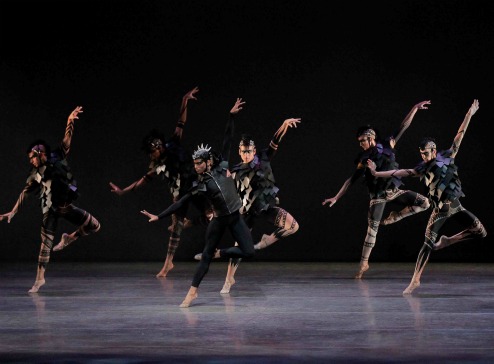
        
    </content>
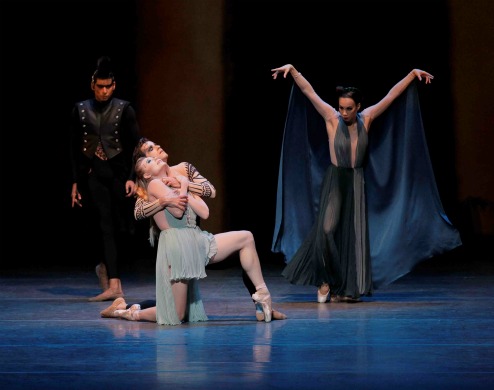
</entry>

</feed>